


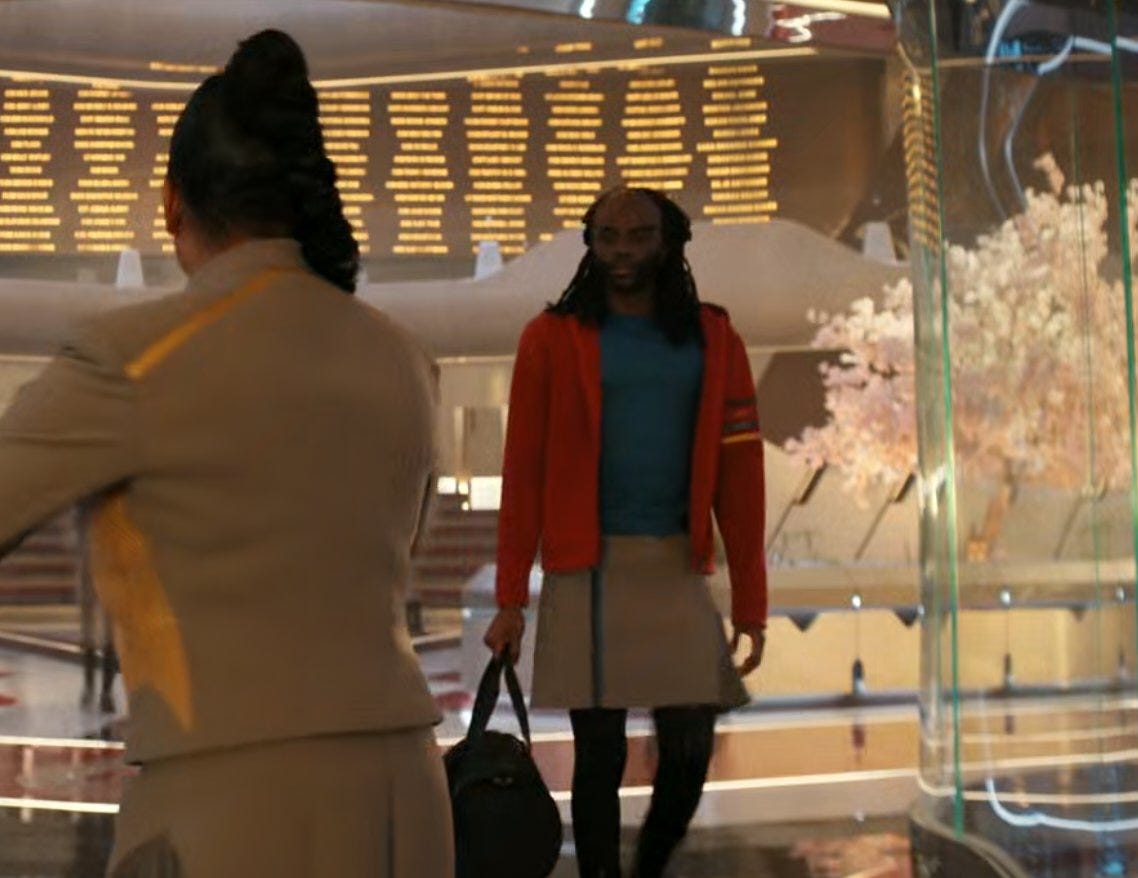
Star Trek: Starfleet Academy released its fifth episode this week, billing itself as a “love letter to Deep Space Nine” while systematically destroying the beloved series’ established lore. The episode features hologram character S.A.M. investigating Captain Benjamin Sisko’s disappearance, but the reverence promised in marketing materials quickly dissolves into continuity-breaking references and relentless LGBTQ signaling.
For those unfamiliar with Deep Space Nine’s conclusion, Captain Sisko ascended into the Bajoran wormhole with the Prophets (non-linear beings worshipped by Bajorans) becoming a spiritual entity. The series positioned Sisko as the Emissary of the Prophets, essentially making him space Jesus who would return at an appointed time. This ending carried genuine weight, particularly given the season four episode where Jake Sisko spent his entire life searching for his father after a temporal accident, missing out on marriage and career opportunities in his obsessive quest.
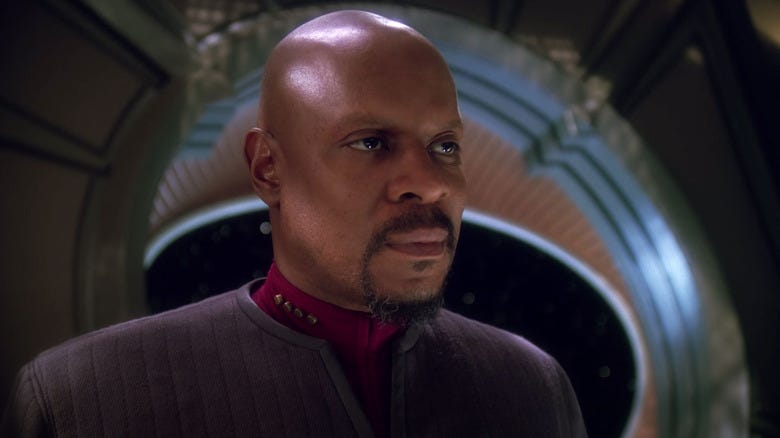
The novels continued Sisko’s story, having him return to interact with his family, which made narrative sense given his awareness of Jake’s potential fate. Starfleet Academy ignores this entirely.
The episode centers on S.A.M., an emissary from her own planet, who uses the shared title to draw parallels between herself and Sisko. The writers attempt to imbue her investigation with the gravitas of Deep Space Nine’s spiritual themes, but the execution falls flat due to the show’s fundamentally comedic tone.
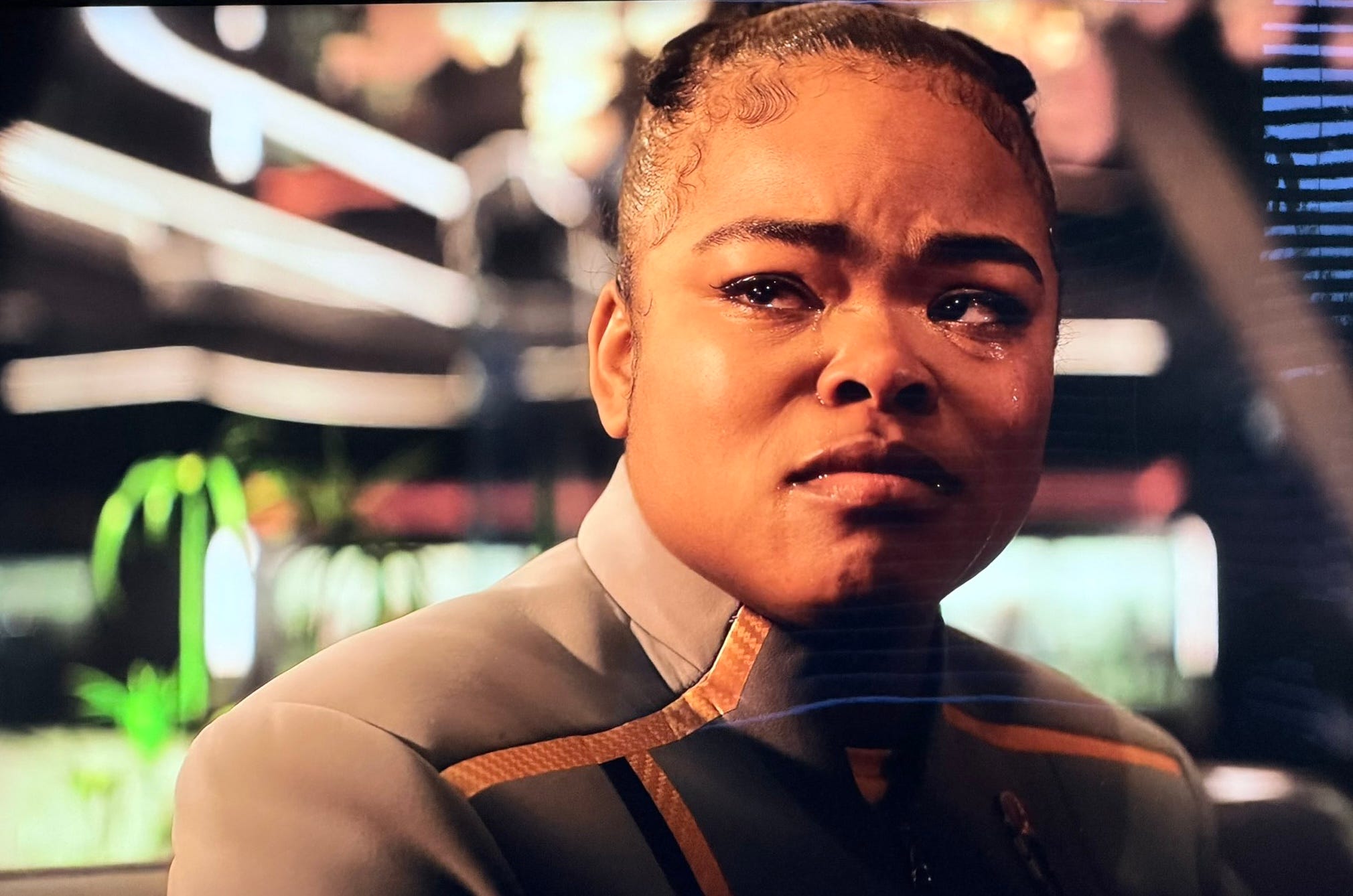
S.A.M. breaks the fourth wall repeatedly, looking directly at the camera while on-screen graphics pop up detailing her discoveries. This approach might work in Lower Decks, the animated comedy series, but Starfleet Academy simultaneously presents itself as a serious continuation of Star Trek: Discovery. The tonal whiplash is jarring and deliberate.
The episode was co-written by Tawny Newsome from Lower Decks, explaining why it feels more like an animated comedy than proper Star Trek. Lower Decks succeeded because it was explicitly a cartoon where fans could enjoy references as jokes without expecting narrative coherence. Starfleet Academy wants to have it both ways, treating itself as both serious drama and irreverent comedy, and fails at both.
The continuity errors are inexcusable for a supposed “love letter” to Deep Space Nine. The most glaring involves Professor Illa Dax, a character revealed to carry the Dax symbiont. Trill symbionts live approximately 500 years, with a maximum lifespan of 800 years according to established Star Trek lore. The Dax symbiont was already 300 years old during Deep Space Nine, which takes place 800 years before Starfleet Academy.
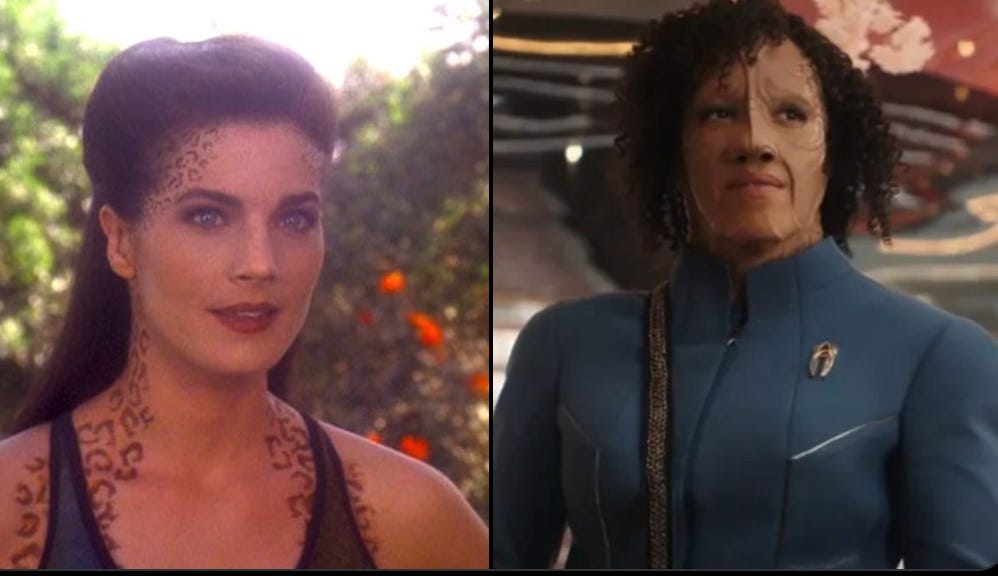
This means the Dax symbiont would be 1,100 years old, 300 years past its maximum possible lifespan. The character cannot exist within established canon, yet the writers present her without explanation.
Additionally, Illa Dax is portrayed as a mixed-species character rather than full Trill, continuing Starfleet Academy’s pattern of making every character mixed-race or mixed-species for political signaling purposes.
The second major continuity error involves Starfleet’s treatment of Sisko’s religious role. In the episode, Starfleet openly refers to Sisko as the Emissary of the Prophets, treating his spiritual status as official military record. This directly contradicts Deep Space Nine’s established dynamic where Starfleet, as a secular military organization, deliberately avoided acknowledging Bajoran religious beliefs.
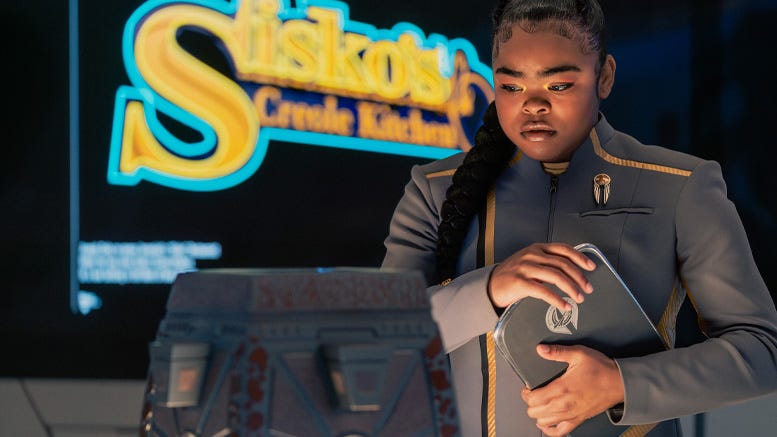
Multiple Deep Space Nine episodes centered on the tension between Sisko’s dual roles as Starfleet captain and Bajoran religious figure. Starfleet officers consistently refused to use the title “Emissary” in official contexts, viewing it as a Bajoran cultural matter separate from military service. Starfleet Academy erases this nuance entirely.
The episode also provides absurdly detailed information about Sisko’s personal life, from his love of baseball, his gumbo recipe, to his family relationships, as if these details would be preserved in official Starfleet records 800 years later. No military organization maintains that level of personal trivia about individual officers across eight centuries.
The writers attempt to justify this through Illa Dax’s presence, suggesting she preserved these memories through the symbiont’s connection to Jadzia and Ezri Dax. However, this explanation fails because the symbiont should be dead, as previously noted.
These aren’t minor nitpicks. For an episode marketed as a “love letter” to Deep Space Nine, the writers demonstrate either shocking ignorance of the source material or deliberate contempt for established continuity. The latter seems more likely given that co-writer Kirsten Beyer is a Star Trek novelist who knows the lore intimately.
Beyer wrote multiple Star Trek: Voyager novels and served as a writer and producer on Discovery and Picard. She understands Trek continuity better than most. The continuity breaks in this episode must be intentional choices rather than accidental oversights.
This makes the episode’s failures even more insulting. The writers knew they were contradicting established lore and did it anyway, banking on fans being too grateful for Deep Space Nine references to notice or care.
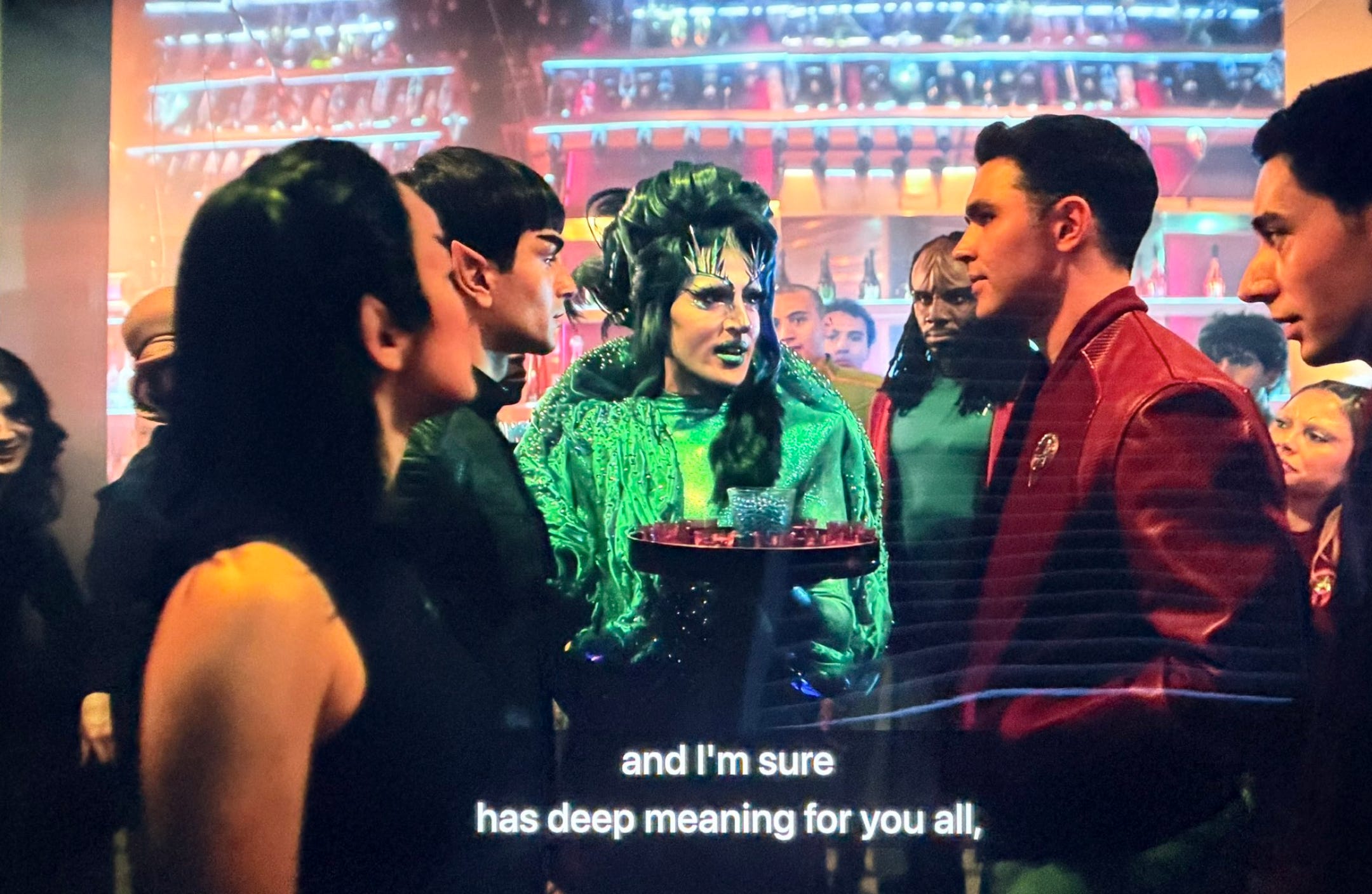
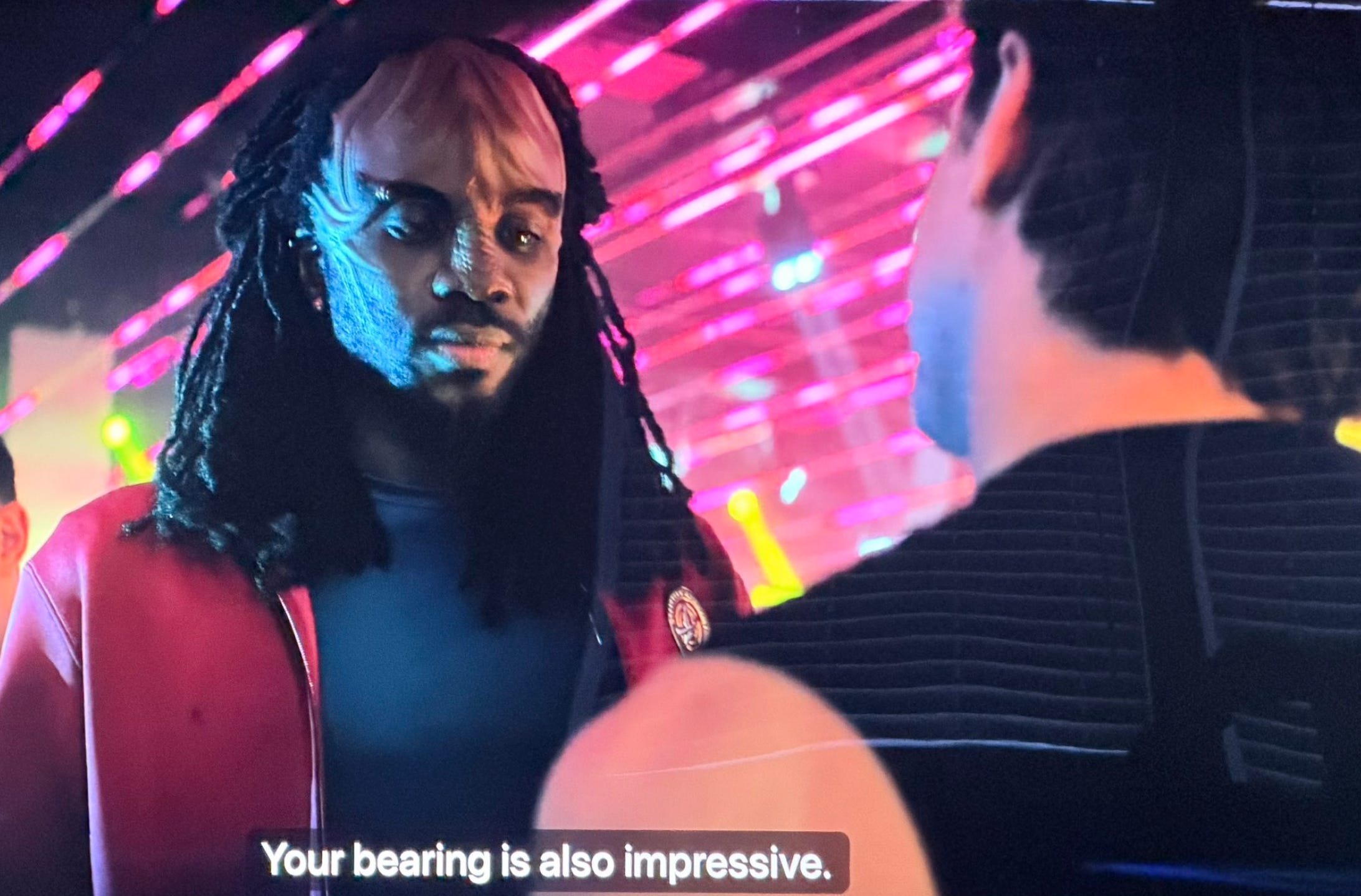
The episode’s most destructive element is its relentless LGBTQ signaling, which continues patterns established in previous Starfleet Academy episodes. A Klingon character wears a dress, then flirts with another male cadet at the academy. During a bar scene, a fight is broken up by characters who look like they stepped off the set of RuPaul’s Drag Race rather than a Star Trek series.
These elements appear constantly in the background, demanding attention while contributing nothing to the narrative. The show prioritizes political messaging over storytelling, making episodes insufferable for fans who want actual Star Trek rather than contemporary social activism dressed in Starfleet uniforms.
The tragedy is that Avery Brooks, who portrayed Sisko, and Cirroc Lofton, who played Jake, lent their blessing to this project. Their involvement provides cover for the show’s destruction of Deep Space Nine’s legacy, making fans feel guilty for criticizing an episode that disrespects everything the original series built.
Lower Decks succeeded because it was honest about being a comedy. Fans could enjoy references and jokes without expecting serious storytelling from a cartoon semi-parody. Starfleet Academy wants the credibility of serious Star Trek while delivering Lower Decks-style comedy, creating a tonal disaster that satisfies neither audience.
The show’s writers seem to believe that simply mentioning Deep Space Nine elements constitutes a “love letter” to the series. They’re wrong. A love letter requires understanding and respecting what made the original work special. Starfleet Academy demonstrates neither.
Deep Space Nine succeeded because it took its characters and themes seriously. It explored complex moral questions about religion, war, occupation, and identity with nuance and depth. Starfleet Academy reduces those themes to shallow references while breaking the continuity that gave them meaning.
The episode’s existence once again raises questions about who Starfleet Academy is for. Long-time Deep Space Nine fans will be infuriated by the continuity errors and tonal inconsistencies. New viewers won’t understand the references or care about their significance. The only audience served is one that values political messaging over narrative coherence.
Star Trek once represented optimistic science fiction that explored humanity’s potential for growth and understanding. Starfleet Academy represents the franchise’s complete corruption, where established lore is disposable and political activism trumps storytelling.
This “love letter to Deep Space Nine” reads more like a ransom note, holding beloved characters hostage while demanding fans accept whatever the writers produce without complaint or criticism.
What do you think about Starfleet Academy’s treatment of Deep Space Nine’s legacy? Leave a comment and let us know.
For a great alternative to mainstream publishing, with sci-fi spy thriller action, read The Stars Entwined on Amazon!

NEXT: ‘Starfleet Academy’ Actress Explains Why She Avoided ‘Star Trek’ Before Being Cast In The Show
Gul Dukat did nothing wrong.
Garbage like this is why I stopped watching TREK after DS9; the last show that had a connection to NEXT GENERATION and Roddenberry's original vision-- all these current writers do is couch their bad writing in the window dressing of quality IP'S and work to destroy them...