


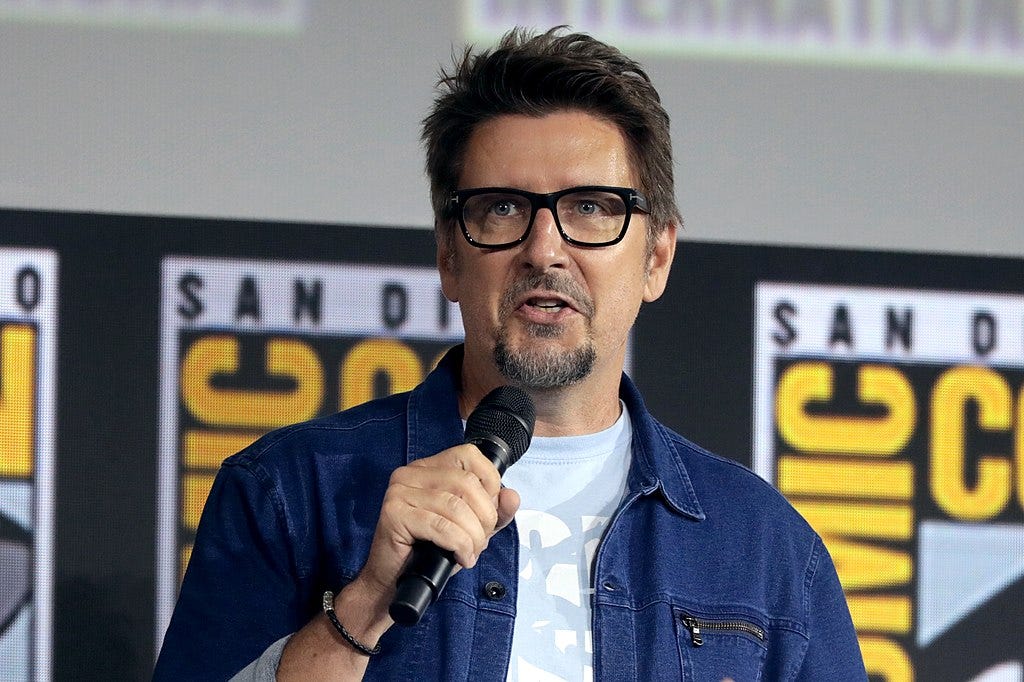
Scott Derrickson, the director of Doctor Strange, The Black Phone, and Snowpiercer, explained why he believes the horror genre is the “perfect genre” for Christians to work in.
Back in 2014, while promoting his film Deliver Us From Evil, which was based on Beware the Night, the memoir of New York police Sgt. Ralph Sarchie, Derrickson spoke with the National Catholic Register.
He was asked, “What does a nice Christian guy like you see in this genre? What does horror at its best offer us?”
“For me, [horror] is the perfect genre for a person of faith to work in. You can think about good and evil pretty openly,” Derrickson answered. “I always talk about it being the genre of non-denial. I like the fact that it’s a genre about confronting evil, confronting what’s frightening in the world.”
“I like the mystery of the genre. It’s a genre that takes the mystery in the world very seriously,” he elaborated. “There are a lot of voices that are broadcasting that the world is explainable. Corporate America limits the world to consumerism. Science can limit it to the material world. Even religion limits it to a lot of theories that can explain everything. I think we need cinema to break that apart and remind us that we’re not in control, and we don’t understand as much as we think do.”
On the flip side, he did indicate that the genre like others can be abused, “There are concerns for every genre. Action can become mere stimulus and mere distraction. When an action film is reduced to that, I’m not sure how healthy that is, at least in large quantities.”
“Horror is the same way,” he said. “When it’s reduced to mere scariness — or even worse, mere exploitation … I don’t think it’s necessarily a good or healthy thing, emotionally, mentally, spiritually. Horror, for me at least, invites depth, invites moral passion, invites ideas that are to be taken seriously.”
Later in the interview, he also shared, “You’ve got to be willing to let the art of cinema take you into some darker places if you’re going to make full use of it. There are some people who shouldn’t watch horror films, and I’m all right with that. It’s not about putting something evil in the world. It’s about reckoning with evil. We don’t need any more evil in the world. We need a lot more reckoning with it.”
Derrickson’s comments align with Nethereal novelist Brian Niemeier and his analysis on the horror genre. In an article titled “The Christian Origins of Western Horror,” Niemeier takes it a step further and observes, “From medieval Europe’s tales of demonic possession to Victorian Gothic novels to modern psychological horror, the genre has explored humanity’s deep-seated fear of sin, Satan, and the possibility of eternal damnation. This unique foundation keeps Western horror fiction grounded in a Christian moral framework, establishing it as the last remaining genre with an essential Christian influence.”
He adds, “The endurance of Christian themes in horror may seem surprising, given how other genres have succumbed to the new state religion. Yet horror, with its existential themes and supernatural focus, is uniquely suited to explore Christian ideas about life, death, and the afterlife. The terror the genre is designed to provoke makes humanity’s most profound fears its natural subject matter. And no one has yet devised a more terrifying idea than the prospect that all your secret deeds will be made known, and you will be subject to their eternal consequences.”
Both Derrickson and Niemeier illuminate why horror endures as a uniquely fertile ground for Christian thought in an age of denial and superficiality. Far from glorifying darkness, the genre ompels us to face the reality of evil head-on, to wrestle with sin’s consequences, and to grapple with the profound mysteries of redemption, judgment, and grace. By refusing to sanitize the world’s terrors or reduce existence to mere materialism or consumerism, horror reminds us of our vulnerability, our need for something greater than ourselves, and the ultimate hope that light can overcome even the deepest shadows.
In this way, it not only reckons with evil but points toward the possibility of triumph over it, making it not just the “perfect genre” for a person of faith to work in, but perhaps one of the last honest arenas where the eternal stakes of the human soul can still be explored without apology.
Horror and Gothic Horror were originally Christian genres.
Time to take them back.
I never thought of it that way before. Thanks for this.