


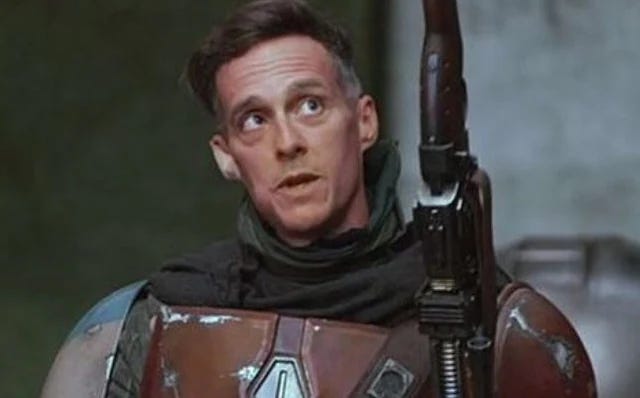
Brendan Wayne, one of the stunt performers who physically portrays Din Djarin inside the Mandalorian suit, gave an interview to MovieWeb this week and used the opportunity to call a portion of the Star Wars fanbase toxic. His film, The Mandalorian and Grogu, has now grossed $155.8 million domestically on a $165 million production budget, making it the lowest-grossing Star Wars theatrical release ever and almost certain to lose money before marketing costs are added.
Wayne went in on the fans as we’ve seen many do before: “It’s interesting to see people who are pulling against the franchise they love, just because of their ownership. That can be 100% toxic.” He added: “They didn’t ruin your Star Wars. It’s our Star Wars.”
Nobody staked out a more direct ownership claim than Wayne in the same breath he accused fans of the same impulse.
The “toxic fans” accusation is not a new instrument in Lucasfilm’s communication toolkit. It has been the franchise’s standard deflection from creative and commercial failure for nearly a decade, and its deployment this week follows a well-worn pattern.
In 2018, The Last Jedi directed by Rian Johnson generated the most sustained fan backlash in franchise history. Johnson called critics “manbabies” on Twitter. When actress Kelly Marie Tran deleted her Instagram following harassment, the resulting coverage cemented the “toxic fan” narrative as the frame through which all Star Wars criticism would be processed going forward. Johnson’s framing: “A few unhealthy people can cast a big shadow on the wall.” Kathleen Kennedy adopted the same framing. When she spoke to The New York Times in 2024 ahead of The Acolyte, she said female stars face disproportionate fan attacks “because of the fan base being so male dominated.” Her response to criticism of The Acolyte’s casting choices: “I stand by my empathy for Star Wars fans. But I want to be clear: anyone who engages in bigotry, racism or hate speech, I don’t consider a fan.”
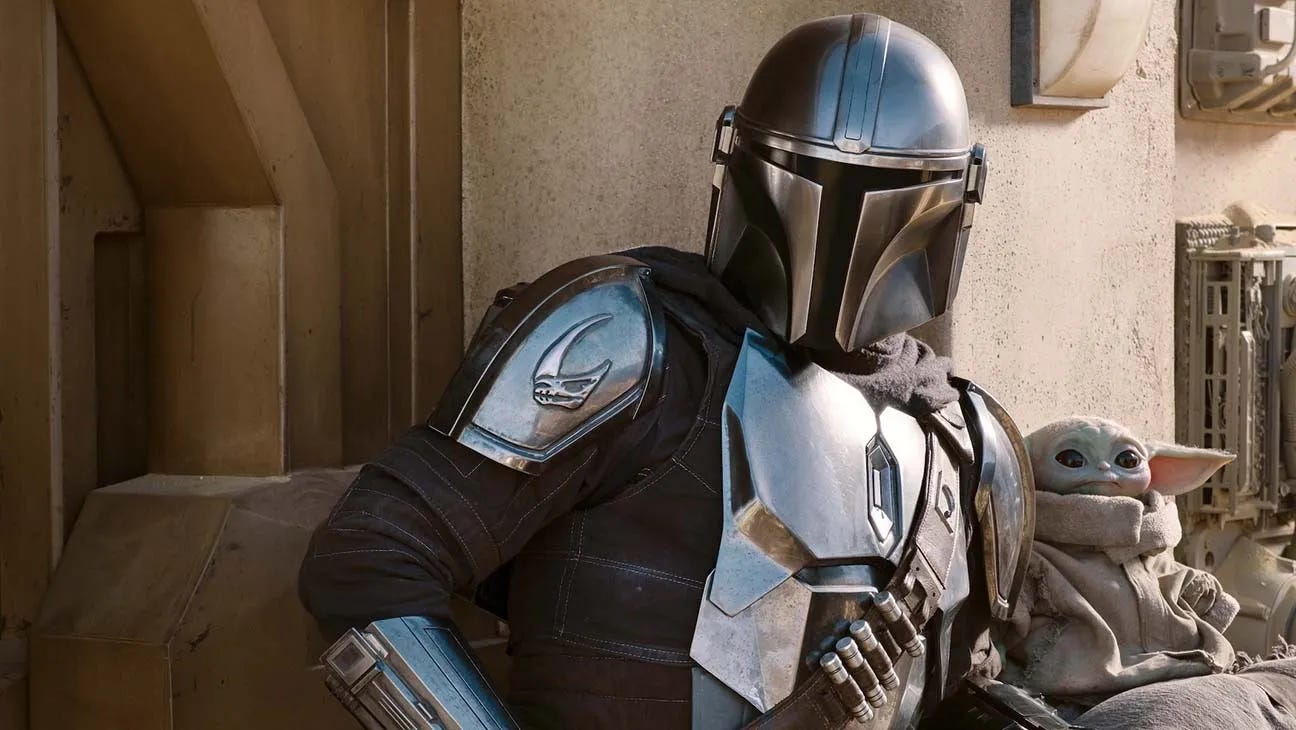
The Acolyte was canceled after one season. The Mandalorian and Grogu opened below Captain America: Brave New World. It dropped 70% in its second weekend. It is now in sixth place.
The problem here is that Disney and Lucasfilm have spent ten years applying the toxic-fan label to the much broader category of viewers who simply did not want to watch what Disney was making. Those people do not post harassment. They do not leave nasty comments. They stop buying tickets. They cancel Disney+. They do not buy the toys. Their opinions register only in box office data and subscription numbers, where they are impossible to dismiss as a vocal minority of bad actors.
The Mandalorian and Grogu’s opening weekend number is the sum of every person who chose not to show up. There were tens of millions of them. They were not posting harassment on social media. They were doing something worse, from Disney’s perspective: they were staying home.
The trajectory tells the story clearly. Star Wars: The Force Awakens opened to $248 million in 2015. The Last Jedi opened to $220 million in 2017. Rise of Skywalker opened to $178 million in 2019. Solo opened to $84 million in 2018. The Mandalorian and Grogu opened to $81.7 million in 2026. The line is not ambiguous. With each installment, Disney’s claim that the backlash came from a toxic fringe became harder to sustain against the arithmetic of the actual audience.
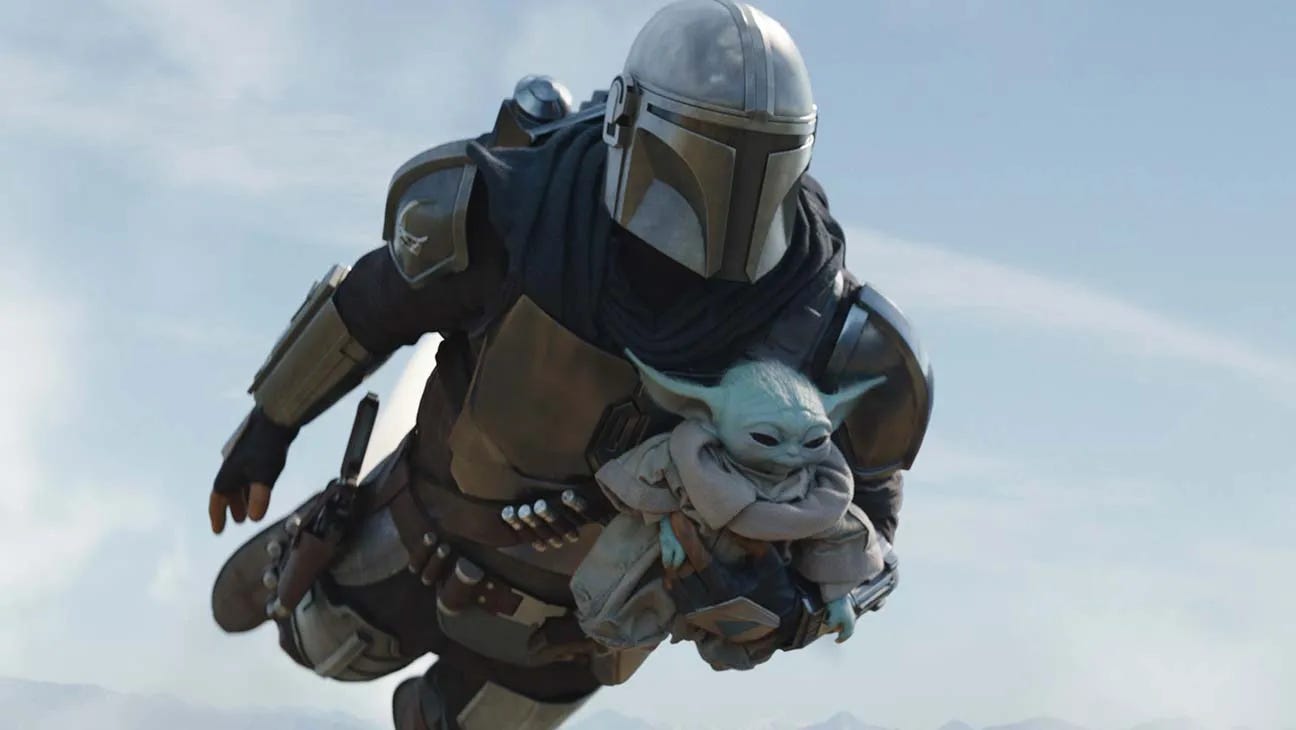
Wayne is not a studio executive. He is a performer with a long personal investment in this property, and his frustration is understandable on a human level. But the interview he gave arrives at the same moment as his film’s third-weekend grosses, and the argument he made lands differently when the film has lost money on the franchise’s most beloved characters.
Kathleen Kennedy left Lucasfilm. The Acolyte was canceled. The Mandalorian and Grogu bombed. Every project that came wrapped in the “toxic fans” defense has underperformed or been discontinued. The audience that Disney spent ten years calling toxic was the audience that built this franchise and funded the $4 billion acquisition price that Disney paid George Lucas in 2012.
“It’s our Star Wars” is a fair statement. It is also a statement the box office has been making every weekend for three years, and the message it keeps sending is not the one Wayne intends.
First contact with the Oridians was supposed to be humanity’s proudest moment. Instead, their chief engineer is dead, their ship is sabotaged, and an ancient alien technology is stealing souls. Book one of the Valiant Frontiers series delivers exploration, mystery, and the kind of crew you’ll want to follow across the galaxy. Read The Soul Catcher on Amazon and start the adventure.
“They didn’t ruin your Star Wars. It’s our Star Wars.”
Sure is now, buddy. Too bad noone wants to see your Star Wars. And judging by the numbers, not even you do.
You missed Rogue One: A Star Wars Story which grossed over $1.058 billion worldwide during its theatrical run. Which was the only Disney SW film that didn’t insult the fans.