


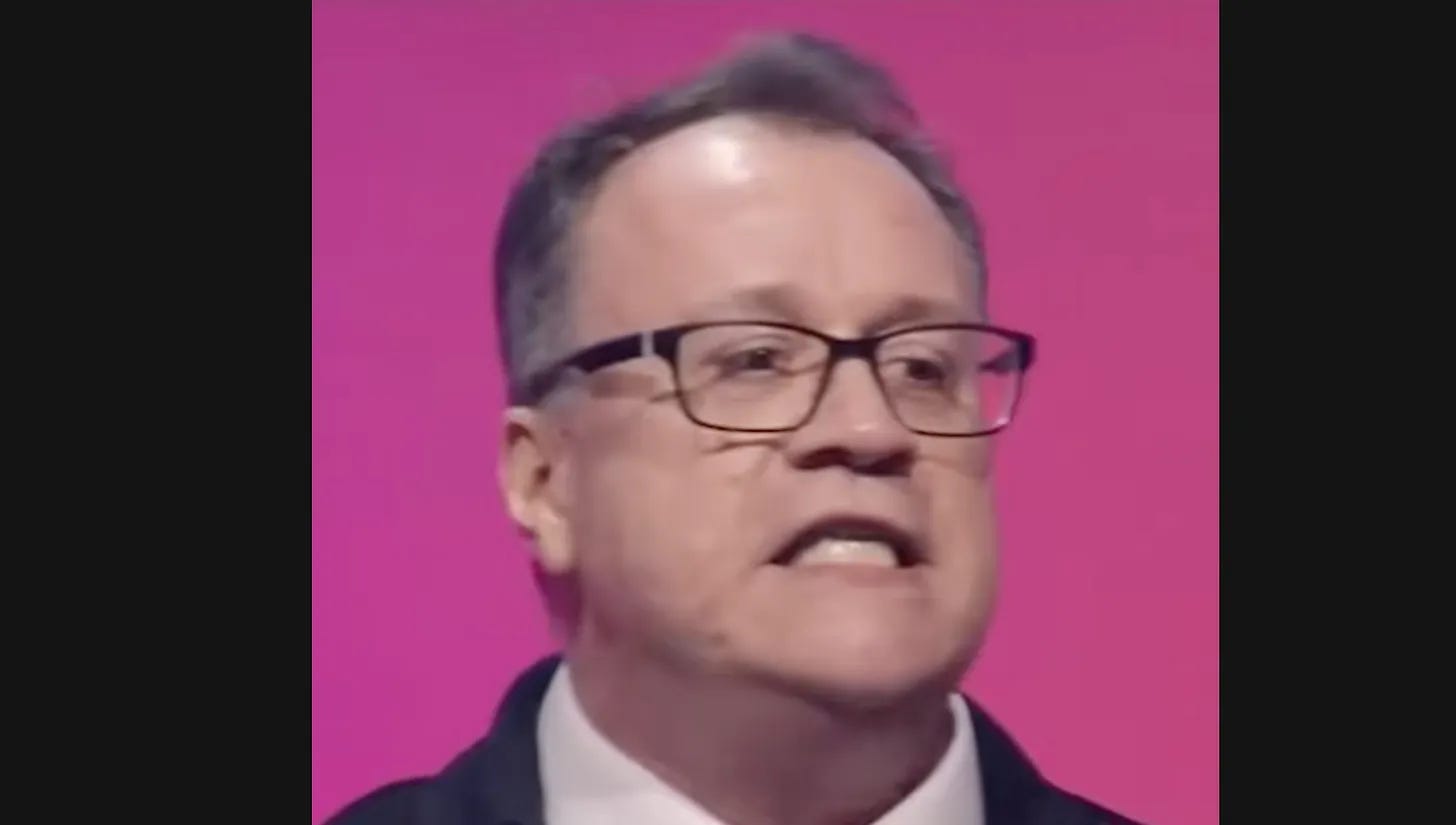
Russell T Davies went on Gaydio this week to set the record straight. The show has not been cancelled, he said. Anyone calling it cancelled is wrong.
“It’s extraordinary to see newspapers, who should know better, saying the show has been cancelled,” Davies told the programme. “It’s the opposite. It’s been put out to tender.”
He then offered a brief civics lesson. “And I understand that’s an industry phrase. People might not understand what a show being put out to tender means.” He added: “Equally, at the same time, those people are complaining on devices which have a search engine. Go and look it up.”
Davies compared the situation to other BBC programmes. “This will happen to every BBC show. It’s happened to Casualty, it’s happened to the weather. The weather was put out to tender. Do you know the weather now is not made by the Met Office?”
He concluded: “So I think this guarantees years of the programme. But no, go ahead and call it cancelled, everyone. You’re wrong. You’re literally wrong.”
Set aside for a moment whether the technical definition of “cancelled” applies. What Davies did not address, because he was not asked, is what the industry actually thinks of the situation he is describing as a routine administrative process.
Deadline contacted four respected UK drama producers this week about whether they would be interested in bidding on the Doctor Who tender. All four expressed serious reservations. One told the outlet that “you would have to be mad” to take on the series. Another described it as “a bit of a nightmare” in the current market, particularly following the collapse of the Disney co-production deal. The hesitation comes down to money, rights, and workload. Doctor Who is owned by the BBC, meaning any successful bidder would produce the show without owning the underlying IP. Funding presents a separate problem: one source told Deadline it is hard to see another major US studio simply replacing Disney, and that the per-episode budget would be difficult to push above three million pounds without significant co-production investment from BBC Studios’ distribution arm.
The creative assessment in the same Deadline report is equally unflattering. Sources told the outlet that Doctor Who has “lost its way creatively,” that Ncuti Gatwa had never “fully embraced the role,” and that Davies used a “sledgehammer” approach to issues of diversity and inclusion. That last characterisation is notable because it does not come from fans posting on X, the platform Davies spent his final months calling a hate site. It comes from industry professionals speaking to the trade publication that covers British television for the people who make it.
Davies said on Gaydio that the tender process “means many years ahead. No one’s going to put out to tender, no one’s going to apply for a tender for one year. It’s not worth it.” He is correct that the process implies the BBC intends the show to continue. He did not acknowledge that the same process is unfolding in a climate where people with money and experience in British television are describing it as something you would have to be mad to pursue.
He was also asked what he would do differently if he could go back to the moment he returned as showrunner. His answer was immediate: “Oh, nothing.”
He added: “I loved what I did.”
That answer lands differently against the backdrop of what the numbers produced. Viewership fell from roughly 5 million consolidated viewers at the start of his second run to under 2 million in Season 15’s worst episodes. Disney exited the co-production deal. Ncuti Gatwa left after two seasons. The Christmas special Davies was publicly announced as writing never materialised. On that specific point, Davies stated on Instagram after his exit was announced: “For the record: there was no script, I never wrote it, and no actor was ever approached to play the next Doctor.”
That statement conflicts with what composer Murray Gold told the Radio Times in February: that Davies had written “multiple versions” of the Christmas special script “depending on certain outcomes,” and added that he probably was not supposed to share that. It also conflicts with the BBC’s own press release from when the Disney deal ended, which stated: “We are delighted that Russell T Davies has agreed to write us another spectacular Christmas special for 2026.” The BBC’s director of drama put her name on that statement.
Fandom Pulse learned from inside sources approximately one year ago that Davies was effectively out as showrunner at that point, and that the Christmas special was essentially his opportunity to wrap things up and hand over cleanly. The failure to produce it, and the subsequent revelation that no actor had been approached to play the next Doctor, suggests that the wrap did not go as planned. The tender process that Davies is now describing as a routine BBC administrative event may be better understood as the BBC’s response to a handover that did not happen.
Davies is technically right that “out to tender” is not the same word as “cancelled.” He is also the man who ran a show that four industry professionals this week described as a nightmare to inherit, whose lead actor never fully grew into the role by the industry’s own account, and who told a radio station he would not change a single thing about the experience.
That combination of defensiveness and zero reflection tells you everything about why the show is in the position it is in.
First contact with the Oridians was supposed to be humanity’s proudest moment. Instead, their chief engineer is dead, their ship is sabotaged, and an ancient alien technology is stealing souls. Book one of the Valiant Frontiers series delivers exploration, mystery, and the kind of crew you’ll want to follow across the galaxy. Read The Soul Catcher on Amazon and start the adventure.
NEXT: Star Trek And Doctor Who Abandoned Their Audiences And We Can Replace Them
Cancel this homo.
“Hey: Western White Men (who contain a vast majority of wealth in the Western World), who would YOU like to helm all properties you’ve loved forever?”
Hollywood:
“We’ll speak for the men. They want bitter, covetous women, POCs, and gays who hate them to helm, nay usurp their favorite properties.” “Be sure to cheer us at the oscar’s and listen to every word we say. We’re better than you.”