


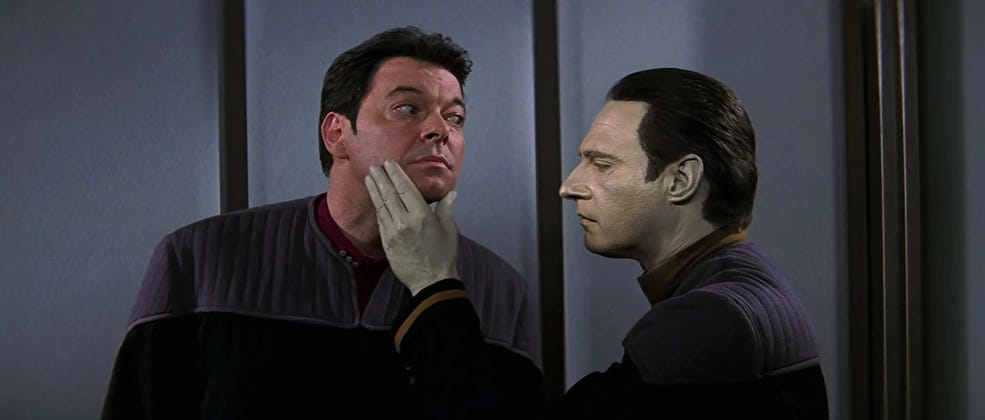
Patrick Stewart walked off the set of Star Trek: Insurrection in a fury. Producer Rick Berman panicked. Jonathan Frakes poured himself a metaphorical coffee and waited.
Frakes told the story on Michael Rosenbaum’s Inside of You podcast recently, delivering it with the calm of someone who knew exactly how it would end before it started.
“I saw Patrick storm off the set once when we were doing Insurrection,” Frakes told Rosenbaum. “And he was pissed about something, really, really pissed about something. And he went and got into his dressing room.”
Rick Berman, producing the film, turned to Frakes and asked the obvious question. “What are you going to do?”
Frakes’ answer stopped him cold. “I’m going to wait for him to cool off and then I’ll go knock on his door and he’ll come back out.”
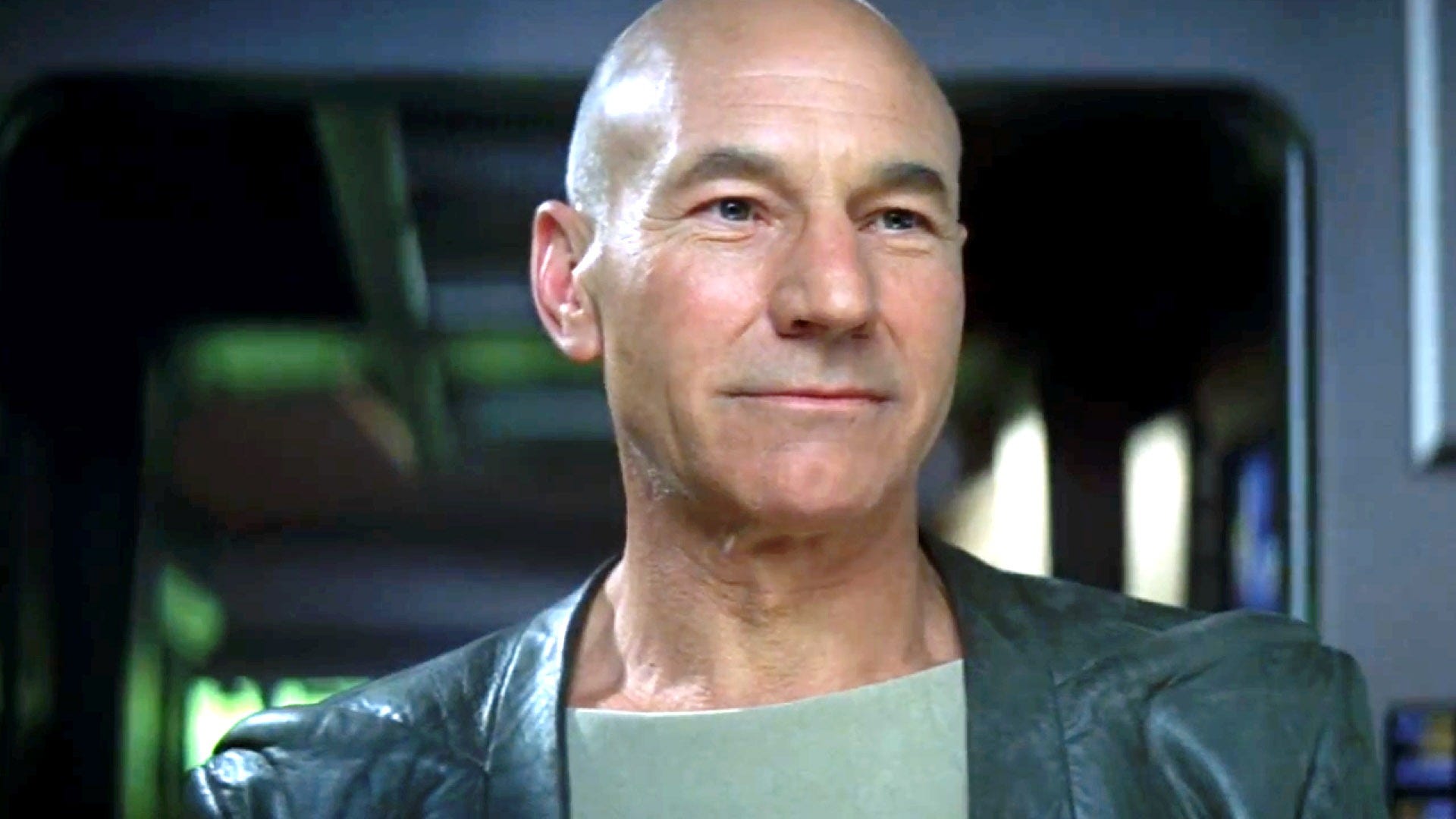
Berman’s response was pure Hollywood producer instinct. “Really?”
“Yeah,” Frakes said. “Patrick and I have been working together for 35 years.”
He knocked. Stewart came back out. The whole incident lasted less than ten minutes.
“How long was he gone?” Rosenbaum pressed. “10 minutes?”
“Not even,” Frakes confirmed.
The story reveals something specific about the working relationship between the two men that no amount of press junket cheerfulness can manufacture. Frakes didn’t need to manage Stewart. He just needed to let him breathe.
When Rosenbaum pushed on what specifically sets Stewart off, Frakes gave a direct answer. “Incompetence. Nobody likes it. He doesn’t like it. I don’t like it. You don’t like it.”
He expanded on the broader challenge facing any actor trying to maintain professional composure through a long shoot. “We try desperately to compartmentalize and sometimes we’re very successful and sometimes we’re not.”
The incident makes more sense knowing what the production had already been through before a single camera rolled. Stewart had already rejected Michael Piller’s first complete script for the film outright, handing it back in disgust. Piller later called the experience “a dark day.”
Piller’s original concept was a sci-fi riff on Joseph Conrad’s Heart of Darkness, with Picard sent to retrieve a Starfleet soldier gone rogue. The story included a subplot where Picard would have had to kill Data after a malfunction. Stewart was the first to push back, telling the creative team the concept was “dark and dreary” and “not fun.”
Stewart’s reaction to a subsequent draft was equally blunt: the script had “no surprises,” “no scale,” “little humor,” and what it did have was “clichéd and tired.” He said it was “not sexy,” “breaks no new ground,” and “under-uses our cast.” He cited specific episodes by name, arguing the themes had been explored before and demanding Piller find new paths.
Piller later said of the conflict: “Without a doubt that script is far better as a result of that conflict. It certainly is important to realize that from conflict with people who really care about the material, good results can come.”
The studio pushed from a different direction. Paramount was not satisfied with Frakes’ initial cut, demanding an action sequence before the film’s epilogue. The late 1990s theatrical market had been defined by Independence Day, Bad Boys, and Die Hard sequels. A contemplative story about forced relocation of 600 people was not what the suits had in mind. The result was a three-prong climax built around a self-destruct mechanism. Frakes later acknowledged the change improved the film’s stakes.
So by the time Stewart walked off the set and into his dressing room, the production had been through script wars with its lead actor, creative arguments between Piller and Berman, and studio interference demanding more explosions. A ten-minute breather was the least dramatic thing to happen on that film.
Frakes understood this, which is why Berman’s panic registered as a curiosity rather than a crisis.
“I’ve probably done more scenes with Patrick Stewart than anybody I’ve ever worked with, and vice versa,” Frakes said. “So when I’m on the stage with him, as a director or as an actor, it’s like I feel so safe, and it’s so comfortable. It’s great.”
Frakes was carrying two jobs simultaneously on that production: director responsible for every frame of the film, and actor standing in front of the camera alongside the man he was also managing. That dual role meant he absorbed pressure from every direction on set. The calm he showed Berman in the hallway wasn’t indifference. It was the product of 35 years of accumulated shorthand with one specific human being.
Did Stewart’s documented refusal to accept a lesser script make Insurrection better, or did it just swap one set of problems for another?
If the golden age of Trek and Babylon 5 left a hole in your sci-fi diet, The Stars Entwined fills it — interstellar espionage between two civilizations on the brink of war. Read The Stars Entwined on Amazon!

NEXT: How to Fight for Stargate - Here Is What You Can Do Right Now
I don't have a lot of warm feelings for Insurrection. The premise of a planet with rings that radiate magical age-reversing energy... I just couldn't buy into it.
And they wound up with a script that sucked even more.
I didn't know about the action scene in the harvester being tacked on until I read this. I rewatched insurrection just a few months ago and I remember thinking how weird the end pacing was and now it makes sense.