


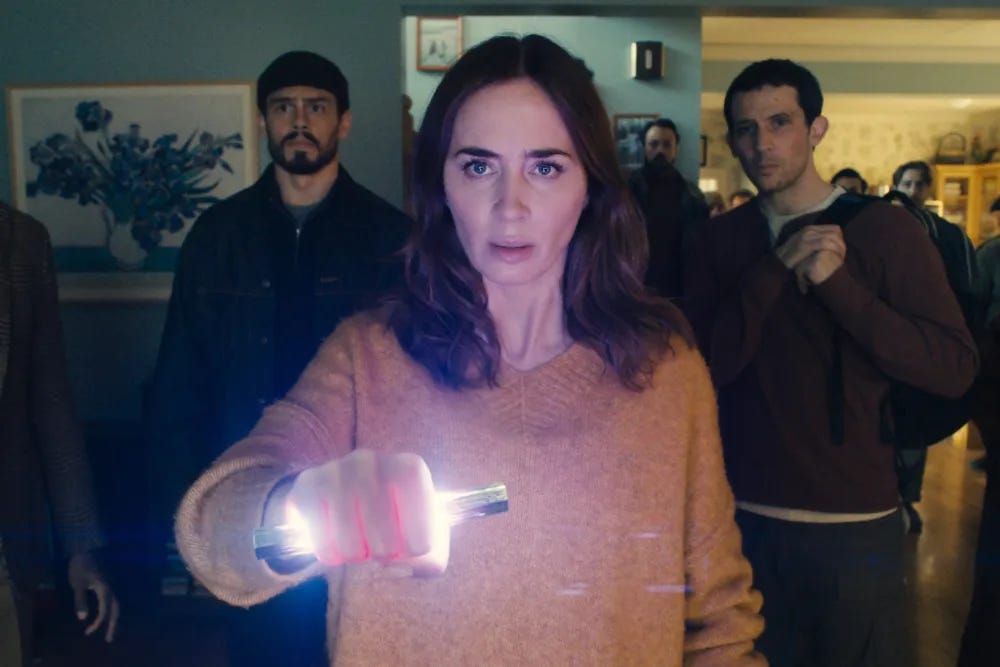
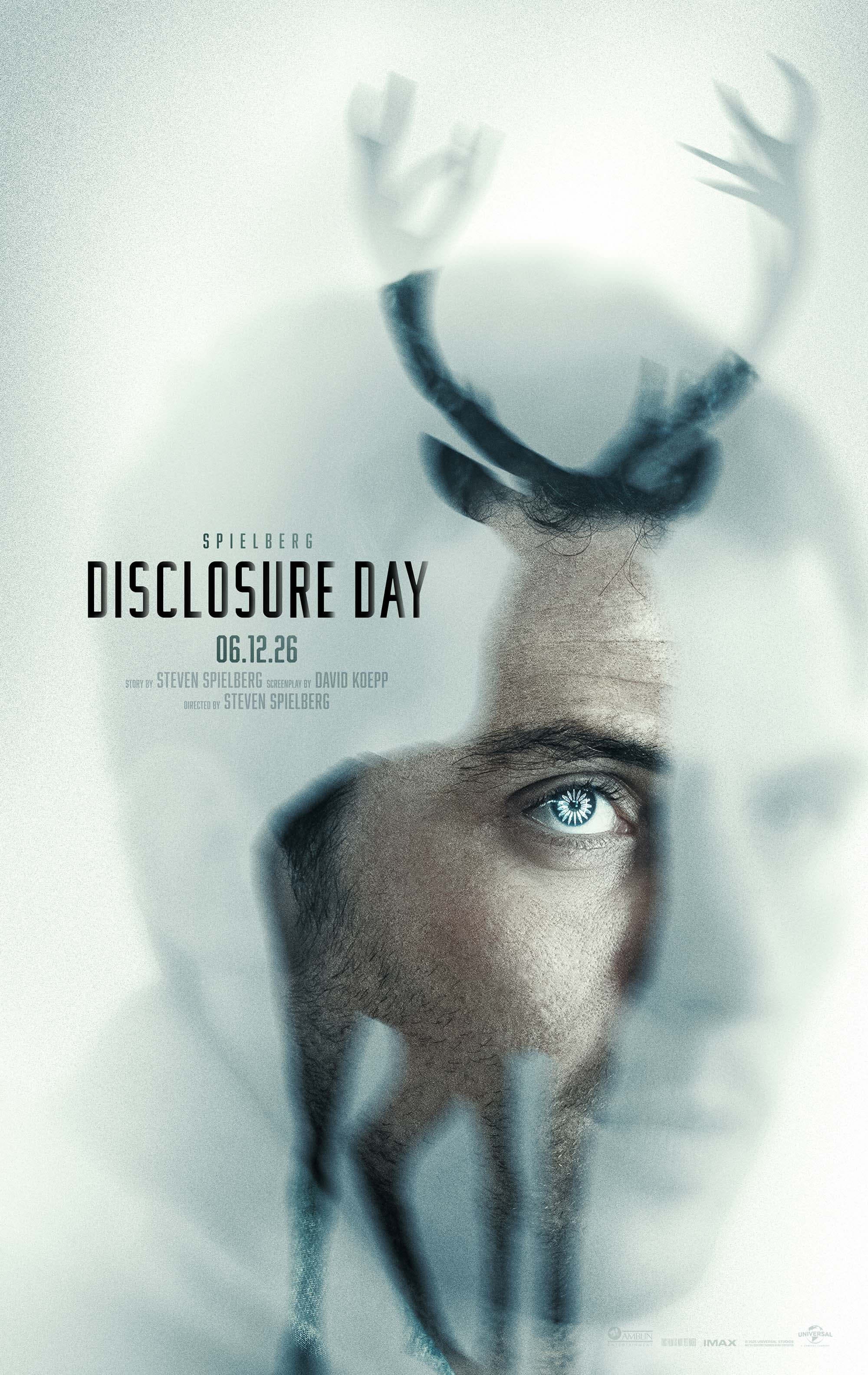
Steven Spielberg’s Disclosure Day opened this weekend carrying the full weight of expectation. The director’s first original sci-fi blockbuster in 25 years, starring Emily Blunt and Josh O’Connor as two strangers who discover they share a psychic connection to alien life on Earth, and Colin Firth as the shadowy corporate villain trying to stop them from going public. The premise is solid, and the film still manages to fumble most of what makes it interesting.
Let’s start with what works, because there’s enough here to acknowledge. Some of the setpieces are tense. A sequence on a train delivers the kind of kinetic Spielberg craftsmanship that made his reputation. There’s a cliff scene with real stakes. The alien animal motif, where the extraterrestrials disguise themselves as deer, foxes, and cardinals to appear less threatening to humans, is the film’s best idea. The mind-control element, with Firth’s villain using an alien artifact to psychically manipulate people from a distance, generates the only scenes where the antagonist actually feels dangerous. O’Connor and Blunt are working hard with thin material, and you can see flashes of what this could have been.
The problem is the script, and the problems are everywhere.
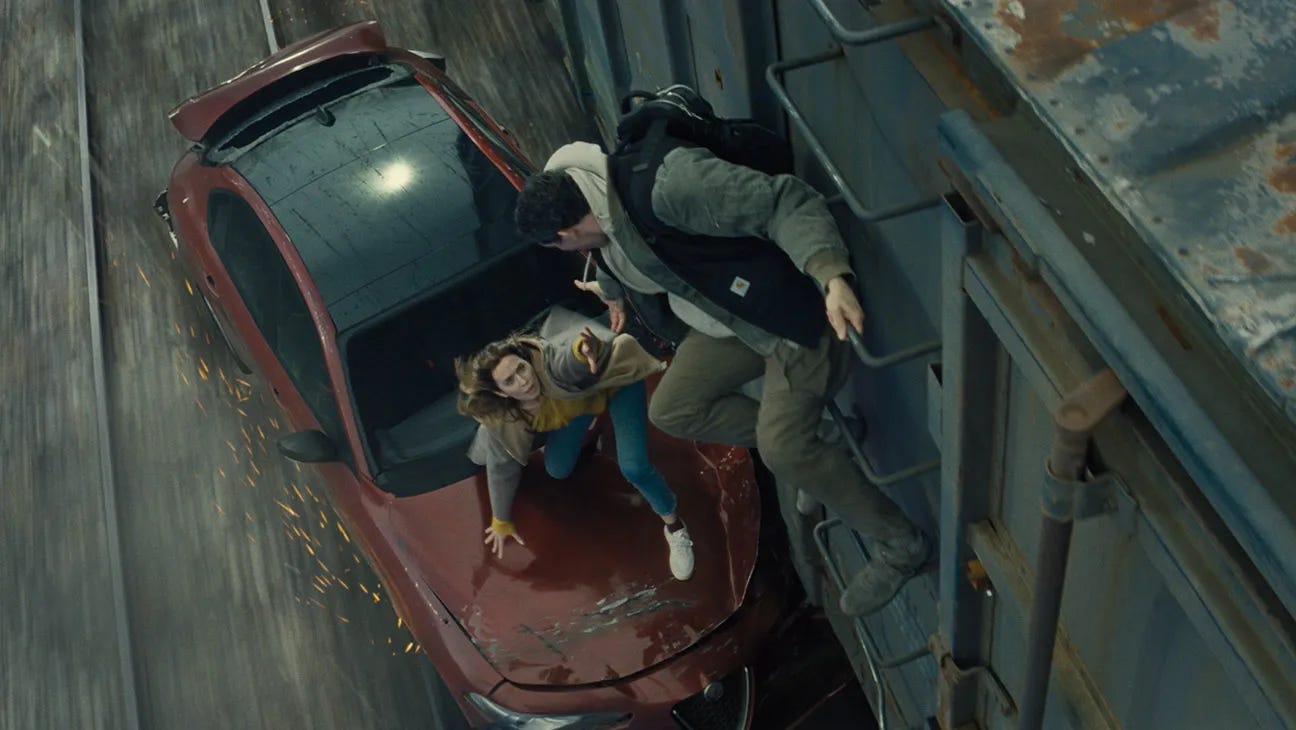
Wardex, the shadow organization Firth runs, has the FBI, the Pentagon, and the ability to remotely control people’s minds. It cannot catch two people who keep stealing their cars and driving on flat tires. The opening setup has O’Connor’s character walking out the door with classified data and an alien artifact, and Wardex just... lets him go. The obvious move is a bullet. They never take it. For the next two hours, trained operatives with government backing and psychic technology get repeatedly outrun by a cybersecurity whistleblower and a TV meteorologist. The suspension of disbelief collapses early and never recovers.
The powers don’t hold up either. Margaret (Blunt) projects illusions. Daniel (O’Connor) comprehends mathematics at alien levels so he can translate alien language (which is, apparently, math). The trouble is that both abilities expand and contract based on whatever the plot needs at that moment. When they escape a Wardex facility, Margaret projects the image of a loved one into the guards’ minds and they just... let her walk away. Why? Because a guard saw someone he loves? The film never earns that logic. The villain’s eventual surrender at the climax is even worse: he decides to stop fighting, and the rest of his organization runs out the door in frustration rather than, again, shooting anyone. You’d think an organization that turned off generators and owns the building might have one person willing to take a swing.
Koepp’s screenplay, assembled from a Spielberg outline, withholds information not to create mystery but to delay the obvious. The movie is called Disclosure Day. We know it’s about aliens. The film still spends the first twenty minutes pretending the artifact might be something else, as if the audience wandered in off the street with no memory of the marketing campaign. When the exposition finally lands, it stops the film cold. Two separate stretches grind the chase to a halt for character-explaining sessions that should have been woven into the action.

The character work doesn’t redeem the pacing problems. Firth’s villain collapses into a man whose wife died and who eventually just doesn’t feel like fighting anymore. The romantic subplot between O’Connor and Hewson’s former nun barely develops and resolves nothing about her faith crisis. There’s a moment where Blunt’s character has a panic attack to establish modern vulnerability, and it plays like a note from a studio executive. Her anchor husband spends the movie dismissing her because she’s a woman who doesn’t believe her, and that’s the entirety of his character.
The woke signaling is present but lighter than most of what Hollywood is putting out right now. The resistance against the shadowy organization is led by Colman Domingo’s character, the villain is a white man, the women are more empathetic than everyone and that’s why the aliens communicate through them. It’s there. It’s not subtle. It’s also not the film’s biggest failing, which is a credit only in the sense that a car crash is less bad when the airbag deploys.
The ending drags past its own climax. The disclosure broadcast happens, the tension evaporates, and then the film keeps going. There’s a montage of alien footage, an alien who shows up briefly to speak, and a news segment that adds nothing. The movie ends about twenty minutes after it should.
Spielberg at this point in his career has nothing left to prove visually, and it shows. Some scenes are constructed with the precision of a director who has been doing this for fifty years and knows exactly where to put the camera. The craft is intact. The story wrapped around that craft is a mess of contradictory rules, inert villains, and a thesis about truth-telling as salvation that the current media environment renders naive before the opening credits finish rolling.
5.5/10.
The bones of a better film are here. Was Spielberg too hands-off with Koepp’s script, or does the mess trace back to the Notes app outline the film was built from?
First contact with the Oridians was supposed to be humanity’s proudest moment. Instead, their chief engineer is dead, their ship is sabotaged, and an ancient alien technology is stealing souls. Book one of the Valiant Frontiers series delivers exploration, mystery, and the kind of crew you’ll want to follow across the galaxy. Read The Soul Catcher on Amazon and start the adventure.
NEXT: Jonathan Frakes Watched Patrick Stewart Storm Off the Insurrection Set and Wasn’t Worried at All
Gay shit. No thanks. I'm 59 and I'm looking forward to more new YouTube voices.
The problem lies strictly with the constant, nauseating, miscasting of women as the lead. Men definitely don’t want this. And no woman in my life wants it either. My teen girls hate this crap. (I mean it) They watch the early hungry games. “Friends”. That’s about it. Otherwise tok tik.