


CD Projekt Red wants you to know it cares about inclusion. Whether that extends to people who disagree with the message is a different question.
The Polish studio behind The Witcher and Cyberpunk 2077 posted this statement to its social media accounts in June:
“The worlds we create are shaped by the people behind them. Bringing together individuals with different experiences, backgrounds, and perspectives helps us in our goal to create memorable stories that inspire gamers. That’s why we’re committed to building an environment where everyone feels respected, supported, and able to contribute. We believe this responsibility extends beyond our teams and into the communities around us. For several years, we’ve partnered with Kampania Przeciw Homofobii (Campaign Against Homophobia) to support grassroots LGBTQ+ initiatives across Poland. We’re also proud that CD PROJEKT RED was recently included in the sixth edition of the Diversity IN Check list, organized by Forum Odpowiedzialnego Biznesu (Responsible Business Forum). And, as in previous years, REDs joined the Warsaw Pride parade.”
The post was noticed. So were the hidden replies.
YouTuber Smash JT covering the gaming industry flagged that CD Projekt Red’s social media team had been going into the replies and hiding critical responses. His own reply was among them. “I do not feel respected when my reply gets hidden,” he said. “This is only for if you agree with the message and the ideology. If you disagree with them, then you will not be respected, supported, and you will not be able to contribute.”
The hidden replies, once surfaced, ran the full range of reader reaction. One commenter observed the workload: “The account manager is working double time. There are probably more hidden comments than there are comments in the regular section.” Another asked a question many gamers have been sitting on for a few years: “Are you a game developer or a political organization? Make a choice.”
It’s also of note that CD Projekt Red’s regional accounts in Japan and Arabia did not update their profile pictures with rainbow flags for Pride Month. Russia’s account was the same. “It goes to show they don’t really care,” Smash said. “It’s all to push the propaganda and agenda where it’s acceptable to do so. Because if they really did care for this, they’d put it everywhere. But they know that Arabia and Russia would shut down their ability to sell the games there.”
Gaming analyst Yorch Torch Games called CD Projekt Red “gaming’s biggest hypocrite,” writing that the studio “claims to bring together individuals with different experiences, backgrounds, and perspectives until those perspectives challenge its propaganda.” CD Projekt Red blocked him after the post. The YouTuber’s read on the block: “It’s not about inclusion if you’re blocking the people that are talking about your studio.”
There is a longer backstory. Content creator Endymion raised concerns about DEI influence at CD Projekt Red over a year ago and was publicly called a liar by the studio’s CEO on X. Endymion then returned with documentation, including diversity partnerships, website statements, the full paper trail. The Pride post and the Diversity IN Checklist inclusion, named in CD Projekt Red’s own statement, are now being read by critics as confirmation of what Endymion claimed. One commenter wrote: “Thank you for admitting Endymion was in fact right about your company.”
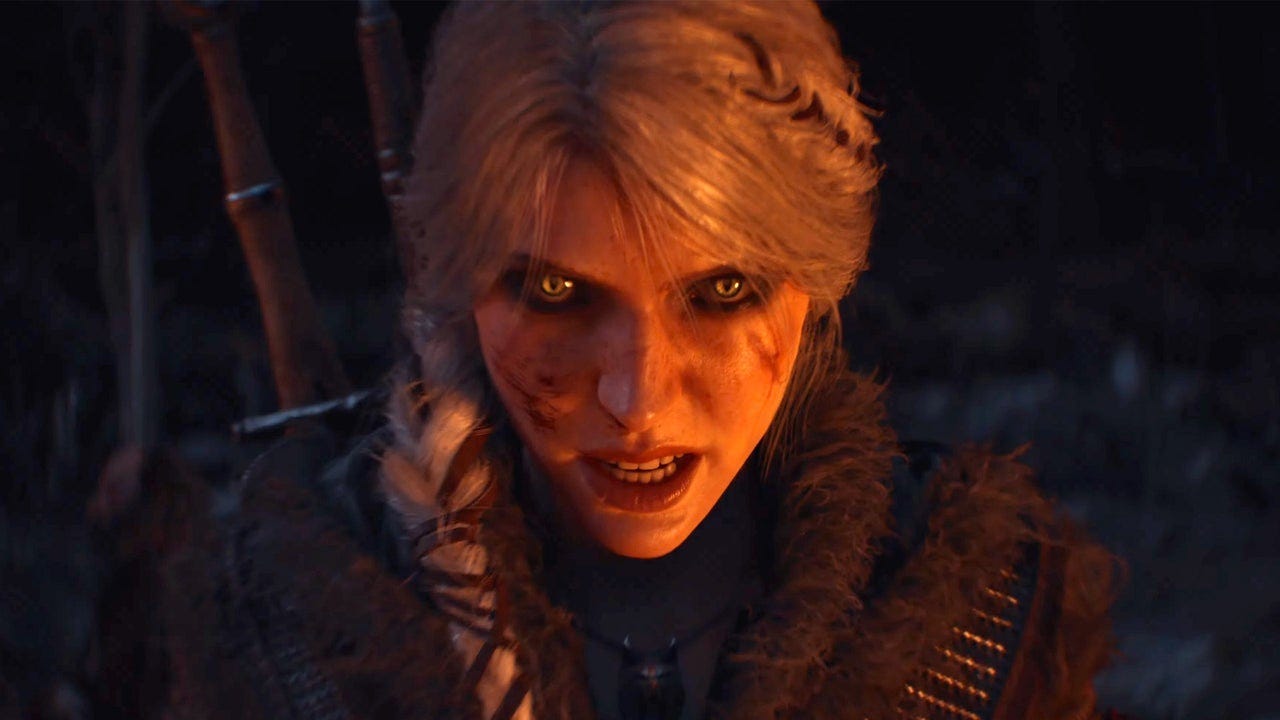
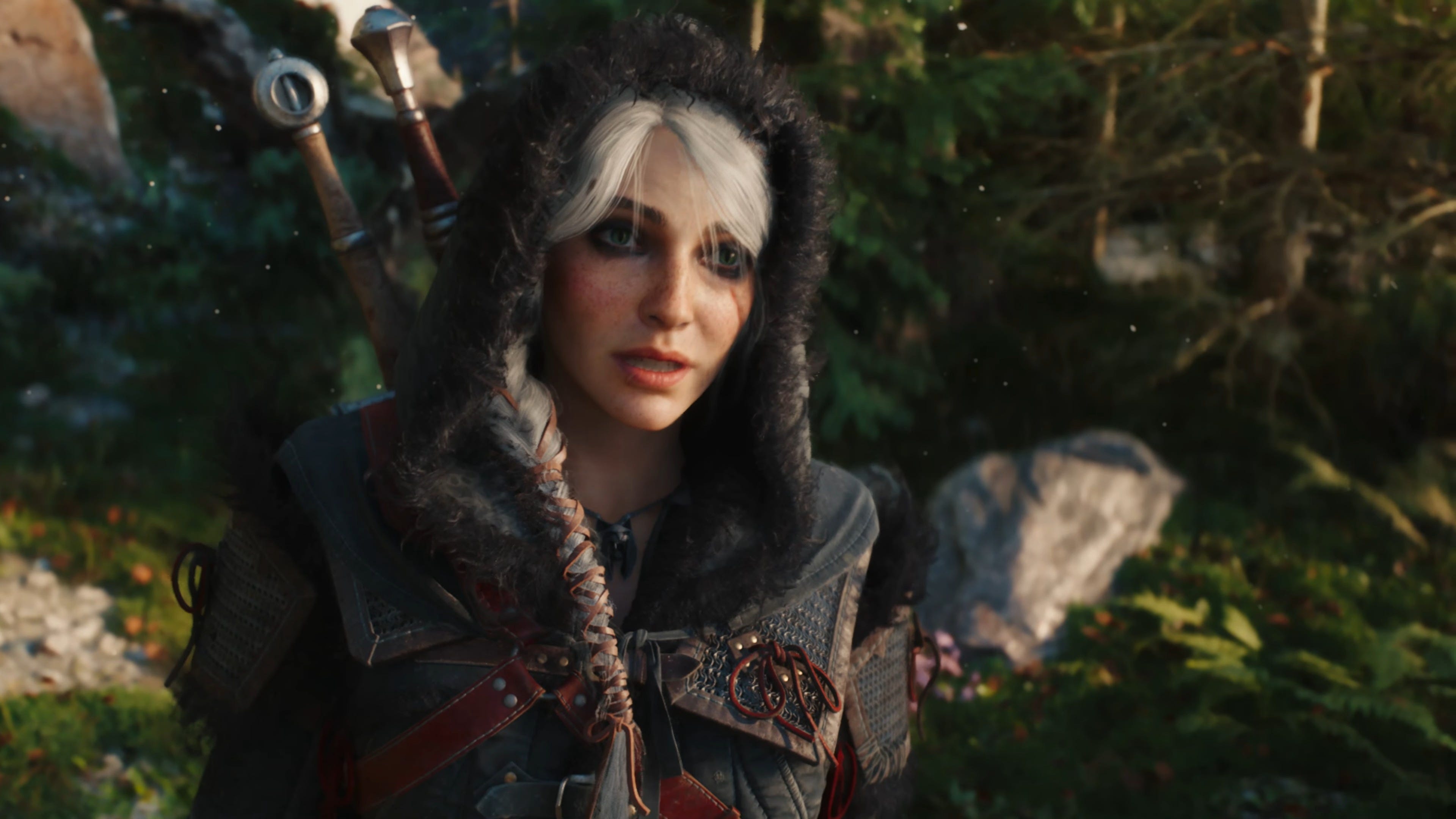
None of this exists in isolation. The Pride statement is happening at a studio that has already made the most consequential creative decision of its next decade: replacing Geralt of Rivia with Ciri as the protagonist of The Witcher 4.
Geralt built CD Projekt Red. Across three games and roughly thirty years of source material, he became one of the most beloved characters in the history of the medium. The Witcher 3 moved over 50 million copies. The studio is now betting its flagship sequel on a character swap that the lore does not cleanly support. In the books by Andrzej Sapkowski, Ciri never undergoes the Trial of Grasses — the process that creates witchers — because her Elder Blood gifts make the mutations unnecessary and potentially lethal. CD Projekt Red has stated she passes the Trial before the events of Witcher 4, which is their lore to write, but which contradicts the books their narrative director claims they are “beholden to.” Narrative director Philipp Weber told Eurogamer: “We really want to respect that.” Asked directly whether Sapkowski approved the change, neither he nor game director Sebastian Kalemba would confirm it.
The Witcher 4 follows a pattern the gaming audience has seen enough times to name it. The Last of Us Part II replaced Joel. God of War: Laufey, announced at Sony’s State of Play this month, replaced Kratos with his deceased wife. Toy Story 5 is apparently Jessie’s movie while Woody and Buzz headlined the marketing. Andrew Stanton confirmed in a recent interview that Jessie was always his focus. The audience buys the ticket for the legacy character and gets the torch-passing.
It is worth noting that many key developers who built The Witcher 3 and Cyberpunk 2077 have left to form Rebel Wolves, the studio currently developing Don Walker. Whether the team remaining at CD Projekt Red can deliver without them is a real question the Pride post does not address.
Smash JT made one observation worth noting: at least one of the Rebel Wolves founders is gay. His point was simple: “No one cares. Be gay all you want. Make a good game. At the end of the day, that’s all people care about.”
That is a reasonable standard. Witcher 4 will eventually have to meet it. The replies section of a Pride post is not where that case gets made.
If the golden age of Trek and Babylon 5 left a hole in your sci-fi diet, The Stars Entwined fills it — interstellar espionage between two civilizations on the brink of war. Read The Stars Entwined on Amazon!

NEXT: The Auteur’s Trap: How Hideo Kojima Talked Himself Out of the Genre He Invented.
CDPR is about as perfect a modern example of The Ship of Theseus paradox as one could find.
Theseus's ship was a relic restored over many years by the Greeks, who replaced old rotting boards with new ones until such a point was reached that every board had been replaced and the question became ~if you replace every piece of a thing is it it still that thing, or is it something else?~
The studio called CDPR may be called CDPR, but if everyone significant who made the Witcher series is gone, replaced by a woke DEUI hire, is it really the same studio?
What's even more interesting is the case of Rebel Wolves bring a perfect example of Hobbes extension of the Ship of Theseus paradox. He supposed that what if some party gathered together all of the discarded, rotting pieces of Theseus's Ship as they were replaced and built a second ship, so that one could say there were two of Theseus's Ships. Which then would be the true Theseus's Ship?
It's been a very long time since I properly read up on it, but I seem to recall the argument (not necessarily from Hobbes) for the replacement ship being that it preserved the form and function of the thing, while the rotting one could do neither, but it held the essence, or immutable spirit, of the thing.
I would go with Rebel Wolves over CDPR, as I would follow the spirit of the studio, even if it has lost the name, the building, and the IP.
CDPR died a long time ago. Hope the investors pull out before they get wrecked.