



Hideo Kojima is an enigma worthy of his games.
For decades, players have dissected his work, debated its meaning, and hunted for clues hidden beneath layers of symbolism, political commentary, intricate gameplay and eccentric storytelling.
The deeper enigma was always the method: the fact that no one else could fuse stealth, systems, and spectacle the way he could, and move tens of millions of copies doing it.
But somewhere along the way, Kojima fell into the trap that catches many celebrated auteurs. He began believing his own mythology. He decided the cinema was the point and the gameplay was the constraint, that the films buried inside his games were the real art and the systems were just scaffolding.
Enigmas lose their power once they’re solved because they become… predictable.
And that’s what happened to Hideo Kojima.
Let’s dive in.
On Physint
Consider his current project. In January 2024, Kojima stood on a PlayStation stage and announced a new game called Physint, a tactical-espionage action title built, in his own words, to recapture the kind of experience he made famous at Konami.
The most celebrated game director alive, free of corporate handlers, chose for his next major statement a return to stealth espionage.
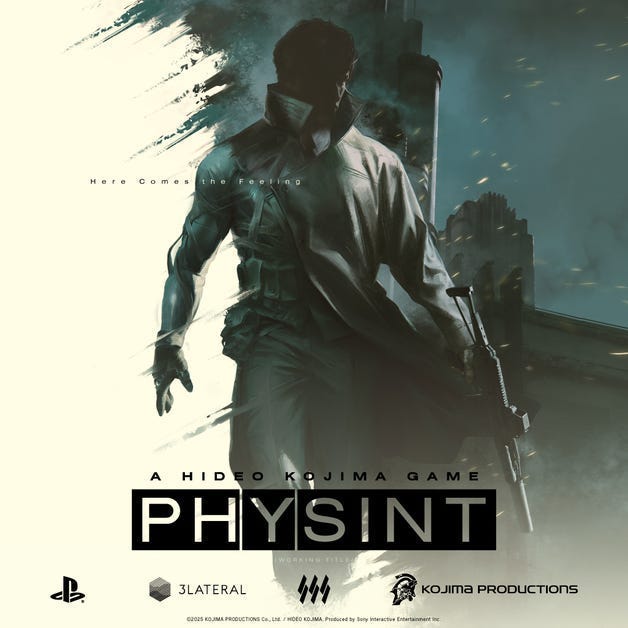
The exact genre he abandoned a decade ago.
It is the cleanest evidence yet for a thesis legacy media would rather not print: somewhere between the Konami divorce and the A24 deal, the man who fused stealth and cinematic action into the most influential design language of his era stopped being a game designer who made films and became a filmmaker who tolerates games.
The rise was earned through systems
It is easy to forget now, but Kojima’s authority was earned through mechanics. Metal Gear Solid defined a generation because it shipped a playable idea: avoidance over confrontation, patience over twitch, at a level of polish nobody else had reached. The cinema sat on top of a genuinely novel systems foundation, and players spent the cutscenes waiting to get back to playing. Every stage was a challenge. Every boss was a puzzle to be solved.
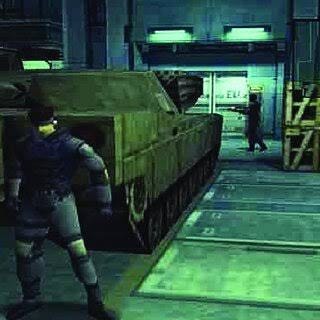
The commercial record reflects that. The Metal Gear franchise has moved north of 60 million copies since 1987, with the core Solid line accounting for the lion’s share.
Metal Gear Solid V: The Phantom Pain, Kojima's swan song at Konami, sold roughly 6 million copies within months and remains one of the most ambitious open-world stealth sandboxes ever created. Remarkably, it achieved that status despite being unfinished, something Kojima himself later acknowledged.
Then came the event that shook the gaming industry to its core.
The break that everyone misread
The 2015 split with Konami has been canonized as a martyrdom. The studio was dissolved, his name was scrubbed from the box, he was barred from collecting Phantom Pain’s awards in person.
The industry decided that the suits had strangled an artist.
But the freedom narrative obscures a structural truth.
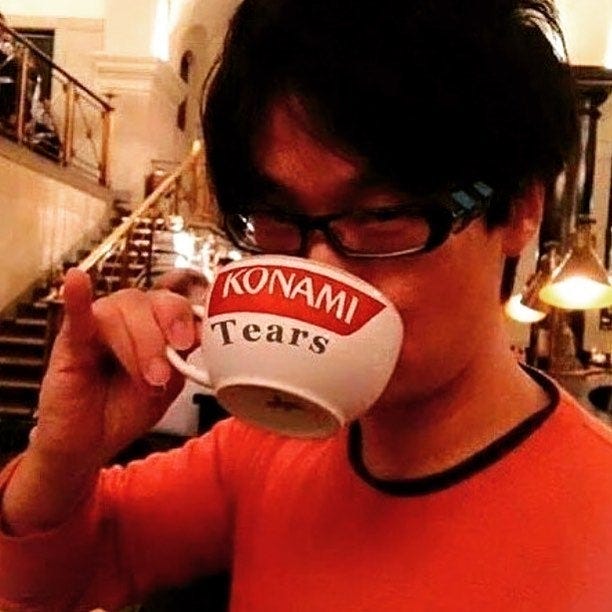
Konami functioned as a discipline as much as a leash, a publisher with a balance sheet that forced his auteurism to remain legible to a mass audience.
Freed from that constraint, Kojima gained creative freedom but lost the only counterweight that had kept his cinematic ambitions anchored to the craft he excelled at most: designing games.
What he built next was the proof.
Death Stranding: the cinema finally won
Death Stranding is the moment Kojima’s personal priorities became evident.
The gameplay (traversal, balance management, cargo logistics across empty terrain) is deliberately ambient.
The spine of the experience is hours of high-budget cutscene featuring Norman Reedus, Mads Mikkelsen, Léa Seydoux, and a supporting cast of arthouse-film royalty including Guillermo del Toro and Nicolas Winding Refn.
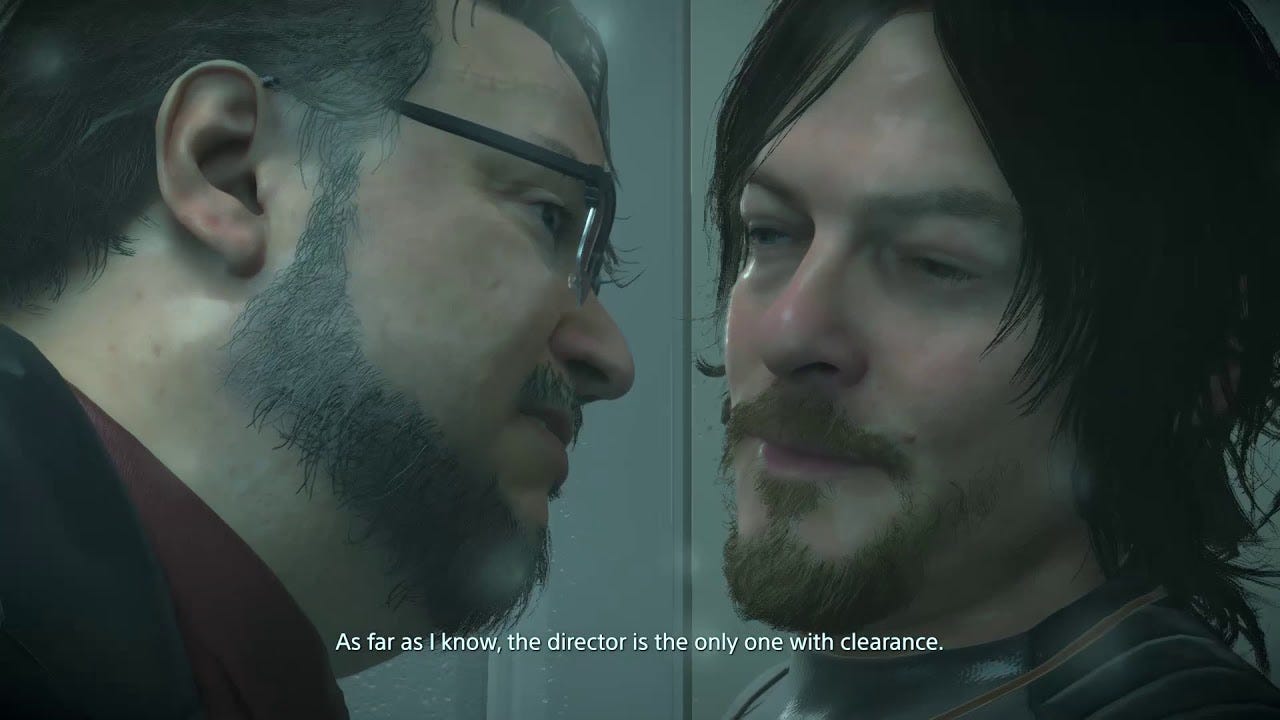
This was a director using a game as a delivery vehicle for film, with the systems reduced to connective tissue between scenes.
He has never hidden it.
His most-quoted line, that the majority of his body is “made of movies,” got treated as charming self-deprecation when it was closer to a roadmap.
And here’s where the data starts to bite.
Death Stranding sold around 5 million units across PS4 and PC by March 2021, close to MGSV’s number but spread across more platforms and a far longer tail.
The headline figures Kojima Productions prefers to cite (10 million, 16 million, eventually 19 million “players”) are not sales figures at all. They are inflated by free copies given away on the Epic Games Store and by Game Pass and PlayStation Plus inclusion.
This is the kind of metric that sets off alarms: when a studio stops reporting copies sold and starts reporting "players," it's often because the sales numbers are less impressive than the narrative.
Remember Assassin’s Creed Shadows?
Alongside the game came the real tell: a partnership with A24, a live-action film adaptation, animated spinoffs, and an in-house film, TV, and music subsidiary.
Kojima Productions stopped describing itself as a game studio and started describing itself as a multimedia company.
The fall is a narrowing
Death Stranding 2: On the Beach (2025) earned genuine acclaim.
It landed around 90 on Metacritic, sat among the best-reviewed games of the year, drew a 95% Steam rating, and became a legitimate Game of the Year contender.
By any critical measure, Kojima is more revered today than at any point in his career.
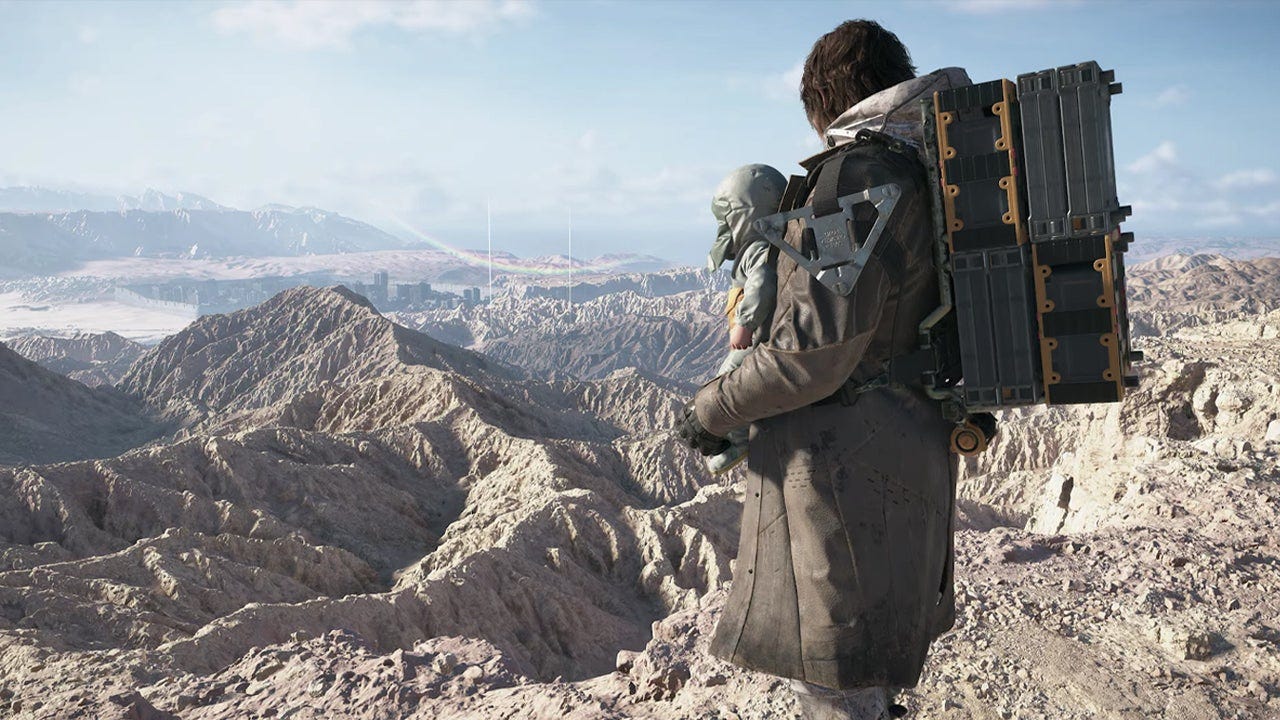
However, the fall lives in three places the The Game Awards narrative is manufactured to make you ignore: scale, dependence, and essence.
On scale: Death Stranding 2 had moved roughly 2 million copies by early 2026 and generated something in the range of $150 million across all platforms.
For most studios that is a fine result, but for the man whose franchise sold 60 million, it is a quiet collapse of commercial reach, from the architect of a mass-market genre to the proprietor of a beloved cult… a niche.
On dependence: look at who pays. Sony funded Death Stranding, its sequel, and now Physint. Microsoft funds his horror project, OD.
Kojima no longer competes in the open market for a mass audience; he is sustained by platform-holder prestige budgets, patronage extended for the cachet of his name rather than the size of his sales.
That is a fundamentally different financial position than the one he occupied at Konami, and a more fragile one.
Prestige patronage lasts exactly as long as the prestige does.
On essence: he walked away from the genre he invented. Stealth espionage, the playable idea that made him, sat dormant for a decade while he built walking simulators dressed as films, a genre he could still execute better than almost anyone but had simply stopped wanting to make.
Which brings us back to Physint
Physint is reportedly five to six years from release, targeting roughly 2030.
The early news out of the project is all about casting: Hollywood actors, performance capture, a villain written to evoke a specific film performance.
The mechanics and systems have barely been mentioned.
The development is being built film-first, again.
But the choice of genre is the part that gives the game away.
After a decade insisting the future was cinema, Kojima’s grand 40th-anniversary statement is a return to tactical stealth, the thing he had when his art and his commercial power were one and the same.
You do not reach back for an old tool unless you have started to suspect the new ones are not cutting.
That is the auteur’s trap, and Kojima walked straight into it: the talent that mistakes the medium it mastered for a stepping stone to a more “respectable” one.
He is the most decorated game director alive.
He is also a smaller commercial force than he was in 2015, kept aloft by patronage, circling back toward the genre he convinced himself he had outgrown.
The useful lesson here runs deeper than failure.
A generational talent can win every award and still lose the thing that made him dangerous in the first place.
The cutscenes were never the engine.
Kojima just talked himself into believing they were.
ONE LAST THING: The Forge by Yorch Torch Games is the leading newsletter on market intelligence and design strategy for the game industry. Consider becoming a free or paid subscriber for more articles like this.
It seems to me like Kojima is focused on making the games he would personally like to play, and that the commercial numbers are no longer his metric of choice. I highly doubt he needs the money.
Total number of players and total number of copies sold tell two different things (albeit, with considerable overlap). Sure, there is a lot of nuance behind both of those numbers - but in the balance between the revenue and the art that has defined the AAA industry for the last few decades, the revenue side has increasingly gained weight while the artistic concern has lost much its influence.
Kojima has always been an artist first and a businessman only in support of that art. He’s a storyteller. Reaching back to old-saw tools like stealth does not necessarily mean he’s run out of ideas, it may just be the right tool for the world he’s trying to build.
Another Radical, "Elite" Lib Lefty who's games aren't games at all.
These "auteurs" wish they were part of the Hollywood ecosystem, so they play filmmaker on our turf...
And the ideology of the "Elites" he wishes to be part of IS part of HIS rhetoric (and this is vital:)
Kojima sacrifices ALL SEMBLANCE OF COMMON SENSE OR NARRATIVE for the ideology he panders to. The game makes absolutely no sense whatsoever. He doesn't even try.
And yet? There's his success, as clear as day... because people don't know what they're purchasing.
And as long as he has that blind, reckless support, we'll continue to get slop, like his, in gaming.