


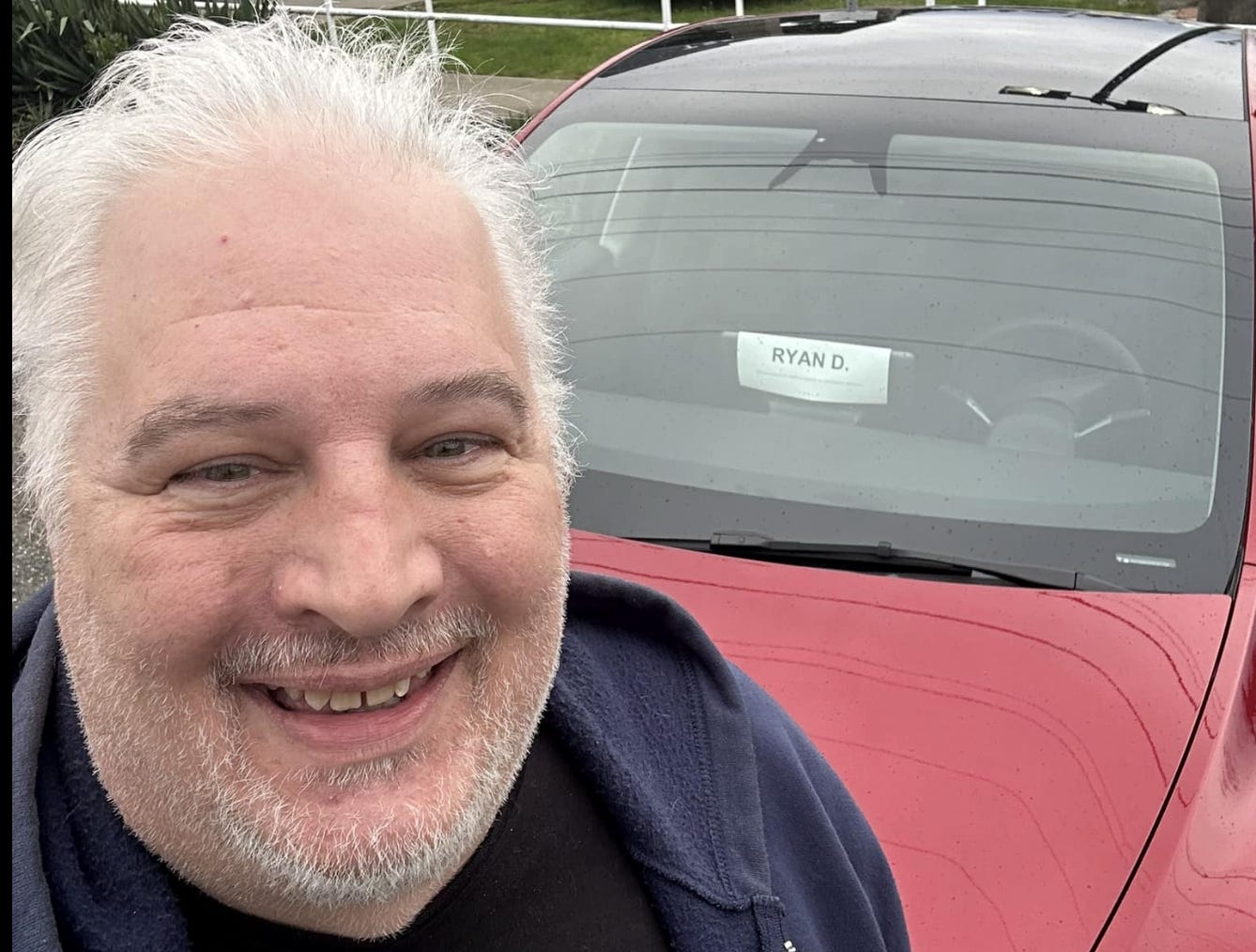
Yesterday, we reported on a BlueSky-driven cancel mob attacking Alderac Entertainment Group’s COO, Ryan Dancey, over some innocuous and accurate comments about the future of AI in game design. Now, despite being a legend in the industry with incredible experience, it seems the anti-AI activists have taken a real human scalp and gotten him fired in the newest example of board game cancel culture.
The board game cancel mob is one of the worst out of any industry, and gets very little coverage from the outside because the industry is so small, while blowing on their bad behavior risks being blacklisted and tarred and feathered by this group. Yesterday, they set their sights on Ryan Dancey, of whom you can read about his tame comments acknowledging the future of AI in board game development, as it’s already being adopted by most sane companies.
This situation involves Alderac Entertainment Group, which is owned and lead by John Zinser, one of the most cowardly and pro-cancel culture activists out there, who’s taken what was once a great and innovative company, and turned it into something that produces basic-tier level “variant” games with generic themes in recent years, hiring some of the worst of the worst of these elements and catering toward the radical activist group within the board gaming industry. Zinser threw the author of this blog under the bus when the Game Manufacturers’ Association attacked over my wanting to make a board game without their permission, prompting race grifters like Eric Lang and woke influencers like Rodney Smith of Watch It Played to lead a cancel mob.
The situation escalated yesterday with Dancey posting an update to his prior post to LinkedIn after his original statements went viral with the cancel pigs:
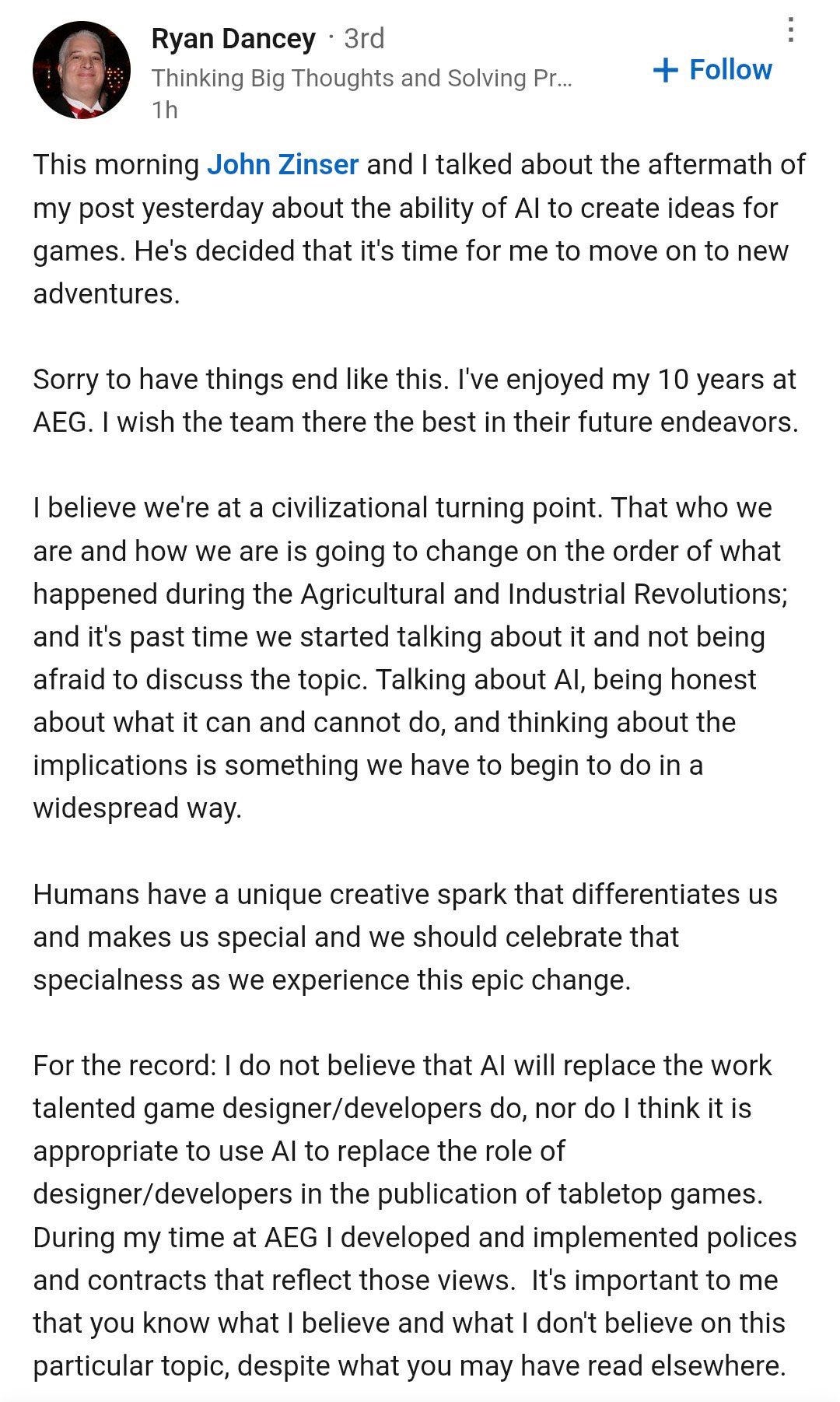
Though phrased very politely, the crux of it is John Zinser fired and canceled him over simply positing what AI might do, and will do, in a few years. Zinser posted his own corporate-speak update on BlueSky for the mob:
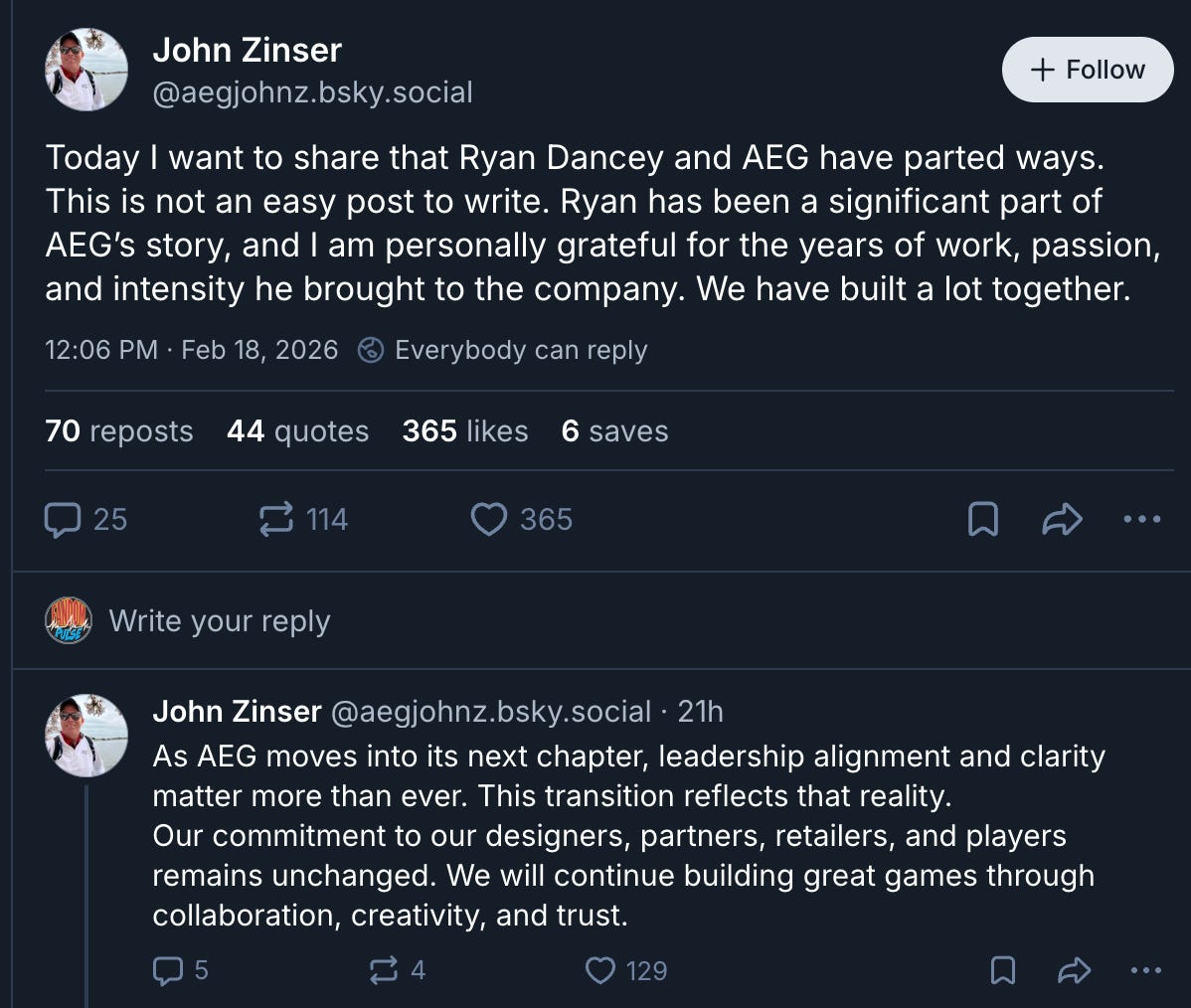
Even so, the mob in his comments wasn’t satisfied with the scalp, ever moving the goalposts:

Apparently, this has to do with Wingspan designer Elizabeth Hargrove, who herself is a radical activist. What happened between them involving a personal matter isn’t clear, but SJWs only want to cancel.

The real tragedy of this and AEG and John Zinser’s shortsightedness in this matter is made clear because of who Dancey is. While people might not know the name as a household one, he’s a person largely responsible for why D&D and Magic: The Gathering built their businesses into juggernauts and became a success.

Ryan Dancey played a pivotal role in reshaping the business side of Dungeons & Dragons at Wizards of the Coast, helping transform it from a struggling legacy property into a modern, ecosystem‑driven franchise. After Wizards acquired the near‑bankrupt TSR in 1997, Dancey took charge of D&D’s business and marketing, overseeing the development and launch of 3rd‑edition D&D and restructuring the RPG division to improve profitability and operational discipline. His key insight was that D&D’s real value lay not just in its core rulebooks but in the broader community of players and publishers around it, so he championed a strategy of openness rather than tight control, a great thing for human developers and players.
To unlock that potential, Dancey largely conceived the Open Game License (OGL) and the d20 System Trademark License, which allowed third‑party companies to create compatible products using the System Reference Document while still tying them back to the D&D brand. This move reversed TSR’s earlier stance of aggressively policing fan content and instead encouraged a boom of compatible supplements, adventures, and even standalone RPGs, which expanded the overall market and drove more players toward official D&D products. By turning D&D into a platform rather than a closed system, Dancey helped rebuild goodwill with fans and created a self‑reinforcing cycle where third‑party success fed demand for core books, organized play, and licensed settings.
On the Magic: The Gathering side, Dancey’s contribution was more indirect but no less important: he helped position Magic as the financial engine that could subsidize and stabilize D&D’s long‑term growth. As Magic exploded into a global hit, Dancey and other Wizards executives used its strong margins to fund ambitious RPG projects, including the costly overhaul of D&D into 3rd edition and the expansion of organized play programs. He also pushed for clear separation between the two brands, keeping Magic as a collectible card game juggernaut and D&D as a roleplaying ecosystem, so each could pursue its own licensing and tournament strategies without cannibalizing the other. In this way, Dancey helped ensure that both Magic: The Gathering and Dungeons & Dragons could grow into larger, more sustainable businesses under the same corporate roof.
With pioneering like this, and clear care for the human designers and developers to create innovative games, it’s someone AEG would want in their arsenal, especially as a Chief Operating Officer. This is a person with a clear business vision, something many lack in board gaming.
However, a small mob of cancel culture activists is more important to Alderac Entertainment Group. One can’t feel bad for them when their entire company eventually gets replaced by AI anyway.
What do you think about this? Leave a comment and let us know.
For great swashbuckling fantasy adventure, read The Adventures of Baron von Monocle six-book series and support Fandom Pulse!
NEXT: RUMOR: D&D 6th Edition Reboot Incoming As Hasbro Scrambles To Save Dying Franchise
AEG cuts their own throat.
Get woke, go broke.
Another display of Leftist power. Omnipresent, almost omnipotent.