


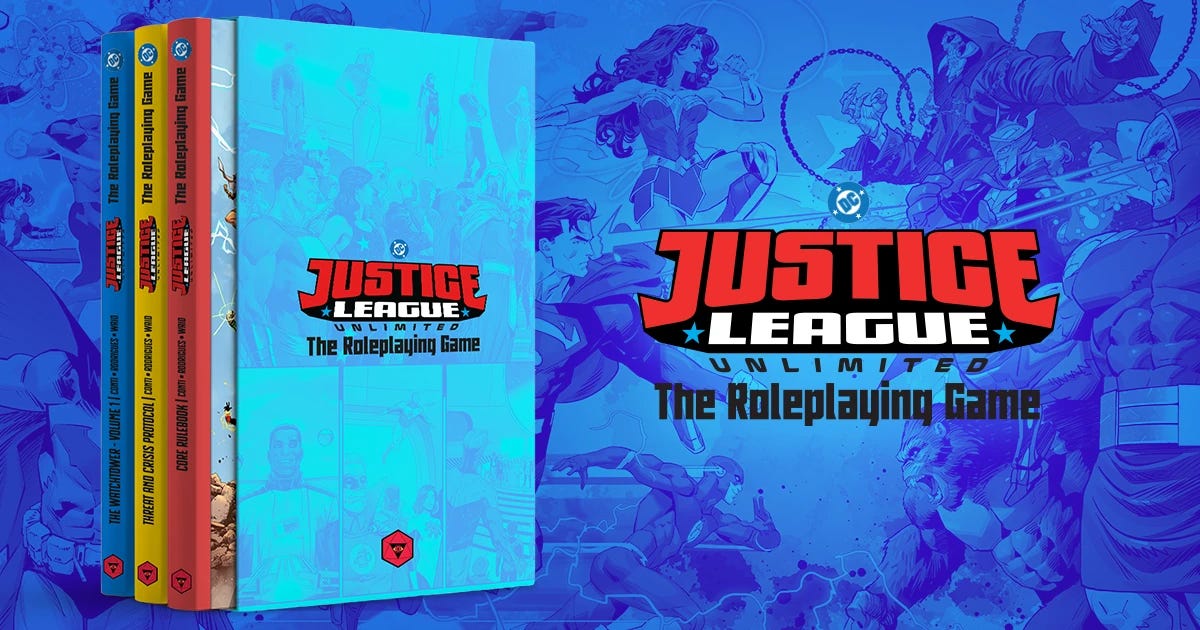
Brazilian publisher D20 Culture and Warner Bros. Discovery Global Consumer Products announced last week that Justice League Unlimited: The Roleplaying Game — the first official DC universe TTRPG in almost two decades — will launch on Gamefound in July 2026, co-authored by Mark Waid. It is rules-light, narrative-focused, and set in a post-Absolute Power DC universe.
The story here is not the game itself. It is what the game represents in the broader context of where Hasbro and Wizards of the Coast are positioning Dungeons & Dragons.
The trajectory over the past three years is consistent. In January 2023, WotC attempted to revoke the Open Game License that had allowed third-party publishers to build businesses around D&D for over twenty years. The backlash was immediate and severe. Pathfinder publisher Paizo launched the ORC license as an alternative. Kobold Press, one of the most prolific producers of D&D-compatible content, began developing its own independent system. Hundreds of creators who had effectively advertised D&D for free walked away. The OGL attempt drove companies toward creating their own systems, fragmenting the ecosystem WotC had built.
The personnel losses followed the reputational damage. WotC’s end-of-2023 layoffs cut 20% of the global workforce, gutting the D&D writing and creative team. Swen Vincke of Larian Studios, accepting Baldur’s Gate 3‘s Game of the Year award, noted that “of the people who were in the original meeting room, there’s almost nobody left.” WotC President Cynthia Williams resigned in April 2024. Additional layoffs hit the D&D team again in October 2024.
Larian Studios walked away from Baldur’s Gate entirely, leaving Hasbro holding the rights to the most commercially successful D&D game ever made with no developer capable of continuing it. Hasbro’s internal response was to lay off most of the people who built the BG3 relationship in the first place. WotC announced it would find a new developer for Baldur’s Gate 4. That developer has not been publicly named. The game remains years away.
What WotC has done effectively in this period is licensing. The estimated $90 million in licensing fees from Baldur’s Gate 3 became one of the few genuine bright spots in Hasbro’s financial reports during a period of broader company losses. Magic: The Gathering licensing deals with Fortnite, Stranger Things, and assorted pop culture brands generate consistent revenue with minimal creative output required from WotC staff. The Hasbro financial reports increasingly lead with licensing revenue rather than publishing output as the engine of WotC’s profitability.
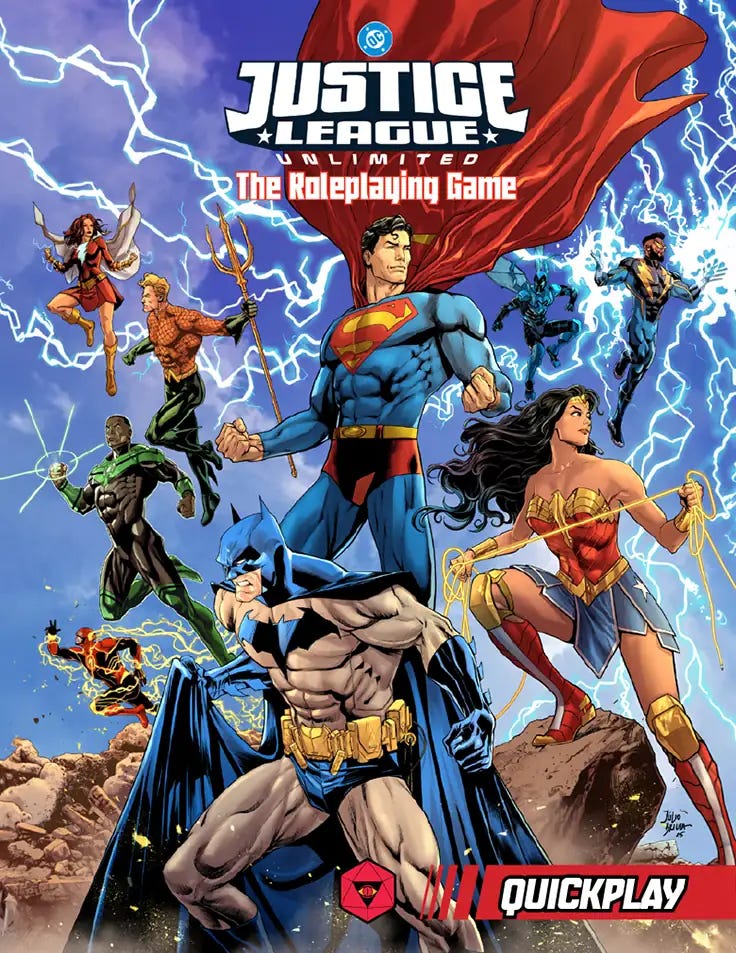
The Justice League TTRPG is not a WotC product. It is being built by a Brazilian publisher, D20 Culture, under a Warner Bros. Discovery license. WotC’s fingerprints are nowhere on it. That is the point. The TTRPG space that D&D once dominated through the OGL ecosystem, where WotC set the terms and third parties built around them, is now producing major licensed games entirely outside of WotC’s system. Justice League Unlimited is running on its own ruleset. So is the upcoming Invincible RPG. So is the MCDM RPG. So is Pathfinder 2E, which gained market share directly from WotC’s OGL debacle.
The speculation in the TTRPG community, which is documented as early as mid-2024 in D&D Beyond forums and elsewhere, is that WotC intends to stop being a publisher of D&D and become a licensor of D&D. In that model, the brand is leased to external studios, the creative output is outsourced, and Hasbro collects fees while running a leaner internal operation. The layoffs of the D&D creative team, the failure to secure a BG4 developer, the pivot toward digital platforms, and the reliance on licensing revenue all point in the same direction.
D&D as a brand remains powerful. The 2024 core rules revision sold, the Ravenloft and Arcana Unleashed 2026 release slate has genuine product to offer, and the 50th anniversary in 2024 drove measurable engagement. But the company that defined the TTRPG industry for fifty years is quietly exiting the business of making the game in favor of monetizing the name.
The Justice League TTRPG is a fine product. D20 Culture does good work — their Foes of Middle-earth funded in under ten minutes. Mark Waid co-authoring gives it legitimate creative pedigree. None of that changes what it represents: another major TTRPG launched in a space WotC once owned, built entirely without WotC’s involvement, succeeding on the strength of a license WotC no longer controls.
Is Wizards of the Coast still a game company, or is it becoming a brand management operation? Let us know in the comments.
450 pages of classic superhero storytelling that puts character first. The Flying Sparks Omnibus collects the complete saga of Meta-Girl — the kind of cape comic the mainstream forgot how to make. Sign up to get your copy.
NEXT: Mass Effect Board Game Designer Eric Lang Is Telling Gamers Not to Support Companies With “Bigotry”
I don't touch anything with Mark Waid's fingerprints on it.
Well, they have certainly made a dog's breakfast of game creation & development lately. Maybe they'll license better stuff than they've been making on their own.