


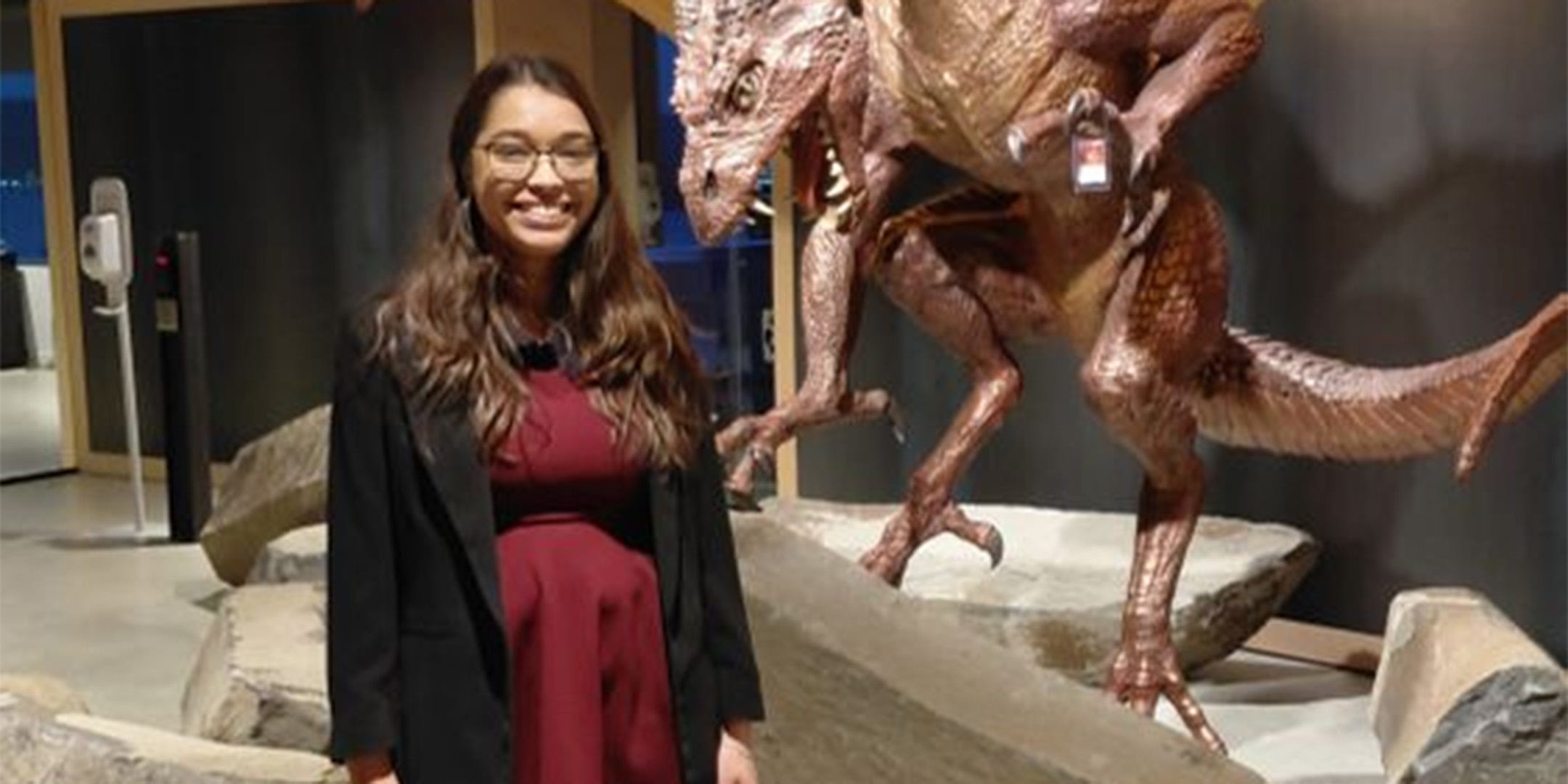
The last year has been a strange one for Dungeons & Dragons, after massive controversies swept the tabletop RPG giant because of its DEI pandering initiatives. Now, it looks like Hasbro and Wizards of the Coast are doubling down on their identity politics by hiring Taylor Navarro as a new designer after a year of layoffs.
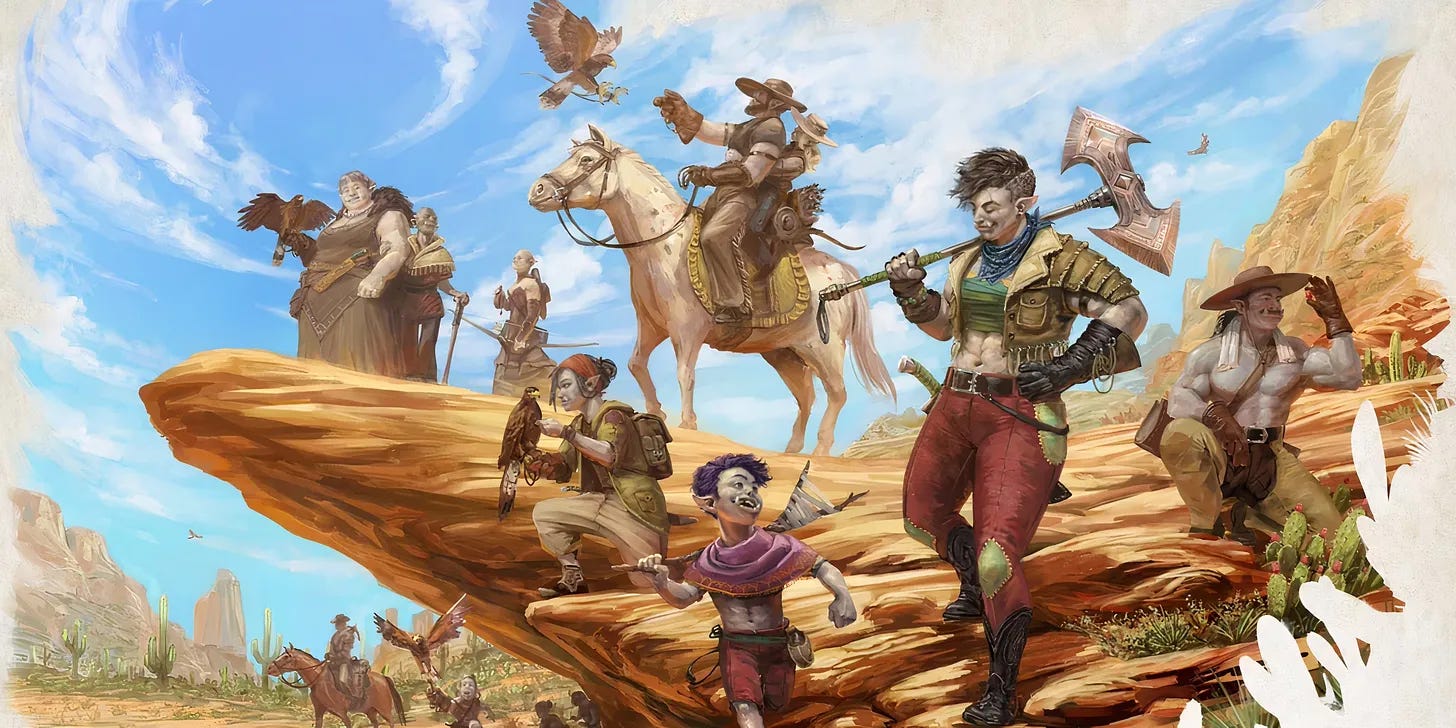
D&D has been turned into a woke nightmare by the current crop of ownership. The 2024 edition leading into their online service One DnD has been riddled with identity politics, from removing of half-races, changing race backgrounds, having BIPOC overrepresented in the art, presenting Mexican Orcs, to including safe spaces in the Dungeon Master’s Guide, players are more than frustrated with WotC’s treatment of the beloved fantasy RPG.
Still, the most egregious situation in the current iteration is the industry’s lack of respect for its creator, Gary Gygax. Woke activists have taken over Dungeons & Dragons, which led to The Making Of The Original Dungeons & Dragons bizarrely attacking Gygax with misinformation maligning the D&D creator.
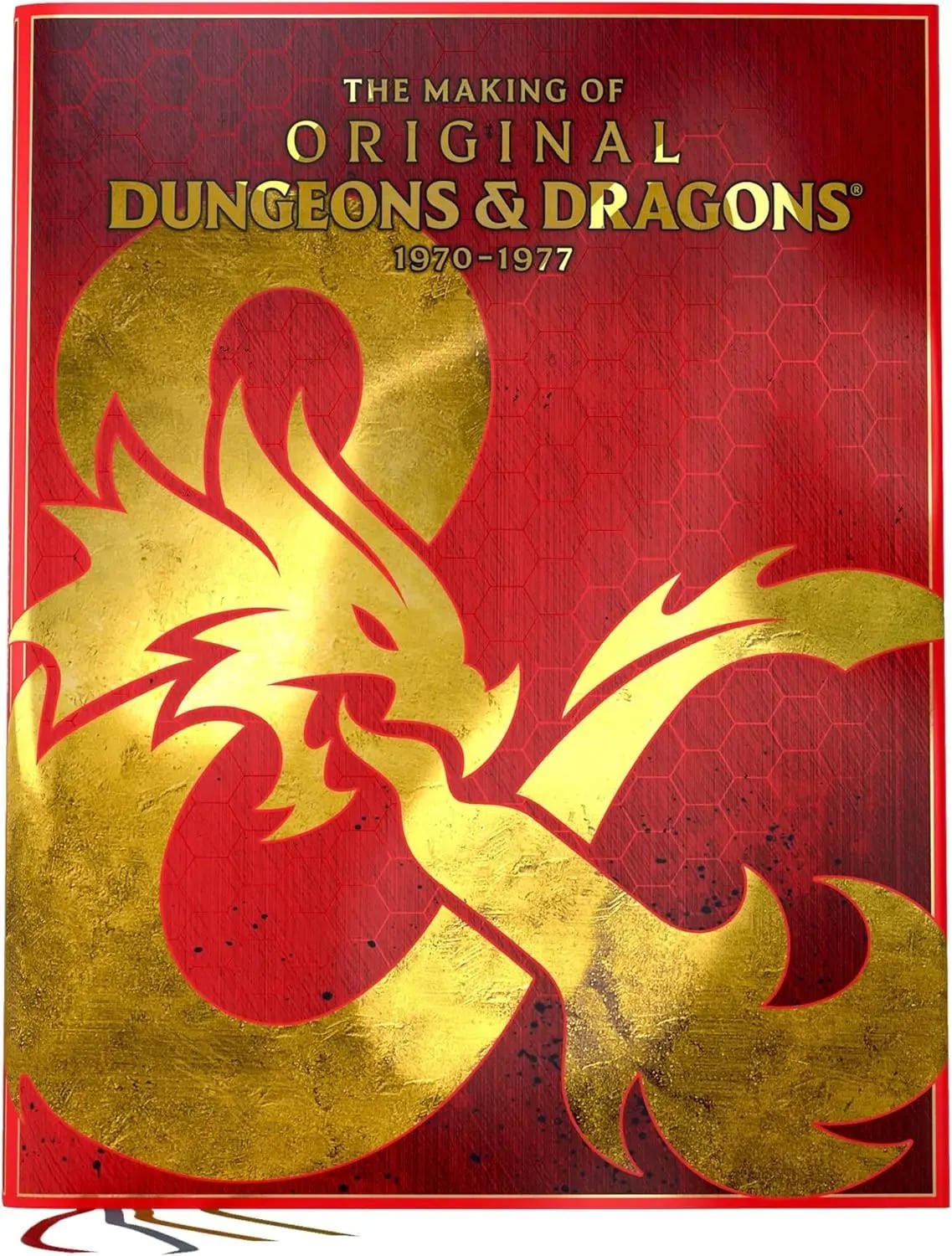
In the preface written by Jason Tondro, a Senior Designer on Dungeons & Dragons, and shared to X by user dLsd_25, Tondro attacks the original creators writing, “Some language in the first iteration of D&D presents a moral quandary. The documents reproduced in this book include many pages of charts and tables alongside lists of monsters, spells, and magic items. But that game content also includes a virtual catalog of insensitive and derogatory language, words that are casually hurtful to anyone with a physical or mental disability, or who happens to be old, fat, not conventionally attractive, indigenous, Black, or a woman.”
Tondro continued, “Some people have charitably ascribed this language to authors working from bad assumptions. In the 1970s, historical wargamers in America were predominantly white, middle-class men; it isn’t surprising that they would dub a class of soldiers the ‘fighting-man.’ But when, in the pages of Greyhawk, the description of the Queen of Chaotic Dragons includes a dig at ‘Women’s Lib,’ the misogyny is revealed as a conscious choice. It’s an unfortunate fact that women seldom appear in original D&D, and when they do, they’re usually portrayed disrespectfully.
Tondro went on, “Slavery appears in original D&D not as a human tragedy that devastated generations over centuries, but as a simple commercial transaction.”
“The cultural appropriation of original D&D ranges from the bewildering (like naming every 6th-level cleric a ‘lama’) to the staggering; Gods, Demi-gods and Heroes (not reprinted in this book) includes game statistics for sacred figures revered by more than a billion people around the world,” he wrote. “Were players expected to fight Vishnu, one of the principal deities of Hinduism, kill him, and loot his ‘plus 3 sword of demon slaying’?”
Tondro concluded the preface writing, “Despite these shortcomings, D&D has always been a game about people choosing to be someone unlike themselves and collaborating with strangers who become friends. It has slowly become more inclusive, and as the player base has become more diverse, the pool of creators who make the game has expanded to include people with a broader range of identities and backgrounds. As these new creators make the game more welcoming, the game has attracted new fans who, in turn, continue to make the game more inclusive. The future of Dungeons & Dragons, here at its fiftieth anniversary, is bright.”
Along with this, we’ve seen profound changes to D&D, turning the game into a sanitized “safe space.”
The Monster’s Manual removed orcs as monsters, and also played with gender ideology by introducing male hags, male dryads, and turned the icubus and succubus into a transgender allegory.
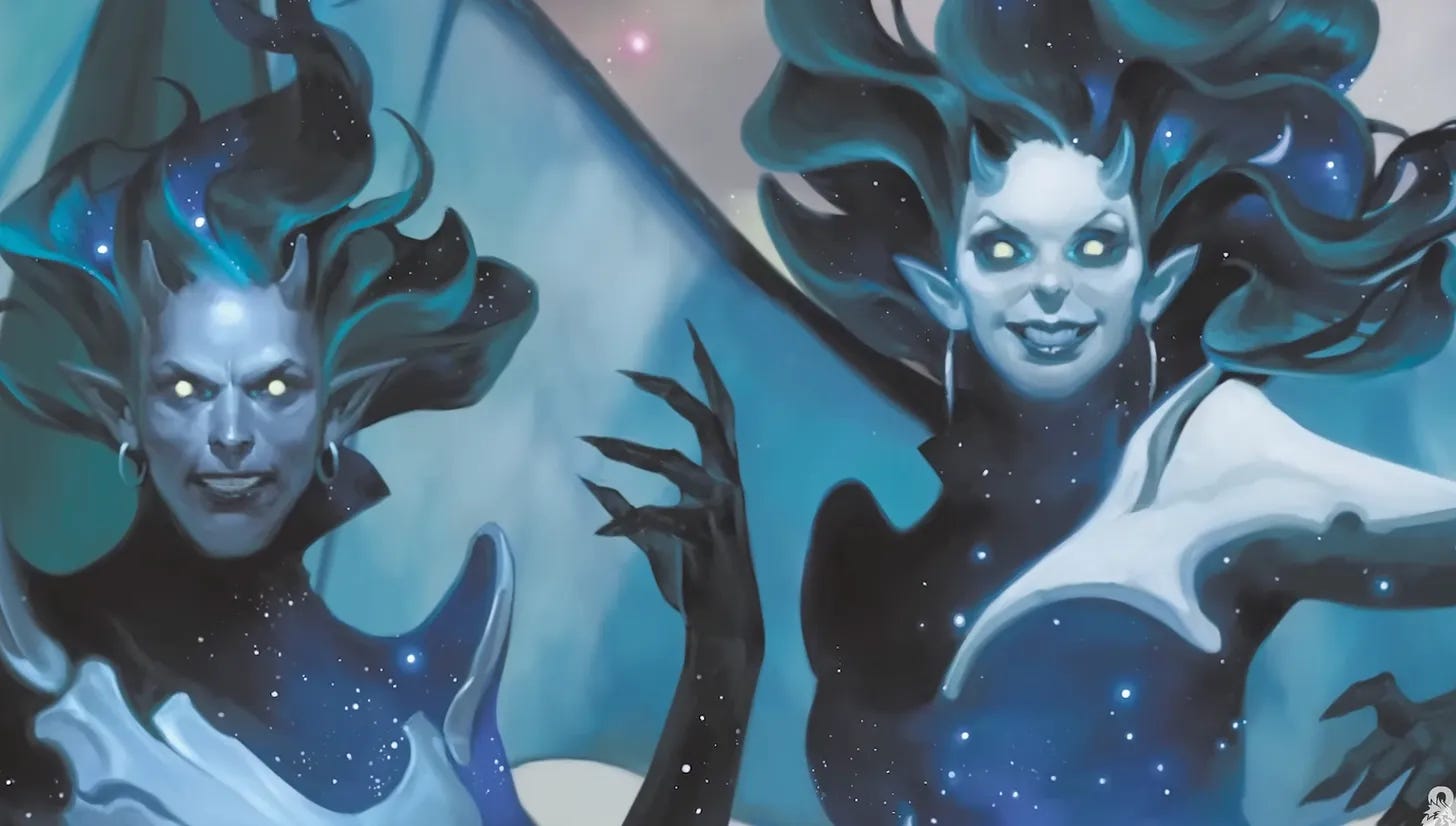
In 2025, they marketed a “glam bard” as an online supplement meant to attract Taylor Swift fans to the game, who are generally people who don’t play D&D. The entire intention seems to be abandoning their core audience for women, minorities, and homosexuals.
The company has made woke pushes in recent weeks as well, with Hasbro using its other brand of Magic: The Gathering to push a Trans Lifeline charity through a livestream last week. It was universally savaged by fans and yet the very next week, they’ve decided to move Dungeons & Dragons into this woke territory as well.
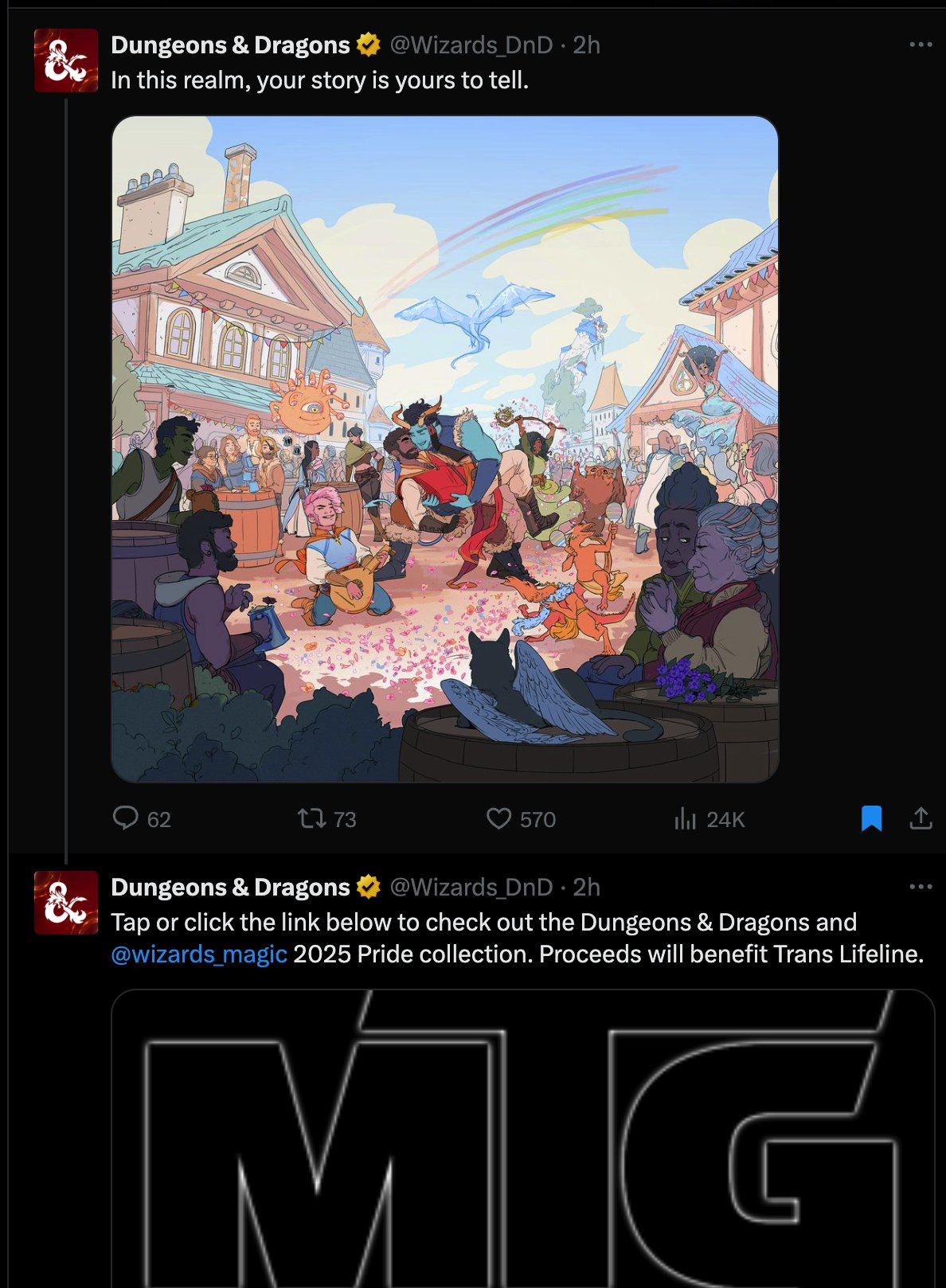
In a post to X, the official D&D account posted a piece of art loaded with homosexual couples with the caption, “In this realm, your story is yours to tell.”
Amid these virtue signaling efforts that turned off fans, D&D announced they were dropping their “Project Sigil” and laying off a whole department worth of employees as they backed away from creating online virtual tabletop spaces.
On top of this, the designers involved in the 2024 edition of D&D, Christopher Perkins and Jeremy Crawford, jumped ship and went to Critical Role to work on their Daggerheart game.
The future did not look so bright for the RPG brand, as Hasbro announced they were transitioning more to making D&D a licensed brand where they could coast off profits from video games, movies, and more created by other companies.
Now, it appears as if Wizards of the Coast is doubling down on their new hire, whose work only includes LGBTQ activism and race-baiting campaigns.
Not much is known about Navarro other than she posts mainly to BlueSky about her mundane life and D&D adventures, a red flag in and of itself, but once one looks to the two works promoted in her bio, it doesn’t appear to be a good direction for D&D.
First up is Journeys beyond the Radiant Citadel, a work posted on the Dungeon Master’s Guild. While it may seem innocuous at first, one sees that there is an anti-white exclusionary preference in choosing the creators of this book.
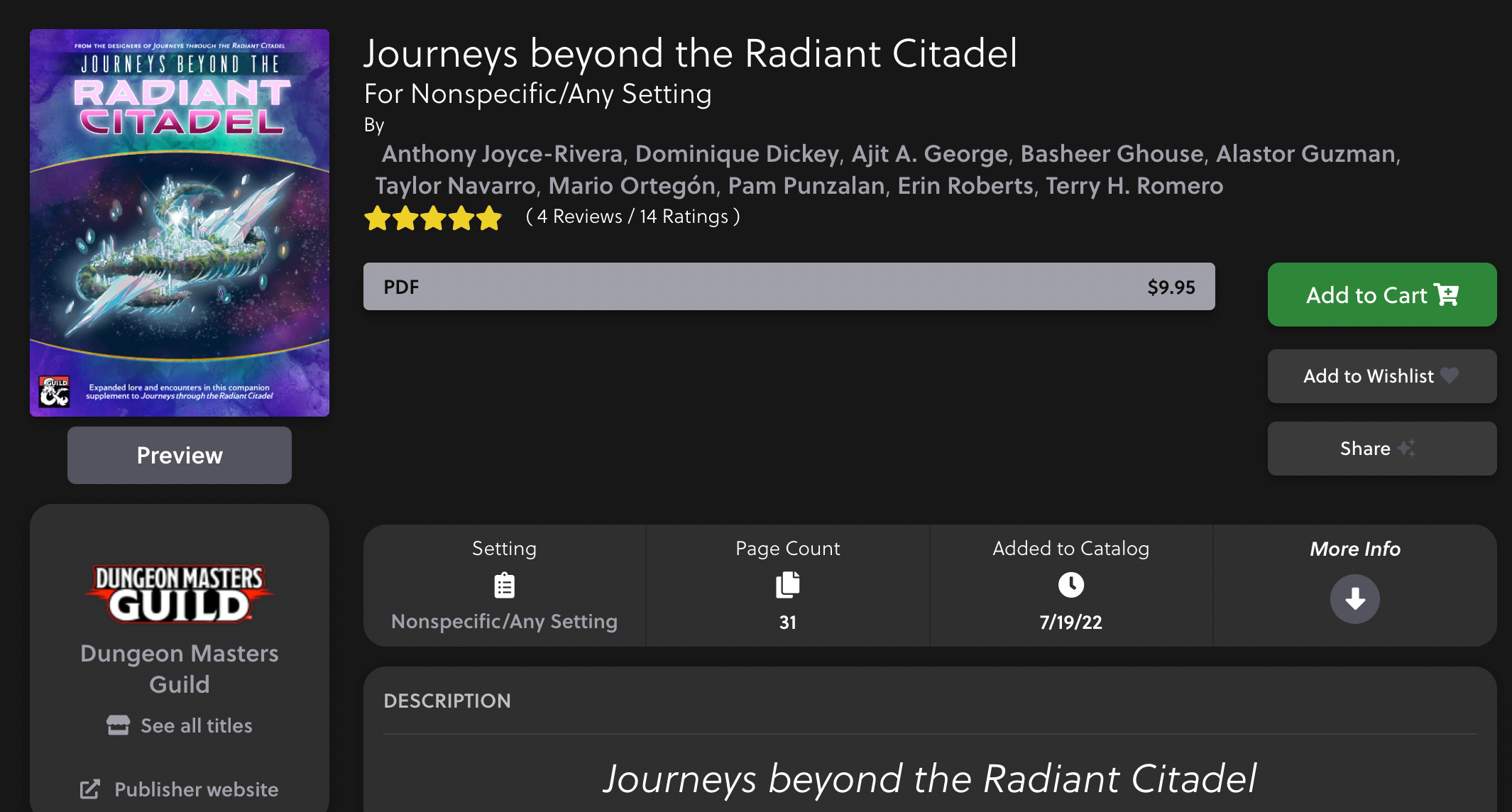
“This book was created by a team of twenty-two people of color from around the world, and we hope you take a moment to see the new lands and artwork created to inspire you and those around your gaming table,” the description reads. When it’s tauted for its “diversity” by the DM Guild staff, and also stating, “there are sixteen pieces of original art created by thirteen artists of color,” it’s hard to see this as anything but a race grift. Not much more information beyond the race of the creators is given on the product page.
But it only gets worse from there. Her other work credited to her name is a 2-player, GMless romance RPG featuring homosexual men on the cover.
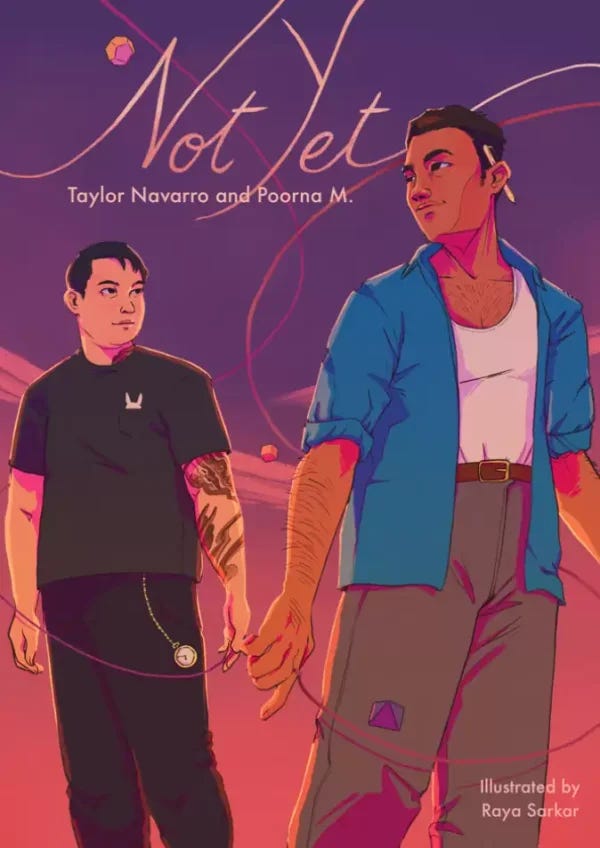
It’s described as:
**Romance. Pining. Tension. This duet has it all. **
Not Yet is a GM-less, two-player tabletop roleplaying game perfect for date night, romancing your friends, or creating a dramatic character backstory. Play as two characters fated to meet but just missing one another—or not if the dice say otherwise. Inspired by the “just missed them” and “right person, wrong time” tropes from How I Met Your Mother (TV) and August Rush (film), and the tense romantic plot generation of Love is on the Cards (TTRPG) and Star Crossed (TTRPG), as well as a real life love story: tell a tale of two people battling destiny to meet and fall in love over the span of months, years, or even an entire lifetime.
Gone are the days of battling dragons and orcs and questing for treasure. It appears that D&D is doubling down on their “modern audience” with this new hire.
What do you think of this? Will you be playing new D&D?
For a great novel with a classic sword & sorcery feel, read The Demon’s Eye, an incredible new classic fantasy novel. Support Fandom Pulse!

In other news: water still wet.
There's no change on the horizon for D&D. Just don't buy the slop.
Why doesn’t Hasbro just shutdown Wizards of the Coast, already? Wizards of the Coast is clearly going to learn, nothing, from the layoffs.