


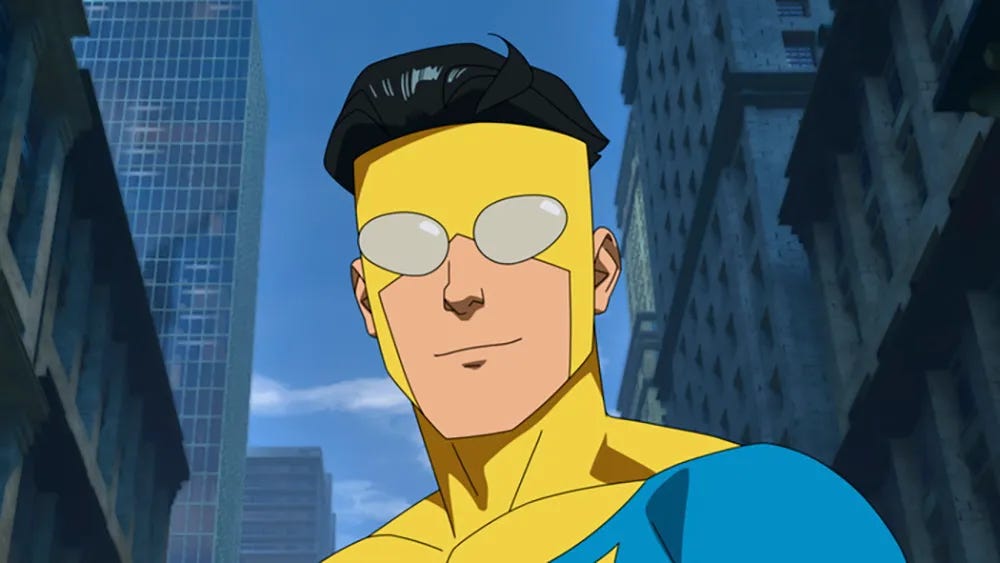
Robert Kirkman walked into ComicsPRO 2026 this week and explained why manga is eating American comics alive, and how Invincible already proved the fix works.
One Japanese magazine outsells America’s best comic of 2025 every single week. Weekly Shōnen Jump moved 1 million copies per issue in 2025. The highest-selling American comic of that same year was the Deadpool/Batman crossover at 500,000 units total. A Batman issue sold nearly 900,000 copies in 1966. American comics were a mass medium. They became a collector niche while the Big Two spent two decades chasing diversity headlines and reboot cycles that drove away the readers who built the industry.
Manga went the other direction. The global manga market sat at roughly $11-19 billion in 2024, growing at 18-20% annually. Analysts project it reaches $21-86 billion within a decade.
Kirkman’s diagnosis at ComicsPRO was direct:
“What I’m seeing with Invincible, and the way that the animated series is fueling the sales on the trades in the direct market is something that to me is signaling that there’s a potential to build something really exciting in this industry that will sustain us for years and years and years. Everybody talks about manga and how successful manga is, and the thing that makes manga so successful is the manga to anime pipeline. And with Invincible, we’re seeing that you can with American comics basically do the exact same thing.”
The manga-to-anime pipeline is not complicated. A manga serializes for years, building a reader base cheaply. The anime hits. Millions of viewers who never touched a volume go back to the source material. Sales on books published a decade earlier surge. The IP branches into games, merchandise, and film. Demon Slayer, Jujutsu Kaisen, One Piece, Naruto — the anime doesn’t replace the manga. It sells more of it. The source material is the product. The adaptation is the advertisement.
Kirkman built Skybound Entertainment in 2010 around that logic before most of the industry understood it. Creator-owned rights, controlled adaptation, retained upside. He ran the play with The Walking Dead first. Fifteen seasons on AMC. The highest-rated basic cable drama in television history. The back-catalog sold millions of copies. The franchise extended into games, merchandise, and multiple spinoff series, and Kirkman kept ownership through all of it.
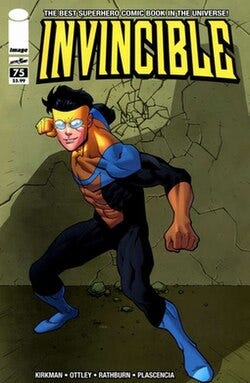
Then he made Invincible. The comic ran 146 issues from 2003 to 2018 at Image, selling roughly 3 million copies before the Amazon series existed. When the animated show launched in 2021, over 100,000 graphic novels sold within the first months of premiere. Amazon sold out of compendiums entirely. First issues hit $2,500 on the secondary market. New readers found the show and wanted the comics, and the comics were in print and ready.
Kirkman fed that demand with new material. The Invincible Universe spinoff Battle Beast #1 reunited the original creative team and sold over 400,000 copies. Three printings in under a month. Best new comic launch of 2025.
He told ComicsPRO what comes next:
“Invincible is an animated series that adapts the comic book very closely, and it is doing really well, and all of the streaming services are so excited about adult animation that they are rolling out entire divisions trying to do that. And I think that as more comic books are adapted in this way, because having done Invincible, comics being adapted into animation really is the most seamless transition, and I feel like the two mediums are just made for each other. And so I think that there is a future where we can have a comics to animation pipeline that will fuel this entire industry in a completely unprecedented way. And we’re already seeing the beginnings of it now.”
Marvel and DC have spent years doing the opposite. They licensed IP to studios that treated the source comics as a rough outline, made whatever they wanted, and when the shows got cancelled or the films bombed, the comics saw no trade bump, no new readers, no lasting value from the adaptation. The property just took damage.

One Piece has sold over 530 million volumes worldwide. The anime has run for twenty-five years. Readers who discovered it through the Netflix live-action series went back and bought volumes published in 1997. The back-catalog never goes cold because the IP never stops producing new entry points.
Kirkman is building that machine for American comics. His track record is the only proof of concept the industry has. Two properties, two full cycles of the pipeline working exactly as designed, and a third likely incoming as Invincible extends into new seasons with a live-action film still in development at Universal.
The numbers have been telling this story for years. Shōnen Jump outsells America’s best single issue 2:1, every week. Kirkman’s back-catalog spinoff outsold everything new released in 2025. The rest of the industry should be taking notes.
Can other American comic publishers actually replicate Kirkman’s pipeline strategy, or is Skybound the only company structured to pull it off? Let us know in the comments.
NEXT: Marvel Taps a Pop Singer to Write Its Annual Pride Comic
No, because the problem is the talent.
Japan has a pipeline of amateur writers who self publish web novels on a handful of well known websites. The manga and light novel publishers pick up the ones that grow popular with readers and adapt them, secure in the knowledge that there’s already a built in audience. If those do well, then there’s an anime adaptation.
American publishers have ignored the American equivalent and tried to force their preferred writers and artists down customers’ throats. Plus, unlike Japanese manga, Marvel and DC have these legacy universes that they are trying to keep going. One Piece has a single author in control of his creative direction. Marvel and DC are messes by comparison; there’s no overall creative vision, and publishers keep picking subpar talent and driving unpopular storylines for diversity reasons.
I predict we’ll see traditional book publishers picking up these kinds of talents (like Matt Dinniman) and then go straight to streaming, bypassing comics altogether.
Didn't Kirkman genderswap one of his characters to "fix" the comics? I don't think the American version of the manga-to-anime pipeline will be as successful, just based on the talent running it.