


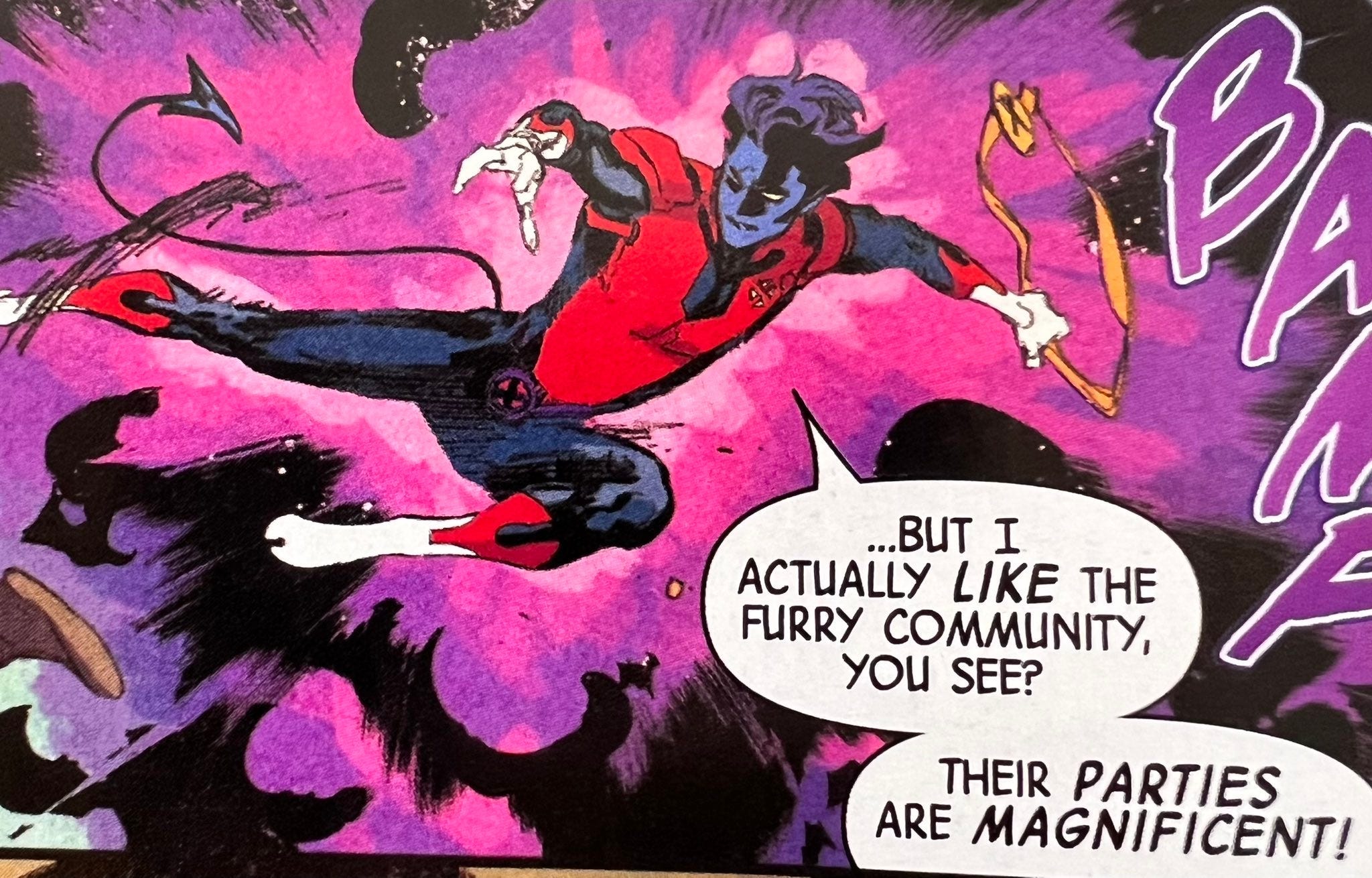
Gail Simone, the writer of Marvel’s Uncanny X-Men series, recently shared her belief that “the most fun comics are deeply unsavory.”
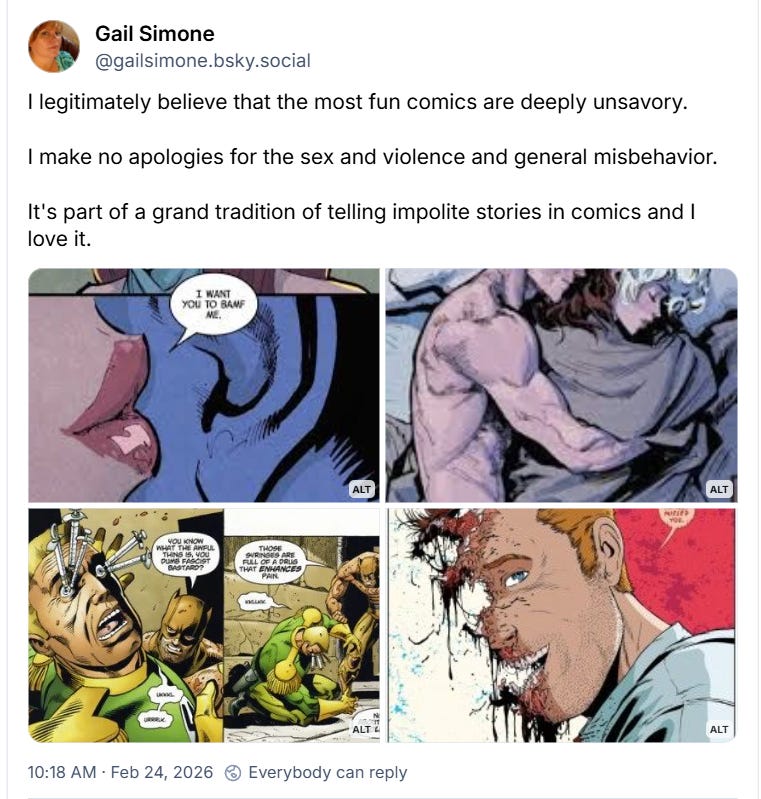
Simone wrote on BlueSky, “I legitimately believe that the most fun comics are deeply unsavory.”
“I make no apologies for the sex and violence and general misbehavior,” she added. “It’s part of a grand tradition of telling impolite stories in comics and I love it.”
In our modern times, there are many who might agree with this assertion. They equate fun with all kinds of debauchery and sin. One thinks of the oxymoronic phrase “It’s good to be bad.” However, this is not really fun, but enslavement to one’s lower appetites. It allows one’s will to be ruled by base emotions. It might “feel good” at the time, but like after a night of alcoholic partying one will suffer a painful headache. And if one continues to engage in such behavior over time it can lead to liver failure and other health complications.
Real fun, true joy, and authentic happiness can only be found in God. The Catechism notes, “True happiness is not found in riches or well-being, in human fame or power, or in any human achievement—however beneficial it may be—such as science, technology, and art, or indeed in any creature, but in God alone, the source of every good and of all love.”
Now, that’s not to say that exploring the unsavory is wrong in and of itself. That is not the case. However, it must be subject to moral restraint and should not be used to harm the common good and the souls of men.
Pope Paul VI made this clear in Inter Mirifica when he wrote, “the narration, description or portrayal of moral evil, even through the media of social communication, can indeed serve to bring about a deeper knowledge and study of humanity and, with the aid of appropriately heightened dramatic effects, can reveal and glorify the grand dimensions of truth and goodness.”
“Nevertheless, such presentations ought always to be subject to moral restraint, lest they work to the harm rather than the benefit of souls, particularly when there is question of treating matters which deserve reverent handling or which, given the baneful effect of original sin in men, could quite readily arouse base desires in them,” he added.
In “The Fiction Writer and His Country” Flannery O’Connor explains how this can be done in practice, “The novelist with Christian concerns will find in modern life distortions which are repugnant to him, and his problem will be to make these appear as distortions to an audience which is used to seeing them as natural.”

Fandom Pulse is reader-supported independent journalism. Paid subscribers get exclusive scoops and investigative reporting daily.
Dive into Jon Del Arroz’s For Steam and Country series, where a plucky 16-year-old farm girl, Zaira von Monocle, inherits her missing father’s legendary airship and is thrust into a high-stakes war against the ruthless Wyranth Empire.
Packed with swashbuckling airship battles, supernatural threats, daring rescues, and clever heroism in a richly imagined steampunk world, this series delivers non-stop action and heart-pounding excitement from the first page.

NEXT: Sony Pictures CEO Tom Rothman Provides Big Update On State Of Spider-Man Spinoff Films
They can't help themselves, can they? Rape, child abuse, cannibalism, degradation...
"The most fun"
Sure, Ms Simone.
Her dried up, useless uterus is making her sad and angry.