


J. Michael Straczynski learned he was not invited to Amazing Spider-Man #1000 the same way everyone else did: by reading the solicitation.
When the announcement came out listing the contributing writers for September’s Amazing Spider-Man #36 (Legacy #1000), Straczynski posted on Bluesky: “It was kind of a surprise, but it’s their call to make.” When someone suggested Marvel might be saving him for Amazing Spider-Man #2000, he replied: “I’m busy that day.”
The irony is sharpened by the fact that Marvel simultaneously has Straczynski writing Mary Jane: Face It, Tiger, a 60th anniversary one-shot celebrating Mary Jane Watson. He is good enough to write MJ’s anniversary special, but not good enough to write the anniversary issue of the comic he defined for six years.
The lineup Marvel chose for #1000 includes Dan Slott, Brian Michael Bendis, Frank Miller, J.M. DeMatteis, Joe Kelly, and Noah Hawley, a television writer who has never written a comic book in his life. Hawley’s credit on the page lists his television work, Legion and Fargo, as his qualification. Straczynski created Babylon 5. He wrote Peter Parker for six years. He is absent.
J. Michael Straczynski wrote The Amazing Spider-Man from 2001 to 2007. He introduced Ezekiel and Morlun, added a mystical totemic dimension to Spider-Man’s powers, made Aunt May discover Peter’s secret identity, rebuilt the Peter and Mary Jane relationship, and guided the book through Civil War, including Peter Parker’s public unmasking as part of the New Avengers.
He also did two things the Spider-Man fanbase has not forgiven.
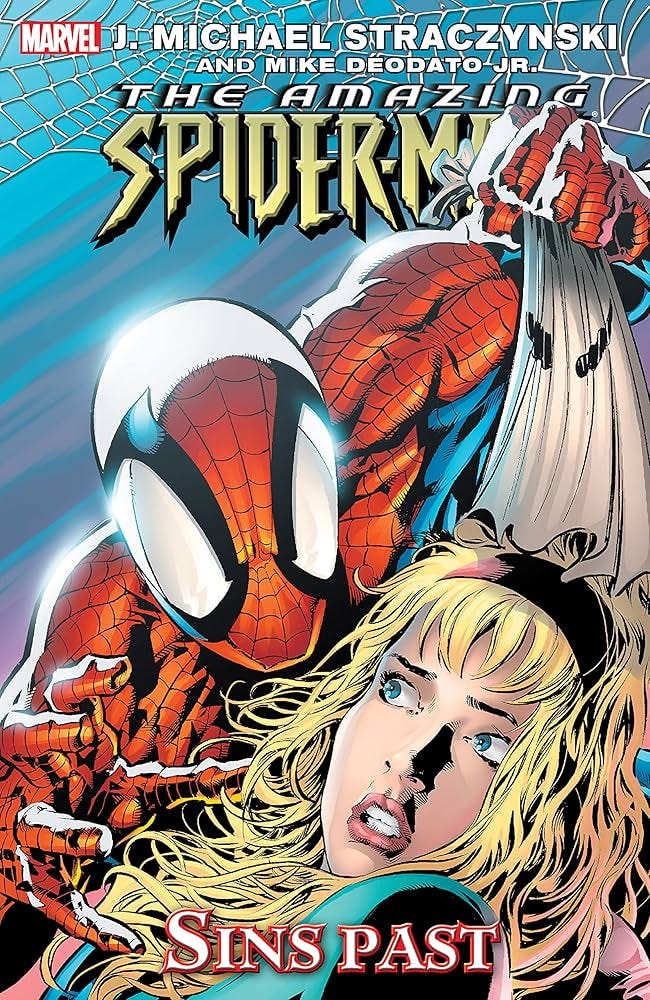
The first was Sins Past in 2004, the storyline revealing that Gwen Stacy had a secret affair with Norman Osborn before her death and conceived twin children who aged rapidly due to the Osborn formula. Gwen Stacy was the defining innocent of Spider-Man’s mythos, the character whose death marked the end of the Silver Age. The revelation turned her into Norman Osborn’s mistress and retroactively poisoned every memory of her. Reader backlash was immediate and sustained. The story has never been formally retconned despite decades of requests from the fanbase.
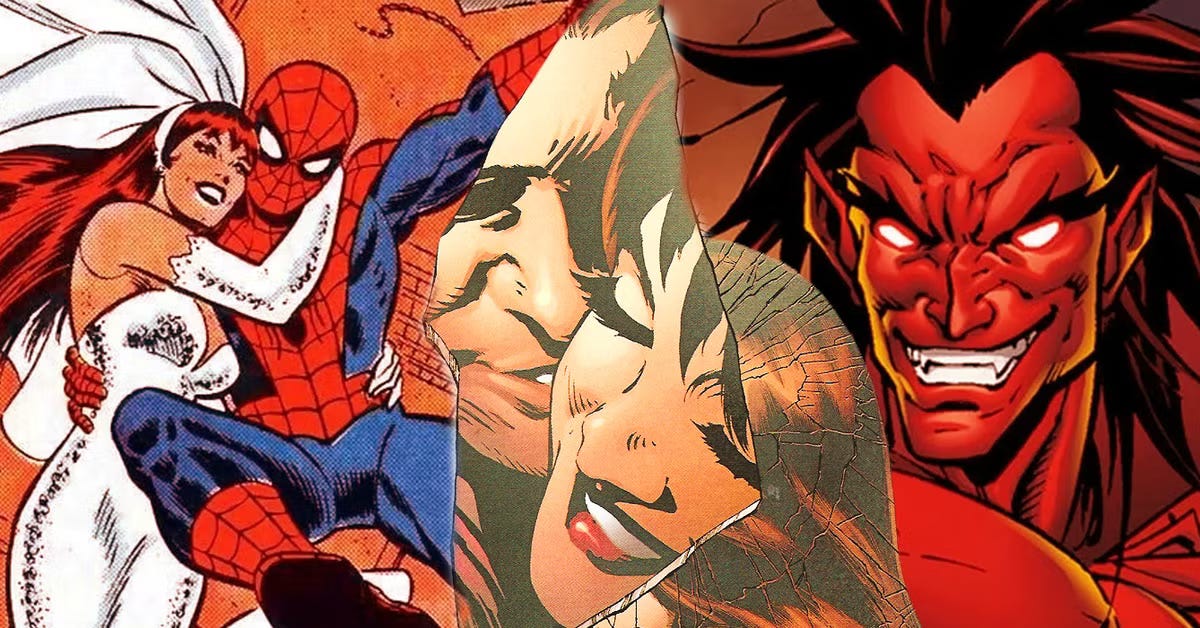
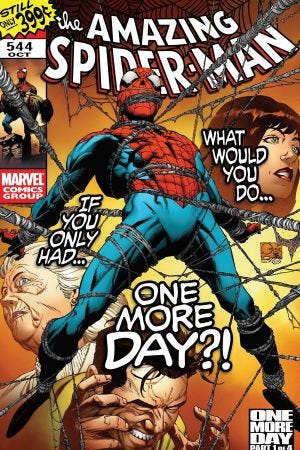
The second was One More Day, the 2007 storyline closing his run in which Aunt May is shot as a consequence of Peter Parker’s public identity reveal, and Peter makes a bargain with the demon Mephisto, sacrificing his marriage to Mary Jane to restore Aunt May’s life and erase the public knowledge of his identity. Straczynski publicly distanced himself from the story’s conclusion, stating that editorial overrode his preferences and that he had asked to have his name removed from the final two issues. The request was denied. His name sits on the issues regardless.
Whatever the internal dispute, One More Day happened on his watch and under his name. Seventeen years later, Marvel has still not restored the Peter and Mary Jane marriage. The most beloved relationship in Spider-Man’s history remains erased because of a story whose own writer tried to disown it.
The pattern of Straczynski’s post-2007 Marvel work confirms that his best years were already behind him. His Thor run beginning in 2007 started strong, reintroducing Thor and Asgard to Broxton, Oklahoma and building a compelling new mythology around the character’s return. Then he walked off mid-story. Thor #600 to #603 had to be finished by other writers when Straczynski departed for DC. His Fantastic Four run with artist Olivier Coipel followed the same trajectory, building toward a story about the Thing and then exiting before it concluded.
At DC he wrote Superman: Grounded, a storyline in which Superman walks across America to reconnect with ordinary people. The concept drew mockery from readers and critics for its plodding pacing. He left that run unfinished as well, with Chris Roberson completing the story. His Wonder Woman run introduced a new costume and a retconned origin that were reversed by the next creative team.
His return to Marvel produced The Twelve, a prestige miniseries about Golden Age Marvel heroes revived in the modern era, which ran from 2008 to 2012 because of delays between issues. Red Circle launched four DC/Red Circle character revamps in 2009, most of which dissolved within a year. His Thor: The Mighty Avenger mini, his Brave and the Bold run, his Before Watchmen: Dr. Manhattan and Nite Owl entries all came and went without lasting impact.
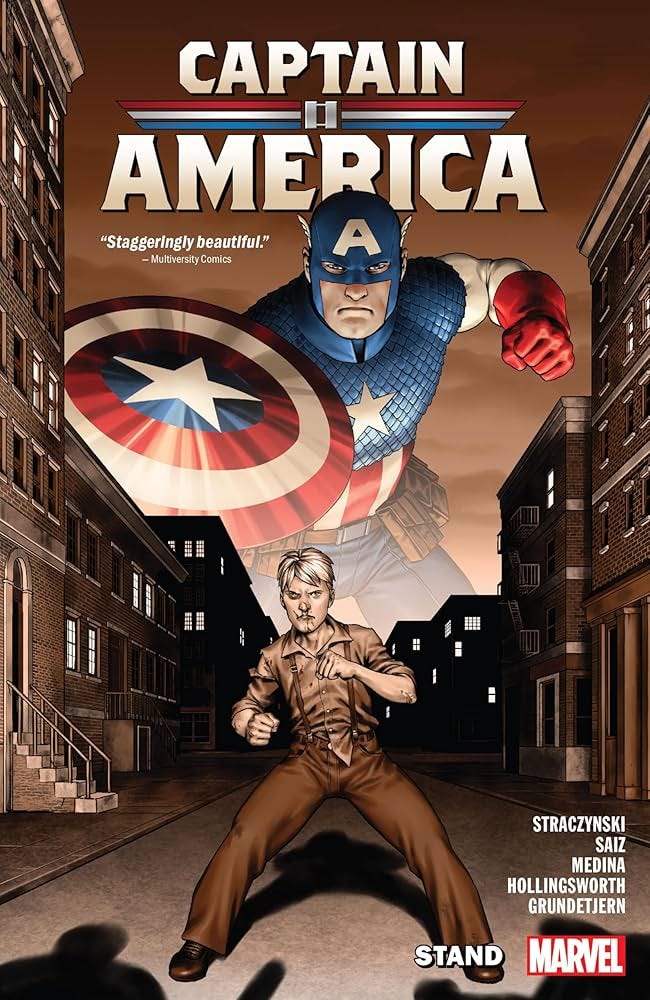
His most recent Marvel work was Captain America: Sentinel of Liberty, a 2022 series with artist Jesus Saiz that was canceled at issue #12 after failing to sustain its early sales. The book’s premise, that Steve Rogers’ entire Captain America identity was built by a secret organization called the Invaders, drew negative reactions from fans who saw it as an attack on the character’s foundational mythology.
Marvel considers him worth a Mary Jane anniversary one-shot. Not worth a slot in the 1000th issue of the title he wrote for six years. The line between those two decisions is the entire story of what JMS did to Spider-Man and what the character has been trying to recover from ever since.
Was leaving JMS off Amazing Spider-Man #1000 the right call? Let us know in the comments.
450 pages of classic superhero storytelling that puts character first. The Flying Sparks Omnibus collects the complete saga of Meta-Girl — the kind of cape comic the mainstream forgot how to make. Sign up to get your copy.
Dan Slutt and Brian Michael Bend-ass will attend, and when it's over, they'll go back to their shared hotel room for blumpkins and a Dirty Sanchez or two.
If they put Dan Slott there (someone who has also damaged ASMs reputation to a lesser extent) then they could have had JMS too. It’s not like the title would be better for it regardless of who is writing it nowadays. ASM is a nothing burger of a title and one that hasn’t been any good since JMS’s run prior to One More Day (which I fully credit to Joe Quesada).