


Christopher Nolan’s The Odyssey opens July 17, and its cast has spent the weeks before release turning promotional interviews into a sustained defense of the film’s politics rather than its story.
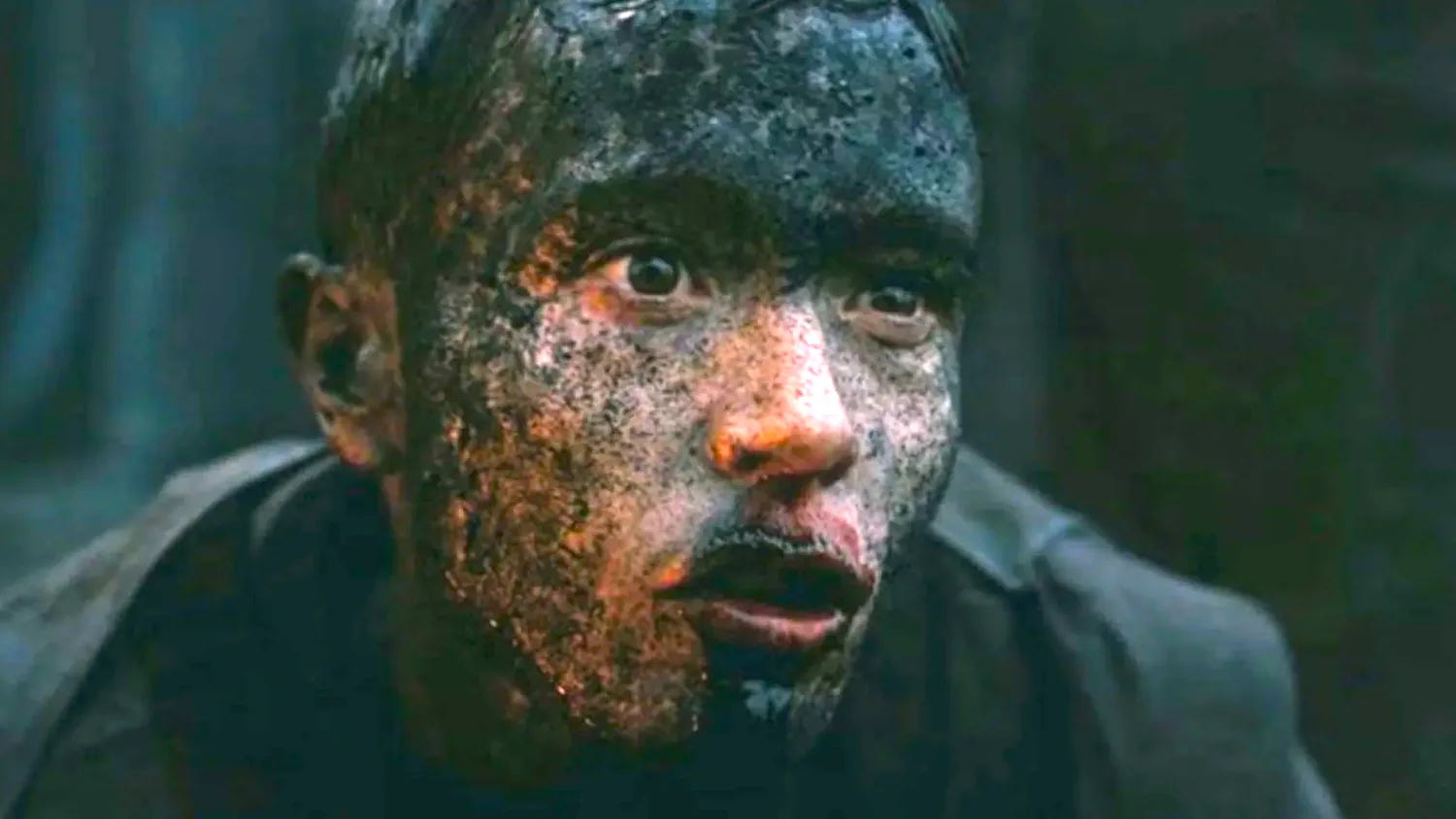
Elliot Page, a woman pretending to be a man, plays the Greek soldier Sinon in the film, just gave the clearest example. In a June 24 interview with Democracy Now’s Amy Goodman, discussing his broader work and public role rather than the film specifically, Page addressed critics of transgender identity directly. “I hope for anyone who’s sort of, you know, struggling in this time, and the headlines, and just to know, like, that you’re, you know, not alone, and loved and celebrated by so many, and try and block out the noise from, you know, absolute vile losers, who must just be so profoundly uncomfortable with themselves, they can’t handle that someone could get to a place that, I think, you know, that, you know, trans people do get to, which is a level of self-acceptance and understanding that I think is really beautiful and profound.” Page has spent the weeks before The Odyssey’s release describing her transition in similar terms across multiple platforms, telling Out magazine there is “absolutely nothing wrong with you” for anyone struggling with their identity. The interview predates the film’s premiere by three weeks, but outlets covering The Odyssey’s press cycle have folded it into the same conversation, since Page’s presence in the cast is itself one of the film’s most-discussed casting choices.
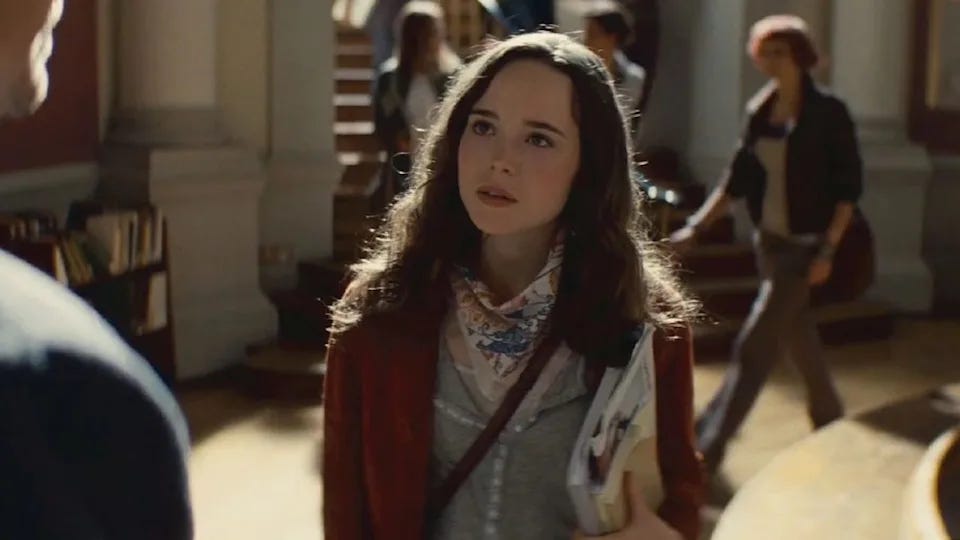
Nolan has been just as direct about his own intentions, if less combative in tone. Speaking to Channel 4 News, he explained why the film swaps Homer’s language for contemporary English. “When you look at the ancient world, people tend to view the ancient world in weird ways and there’s a lot of cultural prejudice, elevating it just because it’s old,” Nolan said. “When you go to the poem, what you find is something that’s really earthy, grounded and accessible. So, for me, in building the world of the film, what I talk to all the actors about is, I want to center it on that and make it feel very fresh for modern audiences and do away with some of those assumptions.” Nolan has confirmed the film draws on Emily Wilson’s 2017 translation of the Odyssey, a version explicitly marketed as using contemporary language to strip away what its publisher calls “archaic, patriarchal interpretations” of the original text. Nolan calling the backlash “irrelevant” in a separate Telegraph interview did not stop him from building the film’s entire linguistic approach around a translation chosen specifically for its break from the poem’s traditional reading.
Lupita Nyong’o, who plays both Helen of Troy and Clytemnestra, rounded out the pattern days before the London premiere. Asked on the YouTube channel Jake’s Takes what she would say to Homer if she could watch the film beside him, Nyong’o answered: “So, Homer, how do you feel about the screen time given to these women, considering how little you spent with them?” She expanded on the same point to DC Film Girl, saying Nolan’s film “takes time to really consider things from the female perspective” in contrast to a story she says is “told from a very masculine side of things.” Nyong’o has separately said she “went in quite blind” on the material, telling Elle in May that she “had no idea what the Odyssey was” before joining the production and used the film as a “crash course” in the mythology.
When it comes to three interviews, it becomes a pattern with one consistent message: the frontier being defended isn’t Homer’s text. It’s the idea that the text needed correcting before a modern audience could be trusted with it. Nolan frames the ancient world as a place full of “cultural prejudice” his film exists to strip away. Nyong’o frames Homer himself as a source that shortchanged its women and needs her generation to answer for it. Page frames anyone questioning the cultural moment around gender identity as too “uncomfortable with themselves” to be worth engaging.
None of these figures are simply doing press for a movie. They’re each making the same argument in different registers, that the original material and the audience raised on it got something wrong, and that this adaptation exists to fix it.
This is an uncanny correlation to how Supergirl just conducted its press tour, leaning heavily into feminism and identity politics, even though it wasn’t as heavily present in the film as this one appears to be. Supergirl bombed, but we’ve yet to see the impact on The Odyssey.
Homer’s epic has survived nearly three thousand years without needing that kind of defense. The question worth asking as the film opens is whether audiences are being sold Homer’s story, or a corrective to it.
Return to the World of John Carter with this pulpy action epic by Batman writer Chuck Dixon. What happens to Barsoom a thousand years after John Carter? Find out by reading today.
NEXT: Little House On The Prairie Returns To Netflix, And The Real Story Isn’t The One Critics Are Selling
I can’t double down on not watching it 😆
While I am overall pleased that a backlash to this affront exists, I am somewhat saddened that it isn't larger.
This should be the end-all-be-all of culture war slugfests. Not Star Wars, not Snow White, not Dr. Who, not any of dozens, hundreds of other properties I could mention.
Those properties are what's actually irrelevant. Star Wars isn't a hill of beans compared to the 3,000+ year history of The Illiad and The Odyssey and their influence on Western Civilization.
The Odyssey as the more influential of the two works, by a nose, is the single most important cultural work ever created by man outside of the Bible (which, to be fair, was Divinely inspired).
The Odyssey is sacred. It is foundational to Western Society. There should have been rioting in the streets and mass burnings of this pathetic feminist "translation."
That's how we should respond to this level of cultural vandalism. But I guess if I'm not going to vigilante any of these fools for mass societal deconstruction, it's hypocritical to expect others to do it for me.
Oh look, a squirrel!