


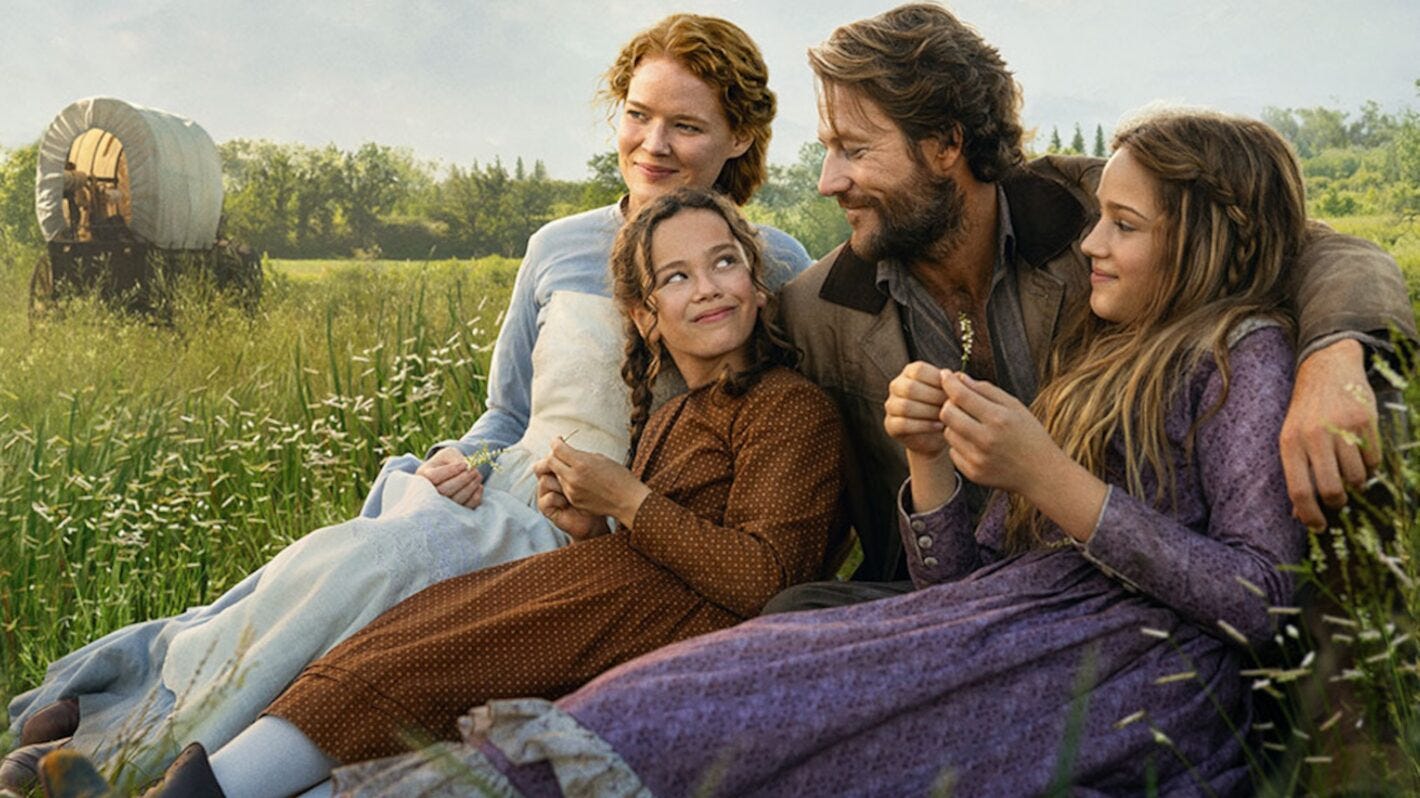
Netflix’s Little House on the Prairie reboot isn’t just adding characters absent from Laura Ingalls Wilder’s books. It’s building an entire moral framework around the idea that the frontier’s traditional values were the actual problem, and showrunner Rebecca Sonnenshine has said as much herself, repeatedly, on the record.
Start with what the critics got wrong, because it matters for what comes next. Slate’s Rebecca Onion wrote that Netflix “did indeed woke-ify” the show, citing a Black doctor and storekeeper among the Ingalls family’s new friends as evidence. Comic writer G. Willow Wilson called that specific claim out directly. “Somebody (Rebecca Onion) didn’t read the books,” Wilson wrote. “If they read the books, they would know the Black doctor is in the books. He nurses the Ingalls family through malaria. He’s based on a real Black doctor who lived near the Ingalls family in Independence, KS.” Wilson is right. Doctor George Tann appears in Wilder’s original 1935 novel, where a six-year-old Laura describes waking from malaria to “a black hand” holding a cup to her mouth. Tann was a real practitioner of eclectic medicine who lived about a mile from the Ingalls’ cabin, and the 1974 NBC series told a version of his story too, in a 1981 episode where a Black doctor named Caleb LeDoux faces prejudice in Walnut Grove. Complaining about a Black doctor character in Little House means complaining about Laura Ingalls Wilder’s own book.
The faith content deserves the same fairness. Melbourne Catholic’s review, drawing on an OSV News interview, highlights something most coverage skipped past: the show leans into the Ingalls family’s Christian faith, their hymns, their church-building, and ties the Osage family’s beliefs to real Jesuit missionary history through Father John Schoenmakers, who ran an actual mission school for the Osage in the 1800s. Sonnenshine calls the books “very important” to her personally and says she read them roughly 100 times growing up.
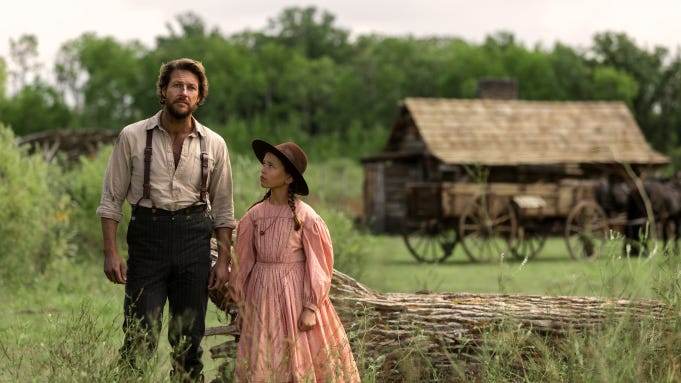
But a close side-by-side of the book and the show, however, shows the reframing goes well beyond fair historical corrections. The site counts ten major characters invented for the series with no basis in Wilder’s novel at all: Good Eagle, White Sun, William Mitchell, Emily Henderson, Caleb, Lacey, Jemma James, Eli James, Russell Kind, and Governor Joe. That’s nearly the entire supporting cast surrounding the Ingalls family, built from nothing to carry the show’s new priorities.
Caroline Ingalls gets the clearest feminist rewrite. In the book, she’s presented through young Laura’s eyes as a steady, dependable mother holding the family together. The series gives her an entirely new arc: she challenges the town’s Women’s Society, searches for paid work outside the home, clashes openly with Charles over major decisions, and keeps secrets from him. As The Viewer’s Perspective puts it, these additions make the Ingalls “feel more like a modern television couple.” That’s not a small tonal shift. It’s a direct rewrite of the marriage at the emotional center of the book, built to model a companionate, adversarial-then-resolved 2026 partnership rather than the quieter, unified frontier marriage Wilder actually wrote. It lines up exactly with what Sonnenshine told Deadline about wanting to show Caroline and a new character named White Sun as “women who are in interesting marriages of equality,” and with her comment at Bentonville that the show deliberately avoids “tropes of sort of masculinity.”
The Osage storyline gets a similar treatment, and here the show actually erases something sharper than what it adds. In Wilder’s novel, the land legally remains Osage territory throughout the entire book. The Ingalls family leaves because government soldiers are coming to remove settlers who never had a legal claim to be there in the first place, a plain admission, in a children’s book from 1935, that Charles Ingalls was squatting on land that wasn’t his. The series replaces that ending with an invented treaty-negotiation storyline, complete with a new Osage leader named Governor Joe, and folds the family’s departure into a financial crisis over debt and a failed land sale that doesn’t exist in the book. The government’s illegal removal becomes a negotiated, mutual, economically-softened parting. The show adds Osage characters and dialogue the book never gave them, but it also quietly removes the one detail in Wilder’s own text that most starkly indicts the settlers’ legal position.
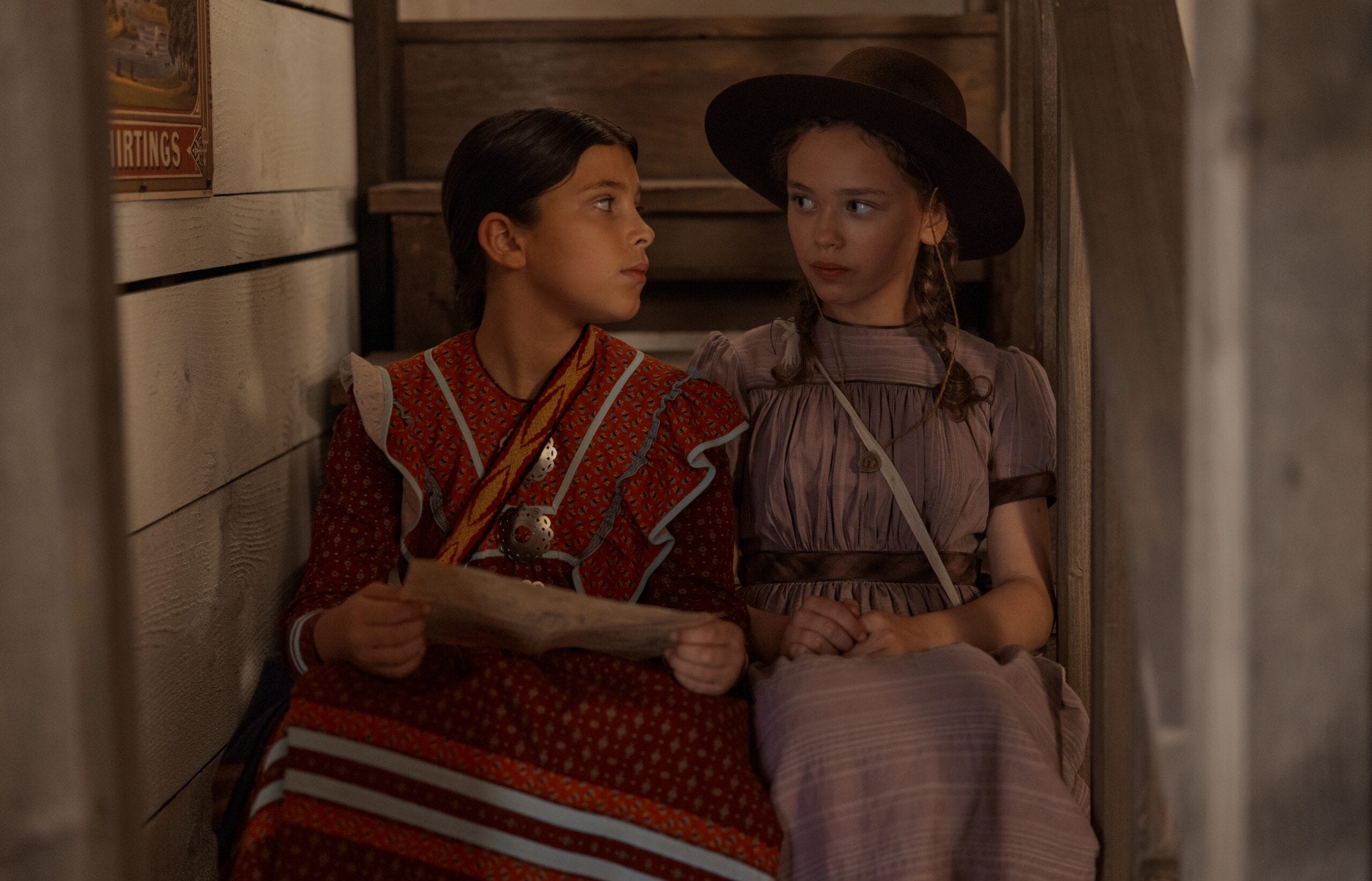
The show pairs all of this with a brand-new character named Lacey, a French, trouser-wearing widowed saloon owner who multiple critics note “practices free love,” invented specifically to model sexual independence to a nine-year-old Laura, and a new antagonist family, the Jameses, whose entire identity, per Slate, is “hierarchy, respectability, a church, a school.” The show’s villains are defined by the church they attend and the order they want to build; the family the audience is meant to root for keeps its distance from both.
Even critics sympathetic to the reboot’s politics can’t help but notice the tension. RogerEbert.com calls the show “aggressively wholesome” while noting it “attempts to modernize the source material,” landing on a verdict that it feels “designed in a lab to appeal to the broadest possible swath of viewers.” TheWrap states outright that the series is “injecting some deciding modern sensibilities” into a story that didn’t originally carry them.
Sonnenshine hasn’t denied any of this so much as reframed the question, telling Variety she isn’t sure “woke” means anything anymore. But her own words across three separate interviews, plus a scene-by-scene accounting of what got added and what got quietly dropped, point the same direction: this is a writer who read Little House on the Prairie and decided the frontier family’s actual marriage, its actual legal reckoning with the Osage, and its actual traditional order needed rewriting for a 2026 audience, credit for the parts she got right included.
Six books. One unforgettable world. The Adventures of Baron Von Monocle is steampunk adventure with the kind of worldbuilding and heart that made you fall in love with fantasy in the first place. Start the series on Amazon.
NEXT: Jonathan Majors’ New Film Looks Like Exactly What the Conservative Entertainment Space Needs
I am surprised Netflix let the Ingalls be white instead of White dad, Asian mom, and an extra new character - a black sibling created from an affair Charles had because, of course, the women are all angels.
That description of marriage from the new Little House show is spot on - not of marriage in 1880, but today. It shows marriage to a ‘modern woman’ to be like a cage match. No surprise that marriage rates are declining - and will continue to do so.