


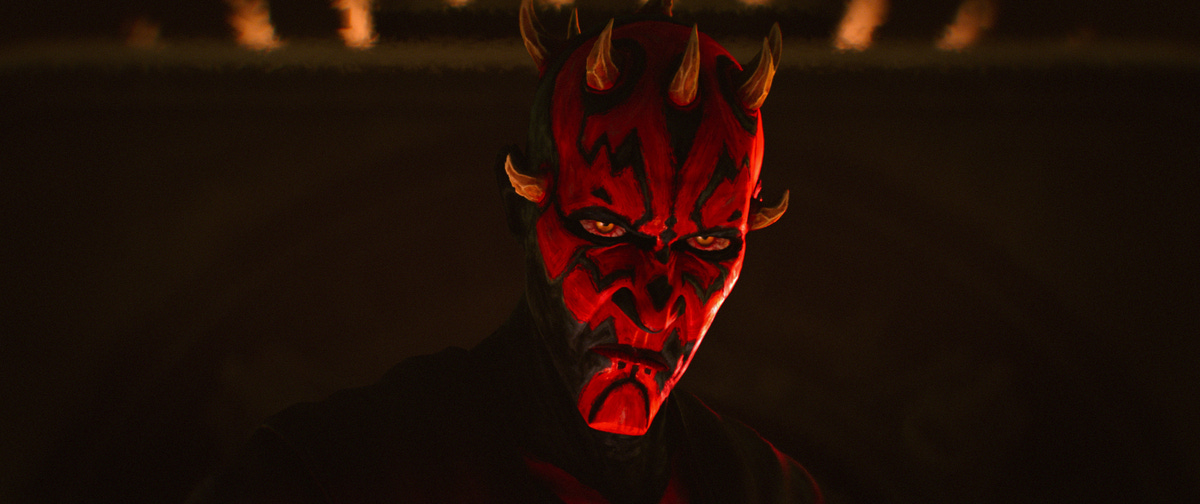
A reader responding to my Darth Maul article offered a familiar and reasonable perspective that writers throughout history have expanded whatever stories resonated with audiences. Doyle resurrected Sherlock Holmes, Baum kept returning to Oz, and Burroughs built empires out of Tarzan and John Carter. Success is rare, the commenter argued, and creators naturally chase it.
It’s a fair point, but I think this all applies to an environment that, unfortunately, no longer exists.
The expansion of Darth Maul, Boba Fett, and other modern franchise characters isn’t the same phenomenon as Doyle reluctantly bringing Holmes back from Reichenbach Falls. This isn’t about a single author returning to a beloved creation. This is something else entirely: a structural feature of contemporary franchise storytelling, where characters are no longer characters but reusable assets that are endlessly redeployed to sustain a content pipeline.
To understand why this matters, and why it feels so different from earlier literary expansions, we need to look at a genre that has quietly mastered the logic of repetition: isekai.
The Isekai Template: The Same Hero in a Thousand Worlds
Isekai stories, wildly popular in Japan and increasingly in the United States, operate on a simple principle:
The protagonist is always the same person, even when he isn’t.
Beneath all the reincarnations, magical systems, and alternate worlds, the typical isekai protagonist is built from the same psychological template. He is:
a person with niche or obsessive interests (vending machines, MMOs, military history, obscure magic systems, you name it)
a lover of video games, anime, or manga His worldview is shaped by pop culture, not real‑world experience.
a shut‑in (hikikomori) Someone who avoids social life, responsibility, or adulthood.
or a burned‑out salaryman A man crushed by routine, monotony, and corporate drudgery.
bored with his mundane life He feels invisible, unimportant, or stuck.
This is the “default” isekai protagonist. Authors repeatedly use this archetype because it resonates with the audience. He is the modern everyman: alienated, overworked, underappreciated, and yearning for a world where his niche knowledge or obsessive tendencies suddenly matter. Crucially, he is the same person in every world. He can be a slime monster, a vending machine, a sword, a child soldier in a WWI‑like setting, an undead lich, or a young man trapped in a time loop. But, essentially, every iteration feels like the same protagonist.
His form changes, his context changes; but, beneath the surface, the core personality remains constant. He is the same archetype wearing a different face. This is Joseph Campbell’s “hero with a thousand faces,” except industrialized.
Modern Franchises Do the Opposite
Star Wars, Marvel, DC, and other major franchises invert the isekai formula. Instead of using a familiar archetype in a new world, wet get the same hero in the same world, but with a new excuse.
Darth Maul and Boba Fett began life in Star Wars as exactly what they appeared to be: cool‑looking henchmen with minimal dialogue and no interiority. But once the franchise realized how much fans loved their aesthetics, both characters were fed through the same narrative machinery. They were expanded, resurrected, repurposed, and mythologized until they became unrecognizable from their original forms.
Their arcs aren’t just similar. They’re practically identical, beat for beat.
They began as silent, visually striking enforcers:
Maul: a Sith assassin
Fett: a bounty hunter
Then both were retrofitted into major historical or political keystones:
Maul becomes a revolutionary figure, destabilizing governments and manipulating galactic factions.
Fett becomes the genetic foundation of a galactic army, retroactively tied to one of the most important events in the saga.
Both were elevated into some form of prestige cultural mythology:
Maul is woven into the mythic history of warrior societies and ancient conflicts.
Fett becomes the symbolic face of an entire warrior culture, its armor, its creed, and its identity.
Both were transformed into underworld power brokers:
Maul becomes a crime lord, building syndicates and shadow empires
Fett becomes a crime boss, ruling territory and negotiating power among criminal factions.
Both were reframed as wandering ronin figures:
Maul drifts through the galaxy as a broken, vengeful nomad.
Fett wanders the desert as a spiritually searching survivor.
Both were reinterpreted as tragic antiheroes:
Maul becomes a philosophical figure, obsessed with fate, identity, and suffering.
Fett becomes a misunderstood antihero, seeking purpose, community, and redemption.
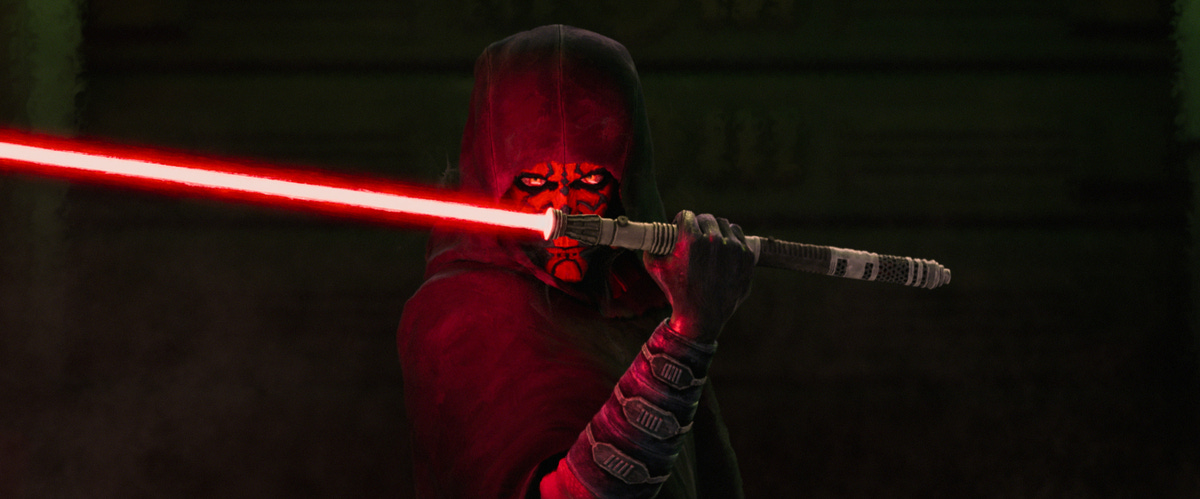
This is all about following a template. When you line up their trajectories, the pattern is unmistakable: The writers have done the same thing to both characters. Not because the story demanded it, but because the franchise machine has a standard playbook for reviving a fan‑favorite silhouette:
Resurrect them
Give them tragic depth
Tie them into some grand cultural mythology
Make them historically important
Turn them into underworld power players
Recast them as wandering ronin
Endow them with philosophical gravitas
It’s the same seven‑step inflation cycle, applied twice, producing two characters who now occupy nearly identical mythic roles despite starting from completely different narrative origins.
Maul and Fett didn’t grow organically. They were inflated. Their arcs are the direct result of franchise economics: an industrial process that takes any popular silhouette and stretches it across every available narrative surface. This is why the Star Wars galaxy feels small why Darth Maul feels like five different people. Because, essentially, he is five different people. He is a re-deployable asset upon which the creators can upload any number of content modules. He functions like an isekai protagonist since he is being endlessly reinserted into new narrative modules. However, as a franchise character, he retains the same face, the same costume, and the same iconography.
Why This Isn’t the Same as Doyle, Baum, or Burroughs
Holmes, Oz, Tarzan and all share a key feature: their authors expanded the same world in a forward direction. Modern franchises are different in every respect. Modern franchises have:
multiple writers
multiple directors
multiple creative teams
corporate oversight
brand management
quarterly revenue targets
Because of all these things, characters are not expanded because a single creative mind has more to say about the characters. Instead, they are expanded because the franchise must remain active. This is why Darth Maul and Boba Fett keep returning and why every new show promises to reveal some “untold story” of someone we’ve already spent decades dissecting.
Let's face facts: this is not storytelling. This is all about IP maintenance.
The Postmodern Horizon
Postmodern storytelling is obsessed with remix, pastiche, self‑reference, and novelty. Isekai embraces this by repeating a basic archetype while reinventing the world. On the other hand, franchises repeatedly use familiar character while recycling the same world. Artistically, both isekai-based and franchise-based storytelling are searching for something new under the sun.
In isekai, the genre constantly reinvents the form of the hero to add novelty to the archetype. We see:
gender‑bent heroes, where a male protagonist wakes up as a woman
reincarnated heroes, reborn into entirely new bodies
body‑swapped heroes, who inhabit forms wildly different from their original selves
heroes who become objects, like swords or vending machines
These variations are the genre’s way of asking: “What else can a hero be?” The personality stays the same, but the form changes. The archetype persists, but the context evolves.
Franchises differ in this regard because they don’t change the world around the hero. Instead, they change the heroic silhouette within the same world, presenting these changes as explorations of ethnic, social, or sexual identity off the back of familiar narrative functions. The structure stays fixed, the mythology stays fixed, and the story beats stay fixed. What shifts is the surface‑level presentation, allowing the franchise to signal novelty without actually generating new mythic possibilities.
You can see this in Disney's Star Wars:
Rey as a new Luke‑type figure A young, desert‑dwelling Force‑sensitive hero who inherits the mythic role of the Skywalker archetype. Same narrative function, but female.
The all‑female mystic order in The Acolyte A reconfiguration of the Jedi archetype: same robes, same lightsabers, same spiritual role, but entirely female.
Unlike isekai, which reinvents the world around a stable archetype, franchises keep the same faces and the same heroic silhouettes in circulation. They don’t replace Luke with someone fundamentally different, they give us a Luke‑type figure with a different demographic profile and call it reinvention. They present these changes as explorations of identity, but the underlying narrative role remains identical. The world stays fixed, the mythology stays fixed, and the story beats stay fixed. Only the surface traits shift. What gets advertised as bold innovation is usually just a cosmetic variation designed to refresh the brand without altering its structure.
The Main Argument
Postmodern deconstruction begins with a desire to probe the myths we inherited. The instinct is to peel back the surface of a narrative, expose its machinery, and reveal the assumptions that earlier eras took for granted. That impulse isn’t inherently misguided, but in practice, it often produces “reinventions” that are really just inversions of older tropes rather than genuine innovations. Instead of widening the imaginative horizon, these works tend to dismantle the very mythologies they depend on. And what emerges is not a search for new possibilities but a gradual erosion of the shared narratives that once helped orient a culture.
This is where the comparison to isekai becomes illuminating. Isekai repeats a basic archetype, but refreshes the world. The protagonist is always the same (the niche‑obsessed shut‑in, the burned‑out salaryman, the gamer who knows too much) but each new world offers a new set of rules, new metaphysics, a new imaginative possibilities. The repetition is the point, but the context evolves.
Franchises do the opposite. They repeatedly use the same characters while keeping the world mostly static. The only postmodern novelty these characters ever experience is in the writers attempting to "explore their identity" which always just amounts to making the hero a woman, or gay, or non‑white. As if that alone constitutes thematic innovation.
Time and again we have seen that this process doesn’t build new mythologies. Instead, it erodes the old ones. When a character can be resurrected, reinterpreted, or re-contextualized at will, they essentially stop being a character altogether.
This is the horizon of postmodern franchise storytelling: a landscape where characters are endlessly recycled, myths are endlessly deconstructed, and nothing ever changes. The current narrative ecosystem only survives by feeding on its own past, even as that past becomes thinner, more fragmented, and less capable of sustaining the imaginative life of the culture.
NEXT: Anti-ICE Anarchists Call For Boycott Of Star Wars Celebration

I work on hospital equipment. In large research hospitals they have a lab named the Biological Prodution Facility. (We can’t get to certain viruses without first “infecting them). In essence, what they do is, attempt to engineer a mutated separate virus to use as their entry into the unwanted host virus to attempt to combat it.
What we’re seeing presently is an engineered virus (hollowwood) attempting to infiltrate the host (society) and attack it within. All they can do is attach themselves to an existing, loved property, to use for their message. They know ANY standalone project (other attack) is completely rejected by the host. Therefore, they have no alternative but to piggy back on an existing property to destroy us by destroying it.
When it comes down to it, they’re nothing but simple parasites.
Very interesting read. I wish the author wouldve mentioned Andor as a positive example. Bc I really think Andor was pretty amazing.