


When John W. Campbell died in July 1971, the most influential editor in science fiction history left a hole nobody believed could be filled. Analog was the magazine that had launched Asimov, Heinlein, Herbert, and a hundred other names. It was also, by Campbell’s final years, creatively moribund. Commercially healthy, but coasting. The job of replacing him was the most thankless seat in the genre.
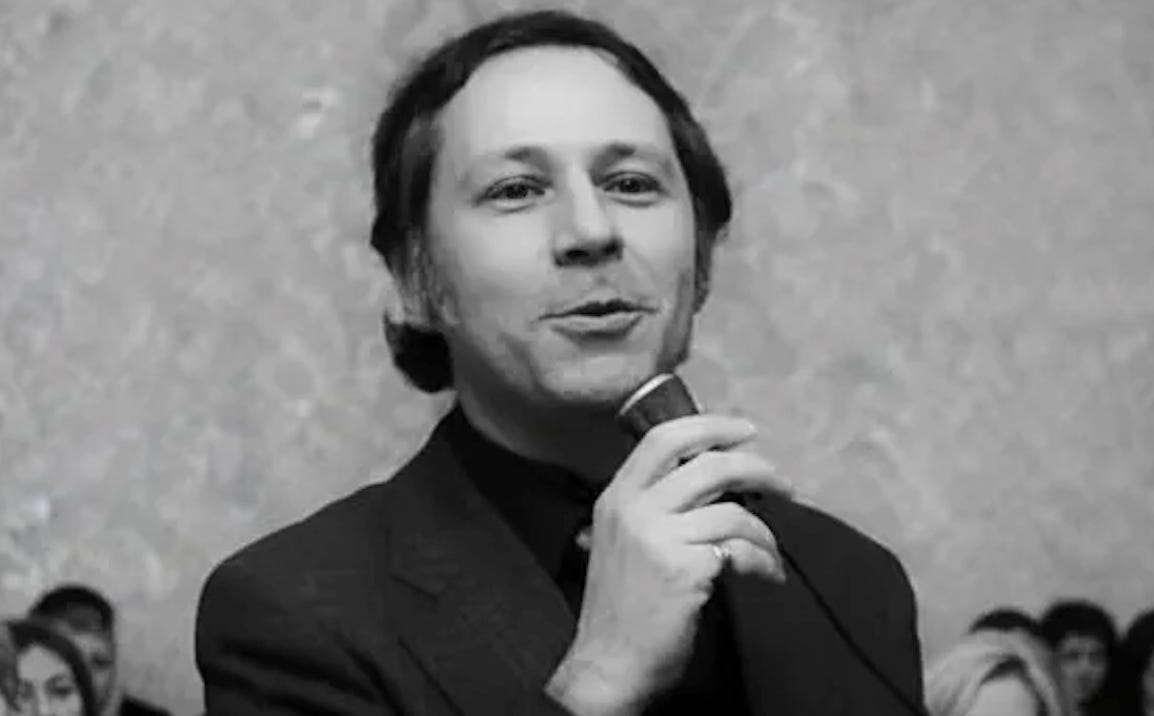
Conde Nast handed it to Ben Bova. He held it for six years. He won the Hugo Award for Best Professional Editor every year he was eligible, with one exception in 1978 when he had already moved to Omni, and he won that one in 1979 for his final year of Analog work anyway. Six Hugos. He shepherded the original publication of Joe Haldeman’s The Forever War. He bought George R.R. Martin’s first sale to the magazine. He pulled Analog out of Campbell’s late-career rut and dragged it into the 1970s without losing its hard-SF spine.
Then he became one of the most prolific working novelists in the genre, wrote more than 120 books, built the Grand Tour series across thirty years, and died in November 2020 from complications of COVID-19 and a stroke. The genre noted his passing. The genre has not yet figured out what to do with the catalog he left behind.
From Project Vanguard to the Editor’s Chair
Bova was born in Philadelphia in 1932. He graduated from South Philadelphia High School in 1949, attended Temple University, and took a master’s degree from the University at Albany. His credentials were not literary. They were technical.
In the 1950s he worked as a technical writer for Project Vanguard, the United States’ first satellite program. In the 1960s he moved to the Avco Everett Research Laboratory, where he worked alongside Arthur R. Kantrowitz on lasers and fluid dynamics. Avco Everett built the heat shields for the Apollo 11 command module. Bova was not a man writing about space from a library carrel. He had spent his working life inside the actual American space program.

He published his first novel, The Star Conquerors, in 1959 as a Winston juvenile. He kept writing through the 1960s while holding down the day job. His 1970 collaboration with Harlan Ellison, “Brillo,” picked up a Hugo nomination and reportedly influenced the later TV series Future Cop. Then Campbell died.
The hiring was, by all accounts, a surprise. Bova had not been a major Analog contributor. He was an outsider to the magazine’s inner circle. He took the chair in January 1972 and began running stories Campbell never would have bought.
What He Did to Analog
The Science Fiction Encyclopedia puts the case plainly. Bova “maintained the magazine’s orientation towards technophilic Hard SF but considerably broadened its horizons.” Frederik Pohl’s “The Gold at the Starbow’s End” ran in March 1972. Joe Haldeman’s “Hero,” the seed of The Forever War, ran in June 1972, after Campbell had personally rejected the manuscript years earlier. George R.R. Martin’s first Analog sale, “The Second Kind of Loneliness,” ran in December 1972. Roger Zelazny’s Hugo and Nebula winner “Home Is the Hangman” appeared during Bova’s tenure. So did P.J. Plauger’s “Child of All Ages.”
Campbell loyalists hated it. The Encyclopedia notes that Bova “alienated some readers who shared Campbell’s puritanism.” The Hugo voters did not care. Bova won Best Professional Editor in 1973, 1974, 1975, 1976, and 1977. He moved to Omni in 1978 and won again in 1979 for his last year of Analog work. No editor in the history of the award has done what Ben Bova did between 1972 and 1979.
His Omni years from 1978 to 1982 brought another generation of writers into the spotlight. He published George R.R. Martin’s “Sandkings” in Omni in 1979, the story that took the Nebula and the Hugo and signaled Martin’s arrival as a major short-fiction writer. Bova was the editor who handed both Haldeman and Martin their breakthrough platforms. The genre owes him for that twice over.
The Grand Tour
In 1992, Bova published Mars. He was sixty years old. He had been writing novels for thirty-three years. What followed was the longest sustained near-future hard-SF project in modern American science fiction.

The Grand Tour chronicles humanity’s colonization of the solar system across the late twenty-first century. Each major book centers on the exploration of one planet or moon. Mars (1992) was followed by Moonrise (1996), Moonwar (1997), Return to Mars (1999), Venus (2000), Jupiter (2000), The Precipice (2001), The Rock Rats (2002), Saturn (2003), The Silent War (2004), Powersat (2005), Mercury (2005), Titan (2006), The Aftermath (2007), Mars Life (2008), The Return (2009), Leviathans of Jupiter (2011), Farside (2013), New Earth (2013), Death Wave (2015), Apes and Angels (2016), and Earth (2019). Titan won the John W. Campbell Memorial Award for Best Novel in 2006. The series ran more than twenty volumes.
The Grand Tour is unfashionable for the same reason it endures. Bova wrote with a frank assumption that humans would, in fact, go to space, build infrastructure, fight over resources, and bring their politics with them. His protagonists tend to be well-meaning entrepreneurs, working scientists, and idealists who get chewed up by bureaucracy and corporate interests but keep building anyway. Dan Randolph, the recurring industrialist who anchors Privateers, Empire Builders, The Precipice, and others, is the kind of frontier capitalist hero modern publishing has stopped writing on purpose. Bova wrote him for thirty years and never apologized.
The science holds up. Bova consulted on actual aerospace projects for decades. His descriptions of orbital mechanics, life support, lunar mining, and asteroid prospecting are the work of a man who knew the engineers personally. When Andy Weir built his career on the same instinct two decades later, he was writing in a tradition Bova had spent thirty years cultivating.
Beyond the Grand Tour
The Grand Tour is the headline catalog. The rest of Bova’s bibliography is enormous.
The Orion series, beginning in 1984, sends an eternal hero through history and myth across five novels. The Voyagers trilogy, beginning in 1981, tracks humanity’s first contact with aliens across decades and ends with a meditation on what contact actually does to a species. Privateers (1985) is a Cold War space novel set in a future where the Soviet Union won and one American industrialist runs a piracy operation against Russian asteroid miners. Mars (1992) is a stand-alone-quality first-contact novel that happens to anchor a series. The Sam Gunn stories, scattered across decades, are Bova’s Callahan’s: a beloved recurring rogue who shows up in short stories and novellas to outwit the bureaucrats.
His nonfiction is its own catalog. The High Road (1981) is a serious argument for commercial space development. The Story of Light (2001) won awards. He wrote on lasers, on energy policy, on the history of speculative fiction, and on the actual mechanics of how humans get off Earth.
The 1995 short story “Inspiration,” in which a young H.G. Wells, a young Albert Einstein, and a time traveler converge in 1896, picked up a Nebula nomination. It is one of the better time-travel stories of the decade and almost nobody under forty has read it.
The Final Books
Bova kept writing. Uranus came out in 2020, the first volume of a planned Outer Planets Trilogy that was meant to close the Grand Tour with three final books on the system’s most distant worlds. He died in November 2020, eight months after Uranus hit shelves.
The trilogy did not die with him. Bova’s coauthor Les Johnson, a NASA physicist, finished the remaining two volumes from Bova’s notes and outlines. Neptune followed. Pluto completed the trilogy. The Grand Tour now stretches from Mercury to Pluto and back, with the final three books reading as a memorial to the man who started the project at sixty and finished it at eighty-eight.
He received the Robert A. Heinlein Award in 2008 for outstanding body of work in the field of literature. He took the Arthur C. Clarke Foundation Lifetime Achievement Award in 2005. He won the Isaac Asimov Memorial Award in 1996. He served as President of SFWA from 1990 to 1992 and as President of the National Space Society. He was Author Guest of Honor at Chicon 2000. The Kate Wilhelm Solstice Award was awarded posthumously.
Why He Matters Now
Bova wrote optimistic hard science fiction in which space was a frontier worth opening and the people who opened it were heroes worth writing about. He took the Campbell tradition and updated it without burning it down. He believed in human ingenuity, private enterprise, and the proposition that the solar system is sitting there waiting for us to grow up enough to use it.
This is the mode of SF the indie and crowdfunded space has been rebuilding for the past decade. Bova was writing it at industrial scale for thirty years before any of the current revival started. The Grand Tour novels are not literary masterpieces. They were never trying to be. They are durable, readable, science-grounded adventure novels in which competent people solve problems in space, which is exactly what science fiction used to do for a living before the genre decided it was too sophisticated for that work.
He also did something almost no other major SF writer has done. He spent six years as the most powerful magazine editor in the genre, used that position to launch the careers of Haldeman and Martin and dozens of others, and then walked away from the editor’s chair to write his own novels for the next forty years. The genre as it exists today was, in measurable ways, built by Ben Bova.
Which hard SF writer from the Analog tradition do you think deserves a full retrospective treatment next, and which book of theirs would you put in every reader’s hands?
When genetic engineering nearly doomed the species, humanity made a desperate bargain: let the frontier do what nature intended. In a harsh universe, these cadets have to make impossible decisions. Read Space Fleet Academy today.
I used to enjoy "hard" science fiction, but nowadays I do not think any of it is "hard" enough or realistic enough. At our current levels of tech, I see no way for humans to get through the van allen radiation belts, baring some type of shield tech that currently doesn't exist even in theory. I am also not certain of how much cosmic radiation actually exists outside of earth, but I would guess it is more than human beings can handle without getting sick and dying. If I am incorrect and some authors have addressed this, please enlighten me.