



A peculiar myth has taken hold in our cultural discourse: the claim that the political Left is inherently more creative than the Right. This myth is repeated with the confidence of a truism, yet it arrives without evidence. The word “creative” is invoked as though its meaning were self‑evident, as though imagination were a measurable substance that flows more abundantly in one ideological direction than another. But the claim is never explained. It is simply asserted, and the assertion is treated as its own justification.
What makes this myth especially curious is not that it is promoted by the Left, but that it is echoed by many commentators on the Right. They speak of it as though they are confessing a weakness, a deficiency in their own tradition. They concede the point before the debate has even begun. And they do so without demanding reasons, without asking what “creativity” means, and without noticing that the claim flatters their opponents while diminishing themselves. It is a strange form of self‑inflicted diminishment, a surrender of cultural confidence masquerading as honesty.
One might expect this kind of unexamined concession to belong to an older cohort, like Boomers whose mindsets were shaped by the prestige hierarchies of the twentieth century when the cultural institutions of art, film, and academia still carried an aura of unquestioned authority. It would be easy to chalk it up to a kind of inherited deference, the reflexive assumption that whatever the major institutions bless must be superior.
But this isn't a Boomer myth. Younger generations are repeating it as well and often with Dunning-Krueger-like confidence despite the fact that there hasn't been a single instance of an online commentator (that I have found) who has examined the evidence (if it exists) of this myth and found it compelling. Incidentally, this is a good example as to why I don't believe Zoomers are as disconnected from the influence of state-sponsored Leftism despite their being hyperaware of it in digital space.

The irony of the myth is sharpened when we consider the institutions that shape our public imagination. The universities, museums, publishing houses, film studios, and grant‑giving bodies that determine what counts as “art” are overwhelmingly liberal or Left‑leaning. They are the ones who decide what is funded, what is displayed, what is canonized, and what is forgotten. Most art produced in the modern era is Leftist art. And given how often art is criticized, especially by those on the Right, this continues to beg the question why Leftists are more creative.
Both Right Wing and even some Leftist commentators repeatedly lament the lack of craft, the detachment from beauty, and a tendency toward provocation without substance in Leftist art.
Leftist art also constantly apologizes for itself, which we see so often in Millennial writing. You can see this in any media where serious moments are continually bereft of their weight by an obligatory "that just happened" joke.
If you're a Conservative creator and you witness the utter degeneracy of Left wing art, then ask yourself: Why is any of this enviable? If today's art is the flagship of Left‑leaning creativity and so widely regarded as incoherent or unserious, then why doesn't this myth collapse under such contradictions?

Part of the answer lies in the prestige economy of our cultural institutions. When the arbiters of taste lean Left, their preferences become the standard by which creativity is judged. Those on the Right, even when they distrust these institutions politically, often accept their aesthetic judgments. They reject the ideology but accept the anthropology. They allow their opponents to define the terms of value, and then wonder why they always seem to come up short.
But there is another reason: the myth is easy to repeat and encourages Conservatives to be lazy and complacent. The myth requires no examination, no argument, and no engagement with the actual works produced by either side. It allows people to speak in generalities rather than attend to particulars.
What's even more remarkable is the fact that the whole concept of a Left/Right creative dichotomy even exists at all. It induces the idea that creativity is the inherent property of a political ideology, which inevitably leads to people adopting progressive ideals or identities as a result. Notice how declarations of homosexuality or transgenderism are often accompanied by the issuance of a highly creative mindset? This is because the two are the same in the minds of far too many people, indicating just how far the lie has buried itself in the minds of people. People will necessarily engage in degenerate behaviors in order to gratify the idea that they have met some institutional criteria for being creative. That, in my estimation, is why this myth is perpetuated and why it baffles me why anyone on the Right would continue to perpetuate it.
The Truth About Sexuality and Creativity
This is not to say that sexuality and creativity are not linked. They are, but the Left's version of it is entirely degenerate and not at all restorative. Across cultures, artists have long written about the relationship between sexuality and creativity, sometimes describing sexual excess as a way to reconcile the exhaustion that follows intense artistic labor. D. H. Lawrence treated sexual union as a metaphysical grounding that restores the self after the strain of artistic expression. Carl Jung, in his writings on libido as psychic energy, provided a framework that many artists interpreted as justification for seeking sexual release after creative depletion. Even secular authors promoting erotica and pornography realized the truth of things. Henry Miller spoke of eros as a life‑force that replenishes the artist drained by the act of creation while Anaïs Nin wrote of sexuality as a wellspring of imaginative renewal.
The point here is not in gratifying the salacious details of sexuality but the underlying pattern of human beings instinctively looking for ways to feel generative when they feel depleted. Creativity drains, and sexual intercourse restores the sense of vitality.
God made us this way.
Where creativity is outward, eros is reciprocal. Where creativity pours out, intimacy draws in. Where creativity isolates the artist in the struggle of expression, intimacy reunites. Theologically, sex is not merely a physical but a sacramental sign of communion. It restores vitality because it restores relation. It answers the solitude that creative labor intensifies.
The Lord God took the man and put him in the garden… to work it and keep it.
Human beings were made for creative labor.
It is not good that the man should be alone.
Human beings were also made for communion.
These two verses together establish the dual vocation: cultivation and union.
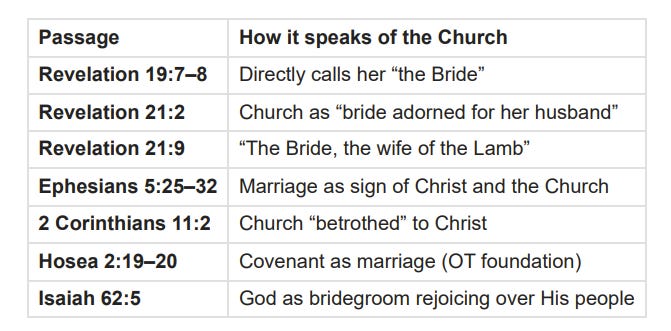
And sex must necessarily be a monogamous relationship between one man and one woman specifically because, as a sacrament, it points directly to the relationship between God and the Church.
Conclusion
Creativity is a general human capacity, cultivated or neglected according to the stories we tell, the communities we inhabit, and the virtues we practice. To claim that one side of the political spectrum possesses it in greater measure is to misunderstand both creativity and politics.
If you're a Conservative and you echo this myth without proof, you need to realize that you are participating in your own marginalization. Stop conceding the imaginative realm to your opponents. Creativity is not something bestowed by institutions; rather, it is cultivated by communities.
More Conservatives voices need to reject this myth and asks what creativity actually is, how it is formed, and who benefits from the belief that it belongs predominantly to the Left. While our institutions may shape our perceptions, they do not define our reality. Imagination is not a scarce resource hoarded by the powerful, but a gift that flourishes wherever people refuse to let others tell them what their contributions are worth.
NEXT: Pre‑Interpreted Storytelling And The Eclipse Of Analysis

This made sense over 50 years ago, when democracy still existed on both sides. Conservatives could be in the same business as the left and accept suggestions. The conservative might not have been a great artist, but they were an important part of the creative process despite the differences. The same applies to women in creative circles: when there is a healthy clash of ideas without fear of retaliation, good concepts usually emerge. The problem is that this has ended; ideology is now rewarded and only one side is accepted, creating an inbred environment and circles where saying anything against an ideology or idea can cost you your job, ensuring that no one can question anything. When you let a leftist—especially one from our current era—do whatever they want, we see that their supposed talent means nothing because they end up sabotaging themselves. Since their ideology takes precedence over their own creativity, they end up butchering their works and creating plot holes and bad writing just to shoehorn in their propaganda.
I will never be able to forget Steven Universe. Years ago, I dared to watch that series and, despite all the red flags about what it was and is, there was genuinely a plot that was interesting and showed promise. In fact, without even realizing it, the authors established a myth of revolution because approaching it that way was a good plot twist. But this shift was, in turn, the death of the series. They will never admit it, but from the moment they introduced that element, they began to change the narrative, making certain characters look worse and giving us a finale that was terrible—one that, viewed from outside their country, was unanimously labeled a disaster for the plot and a condemnation of the lore. When I began to learn about politics outside my country and was able to travel to America, I understood that the writers made that ending because they took for granted that the allegory was universal; it wasn't, because it isn't. To be blunt, you could say that part of the problem with the series' villain is: "You are too white." When I understood this, I put my hands to my head and said: "This can’t be, you seriously flushed your story down the toilet just to include that."
In this article, you touch on how conservatives have surrendered the creative narrative to the left, and I agree with you: it is a problem, and it's a mistake that neutrals make as well. That today's entertainment stinks is half the fault of the left and the companies that permit their discourse, but the other half of the problem is the rest of us. We aren't doing anything—not even stopping our consumption of the garbage they give us—because we have inherited that labor from those people. We must start drawing and creating new things or, at the very least, as in my case, stop consuming garbage firsthand. Some time ago, I saw a content creator explain another reason why the left ended up with this advantage. Historically, the artist always depended on patrons, which kept certain attitudes in check; however, those patrons weren't as large or as devoid of values as the ones today. This is important because there is a correlation between "effeminate" or bizarre attitudes among these people, but this behavior is linked to the fact that it often involved digging into the bottom of the barrel for ideas, and in other cases, because it made them stand out—like Dalí, for whom it was more of a personal brand than actually being insane.
But the general opinion remained: to be an artist, you are going to suffer, be a weirdo, and not earn well. That’s what being an artist is like; it was never lucrative. If we analyze many of them, we realize they weren't very opulent in their beginnings; in fact, some never left that state, and others, like Da Vinci, had side jobs to get by. This reached our times with two bad and discouraging stereotypes. The first and most false of all was saying that being an artist makes you gay. This is especially ironic because the idea of Stranger Things in its first season was supposedly to show that the "geek artist" stereotype was stupid... only for the bullies to be proven right two seasons later. Anyway, Netflix and its creatives, as usual. And the second: don't go into art, you'll starve, become an engineer, a lawyer, or anything else more profitable. This last point is a problem because, unlike the previous one, it does contain a kernel of truth. It is hard to live off art, and combined with the previous points and the fact that today many artists are insufferable "walking stereotypes," it causes ordinary people and conservatives to feel contempt for artists. And that is a problem because they are hitting themselves with friendly fire. As I said, we are the other half of the problem and, without realizing it, we are defaming a sector that is vital for escaping the pit we are in. To top it off, because they are in the media, they end up infecting other sectors with their propaganda; that’s why related fields like programming are full of these people too, because of the proximity—though here, they end up damaging themselves due to their own schizophrenia.
Anyway, this last part isn't entirely my own opinion and is somewhat distant, as it isn't a local observation for the reader, but it felt like something necessary to contribute.
Most conservatives “work”, have responsibilities and people to provide for. So when we are in this aspect of our lives, we have little time to devote to creativity. How many, married, well-centered people are actors? Authors? Screen writers? They’re all self-centered, narcissistic, bleeding heart liberals with no actual accountability, to any one else.
So of course the left has a stranglehold on all aspects of the entertainment industry. But in the past, the looneys were tempered by strong, conservative, studio leadership. (You know, that nagging need to satisfy the audience and make $).
Now we have bob iger’s.