


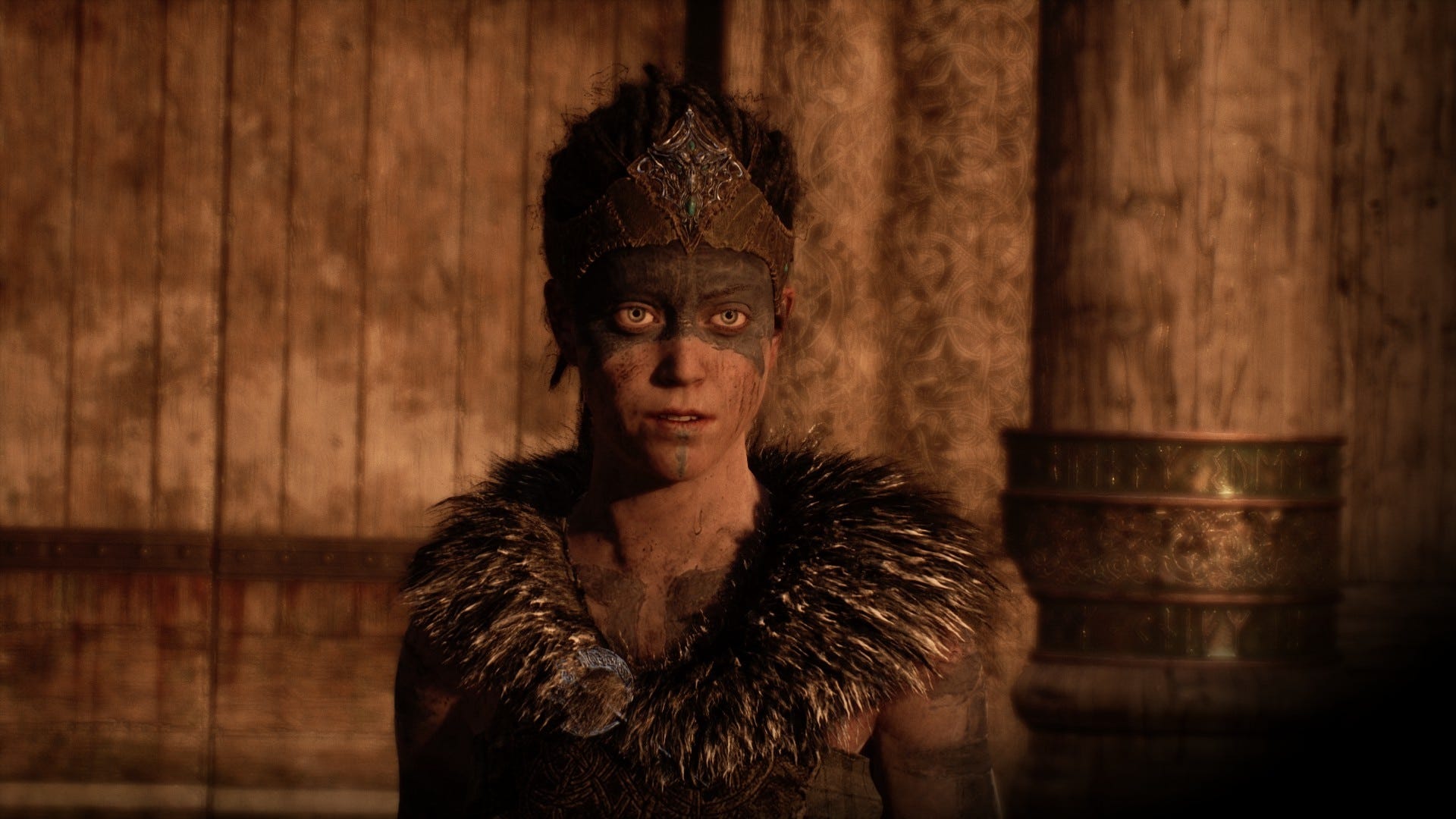
When Hellblade: Senua’s Sacrifice was released, the developers told everyone exactly what the game was about. The framing was not subtle. In interviews and promotional material, Ninja Theory emphasized that the game’s central purpose was to portray psychosis and mental illness with accuracy and sensitivity. One representative line captures the spirit of their approach: “Senua’s experiences of psychosis...are rooted both in neuroscience and in real lived experience.” The meaning arrived pre‑attached. The audience was not invited to discern what Senua’s visions might signify within the world of the story. They were told in advance how to understand them.
The contemporary imagination suffers from a peculiar malnutrition. We are surrounded by stories, yet starved of meaning. The problem is not that our media lacks themes; it is that when they arrive, they have already been digested. The modern storyteller, anxious to be understood and terrified of being misunderstood, rushes to supply the audience with an interpretive key before the door has even been encountered. What this results in is not a real narrative but an instruction book. This is why so much of modern media is about consumption and not discovery.
This is a condition I call pre‑interpreted storytelling.
The phenomenon is easy to observe. Consider the way certain games and films announce themselves. In addition to crafting a world, people find it necessary to bolt a moral lesson onto its framework just in case you missed the point. The medium is “about trauma,” or “about mental illness,” or “about overcoming your inner demons.” And so the audience is told, in advance, what the story means. The narrative becomes a vessel for a message already fixed, already clarified, and already insulated from the risk of misinterpretation. The work is not permitted to speak in its own voice and must instead echo a familiar therapeutic vocabulary.
Often now, when I listen to promotional material for any given work, writers, directors, developers, etc. will briefly talk about characters they have written. They will go in general detail about what makes the character compelling, what their flaws are, and what their struggle will be and how they'll overcome. And my issue isn't simply with the fact that these details spoil the story but that all "story" is just a formula for soapboxing ideals without challenging them over the course of the story.
When a story is pre‑interpreted, the audience is relieved of the burden of discernment. They need not attend to the textures of the world, any contradictions within the characters, or any moments of silence that might speak louder than exposition. The audience need only repeat what they have been told. The result is a strange parody of analysis: online discussions that merely summarize the plot and congratulate themselves for insight.
Summary is not analysis.
In a healthier narrative ecology, meaning emerges from the encounter between the reader and the text. A hero does something cruel or a villain does something charitable and nobody explains why. Guess what? You're left to figure it out. A good story withholds as much as it reveals and invites the audience to partake in its world vicariously. Interpretation should be its own form of participation, a way of entering into communion with the work, which necessarily means more than one interpretation ought to exist. This is also why Leftists or Progressive types don't like telling stories this way. They want you to accept and obey their values without supplying you with modes of interpretation. Do you want to write a hero who is racist? Sorry, all racism is given one mode of interpretation
Morever, too many authors assume that their work must be protected from any misreading. But, essentially, this mode of creativity forsakes treating an audience as participants in a shared search for truth. The best kinds of stories are not those that assume the truth is known, but those where the author is struggling to find it. It's one of the reasons I despise much of Leftist storytelling and don't believe in the myth that Leftists are somehow more creative than Conservatives. Progressives never let you figure out what their stories are about--their stories preach to you like they know all the answers in life and that you need to sit and listen to them teach you about how the world really works.
The anxieties surrounding pre-interpreted storytelling have also been woven into the habits of the audience as well. Many people have been trained to expect stories that declare their purpose and reassure us that we are on the right track, sparing us the discomfort of uncertainty. And so we lose the capacity to dwell in mystery, to discern meaning through patient attention, to allow a story to exceed our expectations. This impoverishes the audience. A narrative that explains itself cannot truly surprise us. A character who names his own psychological conditions or sexual identity cannot reveal anything deeper than the diagnosis. Just like a character who names his sexual identity doesn't reveal anything deeper than where he likes to stick his junk. A world that arrives with its themes pre‑labeled cannot disclose something unexpected.
More stories ought to be opaque. Opacity is the space in which interpretation becomes possible. This means the refusal to reduce characters to case study, or a plot to a moral lesson. We ought to look at stories less as products and more as a relationship between ourselves and the author. In this manner, true analysis becomes less an academic exercise and more a form of communion. Pre‑interpreted storytelling denies us this communion, prescribing us meaning without a mystery attached to its discovery. How droll.

I had an old school journalism professor decades ago for an elective on review writing.
His greatest emphasis was, "summation in not a review.". He was a hard case about that, and rightly so.
The job of the reviewer was not to tell the audience what the media was about, that was for them to figure out. The job of the reviewer was to assess whether or not the media was done well, make suggestions for who it might and might not appeal to, and share something of the overall experience.
I have been struck for years now at just how poorly reviewers do in this regard. Instead of giving thoughtful analysis, they just summarize the plot and harp on whatever industry talking points are hot at the time. D's and F's for the whole class.
What's even more concerning is that media producers now do the same thing. They can't show us their media and suggest why we should be interested. Instead, they have to tell us ALL ABOUT their media and how BRAVE and GROUNDBREAKING it is. It DOES THIS and IT'S THE FIRST AT THAT. And it's FOR this certain TYPE of person, but you ALL better enjoy it, because if you don't, that's PROBLEMATIC.
It's all so very tiring.