


Lois McMaster Bujold’s Vorkosigan Saga is one of the longest-running, most award-decorated science fiction series in the genre’s history, spanning more than three decades of novels, novellas, and short fiction. It has won more Hugo Awards than any other series. If you are coming to it fresh, the reading order question matters more here than in almost any other long-form SF series, because Bujold wrote the books out of internal chronological sequence and the publication order creates a different experience than the story order.
This guide covers both, flags the short fiction, and breaks down the notorious Borders of Infinity anthology situation so you know what you are getting into before you buy.
A Note on Two Reading Orders
Publication order drops you into the action with Shards of Honor (1986) and lets you experience Miles Vorkosigan’s early adventures before learning his backstory through the prequels Bujold wrote later. Many fans recommend this approach because meeting Miles as a young, chaotic force of personality before knowing his origins has a specific effect.
Internal chronological order starts with Cordelia Naismith’s story before Miles is born, then follows Miles from birth onward. This is the recommended reading order for most newer readers because it lays the emotional foundation Bujold built retroactively.
This guide follows internal chronological order with publication dates noted.
Prequels and Proto-Universe Fiction
“Dreamweaver’s Dilemma” (novelette, 1995)
The earliest piece in Bujold’s proto-universe, available only in the NESFA Press collection of the same name. Beta Colony appears; Barrayar does not exist yet as a concept. Bujold wrote it before she had built out the full universe, so it reads as a precursor rather than a foundation. The NESFA collection is a limited-run convention book and not easy to track down. Completionists should know it exists. Casual readers can skip it without losing anything in the main series.

Falling Free (novel, 1988)
Set roughly 200 years before the birth of Miles Vorkosigan, the novel follows engineer Leo Graf and the Quaddies, genetically modified people with four arms in place of legs, engineered as a zero-gravity labor force. The Quaddies reappear much later in the series, so this is not a standalone curiosity. It won the Nebula Award. That said, it has no Vorkosigans in it and connects to the main series only through the Quaddie thread. Most fans recommend reading it either first in chronological order or saving it until the Quaddies come up organically in Diplomatic Immunity. Both approaches work.
The Cordelia Arc (Before Miles)

1. Shards of Honor (1986) The starting point in chronological order. Cordelia Naismith, a Betan Survey captain, is stranded on an unexplored planet with her captor, Aral Vorkosigan. This is where the saga’s central family originates. Bujold later said she didn’t know the scale of what she was starting.

2. Barrayar (1991) Picks up immediately after Shards of Honor and covers Cordelia’s life on Barrayar as a political coup threatens her husband and unborn child. This won the Hugo Award for Best Novel. The events here explain Miles’s physical condition, which drives the entire rest of the series.
(Note: Bujold packaged both Cordelia novels together in the omnibus Cordelia’s Honor*, which is a convenient entry point.)*
Miles Vorkosigan: The Early Adventures

3. The Warrior’s Apprentice (1986) Miles is seventeen. He fails his entrance exam to the Barrayaran Military Academy and accidentally acquires a mercenary fleet. This is the book that defines Miles as a character: a physically disabled young man in a warrior culture who compensates with an intelligence and audacity that frequently outrun his judgment. The mercenary identity he creates here, Admiral Naismith, runs through most of the series.
4. The Mountains of Mourning (novella, 1989) Published in the anthology Borders of Infinity (see below). This novella takes place between The Warrior’s Apprentice and The Vor Game. Miles investigates an infanticide in a rural Barrayaran village. It won both the Hugo and Nebula Awards. Do not skip it.

5. Ethan of Athos (1986) A standalone that follows a supporting character, Elli Quinn, and a doctor named Ethan from an all-male planet. Miles is barely present. You can read this after The Warrior’s Apprentice or save it for later without losing the thread of the main Miles arc.
6. Labyrinth (novella, 1989) Also published in Borders of Infinity. An Admiral Naismith mission that introduces a recurring character. Takes place chronologically after Ethan of Athos.

7. The Vor Game (1990) Miles completes his military training, gets posted to a weather station on an arctic base, and things escalate from there to a full political crisis involving the Emperor of Barrayar. Hugo Award winner for Best Novel. This is where the series hits its stride as a wide-canvas political and military SF series.
8. Borders of Infinity (novella, 1989) The third novella in the anthology of the same name. Miles infiltrates a Cetagandan prison camp. This takes place after The Vor Game. The anthology edition frames all three novellas with a connecting “interview” sequence set even later in the timeline, which is why the collection feels slightly temporally disorienting.
The Borders of Infinity Anthology: What You Need to Know

The 1989 collection Borders of Infinity contains three novellas:
The Mountains of Mourning (chronologically the earliest)
Labyrinth (middle period)
Borders of Infinity (the prison camp story, later)
These three were written and published separately, then gathered into the anthology. The frame story connecting them was written specifically for the anthology and is set later than any of the three novellas. So when you read the anthology straight through, you are moving forward in internal chronology across the three novellas, then the frame story jumps you to a point even further ahead.
Reading them as a collected volume is fine. Reading them individually at their chronological positions is also fine. What trips readers up is assuming the anthology is a single story with a consistent timeline. It is not. It is three separate missions with a wrapper.
The Middle Miles Arc

11. Cetaganda (1996) Chronologically this slots before Brothers in Arms but was published later. Miles visits the Cetagandan Empire for a state funeral and uncovers a conspiracy. Many readers place it here in the reading order; others prefer publication order for this stretch. Either works.

9. Brothers in Arms (1989) Miles juggles his dual identity as Lord Vorkosigan and Admiral Naismith on Earth, complicated by a clone with a grievance. This is where the identity-doubling theme that runs through the series becomes explicit.

10. Mirror Dance (1994) Follows directly from Brothers in Arms and shifts primary POV to the clone, Mark Vorkosigan. Hugo Award winner. This is frequently cited as the series’ most intense novel and the one where Bujold’s exploration of identity, trauma, and family reaches its fullest expression. Do not read this one first.

12. Memory (1996) A turning point. Miles faces a career-ending crisis and has to figure out who he is without the Admiral Naismith identity. Frequently ranked among the best in the series. The transition it forces on the character changes the entire shape of the books that follow.
The Later Arc

13. Komarr (1998) Miles, now in a new role, investigates a terrorist incident on an occupied planet and meets Ekaterin Vorsoisson. The first of a two-book romantic arc.

14. A Civil Campaign (2000) Bujold described this as her Regency comedy of manners. Miles attempts to court Ekaterin while multiple political plots run simultaneously. The tone is deliberately lighter than the preceding books. It rewards readers who have followed the series because its humor is built on established relationships.
15. Winterfair Gifts (novella, 2004) A short story set immediately before and during a wedding. Published in the anthology Irresistible Forces. Bridges A Civil Campaign and Diplomatic Immunity and is told from a secondary character’s POV.

16. Diplomatic Immunity (2002) Miles and Ekaterin on a honeymoon that becomes a crisis. A somewhat lighter novel after the emotional weight of Memory through A Civil Campaign.

17. Captain Vorpatril’s Alliance (2012) Follows Ivan Vorpatril, Miles’s cousin and a long-running comic foil, through his own novel-length crisis. Bujold noted this was partly an answer to readers who wanted to know more about Ivan. It works as a near-standalone.

18. CryoBurn (2010) Miles investigates a cryogenics corporation on a distant planet. The novel ends with a sequence of very short chapters that hit hard if you’ve been with the series since the beginning. Do not read the last pages before reading everything else.

19. Gentleman Jole and the Red Queen (2016) Returns to Cordelia Naismith as primary POV for the first time since Barrayar. Set years after the main Miles arc. More meditative than the earlier books and a deliberate change of pace.
Short Fiction Outside the Anthology
“The Flowers of Vashnoi” (novella, 2018) Set between CryoBurn and Gentleman Jole. Ekaterin POV. Deals with the irradiated Vashnoi region of Barrayar and its surviving inhabitants. Available as a standalone e-book.
Where to Start If You Don’t Want to Start at the Beginning
The Warrior’s Apprentice functions as a workable entry point if you want to go straight to Miles. Bujold provides enough context that you don’t need the Cordelia books first. From there, read The Mountains of Mourning immediately before The Vor Game.
If you want the full emotional arc as Bujold constructed it, start with Shards of Honor and read in the chronological order above.
The one book that does not work as a solo entry point is Mirror Dance. It requires Brothers in Arms at minimum, and the emotional payoff it delivers depends on knowing Miles across several prior novels.
What is your preferred reading order for a long series: publication order to experience the author’s discovery alongside her, or internal chronology to get the full designed arc from the start?
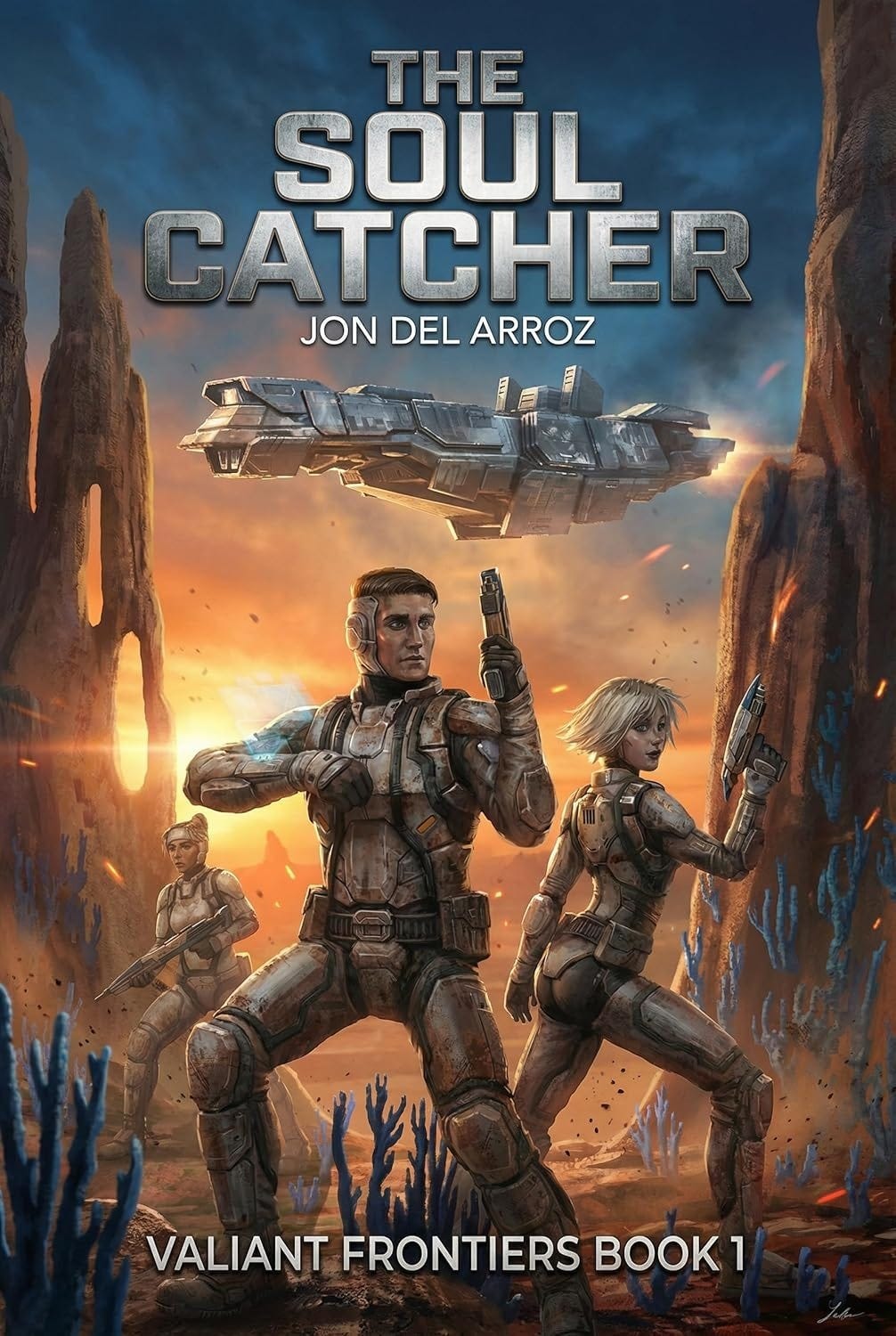
First contact with the Oridians was supposed to be humanity’s proudest moment. Instead, their chief engineer is dead, their ship is sabotaged, and an ancient alien technology is stealing souls. Book one of the Valiant Frontiers series delivers exploration, mystery, and the kind of crew you’ll want to follow across the galaxy. Read The Soul Catcher on Amazon and start the adventure.
Missed on this series. At the time I was mostly reading Star Wars