


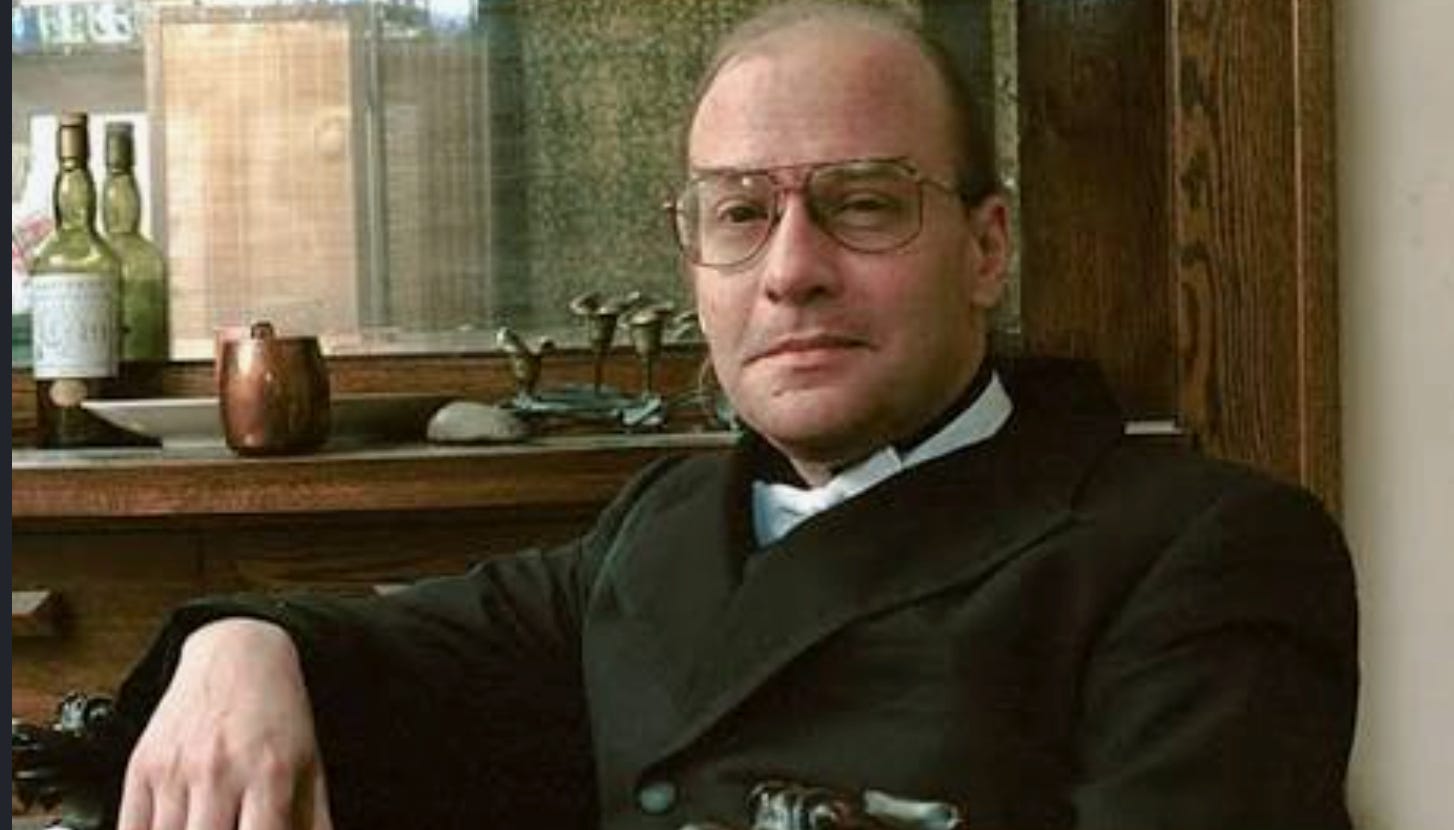
When John M. Ford died in his Minneapolis apartment on September 25, 2006, at the age of forty-nine, the working writers of his generation reacted like they had lost a compass. Robert Jordan, a lifelong close friend, called Ford “the best writer in America, bar none.” Neil Gaiman called him “my best critic ... the best writer I knew.” Patrick Nielsen Hayden, his editor at Tor, said, “Most normal people had the slight sense that something large and super-intelligent and trans-human had sort of flown over ... There would be a point where basically the plot would become so knotted and complex he would lose all of us.”
He had won the World Fantasy Award for Best Novel. He had won the World Fantasy Award for Best Short Fiction. He had won the Philip K. Dick Award. He had won the Nebula. He had won the Theodore Sturgeon Award. He had won three Rhysling Awards for poetry. He had won three Origins Awards for RPG work. He had written two Star Trek novels considered among the finest tie-in fiction ever published in the genre.
Then, for more than a decade after his death, almost everything he wrote went out of print. The catalog disappeared. Fans who had read him in the 1980s could not find his books to give to their children. Used copies of The Dragon Waiting on eBay ran into the hundreds of dollars. A generation of readers came up in the SF and fantasy field without ever encountering his name.
The books started coming back in 2020. The story of why they went away, and how they came back, is one of the strangest posthumous chapters in modern genre publishing. John M. Ford belongs in the front rank of the field. He slipped out of the conversation because of a combination of low output, chronic illness, tie-in fiction stigma, and a posthumous rights situation nobody knew how to solve.
The Indiana Kid
John Milo “Mike” Ford was born in East Chicago, Indiana, on April 10, 1957, and raised in Whiting, Indiana, a working-class industrial town on the shore of Lake Michigan. His health was already fragile in childhood. He was a Type 1 diabetic from a young age, a condition that would shape and eventually shorten his life.
He attended Indiana University Bloomington in the mid-1970s, where he was active in the campus science fiction club and in the SCA under the name Miles Atherton de Grey. He sold his first short story, “This, Too, We Reconcile,” to Analog in May 1976 while still an undergraduate. He was nineteen years old. He never finished the degree. In 1978 he moved to New York to work at the newly founded Isaac Asimov’s Science Fiction Magazine, where he became one of the ten most frequent contributors across the magazine’s first quarter century. Poetry, fiction, articles, and game reviews. He wrote everything.
Around 1990 he moved to Minneapolis, where he stayed for the rest of his life. He worked, in various stretches, as a hospital orderly, a computer consultant, a slush pile reader, and a copy editor. Writing did not pay all the bills. Diabetes and kidney disease did not help. In 2000 he received a kidney transplant that considerably improved his quality of life, giving him the six good years that produced The Last Hot Time and the beginning of Aspects.
He met his life partner, jewelry maker and fan Elise Matthesen, in the mid-1990s. She found his body on September 25, 2006. He had died in his sleep of natural causes.
He was one of the great fixtures of Minneapolis fandom in those years. At Minicon and other conventions he ran a comedic performance called “Ask Dr. Mike,” donning a lab coat and standing before a whiteboard to give elaborate humorous answers to any scientific or philosophical question the audience threw at him. He composed poems on the spot in complex traditional forms, from sestinas to sonnets, often extemporized. He was, by every account of anyone who was there, one of the most brilliant human beings the field has ever produced.
The Dragon Waiting

The Dragon Waiting (1983) is Ford’s masterpiece, and it is one of the finest fantasy novels of the twentieth century, and almost nobody has read it.
The premise: an alternate history in which Julian the Apostate succeeded in restoring the pagan Roman Empire, Christianity remains one contested religion among many, Byzantium never fell, magic works, vampires exist as a known and negotiated fact of European life, and the machinations surrounding the reign of Edward IV and the rise of Richard III of England are the central political drama. The book converges on the Wars of the Roses as viewed from four perspectives: a Welsh wizard, a Byzantine physician-vampire, a Florentine banker in the Medici circle, and a German mercenary. Their intersecting stories build to a reconstruction of what happened to the Princes in the Tower, and to Richard III himself, that is more historically grounded than most straight historical fiction on the same subject.
The prose is dense, allusive, and demanding. Ford does not hold the reader’s hand. He assumes you know your late medieval European history, or that you will look up what you need. Characters speak in ways characters spoke in period, which means Latin tags and untranslated French and idiomatic Welsh. The plot rewards close reading and multiple passes. This is the reason many readers who pick it up bounce off it. It is also the reason readers who stick with it come back to it every few years for the rest of their lives.
The Dragon Waiting won the World Fantasy Award for Best Novel in 1984. Tor reissued it in 2020 as the first title in the Ford recovery project. If you have never read Ford, this is where to start.
Growing Up Weightless and the Rest of the Original Novels

Growing Up Weightless (1993) is Ford’s second masterpiece. It won the Philip K. Dick Award. It is a coming-of-age novel set on a colonized Moon three generations after the founding, in which the young protagonist, Matthias Ronay, is the son of a Lunar Council member and comes of age understanding both the culture that made him and the reasons the Lunar colonies are drifting toward independence from Earth. It reads like nothing else in the field. Ford builds his Moon by inference. Nobody explains anything to the reader. You pick it up from context, dialogue, throwaway details, the way you would if you had grown up there. Tor reissued it in 2022.
Web of Angels (1980) is his first novel and one of the earliest proto-cyberpunk works. Ford was writing about networked reality and information warfare and hackers as folk heroes years before William Gibson published Neuromancer. The book is rougher than his later work, but the ideas are enormous, and it deserves recognition as a foundational cyberpunk text.
The Princes of the Air (1982) is space opera done in Ford’s style, which is to say with layered political intrigue and characters who talk like they have interior lives.
The Scholars of Night (1988) is a high-tech Cold War thriller in which the recovery of a previously unknown Christopher Marlowe play triggers an intelligence war. It reads like John le Carré wrote a novel with Ford’s brain.
The Last Hot Time (2000) is urban fantasy set in a magical Chicago, and it is one of the last books he published in his lifetime.
Aspects was published in 2022, sixteen years after his death, unfinished. Neil Gaiman wrote the introduction. It is the book Ford was working on when he died. Even incomplete, it is astonishing.
Star Trek and the Tie-In Stigma
Here is where the story gets uncomfortable. Ford wrote two Star Trek novels for Pocket Books. Both are landmarks. Both got him dismissed by the prestige end of the field, or, more accurately, gave that end of the field the excuse it needed to overlook the rest of his catalog.

The Final Reflection (1984) is the first novel to treat Klingons as a serious civilization rather than as generic space villains. The protagonist is not Kirk. Kirk barely appears. The book is the memoir of a Klingon officer, Krenn, and it builds the political, military, cultural, and religious framework of Klingon society from the inside. Everything Ronald D. Moore’s TNG-era Klingon episodes did with honor codes, House politics, and the Empire’s internal factions was foreshadowed here. Ford also invented klin zha, the chess-like strategy game that Klingon fandom adopted as canon. The book is smart, dark, morally serious, and features human characters as the alien outsiders. It reads like nothing else in the Star Trek tie-in library.
How Much for Just the Planet? (1987) is the comedic novel Ford wrote next. The Enterprise and a Klingon ship arrive at a planet whose colonists defend their independence by staging elaborate musical-theater set pieces. The book includes original song lyrics parodying twentieth-century Broadway musicals. It is a Gilbert and Sullivan operetta in the shape of a Star Trek novel. Paramount reportedly banned all subsequent Star Trek tie-in novels from including humor after they saw what Ford had done.
Before either novel, Ford wrote The Klingons: A Sourcebook and Character Generation Supplement (1983) for FASA’s Star Trek: The Role Playing Game. The book laid out Klingon culture, history, politics, and language in more depth than any Paramount production had at that point. Subsequent Paramount productions, from The Next Generation forward, borrowed heavily from Ford’s framework. His fingerprints are on the modern Klingons. He was never credited on screen.
The tie-in stigma point is the crucial one. In the American SF/F prestige conversation, tie-in fiction is not respectable work. It does not count toward literary reputation. It is treated as hackwork done for money. Ford wrote two tie-in novels that are as good as almost anything he did elsewhere, and the field’s response was to lump them in with the disposable content and file him alongside the disposable authors.
This is a mistake the field has made repeatedly. Alan Dean Foster’s Splinter of the Mind’s Eye. Peter David’s Star Trek and Marvel work. Michael Stackpole’s Star Wars X-Wing novels. Timothy Zahn’s Thrawn trilogy. Every one of these is a serious writer producing serious work in a shared universe, and the prestige conversation has spent forty years treating tie-in fiction as beneath consideration. Ford is the highest-profile casualty of that policy.
The RPG Work
The role-playing game work is the other large chunk of Ford’s catalog the prestige conversation has ignored, and it is astonishing.
The Yellow Clearance Black Box Blues (1985) for West End Games’ Paranoia RPG won the Origins Award for Best Roleplaying Supplement and is still cited by RPG designers as one of the finest published adventure modules ever written. Ford took Paranoia‘s black-comic dystopian setting and used it to build an adventure that was simultaneously hilarious, brutally satirical, and structurally clever in ways the medium had rarely seen. It won Paranoia its serious critical reputation.
GURPS Time Travel (1991) with Steve Jackson won the 1991 Origins Award. GURPS Infinite Worlds (2005) with Steve Jackson and Kenneth Hite won the 2005 Origins Award, twenty years after his first Origins win. Three Origins Awards is a career for most game designers. Ford treated it as a side project.
He also wrote for Traveller, Autoduel Quarterly, and Pyramid. He drew the cartography for The World of Robert Jordan’s The Wheel of Time (2001) at his old friend Jordan’s request. He plotted issues of the alternate-history comic Captain Confederacy. He wrote children’s gamebooks under pseudonyms. There was almost nothing in genre publishing he could not do well.
The Disappearance
The story of what happened to Ford’s catalog after his death is strange, and for years the SF community told a version of it that turned out to be more myth than fact.
The received wisdom, repeated by fans and industry figures alike, was that Ford’s estranged family disapproved of his work and were deliberately keeping his books out of print out of spite. This was not accurate. Isaac Butler, writing for Slate in November 2019, tracked down Ford’s family, spoke with his aunt Jane Starner, and found the situation was considerably more complicated. Ford had written an unexecuted will specifying that he did not want his family to inherit his estate. That document was in his apartment. His partner Elise Matthesen was unable to legally access the apartment after his death. His family claimed the body and the belongings, left town, and communication broke down. The family did not hate his work. They had lost touch with the SF community that mourned him, and neither side knew how to reach the other.
Butler’s investigation made contact possible. Tor Books, where Ford’s editors Patrick Nielsen Hayden and Beth Meacham had been trying for years to reissue his catalog, was able to negotiate an agreement in November 2019. The Dragon Waiting came back into print in 2020. Growing Up Weightless followed in 2022. Aspects, the unfinished novel, was published in 2022 with Neil Gaiman’s introduction. The two Star Trek novels have been continuously in print through Simon & Schuster. The Ford catalog is more available now than it has been since he died.
That gap of thirteen years, from 2006 to 2019, is why a whole generation of SF and fantasy readers never encountered him. The books did not exist for them to find. The Slate article, the negotiations, and the reissues are the reason a working recovery is now possible.
Why He Matters Now
Ford is the writer’s writer. He is the case study for what happens when a spectacularly gifted author does not fit the shape the industry has ready for him. His output was low compared to peers of similar stature because he was chronically ill. His prestige was low because he wrote two Star Trek novels and a shelf of RPG modules that the field’s tastemakers did not know how to file. His catalog vanished because he died without a functional will and the friends who could have advocated for him and the family who legally inherited him did not know how to talk to each other.
Every one of those problems is a problem that recurs in the current publishing environment. Every author with health issues, every author whose day job is tie-in work, every author whose posthumous rights are tangled by legal complexity: Ford’s case is the template. He is worth reading in his own right. He is also worth reading as a corrective example for how the field treats the brilliant writers who do not fit the prestige mold.
The technical craft is extraordinary. Nobody in the genre wrote sentences as precisely as Ford. His poetry, most of it collected in Heat of Fusion and Other Stories (2004) and From the End of the Twentieth Century (1997), is world-class formal verse produced at a time when nobody else in the field was even trying to write formal verse. His prose sentences do multiple kinds of work at once. His plots are dense, layered, and reward the reader who pays attention.
The indie and crowdfunded SF space, which has been busy rebuilding a genre where craft, ambition, and unfashionable political sensibilities are welcome, has a lot to learn from Ford’s catalog. The prestige conversation shut him out. The reason to read him now is partly to see how much better the field could be if it were willing to take the writers it dismissed seriously again.
If you have never read Ford, start with The Dragon Waiting. If that grabs you, follow it with Growing Up Weightless. If you love Star Trek, The Final Reflection is where to go. If you play RPGs, The Yellow Clearance Black Box Blues is still one of the best published adventure modules in the industry. If you love poetry, Heat of Fusion is the book.
He was one of the great ones. The catalog is coming back. The reading is ready to be done.
Which brilliant, low-output, forgotten writer do you think deserves the next full retrospective, and which book of theirs would you put in every reader’s hands?
First contact with the Oridians was supposed to be humanity’s proudest moment. Instead, their chief engineer is dead, their ship is sabotaged, and an ancient alien technology is stealing souls. Book one of the Valiant Frontiers series delivers exploration, mystery, and the kind of crew you’ll want to follow across the galaxy. Read The Soul Catcher on Amazon and start the adventure.
NEXT: Gregg Press Turned Paperback-Only Science Fiction Into Quality Hardcovers, Then Vanished
I’ve really been enjoying these biographical pieces. It’s nice to know about the people behind the work.