


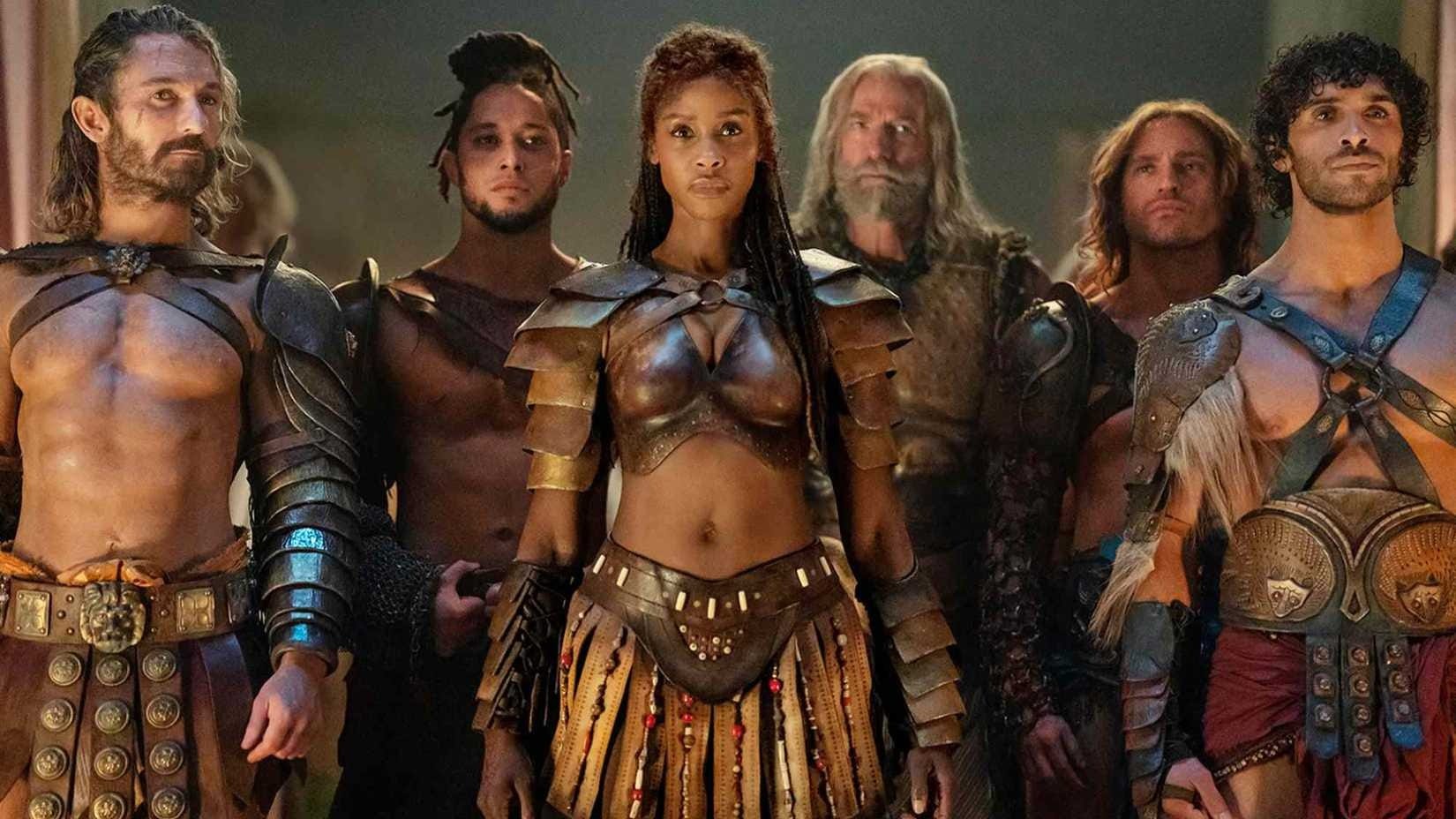
Spartacus: House of Ashur has been canceled after one season at Starz. Lionsgate Television is reportedly shopping the series to other platforms, but Starz will not move forward with Season 2.
The cancellation statement from Deadline contains the most honest sentence a studio has published about DEI-driven programming in recent memory. “The makeup of the followup’s audience did not quite align with Starz’s focus on women and underrepresented audiences,” Deadline reported.
The people who wanted a Spartacus show, the male-skewing fans who made the original a Starz signature series, showed up. They were not the audience Starz wanted. So the show was canceled.
The original Spartacus: Blood and Sand launched in 2010 and became one of cable television’s defining genre properties of its era, brutal, bloody, sexually explicit, and built around testosterone-soaked arena combat, slave rebellion, and Roman political intrigue. It made stars of Andy Whitfield and Liam McIntyre. It ran four seasons. It built a devoted male audience that had nowhere else to go for that kind of content.
House of Ashur brought back Steven S. DeKnight, who created the original series, and Nick Tarabay as Ashur in an alternate timeline. The premise was solid. Ashur didn’t die on Mount Vesuvius. He was rewarded for helping the Romans defeat Spartacus and given control of Batiatus’ ludus. The original’s DNA was there.
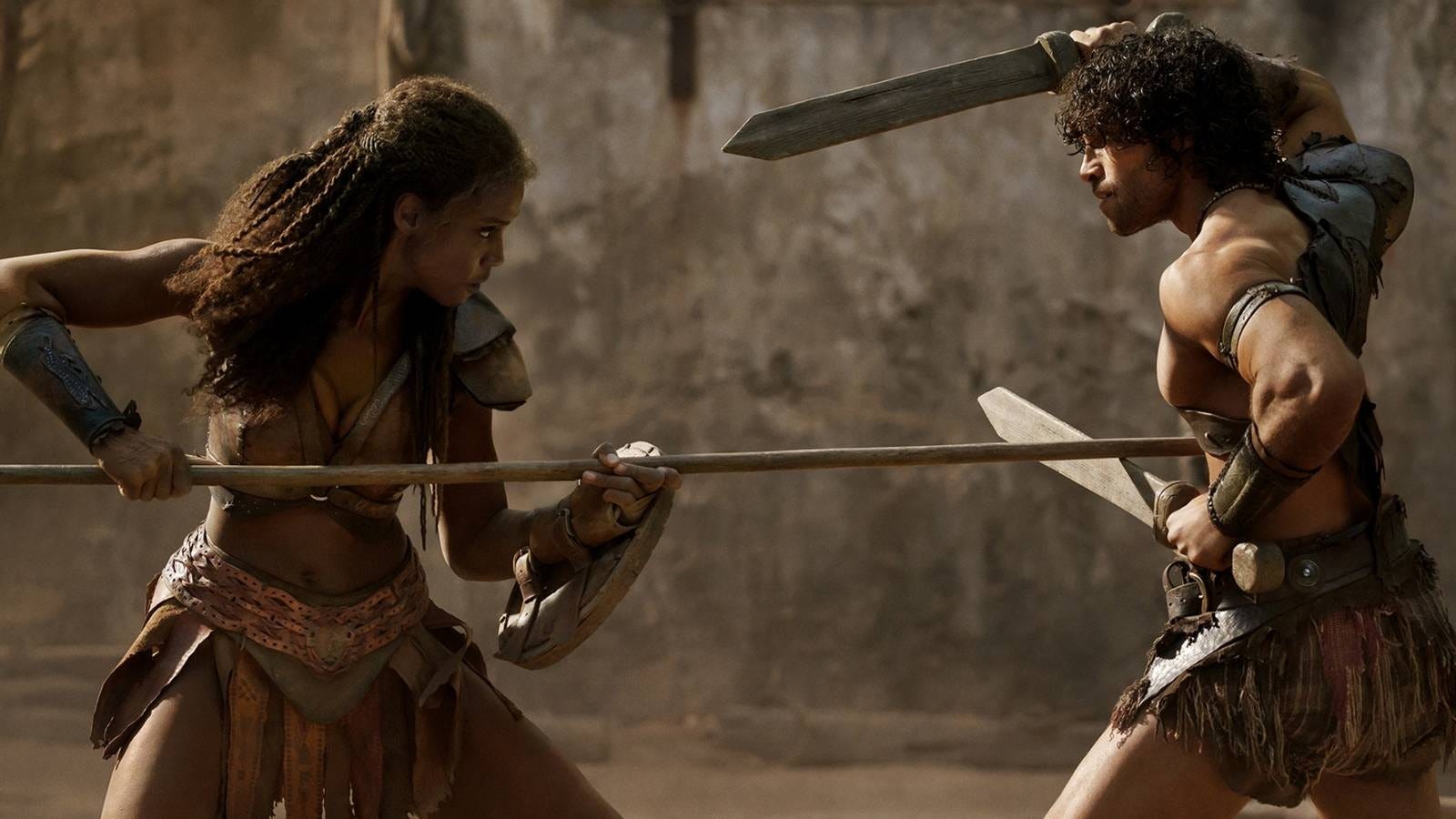
What was also there, inserted from the production’s first episode, was the new direction Starz demanded. The show was built around Achillia, played by Tenika Davis, an enslaved Nubian warrior whom Ashur recruits as his champion. Starz promoted her as the franchise’s first female gladiator, making her one of the show’s biggest departures from the original formula.
Pop Culture Analysis by Holte reviewed the series and described what that departure looked like in practice: “If you ever wanted to see an angry black woman literally rip a man’s penis right off with her bare hands, this is the show you’ve been waiting for. If, on the other hand, you’re insulted and fed up with the ‘130-lb woman beats ten bigger armed men’ trope that’s infected every single franchise in 2025 — skip this one, hard. Dead Lucretia resurrects Ashur in an alternate timeline where he actually killed Spartacus and got rewarded with his own ludus. Then his top gladiator loses to three dwarves — yes, really — so Ashur goes shopping for something unique. What does he find? A black female slave who single-handedly wrecks his entire guard squad, smashes a vase in his face, wraps a chain around his neck, and nearly kills him on the spot. Naturally, he immediately makes her his new champion. Immersion? Gone. Logic? Out the window. Because if one random slave woman can mop the floor with every trained male killer in the villa, why the hell has every ludus in Rome not been 100% female for the last 300 years? They took a franchise built on raw, brutal, testosterone-soaked action and turned it into yet another girlboss beats the patriarchy fanfic. Spartacus deserved better. We deserved better.”
This is the structural problem with the DEI programming model applied to legacy properties. The original Spartacus audience did not need to be told the show was for them. They showed up. The show Starz produced for House of Ashur was not built for that audience. It was built to attract the “women and underrepresented audiences” Starz identified as its strategic focus as an audience that had no particular reason to watch a Spartacus spinoff and did not show up in meaningful numbers regardless.
The audience that did show up was then told by Starz’s own cancellation language that their viewership was the wrong kind. The show failed to match the original’s numbers. The audience “did not align” with Starz’s focus. Translation: the people who remembered Spartacus and wanted more of it came back, and they were not the demographic the network was trying to serve.
This is the same pattern we’ve seen across franchises for years. An established property with an existing audience gets handed to a DEI-driven programming mandate. The existing audience is alienated by the changes. The new target audience does not materialize. The show fails commercially. The network cites viewership numbers without acknowledging that the audience they drove away was the one that had made the original viable.
The original Spartacus “could not be matched” in buzz and viewership by its own spinoff. The reasons are in Starz’s own cancellation statement. They built the wrong show for the wrong audience and then canceled it when the right audience showed up and found it unrecognizable.
Lionsgate is shopping the series to other platforms. If another network picks it up, the question is whether it gets the course correction it needs or continues the direction that killed it at Starz.
What would a genuine Spartacus continuation look like to you? Let us know in the comments.
Epic Fantasy hasn’t been this hard-hitting since Tolkien. In a world where humanity is akin to a Roman legion, a great darkness arises. Read A Throne Of Bones today.
NEXT: Nolan’s Odyssey Cast Explains What They Did To Homer And Imply Criticism Is Racism
The original Spartacus is my favorite show ever. What makes this failure even more tragic is that a certain amount of diversity was baked into the concept. The Romans took slaves from all over the empire—Gauls, Celts, Punics, Moors, Britons... Spartacus himself was Thracian. There was even a certain amount of homosexuality in ancient Rome, so even that would not be totally out of place.
Thus, the producers of this spinoff, if diversity was their goal, really didn't have to make it so stupidly woke. But diversity wasn't their goal. Their goal was to demoralize and humiliate viewers like me. Unfortunately for them, viewers like me didn't show up.
Will they learn a lesson from this failure? Doubtful.
Oh look, another "This isn't for you" series. Thanks for letting us know, it'll save time and brain cells.
It must be nice to be able to waste money and get rewarded. If I wasted money, I'd be on the starving line.