


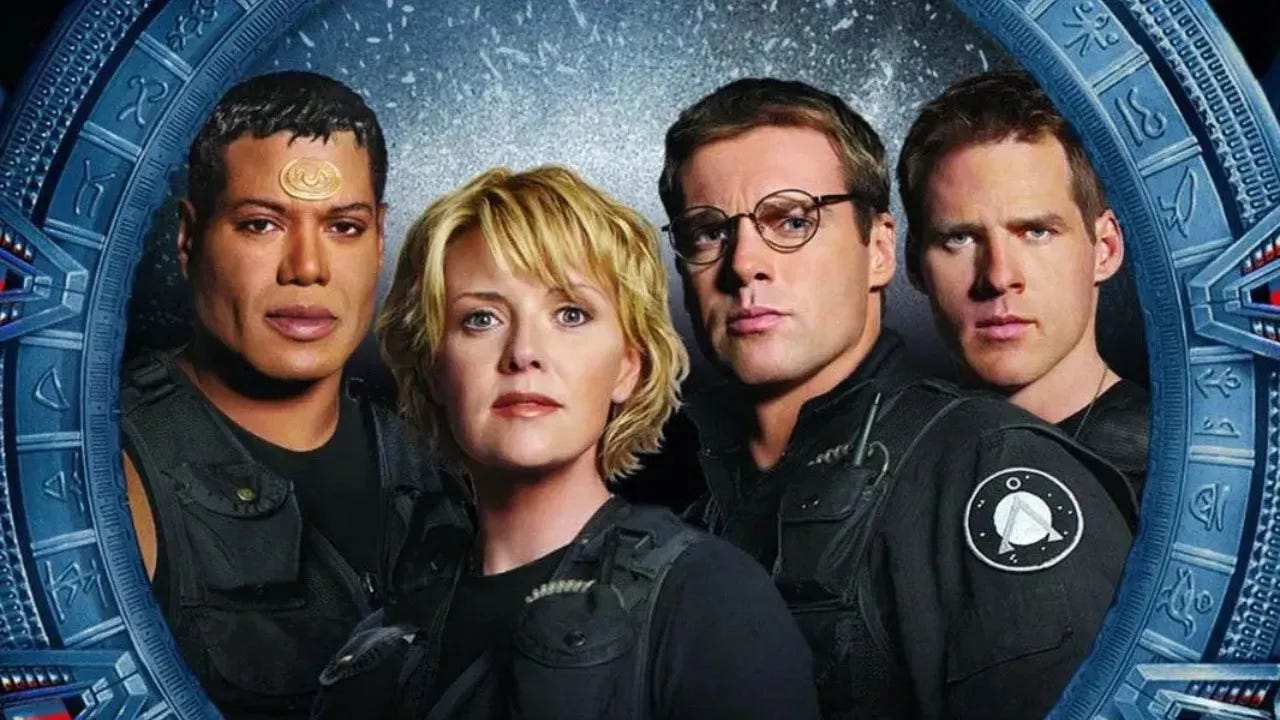
Amazon canceled the new Stargate series on June 2. The creative team that built it responded with grief and fury. Polygon responded with a think piece arguing Amazon made the right call.
The Polygon article, published within hours of the cancellation, argued that the new Stargate was too focused on existing fans and that Amazon was correct to kill it. The piece opened by framing the show’s announcement to the Stargate fan community, a marketing launch that brought in GateWorld’s Darren Sumner and Dial the Gate’s David Read alongside the creative team, as evidence that the show was designed exclusively for hardcore fans rather than general audiences.
It then proceeded to speculate about what the show would have been, acknowledged it had no actual plot details, and used those speculations as evidence to support its argument. The piece cited Starfleet Academy’s struggles as a parallel, claiming the show failed because it was too beholden to canon. It suggested rebooting Stargate’s canon would allow the new show to bring back the Goa’uld, without apparently realizing that the Goa’uld are already canon and do not require a reboot to appear in new Stargate content.
Joseph Mallozzi, who served as showrunner across fifteen seasons of SG-1 and Atlantis and was a consulting producer on the canceled revival, posted a full response on his blog.
His complete statement:
“Well this is a hastily cobbled together shit-take of conjecture and misdirection. The author starts by misreading a grassroots marketing launch as a statement of exclusive intent. Come on. Announcing a series TO a fandom alongside its community leaders is standard PR; it’s not proof that the show was designed exclusively FOR fandom.
“In fact, it was made clear from the start that, first and foremost, the series would function as an accessible entry point for new viewers...while still respecting canon. And, by the way, ‘Respecting canon’ does not mean ‘requiring new viewers to be familiar with 350+ hours of existing Stargate programming’ as this article implies. The author proceeds to support their point by launching into fan fiction: ‘No plot details were revealed about the scrapped show, but I can easily imagine…’
“And they certainly do. What follows is a parade of clichés, a generic legacy-sequel checklist that the author has conjured up from nothing and pinned to the new show as predictive evidence. Then comes the claim that Starfleet: Academy failed because the showrunners ‘focused too much on paying tribute to the series’ past.’ Uh, wut?
“Yes, Starfleet: Academy did receive a fair amount of criticism, but strict adherence to canon wasn’t on the list of grievances. This reads like a comment from someone who likely never even watched the show, much less perused the fan response. They state: ‘Rebooting the cannon also would let the new Stargate showrunner bring back the Goa’uld, the franchise’s most iconic villains…’ No, it wouldn’t. Know why? Because the Goa’uld... ARE CANON!!!!
“The article concludes with a disconnected meditation on an old Stargate storyline with no relation to either the new show or the author’s own argument. I want to say it was written by A.I., but surely A.I. would display more logical consistency than this.”
Mallozzi is right on every point.
The Polygon piece committed the specific category of entertainment journalism failure that has become standard at outlets whose cultural politics align with the corporate streaming apparatus. It published quickly, reasoned from invented premises, cited no actual sources on what the show would have been, and arrived at a conclusion that happened to defend the studio’s decision against the fans who were hurt by it. The piece did not have access to the show’s scripts, room documents, or pitch materials. Neither does anyone outside Amazon and the production team. The Polygon writer acknowledged having no plot details and proceeded to invent them, then used the invented details as evidence.
The broader context makes the piece worse. Gero built this show over two years with the explicit goal of creating an accessible entry point for new viewers while respecting existing canon — a goal Mallozzi confirms was central to the pitch from the start. The community leaders brought in for the launch announcement were not evidence of a show designed only for hardcore fans. They were the promotional infrastructure for a show that needed its core audience’s trust before it could earn a broader one. Every successful franchise revival uses this approach. You do not abandon your existing audience to find a new one. You bring your existing audience with you while building the bridge for newcomers.
Amazon killed the show because executives decided it was too focused on existing fans. Polygon published a piece within hours defending that decision with arguments the show’s own showrunner has now documented as factually wrong. The Goa’uld point alone should have disqualified the piece from publication. Any writer covering Stargate with enough knowledge to argue about its future would know the Goa’uld do not require a canon reboot to appear in a new Stargate show.
Mallozzi’s grief and his anger are both earned. He wrote this on his blog when the cancellation was confirmed: “Martin Gero developed a new Stargate series over two years, ultimately crafting a show that offered a fresh jumping-on point for new viewers while deeply respecting existing canon. It was a series that avoided the pitfalls of several modern remakes and reboots by fully embracing the core of its predecessors: action, adventure, exploration, wonder, heart, humor, and found family. My heart breaks. For the incredibly talented writers who worked tirelessly to bring this show to life. For Martin who maintained an unwavering positive outlook throughout despite the challenges. And for the long-suffering Stargate fandom who waited so long and came so close to getting a show they truly would have loved.”
The media has been causing a lot of problems already, claiming the show was not appealing to broad audiences, with Michael Shanks, the star of SG-1, even chiming in to say “I too dispute this claim.” It seems like there’s a hatchet job being made by the media over politics.
A reader even mocked Polygon’s article in Mallozzi’s comments, saying, “First time reading Polygon?”
To which Mallozzi wittily replied, “Yes! I was always asuned it was a hook-up site for polyamorous couples.”
What do you think Amazon should do with the Stargate IP? Let us know in the comments.
If the golden age of Trek and Babylon 5 left a hole in your sci-fi diet, The Stars Entwined fills it — interstellar espionage between two civilizations on the brink of war. Read The Stars Entwined on Amazon!

NEXT: Andor Director Tony Gilroy Doubles Down On Political Rants In Peabody Award Speech
The Communists have "infiltrated" everything. Nothing. Nothing will change until they are removed from ... The Corporations, The Government and the Institutions (e.g. Universities).
Everything will be corrupted and ruined to promote their Satanic ideology.
And "straight White Christian Men" will be ostracized and discriminated against everywhere.
The piece cited Starfleet Academy’s struggles as a parallel, claiming the show failed because it was too beholden to canon.
SFA in no way held to Gene's canon. It was a lbgtq+ disaster. It deserved to die, have a stake through the heart, and it's head cut off.
There is no reason why you have to sacrifice a solid fanbase in order to bring in new viewers.
The execs don't understand how it works. If StarGate had been allowed to run and the fan base liked it, they'd suggest it to their friends and family and drag gen Z to watch it as well.
However, if you alienate the existing fanbase, they won't suggest it to anyone, and they'll go out of their way to drive people away from it.