


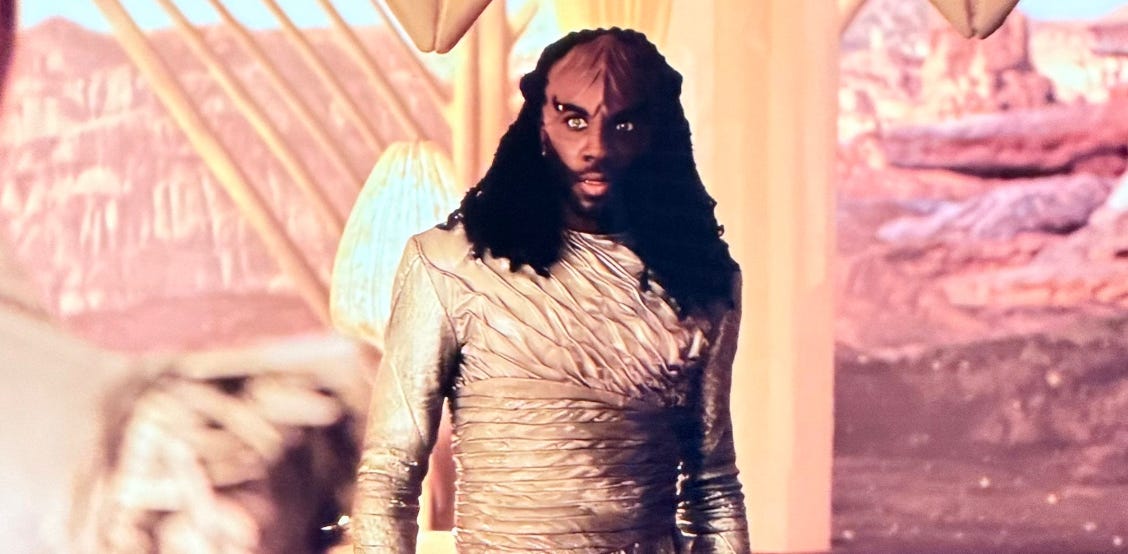
Star Trek: Starfleet Academy has wrapped production on its second and final season. Paramount+ confirmed the show will not return after Season 2. Karim Diané, who plays Jay-Den Kraag, the franchise’s first openly gay Klingon, gave an interview at Trek Talks this week that tells you quite a bit about why the show is ending.
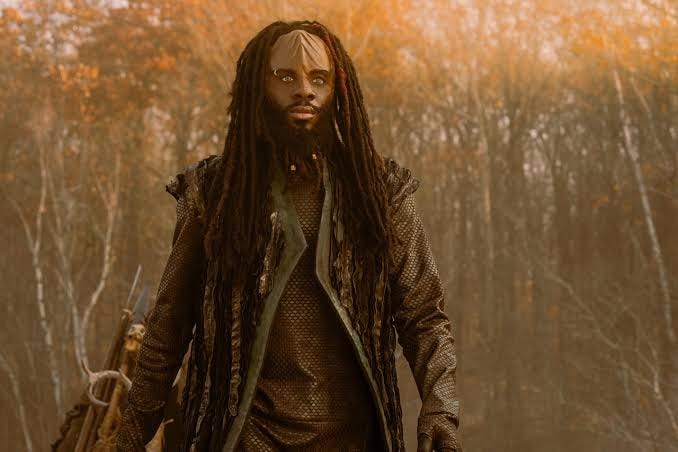
Diané plays a Klingon who is a pacifist, a healer, gay, soft-spoken, and gentle, the opposite of what Klingons are traditionally portrayed as in order to make identity politics commentary. He is, by the actor’s own description in a prior Metro Weekly interview, “Ferdinand the Bull.” He works as a go-go dancer at a Brooklyn club called House of Yes when not on set. The character was designed from the ground up as propaganda for gay representation, and Diané has been open about that throughout the show’s run.
The Trek Talks interview covers the physical demands of playing a Klingon, including the hand-painted contacts that are dangerous to wear past four hours, the muscle suit with a built-in cooling system, and the voice that showrunner Alex Kurtzman called him about two weeks before filming began.
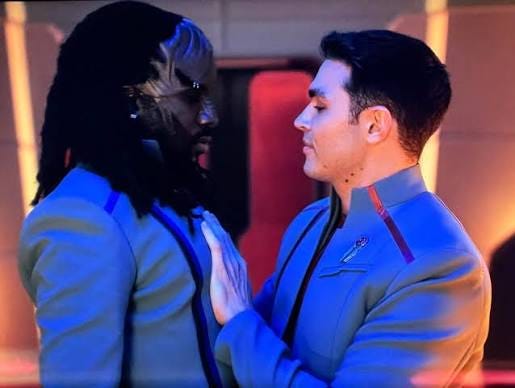
“Alex called, and he’s like… ‘I think we’re gonna drop your voice for this…. We want you to learn how to speak lower.’”
He explains playing the character as a moment of anxiety: “I had anxiety the whole first season, I’m not gonna lie to you, the whole time. Because I have never done this before… Now I can do it. I can swing back and forth pretty easily now, but in season 1, I was still trying to figure it out. So on top of everything else I was going through physically, the voice was just another layer that like… I just gotta trust… It’s above me now. But I’m so happy that they made that change.”
He also talked about the mentorship of Michael Dorn, who played Worf across 174 episodes of The Next Generation, 98 of Deep Space Nine, four feature films, and a guest role in Picard. Dorn met Diané on the Star Trek float at the Rose Bowl Parade.
“He gave me a lot of really good advice about how to deal with prosthetics and how to interact with the fandom and stuff like that. He warned me that there was gonna be people coming for me, that kind of thing. And even back then, he was dealing with it.”
On meeting Dorn in person: “He actually came out on his own time. And it was so cool, because sometimes you meet people and you take a second to get into it. But immediately, he was like, ‘I’m gonna make it for you.’ And we immediately just started talking about the makeup, and he was talking for like an hour about the process. He told me it hasn’t changed much since…. it’s just as hard now as it was back then. But I don’t even hold a candle to him… they had how many episodes a season? For how many seasons?”
As with usual when these people turn a show into propaganda, when it’s met with cirticism, they play the “harassment” card. His statement though fails to address the core problem, which is not that the Trek fanbase is full of fools who hate gay people. The core problem is that Trek fans wanted Star Trek, the specific storytelling tradition, the moral philosophy, the character-driven science fiction, and got a show whose stars were publicly joking about pushing the production to add more gay content between seasons. It treats the audience poorly even in the framing of his commentary.
But it doesn’t stop there, he talks about the show’s trajectory and we see the core problems. After a Season 1 screening, Diané and co-star Kerrice Brooks went to showrunner Noga Landau with a request.
“Sandro and Zoe have a lot of… there’s like a lot of straight sex here, they’re like…Oh my god this is great. Love this, can we have gay things too? We wanted more, and we were kind of joking. We were like — with Noga, like, ‘Let’s be more gay. Like, are you guys homophobic, what’s going on?’ Me and Kerrice were joking with them, but they took me seriously. When I came to work the next day, I remember a producer came to me. He was like, ‘I just want you to know we’re obviously not homophobic.’ ‘As you know, we were totally kidding.’ But, like, while we’re here… let’s do more gay things. And so season 2, there’s gay things, guys.”
The result was not a joke. The producers took it seriously. Season 2 has more gay content, per Diané’s own announcement to the Trek Talks audience. The show that couldn’t find enough viewers for a third season is ending with a second season that leaned further into the identity content the actors pushed for.
Starfleet Academy premiered January 15, 2026, to the lowest debut in Paramount+ history for a Star Trek series. NerdRotic’s livestream of a Spock action figure sitting in an empty chair beat the show’s YouTube premiere peak viewership in under three minutes. Paramount+ made the premiere video private after the embarrassment. The show never recovered its standing with the Trek fanbase, which had spent years watching the Kurtzman era systematically degrade the franchise’s storytelling in favor of progressive identity content. Starfleet Academy was, in many ways, the fullest expression of that project: a Star Trek show whose central premise was a diverse group of young cadets navigating identity and belonging, set so far in the future that no prior character or established lore could anchor it.
When Diané was asked about online hostility, he called Star Trek fans fools, “Whenever a fool approaches you and they’re yelling in your face looking for an argument, and you respond like this, from afar, you can’t tell which is the fool. So I learned that whenever fools are arguing with me, in person or on the internet, to respond with love, because that is my purpose and that’s what I want to spread.”
With him calling fans fools, and Picardo calling fans “trolls,” it’s pretty obvious why the fanbase turned so hostile against this show. Even if it was a better production, which it was not, that kind of entitled attitude would make even the most patient person sour.
The show’s ending was announced before Season 2 airs. When asked what he imagined for Jay-Den had the series continued, Diané said: “What I imagined for the future? Wait and see because it happened. It’s easy too, actually. So there that goes. What I want for him is what you will see in the second season.”
Season 2 will have more gay content, by the star’s own description. It will also be the last season after poor ratings. Those two facts don’t require editorial commentary to make the point.
First contact with the Oridians was supposed to be humanity’s proudest moment. Instead, their chief engineer is dead, their ship is sabotaged, and an ancient alien technology is stealing souls. Book one of the Valiant Frontiers series delivers exploration, mystery, and the kind of crew you’ll want to follow across the galaxy. Read The Soul Catcher on Amazon and start the adventure.
NEXT: Axanar: The Gathering Storm Finally Arrives, And It’s a Win for Fan Films
"Jay-Den" pushed, the fans pushed back-- and the show was pushed right into cancelation...so how'd that work out?
This caused too much dissonance in the brains of Star Trek. Klingons ain't this way, period. I suspect this was one of the biggest reasons for the show's failure. Starting with the marketing pictures of him in a skirt long before the first episode.