


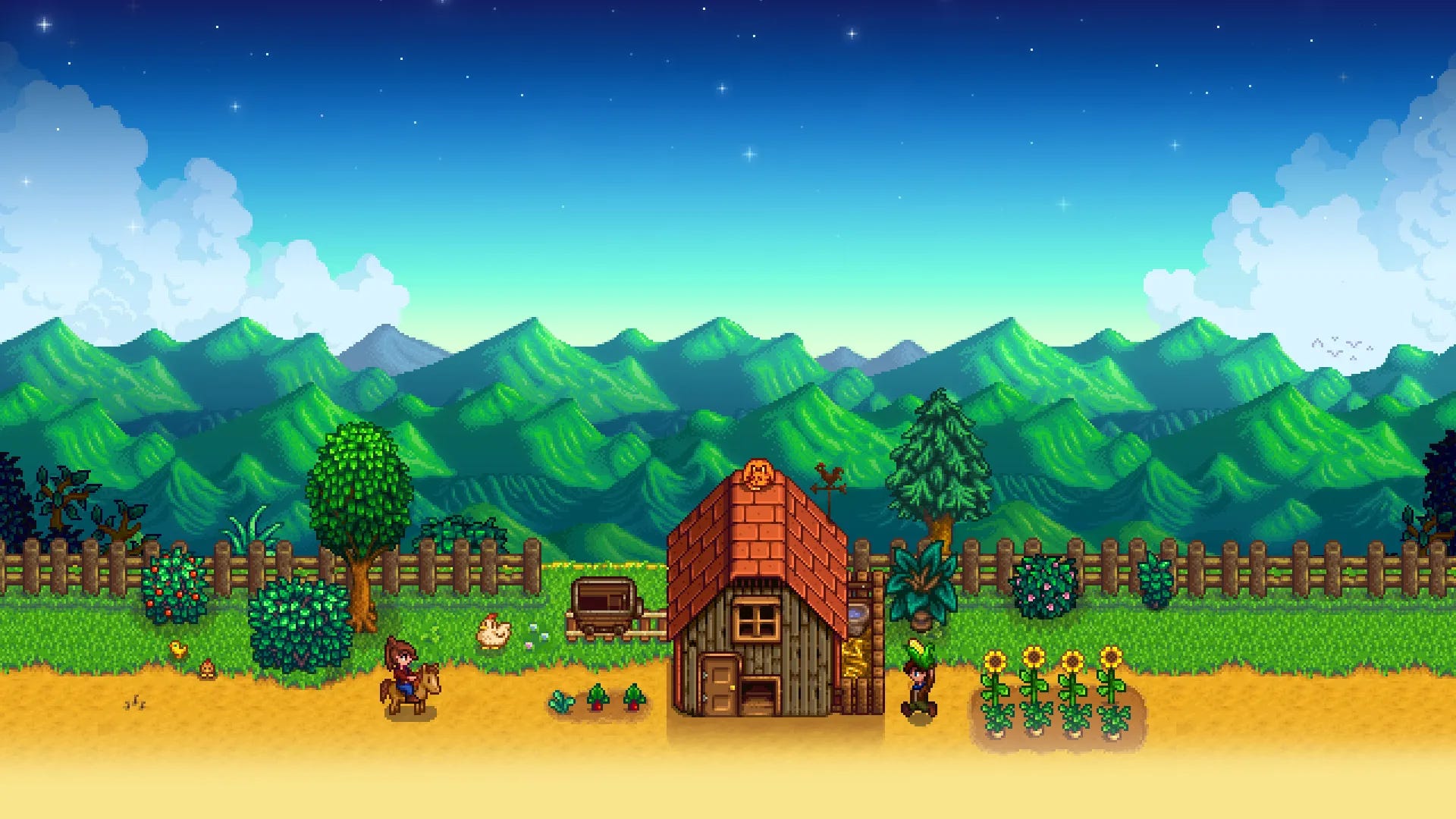
Eric Barone, the solo developer behind Stardew Valley, sparked a brief media frenzy this week when outlets reported he was “open to” adding infidelity mechanics to his farming sim. The full quote tells a more interesting story, and Barone moved quickly to correct the record.
The confusion started in a Game Informer interview published May 12. Barone was asked whether he had ever considered changes to Stardew Valley but held back out of concern for player reaction. His full answer:
“I mean, one thing I have mentioned before, which I kind of was half joking about. It was like, people want to marry Caroline or Robin or Demetrius, and in order to do that, you would have to break up families in town. And personally, I’m against that on a moral level. But I feel like in a sandbox game, you should be able to do wicked things and then face the consequences. I wouldn’t just make everyone be totally chill about it. Everyone would hate you. It would cause a lot of chaos and disaster and suffering, and people would be angry, and you would ruin the family. I would be open to doing something like that, but I wouldn’t baby people about it. There would be very serious consequences. But then part of me is like, ‘Well, maybe this is just too real.’ Maybe Stardew Valley is supposed to be, to some degree, an escape from those kinds of things. It’s too realistic, you know?”
Several outlets, including GamesRadar in its initial report, interpreted this as a sign Barone was actively considering infidelity mechanics for a future update. He was not. Barone responded on X directly:
“The quotes are taken out of context, and don’t capture the whole spirit of what I was saying. They make it seem like this is something I am planning on adding, but if you read the actual interview it’s clear that I’m not going to add it.”
In a follow-up tweet he clarified his actual position: “the only thing I had ever ‘considered’ was allowing players to break up Pierre/Caroline or Robin/Demetrius, but even that is probably too heavy and serious, and would be a ton of work to adjust all dialogue and tone of everyone in town in consequence, and Grandpa ashamed of you. It was just some theoretical idea I’ve toyed with. I don’t condone doing it either.”
The short version: Barone thought about it, decided against it on moral grounds, and said so in an interview. The internet mistook the hypothetical for a plan.
This is worth more than a correction notice. Barone is one of the most unusual success stories in gaming history. He developed Stardew Valley alone over four years while working a day job at Target, teaching himself programming, art, music composition, sound design, and game design simultaneously. The game launched in 2016 and has sold over 41 million copies across all platforms, making it one of the best-selling indie games ever released. Barone has continued updating it for free for a decade, adding content patches, multiplayer support, new characters, and new story content without charging existing players a cent.
He is also openly guided by values that most game studios do not apply to design decisions. He stated in a separate GamesRadar interview that Stardew Valley and his upcoming Haunted Chocolatier will always be AI-free because people “should take priority over a soulless machine.” He has declined to monetize the game beyond its initial purchase price in an industry that pushes season passes, microtransactions, and live service subscriptions as standard practice. He makes design decisions based on what he believes is right for the game and for the player, not what maximizes engagement metrics.
The infidelity question fits that pattern. His first instinct was moral objection. His second was a designer’s consideration of whether dark mechanics could be handled with genuine weight and consequence rather than trivialized. His conclusion was that Stardew Valley is an escape, and that certain kinds of darkness belong somewhere else.
That reasoning is not complicated. It is also increasingly rare in an industry that defaults to “the player should be able to do anything” as a design philosophy without considering what the anything communicates. Barone considered the communication. He decided against it.
In a week where gaming discourse has been dominated by IGN handing a perfect 10 to a three-hour walking simulator while players score it 6.1, Barone drawing a quiet moral line in his own game is the kind of story the industry could use more of.
Does a creator’s personal moral convictions belong in game design decisions, or should gameplay systems be purely player-driven?
Why are these people like this? Why does stuff like this excite them? Why are they so desperate for debasement that they completely misinterpreted a clear answer?
It took me years of life and seeing degeneracy pushed to the point only a fool or a liar could deny it
It's God.
In this case, he's been VERY clear about adultery.
These people have rejected God, and wallowing in filth is what pleases them.
Can you evangelize and plant churches in it?