


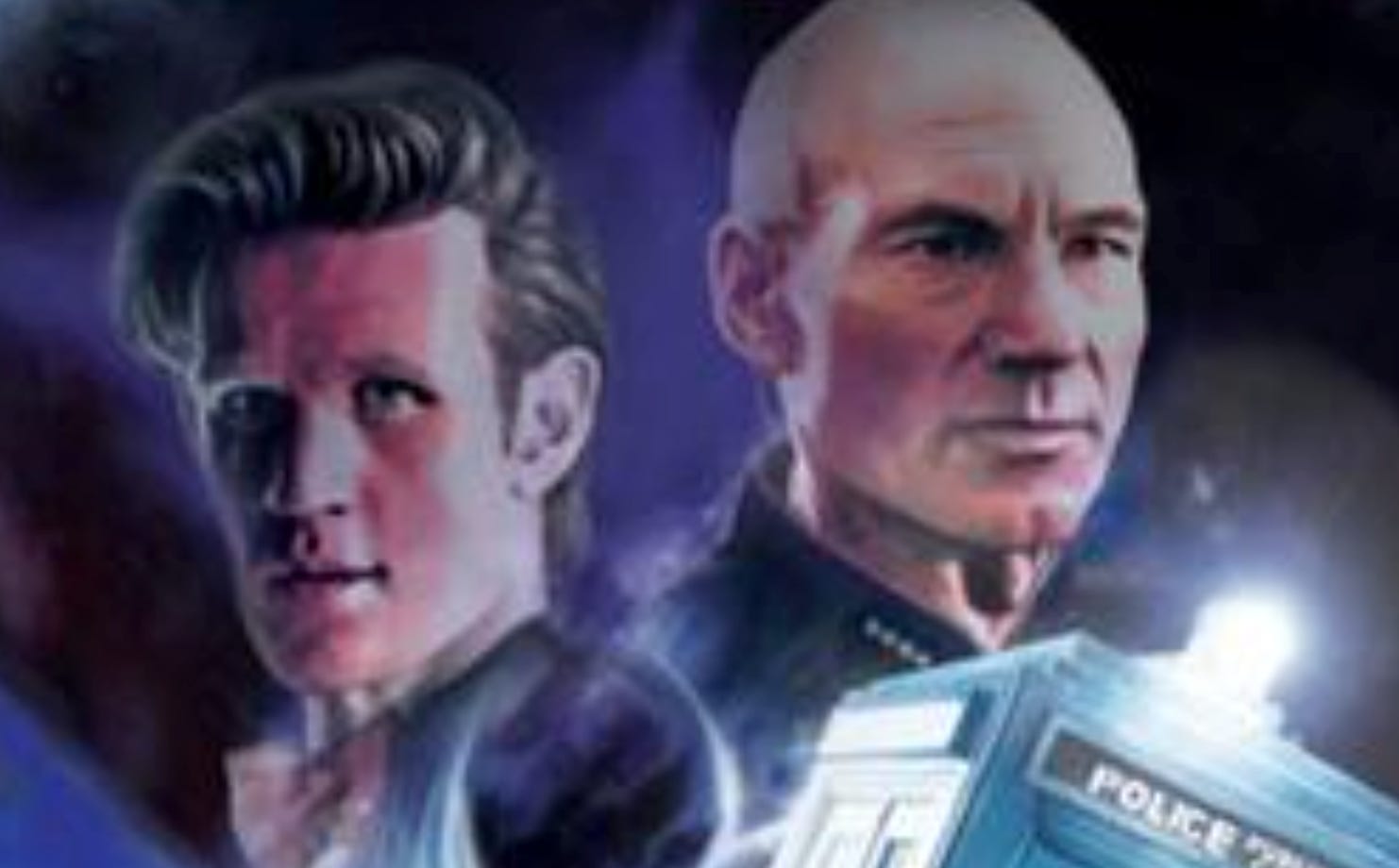
Star Trek and Doctor Who once owned the same piece of storytelling real estate. Both franchises built decades of loyalty on a simple premise: take a crew or a traveler, send them into the unknown, and let the audience discover something about humanity along the way. Both franchises have spent the last several years squandering that loyalty by replacing wonder with lectures.
Modern Trek under Alex Kurtzman turned the franchise into prestige TV cosplay. Discovery made its lead character the center of the universe in every literal and figurative sense. Strange New Worlds started strong and then stumbled into musical episodes and body-swap comedy. The writing rooms stopped asking “what’s out there?” and started asking “how do we signal that we’re on the right side of history?” Characters became vehicles for representation checklists rather than people with flaws and duties.
Doctor Who followed the same arc. Chibnall’s run gutted the show’s mythology with the Timeless Child retcon and replaced storytelling with moral instruction. Russell T. Davies came back and leaned harder into identity-first casting and storylines that treated the audience as students who needed correcting. Viewership collapsed. The BBC responded by doubling down.
Both franchises forgot what made them work.
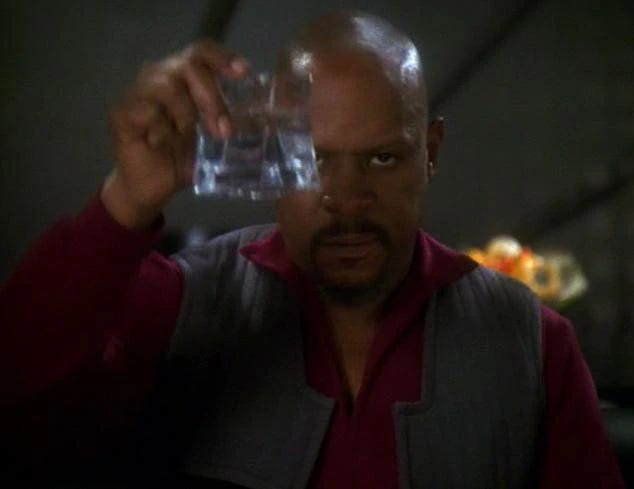
Consider what 90s Trek looked like at its best. Deep Space Nine’s “In the Pale Moonlight” put Captain Sisko in front of an impossible decision: fabricate evidence to drag the Romulans into the Dominion War and save the Alpha Quadrant, or maintain his integrity and watch billions die. The episode ends with Sisko recording a personal log, confessing what he did, and then deleting it. He chose to lie and cheat. He was complicit in an assassination. And he could live with it. No speech about doing the right thing. No reassurance from the crew. Just a man sitting with what the war made him do. The audience walked away asking what they would have done.
Voyager’s “Eye of the Needle” told a smaller story with the same weight. The crew discovers a micro-wormhole and makes contact with a Romulan scientist named R’Mor on the other side. Hope builds through the entire episode. They can send messages home. They can beam through the wormhole. The whole crew comes alive at the possibility of contact with the Alpha Quadrant. Then Tuvok reveals the wormhole leads twenty years into the past. R’Mor agrees to deliver their messages when the time comes. And after he beams home, Tuvok checks the records: R’Mor died four years before Voyager launched. The crew never learns if their messages were delivered. No villain caused this. No political lesson was embedded. Just the universe being vast and indifferent, and a crew holding onto hope because that’s all they had.
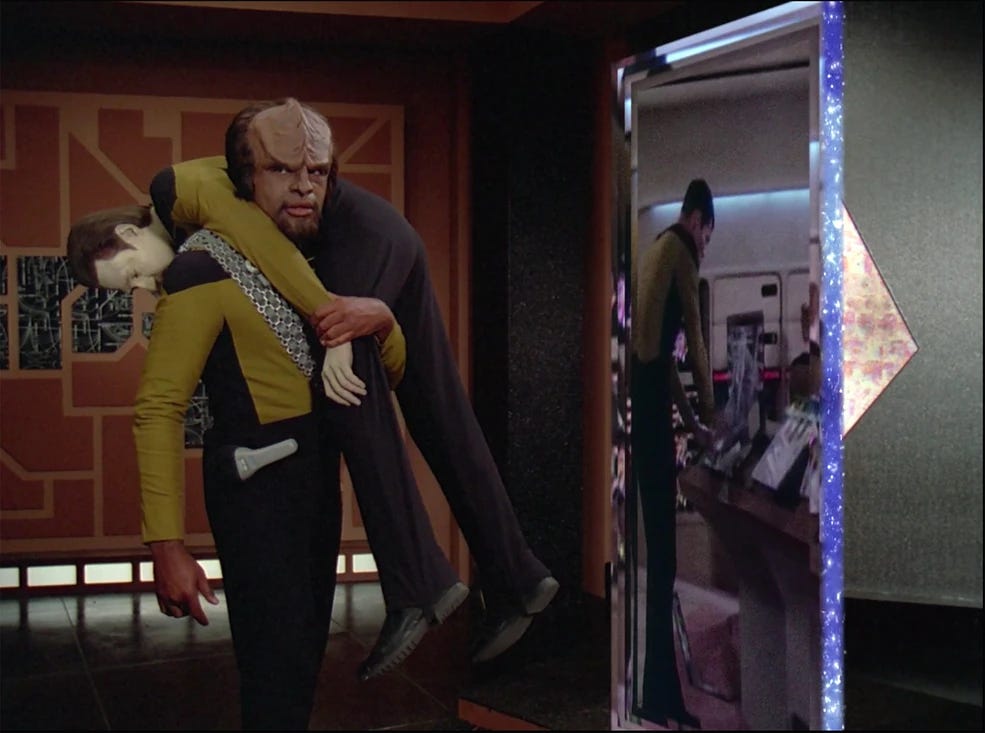
The Next Generation’s “Contagion” sent the Enterprise to the homeworld of the Iconians, a civilization that vanished 200,000 years ago but left behind gateway technology that could transport anyone anywhere in the galaxy instantaneously. Picard stood in front of those gateways and made the call to destroy them rather than let that power fall into Romulan hands. The episode asked what happens when you find something too dangerous to keep. No modern Trek episode would trust its audience with that kind of restraint.
These episodes worked because they respected the audience. They presented a situation, let the characters respond based on who they were, and left the moral weight for the viewer to carry. Nobody on screen told you what to feel.
That kind of storytelling is what the Valiant Frontiers trilogy was built to deliver.
Captain Conley of the E.A.S. Valiant is written in the mold of those classic commanding officers. A career fleet man. Competent and principled, but new to command. The Aryshan War ended months ago and now he’s leading a joint human-Aryshan crew into uncharted space. His challenge is not just what lies beyond explored territory. Half his bridge crew were the enemy a few months prior, and he has to earn the trust of people whose worlds his side bombed. That tension sits underneath every decision he makes, every order he gives. He’s not a superhero. He’s not chosen by destiny. He’s a captain trying to hold a fragile crew together while the galaxy throws things at them that nobody planned for.
The Valiant Frontiers trilogy is set in the Stars Entwined/Aryshan War universe, a setting that has been in development since its author was eighteen years old. The Soul Catcher, Book 1, is available now on Amazon and Kindle Unlimited.

Has modern sci-fi television lost the ability to tell stories that trust the audience, or is the problem specific to the people running these franchises?
"In the Pale Moonlight" is one of the best episodes of television, EVER. I will fight anyone that says otherwise!
"I can live with it."
“Both franchises have spent the last several years squandering that loyalty by replacing wonder with lectures. …Both franchises forgot what made them work.”
What a fine example of why the Left wins and wins: underestimating the foe. “We’re so much smarter than those foolish Leftists.”
They forgot nothing; they squandered nothing. They repurposed those franchises to serve the Left, part of a core Left project to remold our society. A project running for decades, with success on a scale unimaginable to those watch the original Star Trek or early Dr Who episodes.
They pursue higher goals than revenue for their employers - and are well-paid to do so. My favorite example of this is Corinne Busche. He/she/it took one of the most valuable franchises in gaming - a massive customer base eager for another Dragon Age game - and liquidated it into a Leftist culture-fest. After such a triumph, this person was immediately hired by Wizards of the Coast to revamp another major gaming franchise.