


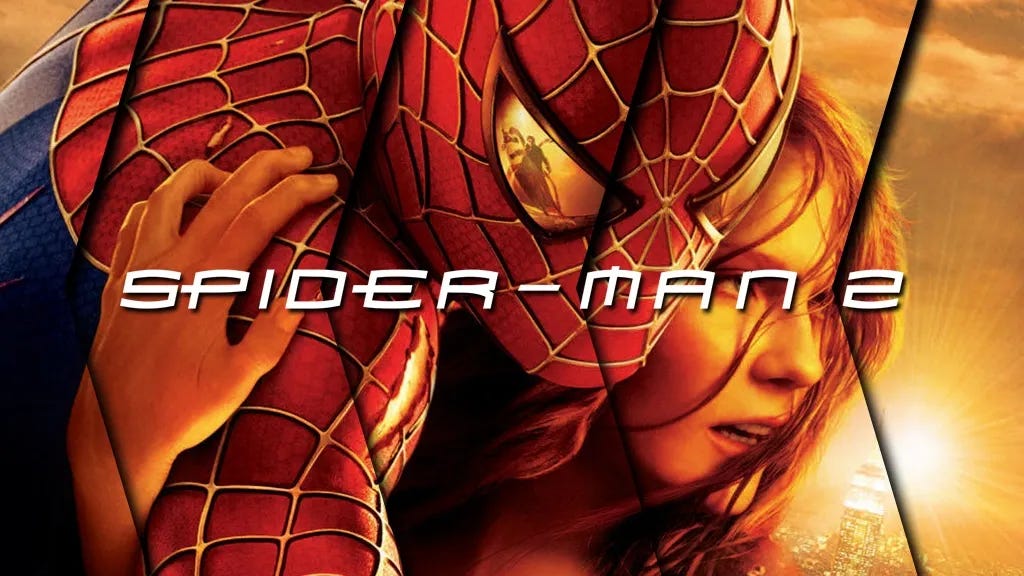
There are superhero movies that are successful. There are superhero movies that are entertaining. And then there are superhero movies that remind you why you fell in love with superheroes in the first place.
Sam Raimi’s Spider-Man 2 is one of those movies.
Released in 2004, Spider-Man 2 came from a Hollywood that still understood that making a superhero movie was supposed to be an exercise in imagination. It wasn’t embarrassed by its source material. It didn’t try to deconstruct the very idea of a superhero or convince audiences that superheroes were ridiculous.
It simply embraced the material, and Sam Raimi embraced it harder than almost anyone could have.
What makes Spider-Man 2 remarkable is how many different kinds of movies Raimi manages to put inside one superhero film. It can be funny one minute, romantic the next, genuinely moving after that, and then suddenly turn into a horror movie.
The Doc Ock hospital sequence is probably the best example.
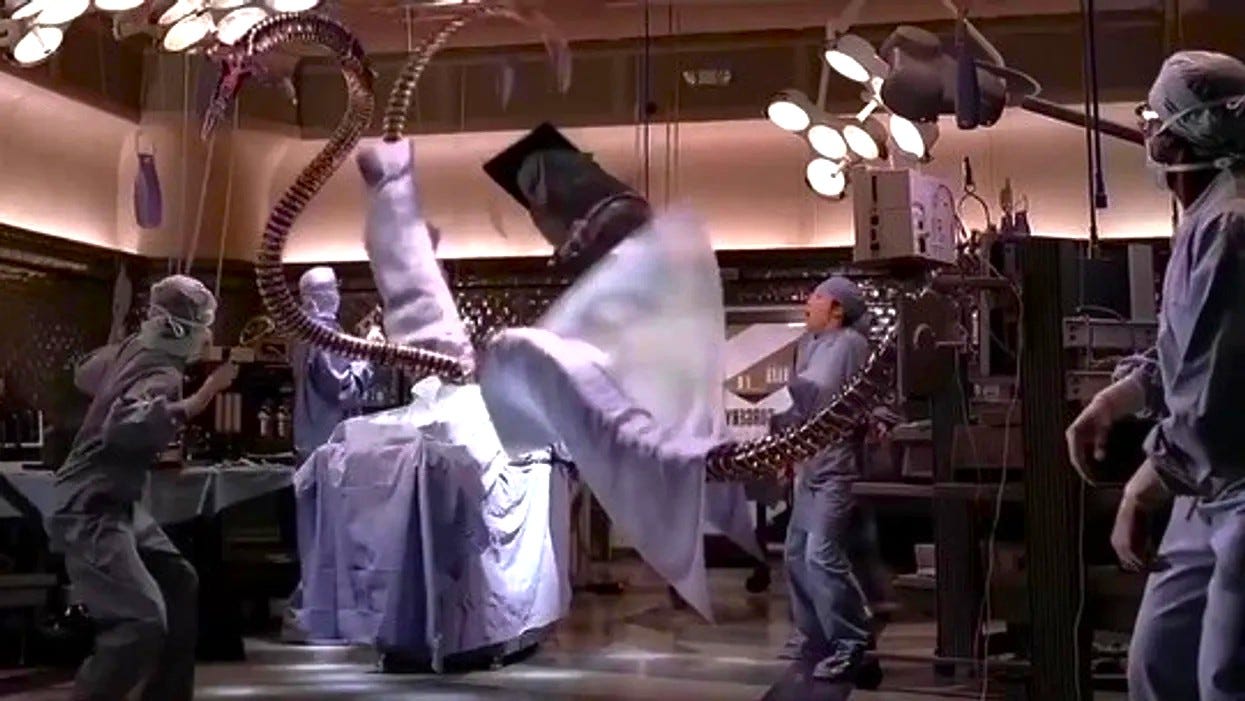
Raimi takes roughly three minutes of a superhero movie and turns it into a miniature Evil Dead movie. The sterile operating room becomes a nightmare, with harsh surgical lighting and deep shadows making the room feel like a trap. The camera is constantly moving, using Dutch angles, frantic tracking shots, extreme close-ups and point-of-view shots from the mechanical arms to create a sense of breathless panic.
The music largely disappears, replaced by screaming, crashing metal, machinery and the unmistakable whine of a chainsaw.
And remarkably, the tentacles were brought to life through practical puppetry, giving Doc Ock’s mechanical arms a physical presence that CGI often struggles to replicate.
The result is one of the most unsettling sequences ever put into a superhero movie. It isn’t simply an action scene; it’s a monster movie.
Otto Octavius is unconscious while his mechanical arms essentially take over his body. The surgeons become trapped with something they don’t understand, and Raimi shoots their deaths with the gleeful nastiness of his Evil Dead days. The sequence ends with Otto waking amid the wreckage, screaming as he sees what has happened. It’s essentially the birth of a monster, and Raimi somehow manages to make it terrifying, exciting and completely appropriate for a Spider-Man movie.
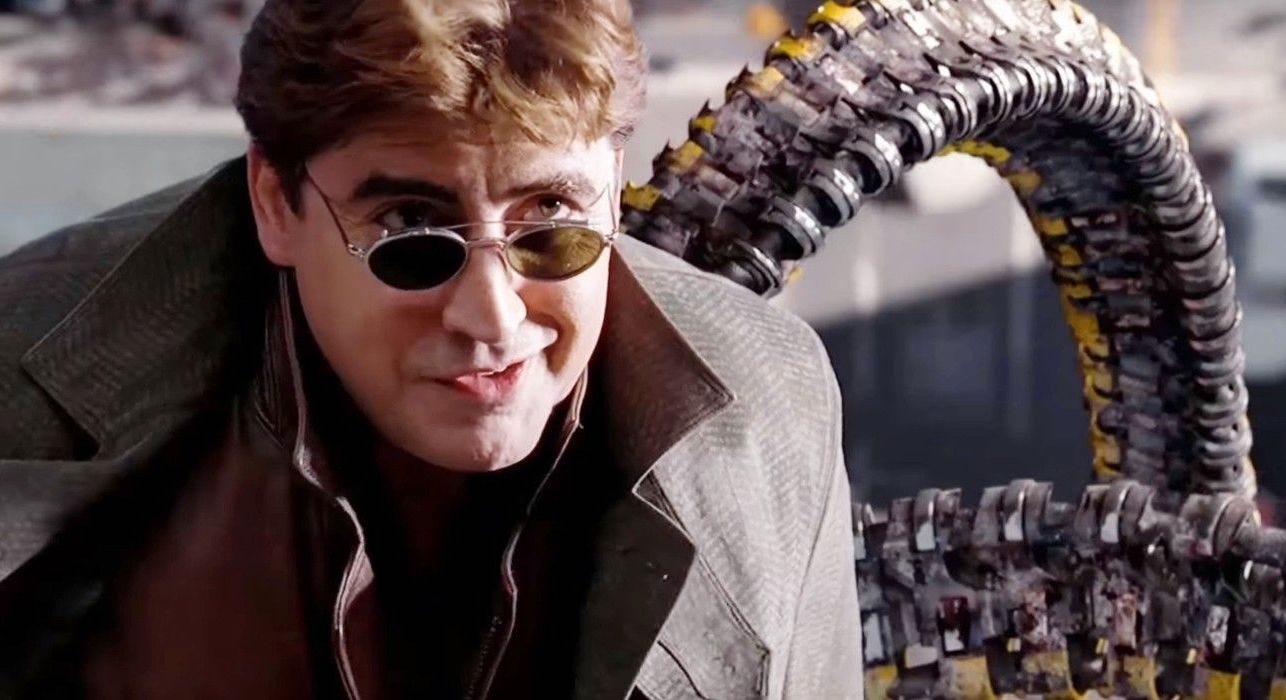
And then there’s Alfred Molina. Molina could have played Doc Ock as another generic comic-book villain, but instead he gives Otto Octavius genuine humanity. Before he becomes the villain, Otto is a brilliant scientist, a husband and a man pursuing something he genuinely believes will benefit humanity. That makes his transformation tragic rather than merely functional. The movie understands that a great superhero villain shouldn’t simply be evil; he should be someone whose downfall matters.
But the greatest thing about Spider-Man 2 isn’t actually Doc Ock.
It’s Peter Parker.
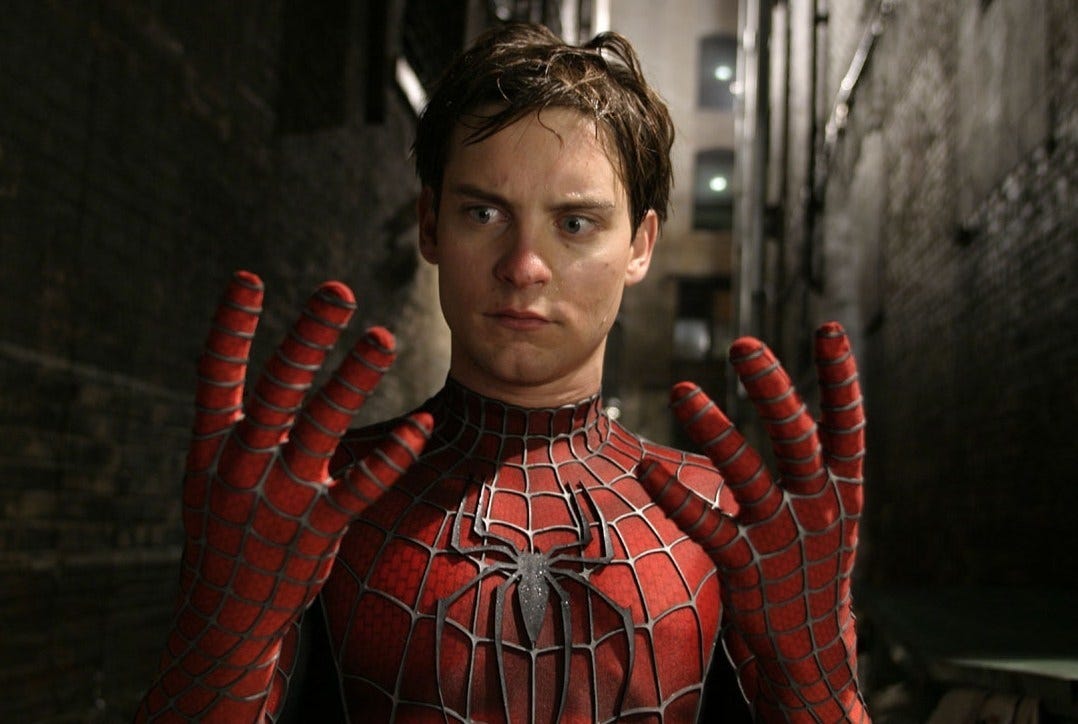
This is a superhero movie that understands the contradiction at the heart of Spider-Man: Peter wants to be Spider-Man, but he also wants to have a life. He wants Mary Jane. He wants a career. He wants to help Aunt May. He wants to pay his bills. He wants to be normal. And he can’t have all of those things.
That’s why Peter’s decision to give up being Spider-Man actually matters. It’s not just a temporary plot device. The movie spends real time showing what happens when he puts the suit away. Crime increases, people suffer, Peter initially feels liberated, and yet he eventually realizes that the responsibility he was trying to escape is precisely what makes him who he is.
That’s where Rosemary Harris as Aunt May delivers one of the greatest speeches in superhero-movie history.
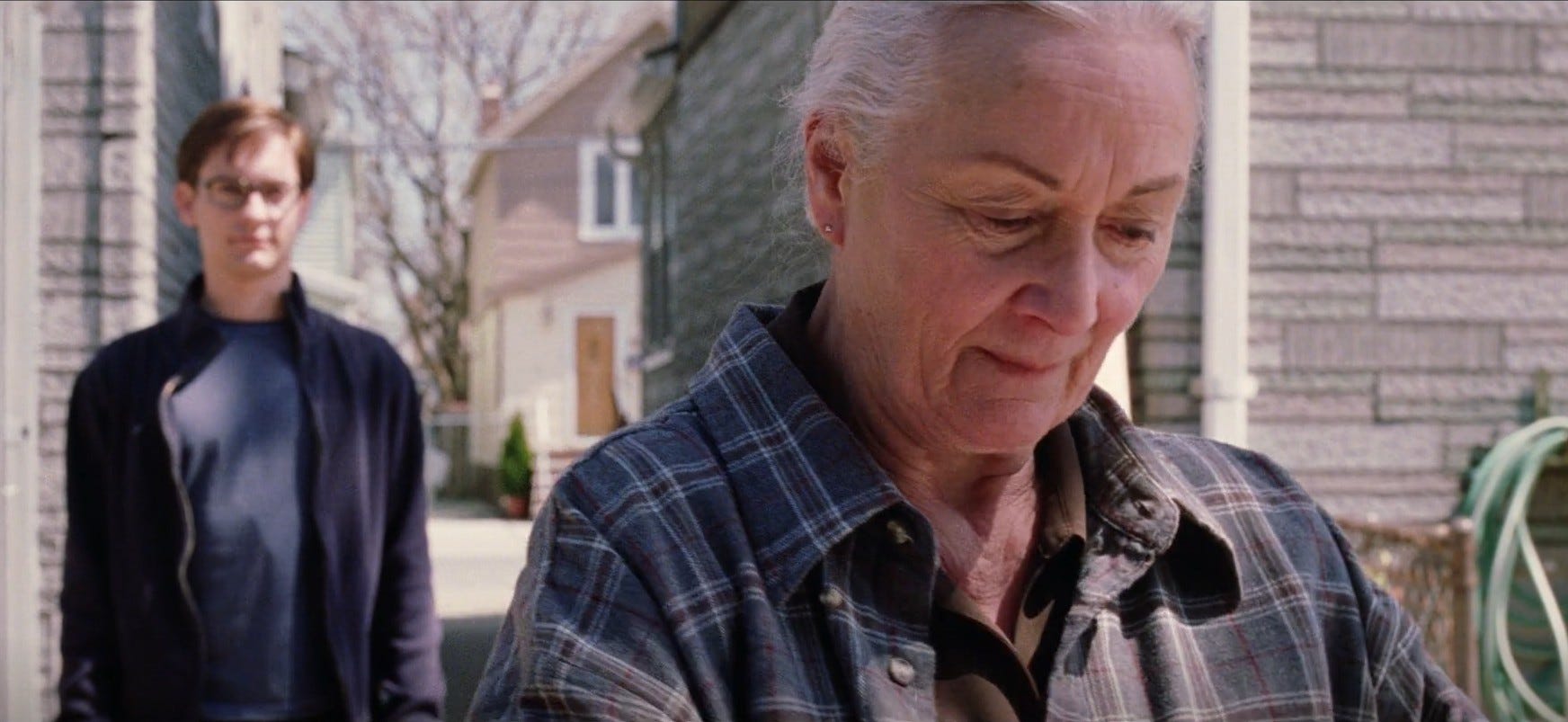
“Everybody loves a hero.” Aunt May explains why people need heroes—not because heroes are perfect, but because they give ordinary people something to believe in. They give people strength. They remind us that doing the right thing sometimes requires sacrifice. “I believe there’s a hero in all of us,” she tells Peter, before explaining that sometimes we have to give up the thing we want the most, “even our dreams.”
That’s not merely dialogue. That’s the movie’s thesis. Peter ultimately has to choose between the life he wants and the responsibility he has accepted. And unlike so many modern superhero stories, Spider-Man 2 doesn’t treat that responsibility as something embarrassing that Peter needs to overcome. It treats it as something noble. The movie believes that sacrifice can actually make a person better. It believes that power carries responsibility. It believes that heroism means something.
Raimi also never forgets that this is supposed to be a superhero movie. The train sequence alone is an extraordinary piece of blockbuster filmmaking. Spider-Man fights Doc Ock on top of a speeding train, gets dragged through the city, loses his mask, and ultimately uses every ounce of his strength to stop the train from killing everyone aboard.
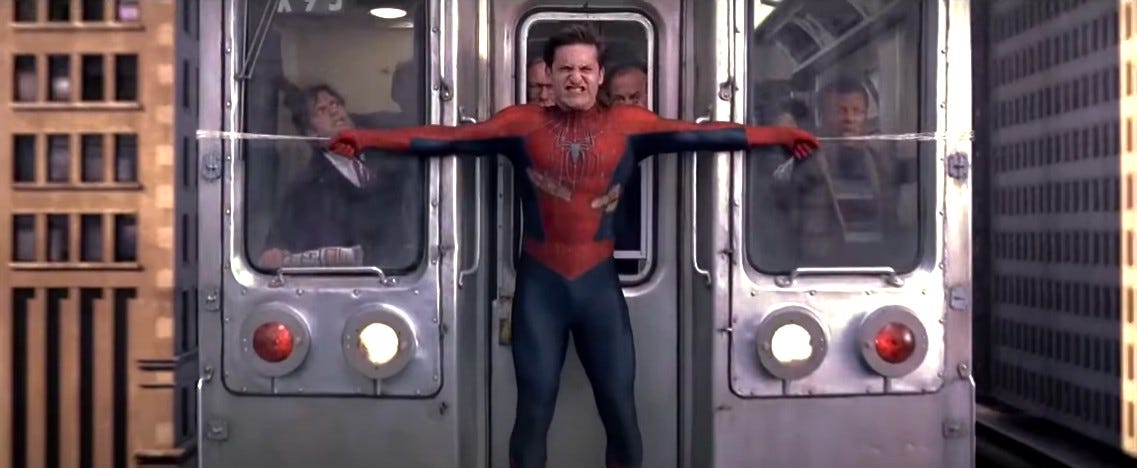
Then comes one of the movie’s most beautiful moments. Peter collapses, and the passengers pick him up. They see the face beneath the mask, and instead of being afraid of him, they protect him. For a few moments, Spider-Man isn’t just a guy in a costume. He’s their hero.
This is still my favorite scene in any comic book movie. It brings chills, goosebumps and tears every time I see it.
That’s what Spider-Man 2 understood. The superhero isn’t interesting simply because he can climb walls, shoot webs or stop a speeding train. He’s interesting because he chooses to do it.
That’s why the movie still works. The effects may show their age in places. Some of the science is ridiculous. The melodrama is unapologetically melodramatic, and Raimi’s fingerprints are all over virtually every frame. But those aren’t weaknesses to me. They’re part of the movie’s personality.
Spider-Man 2 feels like a Sam Raimi Spider-Man movie.
It has horror, comedy, romance, tragedy, spectacular action, larger-than-life villains and a genuinely heroic hero. Most importantly, it has heart.
And that’s what I miss - superhero movies that weren’t afraid to be superhero movies. I miss filmmakers who could take four-color comic-book characters seriously without ruining them with THE MESSAGE.
Spider-Man 2 wasn’t perfect, and it didn’t need to be. It was sincere. It was imaginative. It was spectacular. And, most importantly, it actually believed in the idea of a hero.
Twenty-two years later, that’s why it still stands so tall.
Check out Byl Holte’s Substack for more great takes:

Sam Raimi is my favorite Spider-Man director also, and Spider-Man 2 was the best. But I have to concede that it is an English gentleman, Tom Holland, who has been the best actor in role - yes, even moreso than Tobey McGuire. Sam Raimi understands superheroes. If you have not already check out DARKMAN.
Great article. I never saw this movie and I intend to now!!