


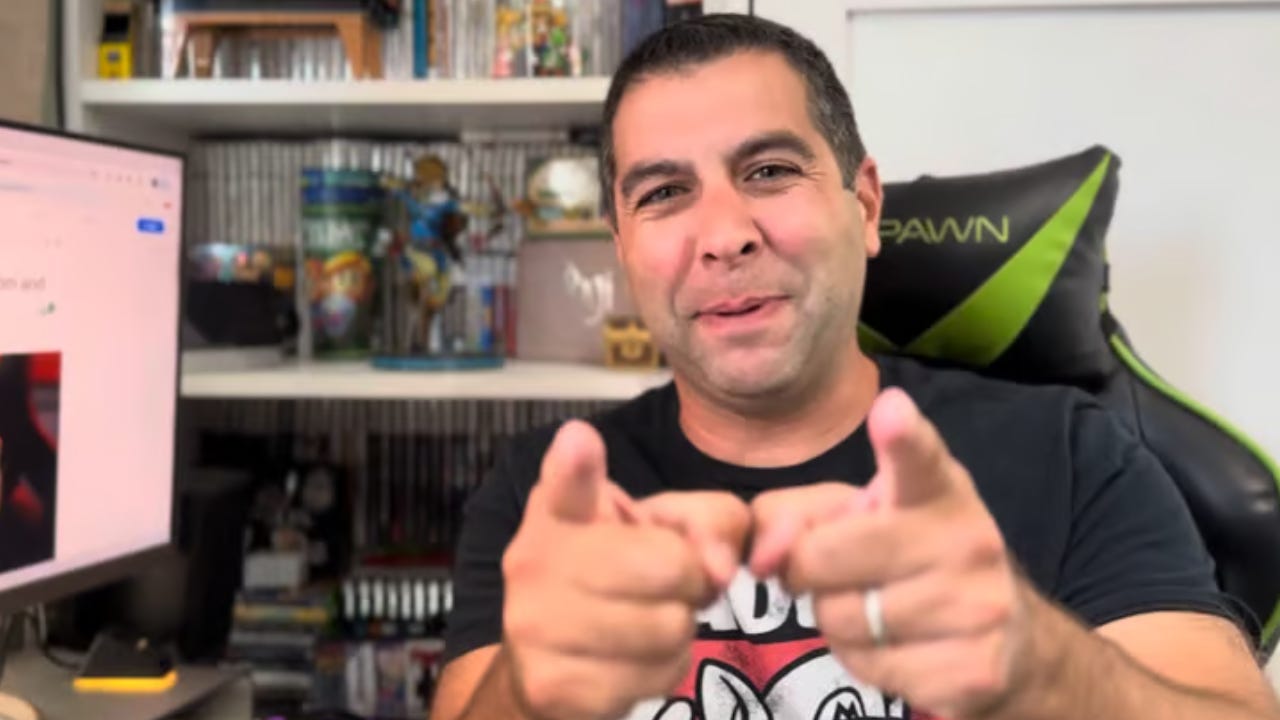
In recent days, my mind has wandered back to the previous four to five years where the gaming landscape was ablaze with ideological tension. Consider the following games:
The Last of Us Part II (2020)
Forced Diversity: Lesbian protagonist, trans side character, and a hyper-masculine female antagonist (Abby) who looks like she bench-presses pickup trucks.
Narrative Subversion: Joel, the rugged male lead, is brutally killed early on—symbolically discarded to make room for “morally complex” women.
Ideological Messaging: The game demands sympathy for Abby, Joel’s killer, while reducing male characters to weak, expendable props.
Verdict: A feminist revenge fantasy disguised as post-apocalyptic drama. Masculinity is punished, and representation is elevated above storytelling.
Gotham Knights (2022)
Progressive Themes: Tim Drake is bi, the Bat-family is sanitized, and Bruce Wayne fears politicians more than criminals.
Representation Over Canon: POC characters like Cassandra Cain and Duke Thomas are sidelined in favor of white leads.
Political Dialogue: Lines about systemic corruption and social justice feel like Twitter threads inserted into cutscenes.
Verdict: A neutered Batverse where diversity is cosmetic and ideology trumps legacy.
Forspoken (2023)
Marketing Identity: Black female lead Frey is the centerpiece of Square Enix’s “progressive” push.
Cringe Dialogue: Quippy, self-aware one-liners that sound like rejected MCU drafts.
Cultural Disconnect: Frey’s characterization leans into stereotypes.
Verdict: A corporate diversity project wrapped in isekai fantasy.
Goodbye Volcano High (2023)
Queer Identity Central: Non-binary protagonist, LGBTQ+ themes, and anthropomorphic dinosaurs navigating high school drama.
Narrative Focus: Identity exploration takes precedence over plot, gameplay, or stakes.
Cultural Backlash: Parodied by Snoot Game, which mocked its ideological framing and character design.
Verdict: Tumblr-core visual novel with a moral compass set to “representation first, story second.” Feels like a DEI seminar in cartoon form.
Starfield (2023)
Pronoun Selection: Character creation includes He/Him, She/Her, They/Them. Mandatory for dialogue. "FUCKING PRONOUNS!!"
DEI Marketing: Bethesda emphasized "inclusivity" as a selling point, not a background detail.
Narrative Blandness: "Diverse" cast, little depth. Forced representation is present.
Verdict: Space exploration with ideological gravity.
Dustborn (2024)
Explicit Politics: Set in a fascist America, with a cast of queer POC rebels fighting oppression.
Combat System: Includes mechanics like “cancel,” “trigger,” and “bully”—literal weaponized social commentary.
Developer Denial: Claims it’s not political, despite overt messaging and identity-centric design.
Verdict: A satire that forgot it was satire. Feels like a playable pre-Elon Twitter thread with combat.
Dragon Age: The Veilguard (2024)
Gender Politics: Non-binary, trans, and queer characters dominate the cast. Pronouns, top surgery scars, and romance options are front and center.
Lore Sanitization: Factions like the Antivan Crows are rewritten to be morally pure; no child assassins, no ethical complexity.
Narrative Safety: No interpersonal conflict, no controversial beliefs, no edge. Everyone gets along.
Verdict: A once-rich fantasy world reduced to a virtue-signaling playground. Dragon Age used to challenge players. Now, it coddles them.
These games were flashpoints, invoking rallying cries for a new wave of digital dissenters. The term “woke” had matured from a niche insult to a mainstream heuristic, and for a brief moment, it seemed like GamerGate 2.0 might recapture the raw energy of its predecessor.
But something was off. The edge was dulled. The rhetoric softened. And in the midst of this ideological fog, figures like SmashJT emerged. Not as a warrior, but as a grifter, subtly redirecting the discourse under the guise of critique.
II. Moderation as Dilution
Jim, formerly known as Internet Aristocrat and later Mr. Metokur, diagnosed the decay early. In a now-archived video, he lamented:
The whole GamerGate thing is depressing… it was the opportunity to finally kick the teeth in of social justice warriors and Tumblr-ettes… and for a while it was working really, really well. All you had to do was attack… people think you need to be a moderate or an independent or neutral—they’re wrong. You need to pick an extreme… if you try to approach the middle to appeal to moderates, you become indistinguishable from them and your message becomes diluted.
This wasn’t just a tactical critique, it was a spiritual one. GamerGate’s original potency lay in its refusal to compromise, its willingness to name names and burn bridges. But the moment it sought respectability, it became a shadow of itself.
III. SmashJT: The Performance of Resistance
Enter SmashJT. His channel, often recommended alongside anti-woke content, seemed at first glance to be part of the resistance. He spoke about Sweet Baby Inc., criticized wokeness in gaming, and gestured toward the same frustrations many shared.
But listen closely.
In a video published back in October, 2024 called "The Future of Metroid is in Serious Doubt". There, Jeff gives a brief introduction to the franchise and says:
Metroid is one of the greatest video game series of all time and if you haven't played it you owe it to yourself to at least try it out. Because not only has it had groundbreaking mechanics and new ways to play, creating literally an entire genre of gaming just based off of the name alone, but also featuring a female protagonist and being one of the first games in history to do such a thing and bringing it to such prominence.
That last line about a female protagonist being brought to prominence? Yeah, that might seem innocuous, but it is a tell. It is a celebration. A subtle endorsement of the very representational logic that undergirds the woke aesthetic. Here, Samus isn’t being praised for her lore or her narrative arc. No, she is praised for being a woman. For “bringing it to prominence.”
This is the language of the woke regime.
**IV. The Myth of Representation
To understand the betrayal here, one must understand Samus Aran. Her femininity was never the point. It was the twist. The fact only revealed itself after you had beaten the game. Samus wasn’t designed to “bring female protagonists to prominence." Her sex was entirely incidental.
Jeff’s framing rewrites this history and retrofits Samus into a representational mold, turning her into a banner for progress rather than a cipher for challenge. In doing so, he gratifies the woke agenda. Granted this is not through overt advocacy but through subtle re-narration.
V. The Illusion of Neutrality
This was my first look at the new face of ideological drift. Not the loud activist, but the quiet reframer. The YouTuber who critiques wokeness while internalizing its grammar. The commentator who outwardly resists the aesthetic but adopts the premise.
Jeff’s attempts to play the centrist arbiter while implicitly endorsing those he claimed to resist. He wants to be the adult in the room. He wants to be the voice of reason, the bridge between the religious right and the progressive left. But in doing so, he constructs a false dichotomy; one that obscures the real ideological battle at the heart of gaming culture. His article, "A New Challenger Appears... Religion. GoonerGate: Explained" is riddled with slippery language and moral evasions. It reveals not a principled stance but a posture of rhetorical self-preservation.
“The gaming industry has been no stranger to cultural battles… the community has fought back hard to preserve creative freedom…”
What community? Because the one that fought back wasn’t a vague coalition. It was a hardline resistance to ideological capture.
Are we just going to say "gamer" as if the word indicates some unified cultural force? The existence of this very article would be proof otherwise. "Gamers" are fractured mass of microcommunities bound together only by a word that increasingly means nothing.
Ever wonder why so many speedrunners and smash tournament players inevitably troon out? The answer is because the ostensible "gaming culture" is fragmented and self-sabotaging.
Movements like Gamergate, though initially aiming to challenge corruption, ultimately undermined themselves through chaotic tactics, giving opponents easy leverage. Gamergate was a testament to culture lacking unity, credibility, or any coherent set of shared values. Attempts to unify have failed. Every movement born out of frustration (be it Gamergate or something else) has collapsed under its own contradictions. Rage without discipline becomes spectacle. And spectacle, inevitably, becomes justification for the very forces it claims to oppose.
Our victories are internal. Our defeats are public.
**VI. The Centrist Contradiction
Jeff’s coverage “implies” disagreement. He gestures toward frustration. He critiques outcomes. But he has ever taken a hard stance on anything except vague personal preference:
“Gaming is about escapism, creativity, and enjoyment…”
This is preference masquerading as principle. And it’s easily flipped. A progressive could just as easily say, “My escapism involves playing as a nonbinary character who announces their identity at the dinner table.” Objectively, is this preference wrong? Besides citing personal preference, why doesn't this belong in the industry?
Jeff writes:
“Telling developers what they should or shouldn’t make… puts you on the same slippery slope as the forces of censorship…”
But his entire channel critiques the AAA industry regularly. Why talk about it at all if we’re supposed to remain neutral? If moralizing is off the table, then why should anyone care about his personal preferences?
This is the fatal contradiction: Jeff’s objective moral principle is not to enforce objective moral principles. He fails to recognize the irony of that stance.
Jeff invokes the ESRB:
“If a game company wants to make a sex-heavy nude model raging party game… they’ll have to deal with the ESRB…”
So moral regulation is fine as long as it’s institutional?
Jeff invokes the ESRB as a safeguard against games slipping into the “sex abyss,” implying that its oversight is somehow neutral or objective. But the ESRB is not a metaphysical entity. It is an institution run by people. And people make decisions based on what they believe is appropriate. That means the ESRB’s standards are not value-free; they’re expressions of moral judgment, shaped by cultural norms, political pressures, and yes, personal beliefs.
So what’s the difference between the ESRB drawing a line and a religious critic doing the same? Nothing, except that one wears a badge of institutional legitimacy, and the other speaks from conviction.
Jeff’s logic here commits a fallacy: he treats institutional regulation as morally valid while dismissing individual moral critique as censorship. But both are forms of boundary-setting. The only difference is who’s drawing the line and whether Jeff finds them socially palatable.
This is not a principled stance. It’s moral outsourcing. And it reveals that Jeff isn’t opposed to moral boundaries, he’s just uncomfortable when they come from sources he can't influence.
VII. The Myth of the Free Market
Jeff's ideology is largely governed by a vague notion of libertarianism:
“Let the market dictate success… historically it’s always worked.”
This is demonstrably false.
The market doesn’t reward quality, it rewards conformity, investor confidence, and ideological alignment. Don't believe me? Let us look at some market failures:
Black Isle Studios – Fallout, Planescape: Torment → Closed in 2003 due to Interplay’s financial collapse.
Lionhead Studios – Fable, Black & White → Shut down by Microsoft in 2016 after canceling Fable Legends.
Neversoft – Tony Hawk’s Pro Skater, Guitar Hero → Merged into Infinity Ward in 2014; effectively dissolved.
Pandemic Studios – Star Wars: Battlefront, Mercenaries → Closed by EA in 2009 after acquisition and restructuring.
Ensemble Studios – Age of Empires, Halo Wars → Disbanded by Microsoft in 2009 despite successful titles.
Clover Studio – Ōkami, Viewtiful Joe, God Hand → Dissolved by Capcom in 2007 due to poor sales despite critical acclaim.
Visceral Games – Dead Space, Dante’s Inferno → Shut down by EA in 2017 during shift toward live-service models.
Silicon Knights – Eternal Darkness, Too Human → Bankrupted in 2014 after legal battles with Epic Games.
Bizarre Creations – Project Gotham Racing, Geometry Wars → Closed by Activision in 2011 after Blur underperformed.
Acclaim Entertainment – Turok, NBA Jam, Mortal Kombat ports → Declared bankruptcy in 2004 due to financial mismanagement.
Free Radical Design – TimeSplitters, Second Sight → Collapsed post-Haze in 2008; later revived under Deep Silver
Now let us look at how mediocrity thrives:
Bethesda Game Studios – Fallout 76 → Widely criticized for bugs, lack of content, and monetization. Bethesda remains a major player under Microsoft.
Electronic Arts (EA) → Despite releasing underwhelming titles like Anthem, Battlefield 2042, and Need for Speed Unbound, EA remains one of the most profitable publishers in the world. Their success is driven by aggressive monetization (FIFA Ultimate Team), mobile ventures, and licensing deals, not artistic excellence.
Microsoft (Xbox Game Studios) → Owns studios like 343 Industries and Arkane Austin, both of which released disappointing titles (Halo Infinite, Redfall). Yet Microsoft continues to expand its gaming empire through acquisitions (Bethesda, Activision Blizzard) and Game Pass subscriptions, insulating itself from creative failure.
Square Enix – Babylon’s Fall → Critically panned and shut down within a year, but Square Enix continues to thrive with Final Fantasy and Kingdom Hearts.
Rockstar Games – GTA Trilogy: Definitive Edition → Bug-ridden remaster of classics, yet Rockstar’s GTA V and Red Dead Redemption 2 keep them dominant.
Blizzard Entertainment (Activision Blizzard) – Warcraft III: Reforged → Poor reception due to missing features and broken promises, but Blizzard remains a juggernaut with WoW and Diablo.
CD Projekt Red – Cyberpunk 2077 (at launch) → Infamous for its buggy release, yet the studio rebounded with updates and continues to expand the Witcher universe.
Konami – Metal Gear Survive → Derided for being a soulless spin-off, but Konami profits from mobile games and legacy IPs.
Nintendo – Pokémon Scarlet & Violet → Criticized for technical issues and lackluster polish, yet Pokémon remains one of the most profitable franchises in history.
The market doesn’t reward quality; it rewards conformity, investor confidence, and ideological alignment.
Jeff’s faith in the market is not just naïve, it’s a dodge. It allows him to avoid taking a stand by outsourcing moral judgment to consumer behavior.
**VIII. The Necessity of Moral Clarity
Let’s test Jeff’s principle:
“Freedom of expression in art is paramount…”
Let’s imagine a game called Auschwitz Simulator, where the player assumes the role of Rudolf Höss, orchestrating the logistics of mass murder at a Nazi death camp. Sounds compelling doesn't it?
Would this be appropriate? Should it be made? Should it be sold?
If your answer is “no,” then you’ve already rejected the idea that freedom of expression is absolute. You’ve acknowledged that some content is morally indefensible regardless of artistic intent or market demand.
And if your answer is “yes,” then one can argue you've embraced a nihilistic view of art: one where you've turned killing Jews at a concentration camp into entertainment and any moral discernment is thereby sacrificed on the altar of creative license.
In a recent X post, Jeff has stated, “create what you want, and expect criticism.” So if everyone loves the Nazi death camp game, the market has spoken. I'm certain there are plenty of people who would approve of this game (although they might be hesitant to say so aloud).
And there's your moral framework, ladies and gentlemen! Let us create an artistic world that offers no guidance, no boundaries, no standard by which to say this is wrong.
Point being, a culture cannot be stewarded by shrugs. It requires conviction. It requires the courage to say that some things should not be made, should not be played, should not be normalized. Otherwise, your entire platform is rendered morally inert.
Jeff’s centrist posture is not a virtue. It’s a liability. In a cultural war, neutrality is complicity. And Jeff has made his position unmistakable:
“I am not an Anti-woke influencer. I never was. From day one: create what you want, and expect criticism. That’s it.”
This is an abdication. It is refusal to engage the moral stakes of the debate. Jeff wants to hover above the ideological battlefield, but in doing so, he forfeits any claim to meaningful resistance. His posture is strategic ambiguity designed to avoid accountability.
If not by now, then just like what happened ten years ago, most will realize the ostensible "GamerGate 2.0" died in the same manner as it predecessor. And this didn't happen because opposition was too strong but because the resistance was too soft and fake. The moderates, those who grifted the movement without ever picking a side, killed it.
Like Jeff, they wanted the clicks, not the convictions. They wanted to gesture at outrage without naming the enemy. They wanted to critique the symptoms while ignoring the disease. And in doing so, they drained the movement of its moral clarity, its spiritual fire, its reason for being.

I remember Grummz, a seemingly self-appointed leader of Gamegate 2.0, personally thanked SmashJT for going against the woke agenda and many people including me fell out of their chairs in disbelief as SmashJT proudly said he would defend trans content in games.
Then a few days ago on Twitter, Grummz made a post regarding his dismay at pdf files cruising Roblox for victims to 'make the Internet real-life' in the worst way possible. We know where the spiritual rot comes from.
Lastly, add Westwood Studios to the list of great studios killed and mined for its IP.
I think we need to now separate GamerGate from GoonerGate. GoonerGaters are weak-minded conformists whose only firm stance is to demand hot babes in their video games. Nothing else bothers them as long as they get eye candy. They will not fight for anything as soon as they get that core indulgence back.