


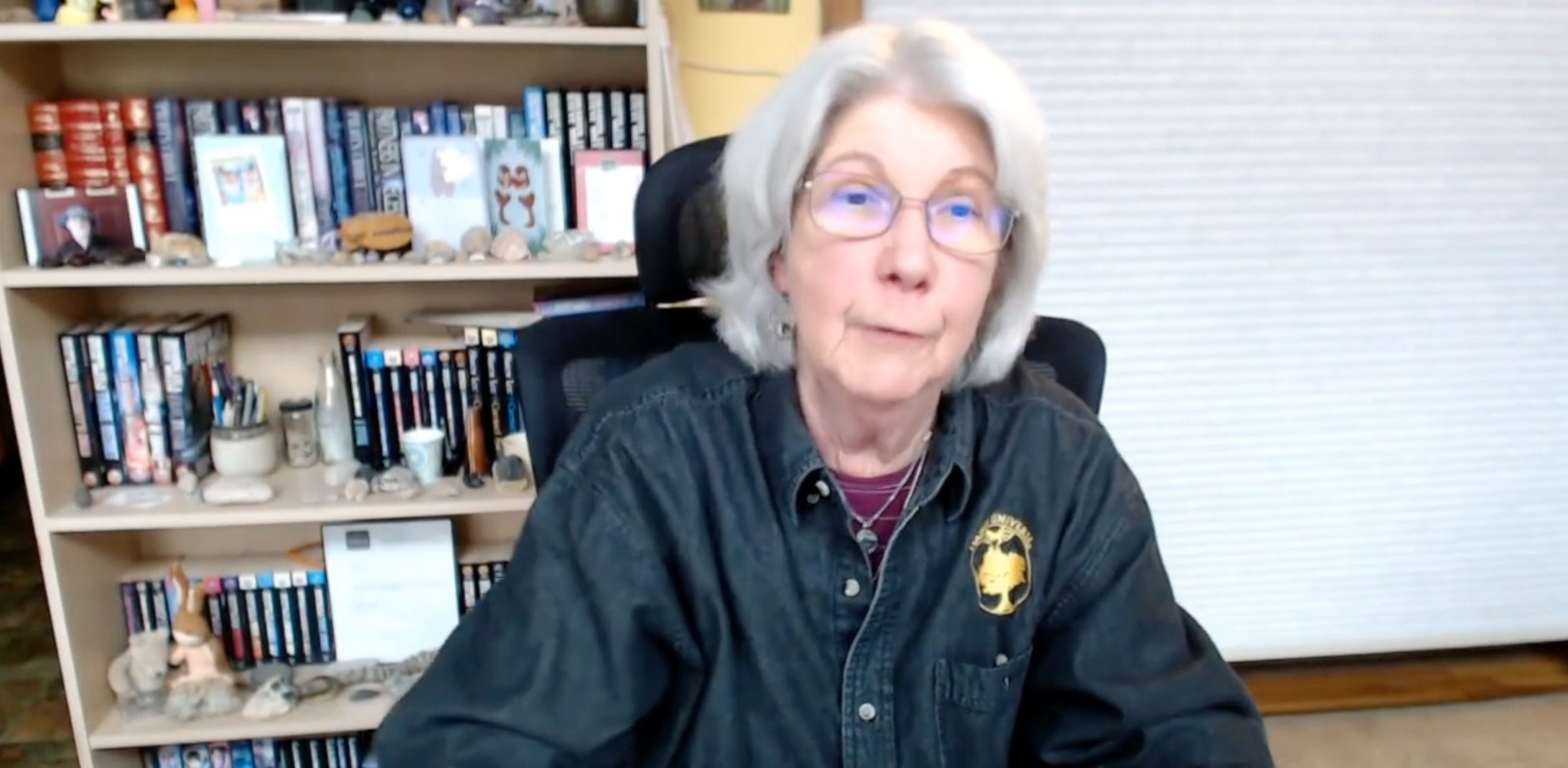
Sharon Lee has been building the Liaden Universe with her writing partner Steve Miller for over 40 years. Six anthology collections deep, the series remains one of science fiction’s most quietly beloved corners with a sprawling space opera built on trade law, honor debt, psionics, and the indomitable Clan Korval. The sixth installment, Liaden Universe Constellation Volume 6, arrives carrying more personal weight than most readers will know.
The Liaden Universe centers on a society of humans descended from Earth who built a rigid culture around clan structure, contract, and a concept called mel’ant’i where a person’s worth and honor as measured by their actions and obligations. Clan Korval sits at the top of that world, a mercantile dynasty with a dragon-and-tree crest, an unsettling number of pilots, and a habit of collecting trouble. Val Con yos’Phelium and Miri Robertson anchor the main novel arc, but the short fiction Lee and Miller have produced around the edges of that universe has always functioned as its own reward. The full universe contains character studies, origin stories, world-building that never made it into the novels but deserved to exist anyway.

Lee and Miller started as short story writers. They never stopped. “Steve and I both started out as short story writers, and we never broke ourselves of writing short stories,” Lee told Baen Free Radio Hour host Sean Hazlett. The collections reflect the novels they were working on at the time. “You can look at them as a kind of history document,” she said. Several stories in Volume 6 orbit Colemeno (the setting of Ribbon Dance, Governor’s Ball, and Trader’s Leap) and the short fiction around it helped Lee and Miller work out the rules of a place where psionic ability gets amplified by ambient conditions. That kind of setting demands discipline. “You have to be careful not to jump the shark,” Lee said. “You have a teleporter, but it has to be realistic. You can’t have someone teleport across the world in a thought. Actions take energy. They take calories. You have to break your journey and eat something. And rest.”
That’s how they write the universe, by figuring out what’s believable. Short stories, Lee explained, are the primary tool for that work. “I have this idea, or I have this character. Let’s throw them into a short story and see what they do.” Characters from the novels who never got enough page time get stories of their own. “They’re an interesting person and I want to find out what they’re doing. How did they get there? Where did they come from? So I ask.”
Volume 6 also contains a first: a Liaden western. Editor David Boop approached Lee and Miller about contributing to a weird western anthology. Lee’s initial answer was no. Miller’s was different. The Lee and Miller method, as Lee describes it, works like this: “Whoever brought a story or a novel to the table and fought for it and convinced the other one, ‘I guess we’re going to do this’ — that person was lead.” Miller said he had an idea, so Lee stepped back. “I went, ‘Great. Go. Make the Western work.’”
Miller wrote a long piece that had everything it needed except a spine. He came to Lee and admitted they might have bitten off more than they could chew. Lee took a walk on the beach in Ogunquit, Maine, and figured it out. The story features a weatherman named Dale who communicates with ranchers through their hats. Walking along the water, Lee kept touching her hat. “I went, ‘Wait a minute. I’ve got it. I’ve got how to pull it all together. It’s the hat. We’ve got to get Dale the weatherman more into this story because the hats are the key.’” Miller had been about to cut him entirely. “He went, ‘Okay. I was going to get rid of the weatherman because I thought he was extraneous.’ I said, ‘No, no, no, no, no. He’s the one. He’s the one who makes all this work.’”
“The Last Train Out of Kepler 283c” also answers a question readers have been asking since Agent of Change. Space leather, a fabric staple of the Liaden Universe for over 40 years, finally has an origin. It comes from Hodums, alien animals with spines that hold their hides in place until the weight gets too heavy and they drop. “Drop season” is when ranchers and aerial patrols go out and collect. Miller invented the animals whole cloth. Lee asked him how. “He’s like, ‘Well, leather’s got to come from someplace.’”
Lee read a passage from the story on air, and it holds up as a western without apology:
“He was big and strong and peaceable. Nobody was accepting a fight. Nobody expected him to knock down one deputy, much less two, or take off running. And if they’d ever thought about his pony, they sure hadn’t expected the bolt of hoofed lightning that answered his whistle, nor the ease with which a big man could swing into a saddle from a dead run. Nolan Quester had gone before the second deputy lumbered to his feet. Out of town and on the wrong end of the law.”
But the story that means the most to Lee in this collection is “Standing Orders.” It opens the anthology, and the reason it exists at all comes down to recovery, from cancer, and from what cancer does to a writer’s mind.
While Miller worked on Fair Trade, Lee handled their short story obligations, which was standard procedure for how they worked. What wasn’t standard was what she was coming out of. “I had just finished radiology and treatment for cancer,” she told Hazlett. “And during all that excitement, I had forgotten how to write.”
The forgetting wasn’t metaphorical. Draft after draft went nowhere over the course of months. “I did, I don’t know, 50 drafts of stories that just were impossible.” She set a deadline for herself, the kind a writer sets when options are running low. “I got up one day and walked to my computer and said, ‘If it doesn’t work this time, I’m just going to contact David and tell him we can’t fulfill the contract.’”
She sat down and started doodling on the keyboard. It worked. The opening came:
“The war was over. The Agnels had prevailed. The enemy was vanquished. Mankind was safe. Some people would think that was a good thing. Some people don’t know much about mankind.”
A character named Maggie Ruthfear arrived with those lines. Lee had no idea who she was. That turned out to be the unlock. “I remembered that I don’t have to know. She knows. And all I have to do is sit here and let her tell me.”
Lee went back to explain what had broken in the first place. “Cancer is cancer. It takes up a lot of time. The treatment takes up a lot of time. And doctors want you to focus on real life really hard.” There are no safe what-ifs when treatment is the reality. “You can treat it or not treat it, but these all have real world consequences. You can’t just make up a better ending.” That collapse of imagination into the immediate is what cost her the writing. “I had gotten mired in real life. I forgot that when you’re making things up, the sky’s the limit. And I had also forgotten that it’s not my story. It’s the character’s story.”

That last part is the foundation of how Lee writes. “It has always seemed to me when I write that somebody is telling me the story and I’m just writing it.” She rereads everything she wrote the previous day before she starts new work, and she’s often surprised by what she finds. She’s been going back through the entire Liaden catalog recently — something she’s never done before — and the experience has been disorienting in the best way. “I was reading them and saying, ‘My god, this person is good.’ And it was, ‘Did I write that? How on earth did I think of this?’”
Forty years of a universe, and it still surprises her.
Are you a fan of the Liaden Universe?
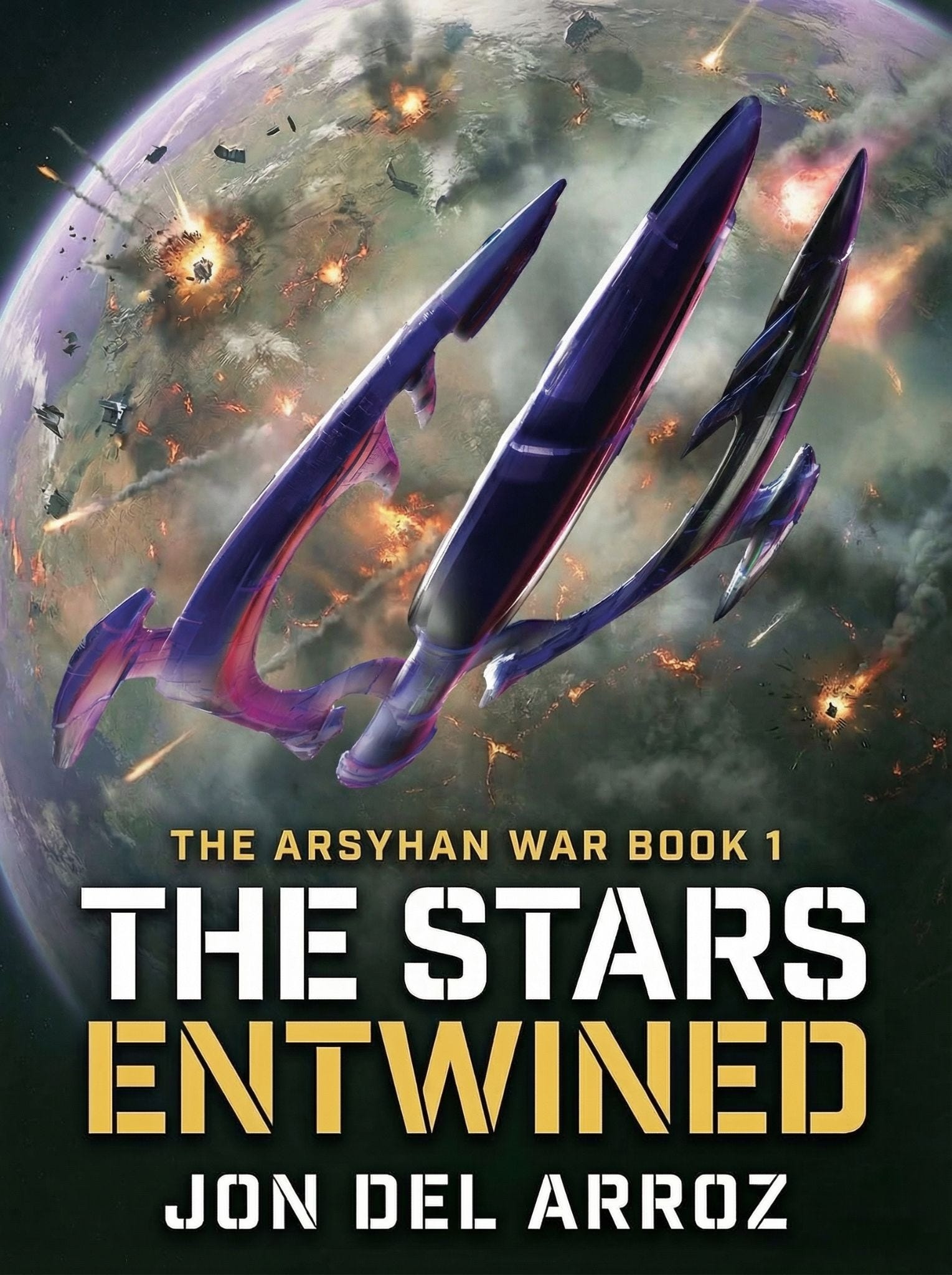
If the golden age of Trek and Babylon 5 left a hole in your sci-fi diet, The Stars Entwined fills it — interstellar espionage between two civilizations on the brink of war. Read The Stars Entwined on Amazon!
NEXT: What Is a First Edition? The Muddied Waters of McCaffrey’s Dragonriders of Pern
I have an abiding appreciation for the Liaden Universe. You've reminded me that I am behind in reading the latest installments.
I'm a fan - even done some cover art for them. But.. they got sexually... wierd.
So I haven't bought or reviewed anything in a decade.