


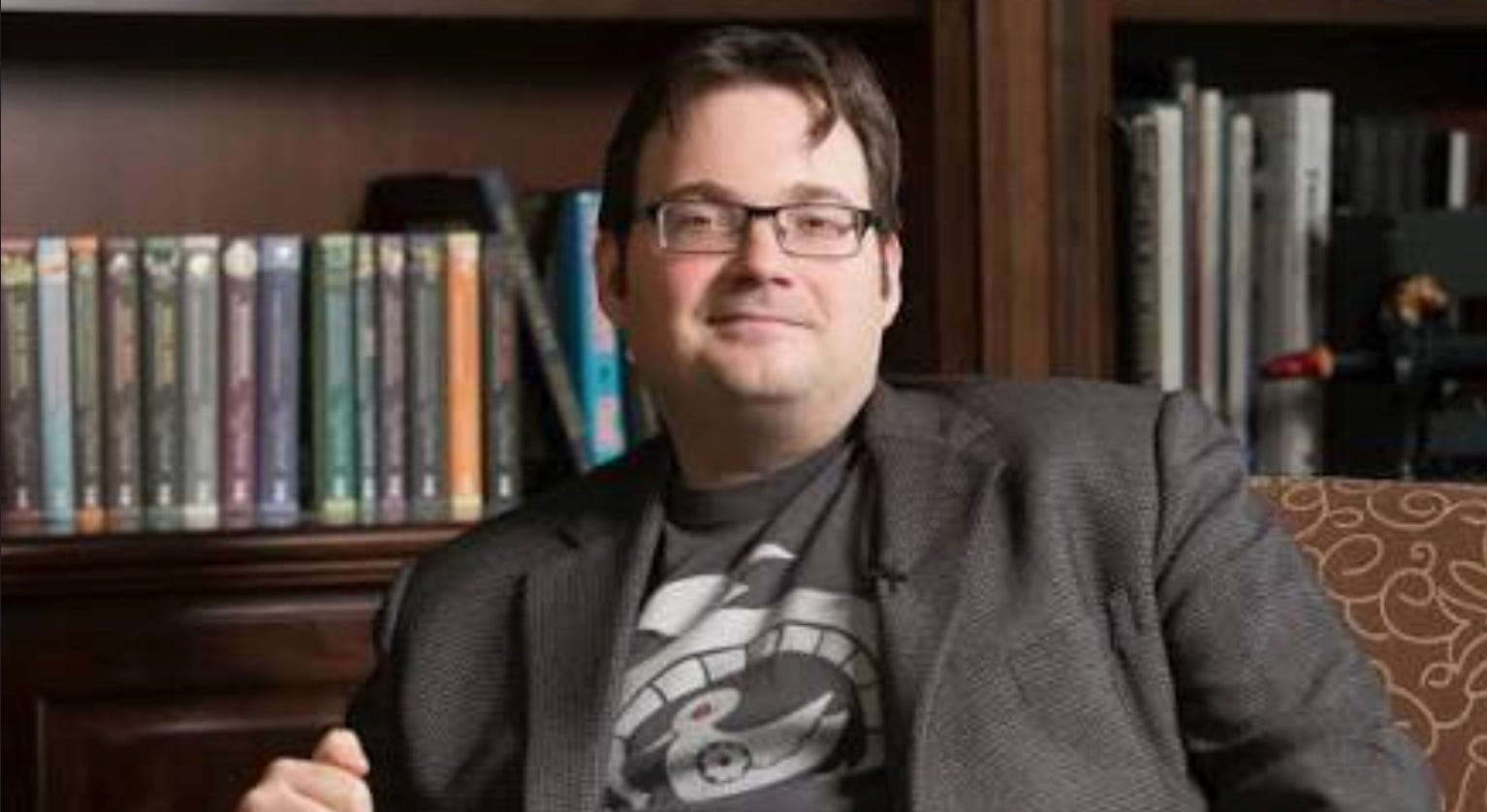
Brandon Sanderson stood at Oxford’s Tolkien Lecture and did something most authors avoid: he tried to define fantasy. He did so very specifically, with rules, categories, and a direct line from Tolkien to every epic fantasy novel published since.
He starts with three requirements. First: “Fantasy, as I will define it, must be imagined as fiction, presented as fiction, and accepted as fiction.” Aslan isn’t Jesus Christ. Eru Ilúvatar isn’t Elohim. Second: “fantasy must be impossible.” He borrows from critic John Clute here, simplifying it to a clean split: “fantasy is about the impossible, while science fiction is about the plausible.” Third, fantasy has to look like fantasy: an aesthetic that leans into wonder and rules of reality bending or breaking, whether or not elves and castles show up.
With that framework built, Sanderson breaks pre-Tolkien fantasy into two dominant lanes. The portal fantasy: someone from the mundane world falls through a gateway into somewhere impossible, then usually comes home. Alice’s Adventures in Wonderland is his go-to example, with roots stretching back to George MacDonald’s 1858 Phantastes. Then there’s heroic fantasy: the Conan and King Solomon’s Mines lineage, larger-than-life heroes fighting through low-magic, often nihilistic worlds where “the hero is not guaranteed victory.”
Then Tolkien shows up and builds a third lane: epic fantasy. Sanderson credits him with five innovations.
Sincerity. Tolkien wrote a serious book in a genre nobody took seriously, and never winked at the reader while doing it. Sanderson contrasts this against modern franchise habits: “You can see the effects of this in my generation’s humor, commonly seen in recent Marvel or Star Wars films, where sincere moments are often undercut by a quick joke.”
Magic with dual functions. Sanderson, who coined the terms hard and soft magic systems, points out Tolkien used both at once. Gandalf’s soft, mysterious magic generates wonder. The Ring’s hard, defined mechanics generate tension through cost and consequence. “I don’t think epic fantasy would be what it is today without both the ring and the sense of wonder in Lord of the Rings.”
Mythological extrapolation. Tolkien didn’t just borrow elves and dwarves from folklore. He rebuilt them into something new. “Elves in Tolkien are not elves seen anywhere in mythology,” Sanderson says, adding that the entire concept of a dark lord as a direct antagonist appears to be a Tolkien invention.
Stakes. World-ending threats, balanced against intimate personal stories. Sanderson tells a story about his own mother, not a fantasy reader, getting hooked on the Lord of the Rings films because she needed to know “if little Smeagol will decide to be good or not.” His point: “Epic fantasy, then, is a conundrum. It is a story where often the entire world is threatened, but we can’t care about that as much as we care about a gardener who just wants to go home.”
Immersion. Maps drawn as in-world artifacts. A translation conceit: Tolkien framing his books as translated manuscripts, which Sanderson says he’s borrowed directly for his own Cosmere novels. “Sam’s name is not Sam... his name is Banazir,” Sanderson notes, explaining how Tolkien anglicized names to preserve tone rather than literal meaning.
Sanderson’s closing argument is the point of the lecture: these five things are learnable. They’re not decoration. They’re structure. Epic fantasy isn’t defined by elves and quests. It’s defined by sincerity, layered magic, mythic depth, dual-scale stakes, and immersive authenticity. Miss those five things while copying the trappings, and you get imitation instead of innovation.
What do you think: are these five ingredients still the backbone of epic fantasy today, or has the genre moved past Tolkien’s template?
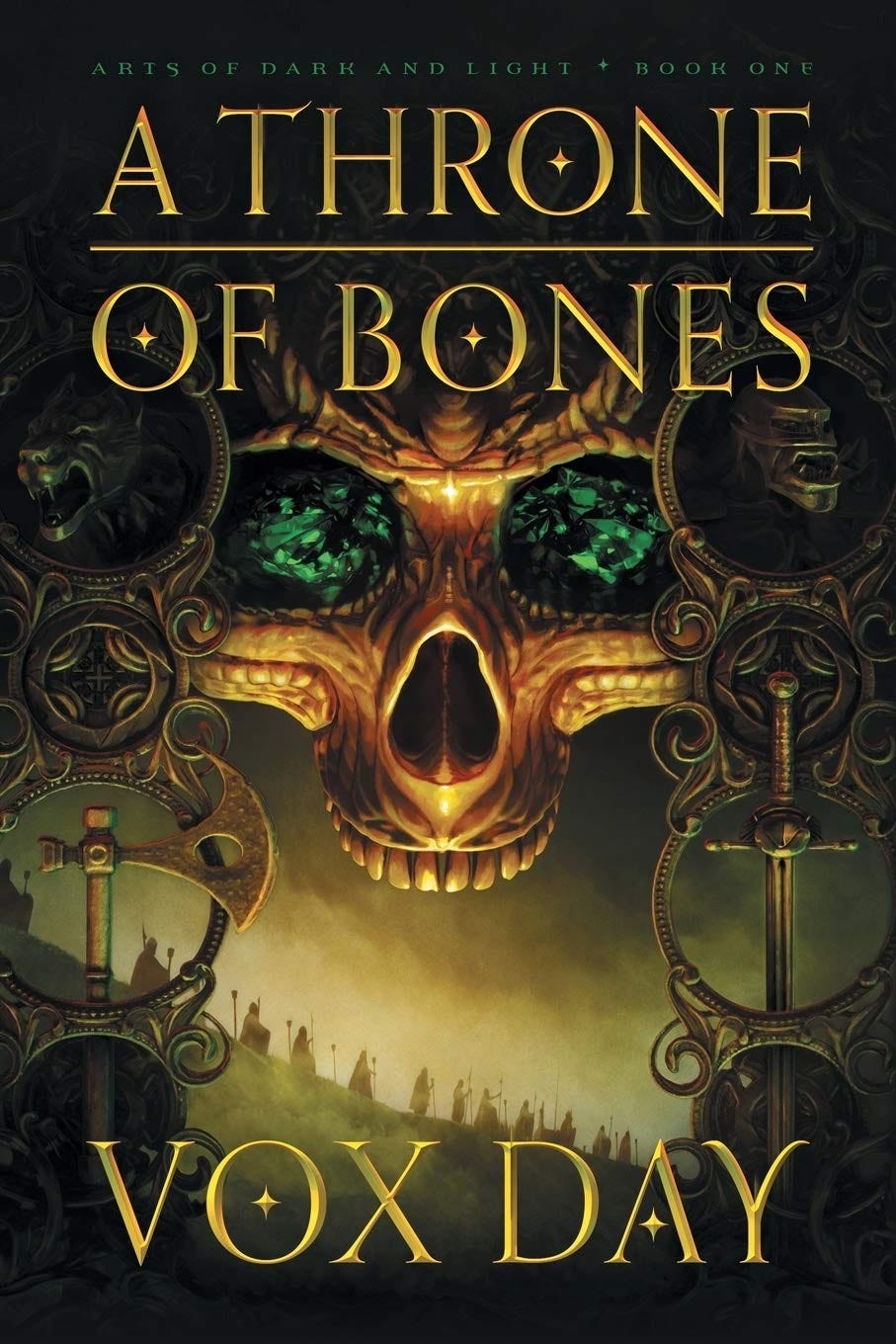
Epic Fantasy hasn’t been this hard-hitting since Tolkien. In a world where humanity is akin to a Roman legion, a great darkness arises. Read A Throne Of Bones today.
I think he makes some good points, and a lot resonated with me as well. Though I would argue three points: C.S. Lewis all but said Aslan was an analog to Jesus Christ. Is this Sanderson expressing atheistic streak and saying Jesus was a fantasy? I always figured he was a Mormon, which still grounds itself in Christ.
The second is I believe a trait of epic fantasy is it holds up and brings wonder that feels timeless. Someone picking up the book today would be just as easily transported. It is so divorced from any traits of the real world there's rarely anything to cause a suspension of disbelief for someone immersed in the story.
It is easy to point to LotR and the Hobbit or the titans of the 60s and 70s but the key is that it is just as good (or bad, depending on taste) now as it was when it came out.
In our more modern era we have the pulp TSR stuff, Terry Brooks original Shannara trilogy, Fiest's (first set) of Magician books, The Belgariad... someone can pick these all up today, nearly half-a-century later and they read just as well.
The third point is I feel he's missing out a big trait of modern fantasy; one he, himself, writes in what I call "Humanacentric Fantasy." The biggest traits of this sort of fantasy are:
1. Often the world is one where where magic is rare, dying, extraordinarily exclusive, or unknown
2. Almost the entire main cast is human, even if they are exotic
3. Politics plays a larger role in the book(s) than expected from typical fantasy.
Mistborn is very nearly this, except magic is common (just that Mistborn aren't). Robin Hobb's Assassin series, Wheel of Time, the Kingkiller Chronicle, but Game of Thrones might be the best example.
The first big series I remember to trend this way was in the late 80s with Memory, Sorrow, and Thorn by Tad Williams. His world was one where almost all magic had been sapped except, generally, some exceptional swords, one dragon, and elf-ish and a dwarf-ish race. The two other races were not particularly thriving and mostly were hiding from the world. The biggest part of the series were the humans, their goals, their problems, their politics.
I re-read it recently. It still holds up.
Thanks for covering of this lecture
I would emened Sanderson's definitions to what sounds to me more precis -
** Sincerity -> Realism. Making fantasy more realistic & modern.
** Magic with dual functions -> Realistic & emotional. Those are the 2 functions Tolkien used. The Ring as mentioned can do physical changes, but can also affect emotions & character, as if those were of the same essence.
** concept of a dark lord -> As the Ancient Gods of Lovecraft and others. Tolkien didn't invent so much there, just put it in his own world.
** Stakes -> An Epic journey, just as the classical ones. This time it's into the heart of the myth itself.
** Immersion -> Internal history & versions. This is the 'academic approach' & so Tolkien used what he knew & loved as an academic (in Litt & Lang) to achieve this depth. He may even was more interested in creating this depth, than with the actual plot.