


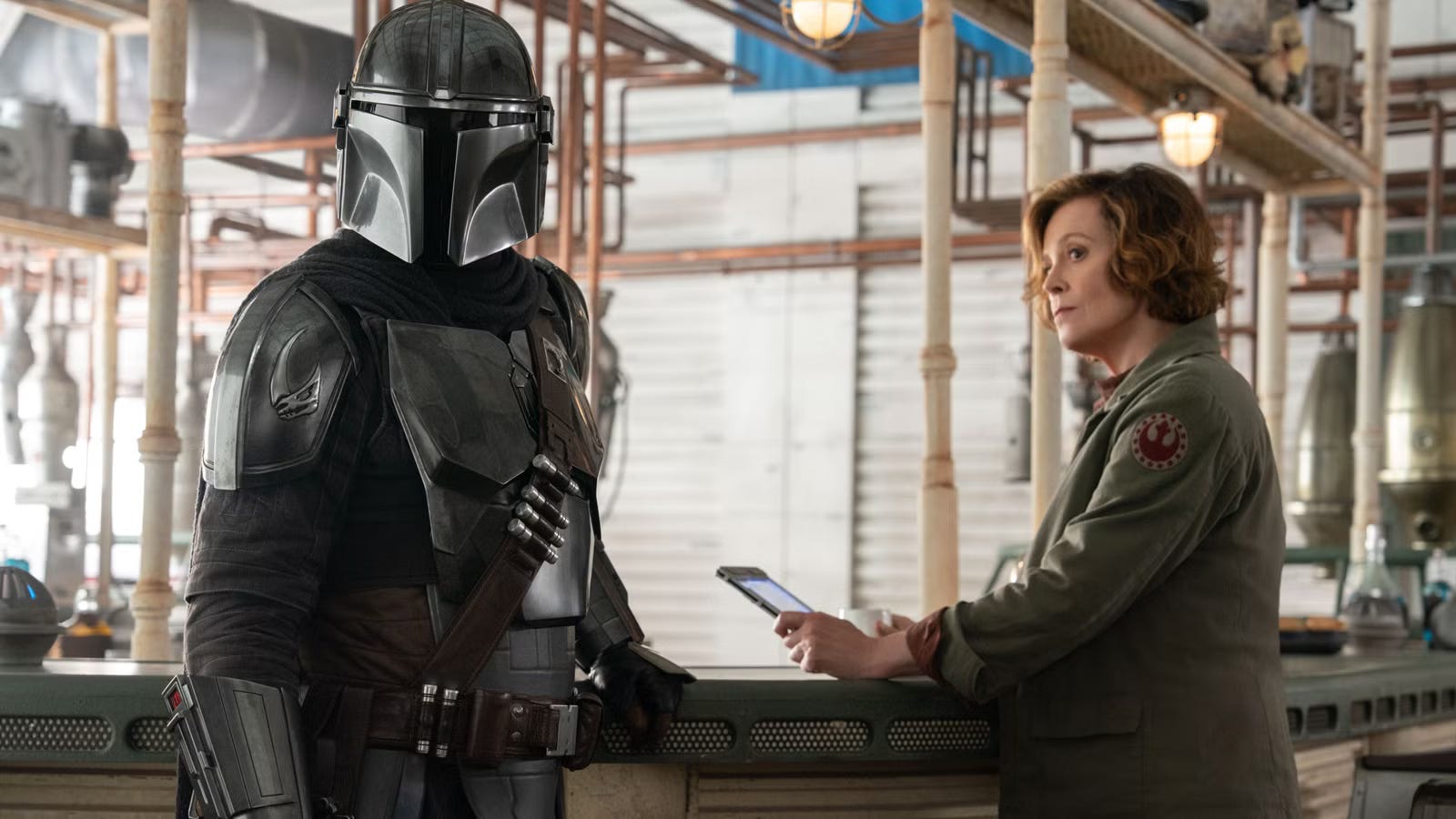
Jon Favreau’s The Mandalorian and Grogu hit theaters May 22, 2026, and the strongest impression it leaves is that this was almost certainly Season 4 of the Disney+ show before someone upstairs decided to put it on the big screen. The Mandalorian season 4 has transformed into The Mandalorian and Grogu, and you can feel it in every frame.
That isn’t a death sentence. The film is fun, light, and free of the cultural lecturing Star Wars audiences have come to brace for. It’s the most low-stakes installment of the franchise in years, for better and worse.
The Plot Is a Video Game Mission List
Din Djarin now works contract jobs for the fledgling New Republic out of the Adelphi base, located in the Outer Rim, and is tasked with hunting down ex-Imperials and bringing them to justice. The opening sequence is pure John Wick in Mandalorian armor: Mando infiltrates an Imperial warlord’s mountain base on a snowy world, takes out snowtroopers, and brings down an AT-AT in dramatic fashion.
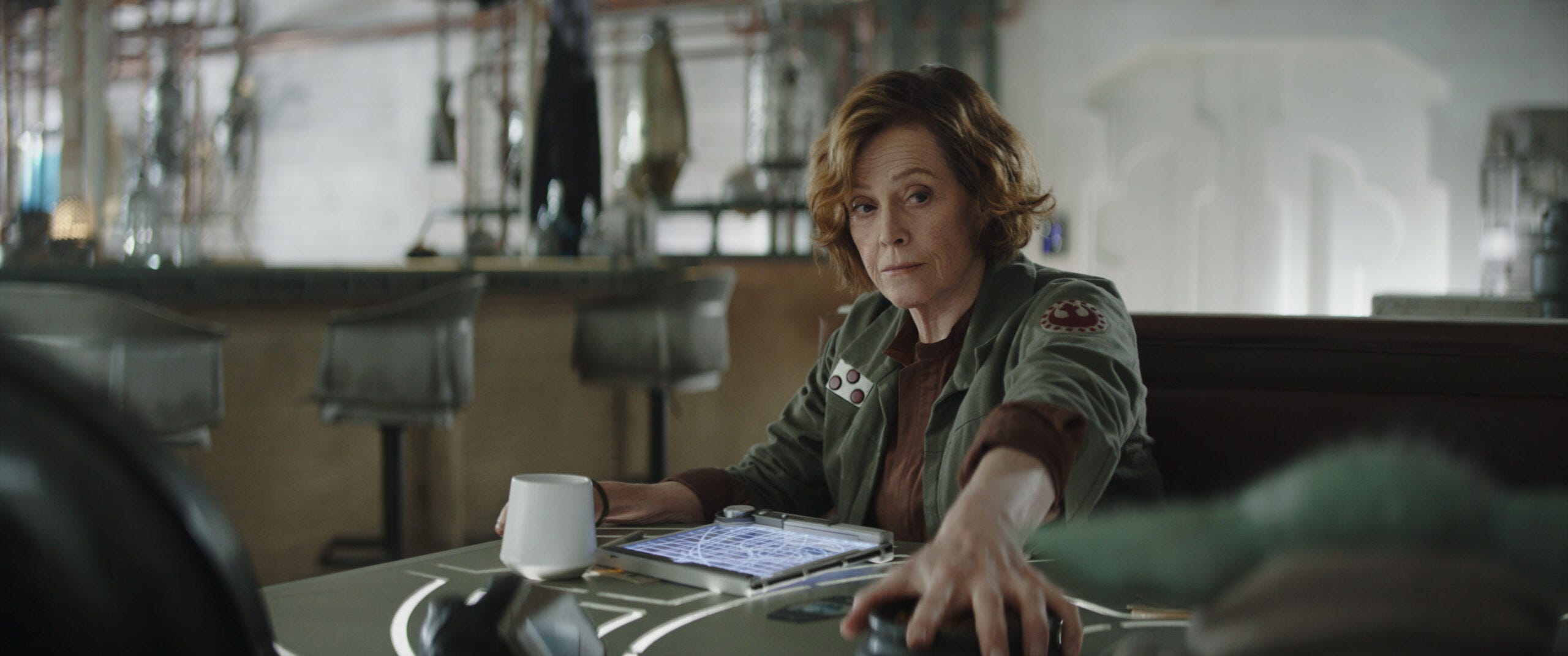
From there it slows down for some character beats, then picks up again. Colonel Ward, played by Sigourney Weaver, tasks the Mandalorian with apprehending Coyne, who she says many believe to be dead, and that it’s not even known what he looks like. The Hutts have the intel. Mando has to go get it.
So Mando and Grogu set off to retrieve Rotta the Hutt (Jeremy Allen White) and return him to his aunt and uncle, the leaders of a crime syndicate of their own. Mando gets in over his head, the Hutts grab him, and Grogu runs the rescue mission. Roll credits.
It’s a tabletop RPG session. Mando rolls initiative against ex-imperials, the GM hands him a side quest from the Hutts, the party gets captured, and the kid pulls off the rescue.
The Bigger Problem: Nothing Changes
Din and Grogu start the film as bounty hunters for the New Republic. They end the film as bounty hunters for the New Republic. The Republic isn’t measurably safer. The galaxy isn’t reshaped. Their relationship doesn’t deepen in any way that matters.
It’s filler. Premium-priced filler with a Ludwig Göransson score and IMAX framing, but still filler.
Compare this to what Star Wars theatrical releases used to do. Empire ends with Han in carbonite and Luke missing a hand. Even Rogue One ended with everyone dead and the Death Star plans changing hands. Here, the credits roll and you could slot the next Disney+ episode in seamlessly.
Rotta the Hutt Is the Worst Part
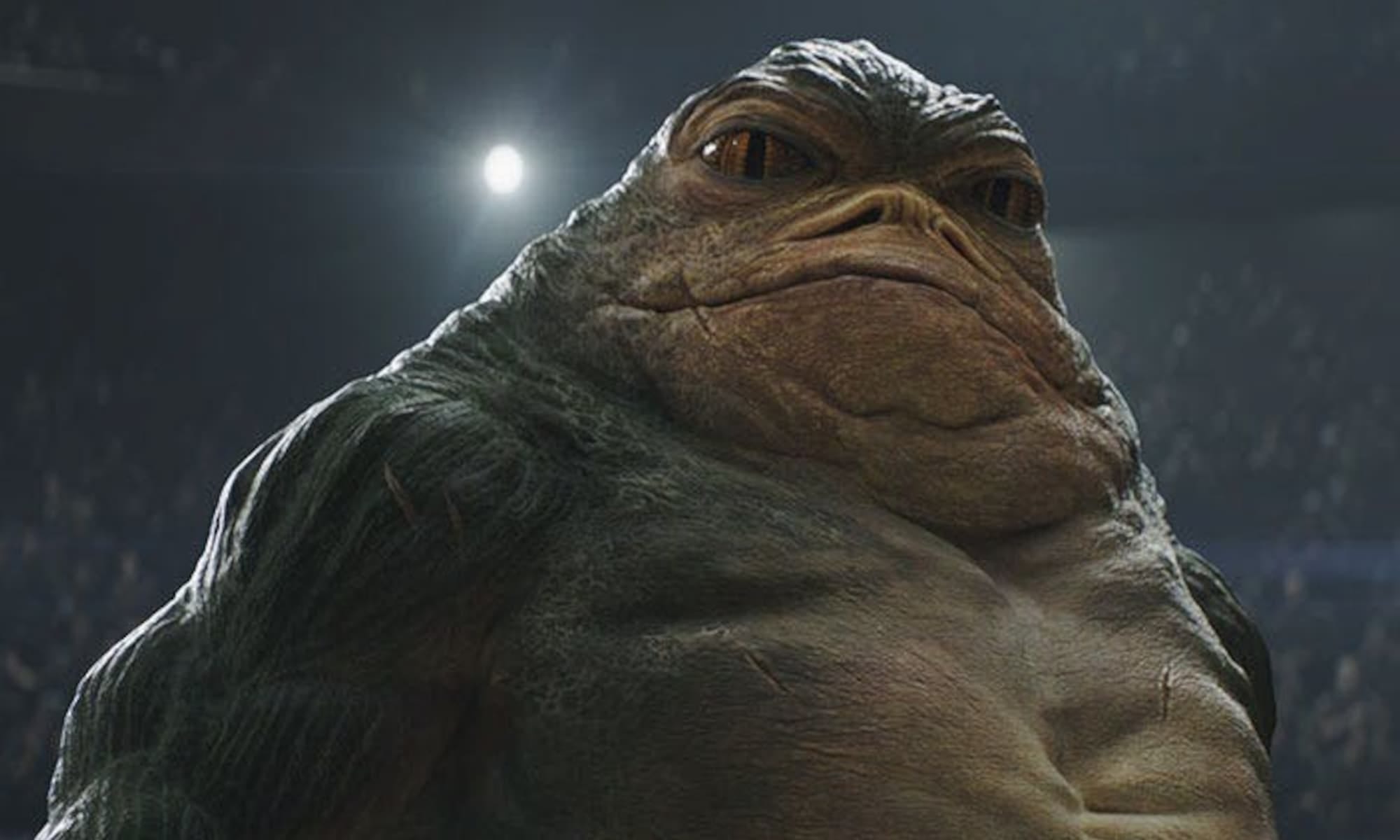
Rotta is a gladiator and while he’s got the slug body, he’s a much more muscular version than his late father, voiced by Jeremy Allen White doing a flat American accent. He complains about his father. He wants to be his own man. He’s a pit fighter who could die any night and he sounds like a sulking film school dropout.
The CGI on him is rough. It recalls the Special Edition Jabba scene where Han steps on his tail, that uncanny cartoon-pasted-into-reality quality. Some of the rest of the movie has the same problem at points, with effects that feel TV-budget rather than theatrical.
Kids in the audience didn’t seem to mind Rotta at all. They laughed at the right beats. But for any adult viewer, he yanks you out of the picture every time he opens his mouth.
Sigourney Weaver’s performance is the other notable misfire. She delivers her lines flat, almost phoned-in. For an actress of her caliber making her Star Wars debut, it’s a strange choice.
The Cameos and the Good Stuff
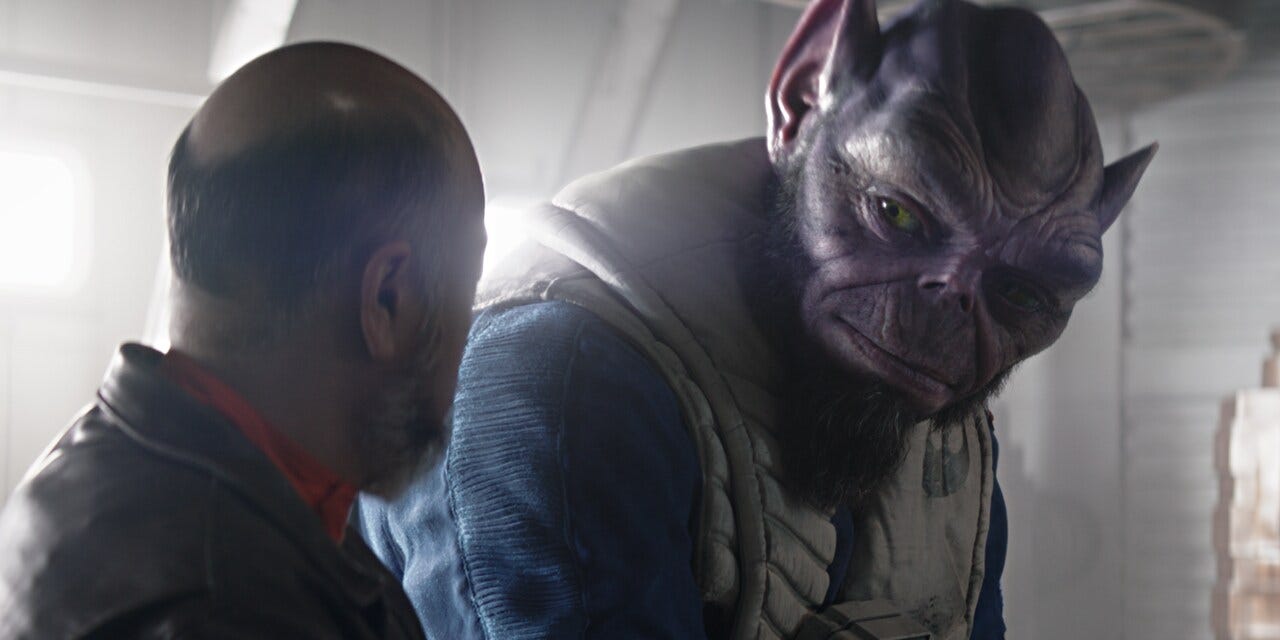
The fan service hits the right notes for franchise loyalists. The most prominent legacy character in the film, aside from Din Djarin and Grogu, is Rebels fan-favorite Zeb Orrelios (voiced by Steve Blum), alongside Embo the bounty hunter (from The Clone Wars) and the Hutt twins (from The Book of Boba Fett). Carson Teva and Trapper Wolf show up briefly.
Grogu gets paired with little monkey-like creatures that follow him around. It’s pure Lucas-era comic relief, the kind of beat that fits naturally alongside Willow, Labyrinth, and the Ewoks. They land well and the kids in the theater ate it up.
The soundtrack is the film’s standout. Göransson takes the Mandalorian themes and blasts them through orchestral horns in a way that feels properly epic, grander than anything on the TV show. If nothing else, this movie earned its theatrical mix.
Action is mostly solid throughout. Mando’s combat scenes are crisp. The AT-AT sequence pays off. The arena fight delivers.
The Verdict
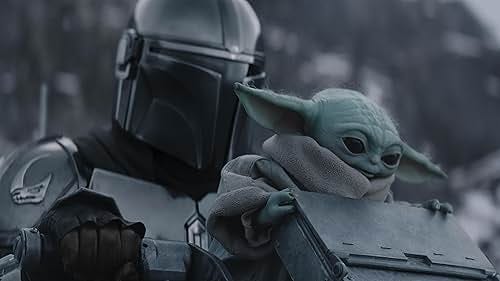
The Mandalorian and Grogu is popcorn-level fun. It’s free of overt ideological content, which alone puts it above most modern Star Wars output. The themes hit, the action works, and Din and Grogu remain charming together.
But the scope is tiny, the plot doesn’t move their lives forward, and Rotta plus Weaver’s stiff line readings drag down what should have been the centerpiece sequences. As a Season 4 of the Disney+ series, this would have played as four solid episodes and fans would have loved it. As a theatrical event after seven years away from the big screen, it’s underwhelming.
8/10.
Did you catch The Mandalorian and Grogu in theaters? Does the Season 4 theory hold up for you, or are you more forgiving of the small scale? Let us know.
Space marines on a holy crusade across the galaxy. If that sentence got your attention, Justified: Saga of the Nano Templar is your next read. Three books of relentless action Read Justified: Saga of the Nano Templar on Amazon!
NEXT: Star Wars Just Had Its Worst Opening Weekend Under Disney And The Spin Won’t Change the Numbers
What makes The Mandalorian most interesting, at its best, is not the mythology around it, but the moral simplicity at its center: a warrior slowly being converted by responsibility. Din Djarin begins as a man of code, armor, and profession. Grogu forces something deeper into that structure: attachment, sacrifice, tenderness, and the risk of becoming vulnerable for the sake of another. That is why their bond works. It is not merely cute. It turns protection into formation. The child changes the guardian, and the guardian gives the child a world in which love can become trust. When Star Wars remembers that scale is not the same as depth, it can still speak with surprising clarity.
8/10? What are you smoking bro? This movie was pure slop. 5/10 is being generous.