


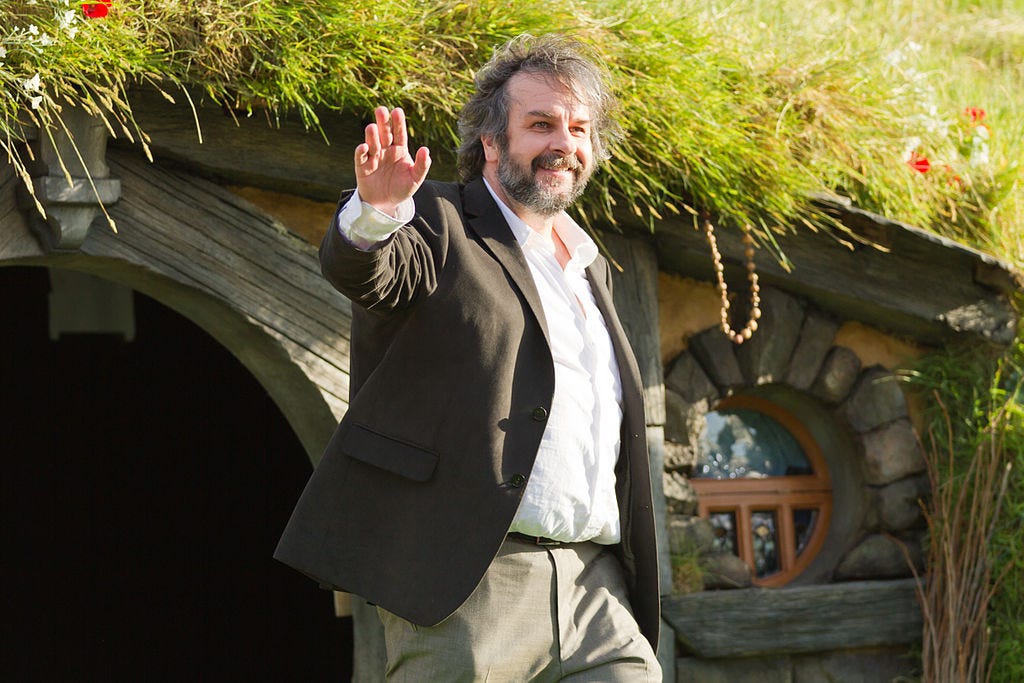
Before Peter Jackson released The Lord of the Rings: The Fellowship of the Ring into theaters, he made it abundantly clear that his films were not “official.”
Back in 1998, Jackson engaged in a Q&A session with Ain’t It Cool News about his upcoming film trilogy. One of the 20 questions he was asked was what the film’s relationship with Tolkien Estate and Christopher Tolkien was.
Jackson answered, “They have made their position very clear: While they are in no way opposed to a film(s) being made, they do not want to be involved.”
As for why the Estate did not want to be involved, he explained, “The reason is basically simple: if they had any involvement, then the films would become ‘official’ - in other words, they would be seen as being endorsed by the estate. This is a situation that the estate does not want, as they consider themselves to be protectors of Tolkien's written word, not film makers.”
From there, Jackson explained how his films can only be an interpretation and cannot replace the books, “I said something here in NZ in an interview, which is worth repeating: You shouldn't think of these movies as being "THE LORD OF THE RINGS". THE LORD OF THE RINGS is, and always will be, a wonderful book - one of the greatest ever written. Any films will only ever be an INTERPRETATION of the book. In this case my interpretation.”

However, film adaptations can effectively affect or even change the way people view the written word. This is especially so in our modern times when most people will see the film or TV series rather than read the original books.
Such was the case with Edgar Rice Burroughs’ Tarzan. In the original Tarzan novels, the Lord of the Jungle is an intelligent, eloquent man who speaks multiple languages including French, English, German, Latin, and even several dead languages, as well as Ape.
However, in the popular movies of the 1930s, this characterization of Tarzan is completely changed. He speaks crude pidgin English and is childlike. And it’s this version of Tarzan that became popular and was widely accepted despite it being contrary to the original novels.
In fact, while Burroughs initially praised the film adaptation, the idea that his “superbly intelligent, heroic and beautiful” character had become a “semi-literate oaf” irked him so much he chose to work with Herman Brix to create a more faithful version of his character in 1935.
In the end, Peter Jackson got it right back in 1998: his films were just one fan’s interpretation of Tolkien’s masterpiece, they are not the “official” version, and certainly not meant to supplant the books. That’s why The Lord of the Rings trilogy largely succeeded in honoring the source material while driving millions back to the page.
Contrast that with Tarzan, where Hollywood’s insistence on turning a brilliant, multilingual English lord into a grunting, childlike brute not only distorted Burroughs’ creation but frustrated the author himself enough to fight back with a better version. Yet the simplified, dumbed-down stereotype stuck in the public mind.
The lesson is clear: the books are the real stories and official and they are still there waiting to be read, no matter what Hollywood tries to do to them. But at the same time, the books’ stories should be promoted to ensure that Hollywood adaptations don’t distort or malign the original stories as they are so wont to do.

Fandom Pulse is reader-supported independent journalism. Paid subscribers get exclusive scoops and investigative reporting daily.
Dive into The Immortal Edge by Jon Del Arroz where Imperial Special Agent Ayla Rin uncovers a deadly conspiracy tied to a revolutionary immortality spore held by ruthless space pirates, forcing her into a high-stakes race across the stars to stop sinister forces from erasing humanity forever.

NEXT: Amazon MGM Studios And Paramount+ Announce New Race-Swapped ‘Treasure Island’ Adaptation
The films are a great addendum to the book, as opposed to a replacement; even Jackson's changes, which continue to draw complaints from some--are an incentive to read the novel for a basis of comparison...
what a missed opportunity. I would have contracted the cast to do an unabridged audio book series, with Andy Serkis as narrator. And fill in the missing pieces like Nick Frost as Fatty Bolger, John Cleese as Tom Bombadil, etc.