


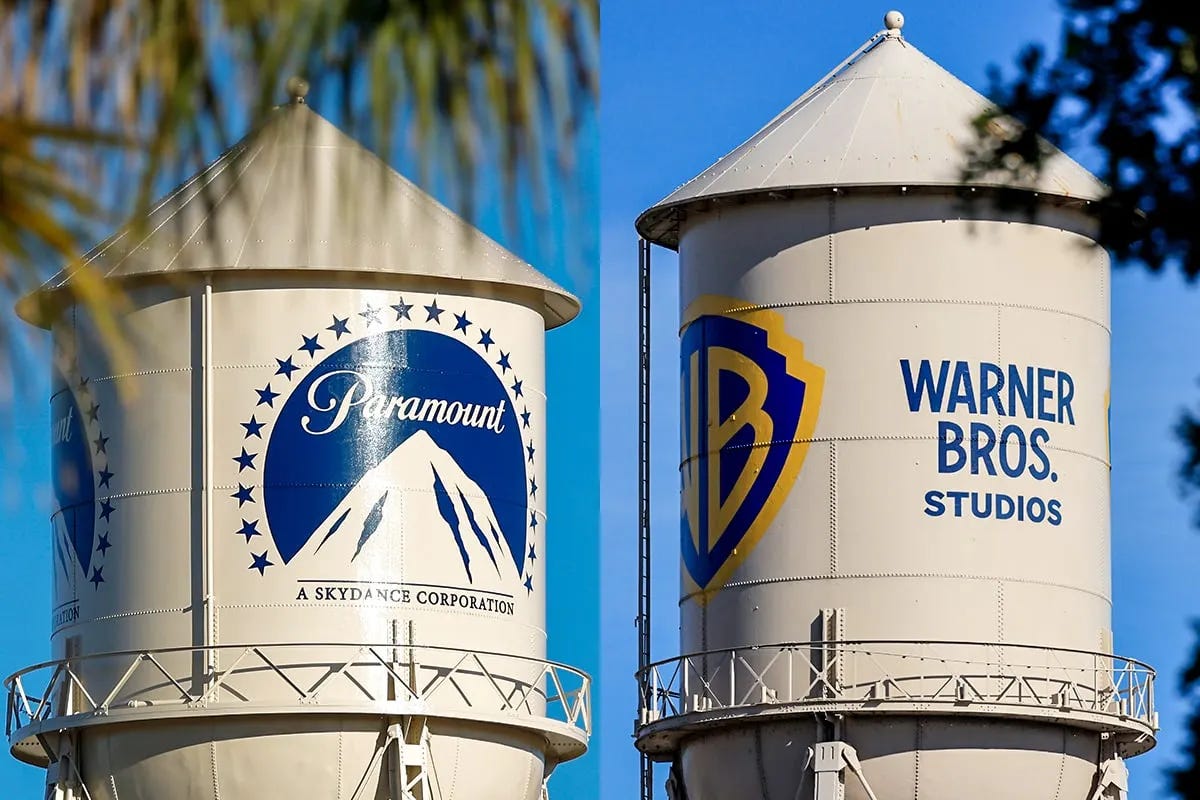
Paramount has settled the antitrust lawsuit that stood between it and finally closing its acquisition of Warner Bros. Discovery, clearing the last obstacle in a fight that has run more than a year and pulled in Netflix, Comcast, a hostile takeover, two attorneys general coalitions, and a $666 million exit package for the executive who sold the company out from under his own employees.
The deal began in September 2025, when Paramount Skydance CEO David Ellison opened talks to buy WBD outright, offering $19 per share, then $22, then $23.50. WBD rejected all three. By October, WBD had opened a full auction, fielding bids from Netflix, Comcast, and Starz. Netflix emerged as the board’s preferred buyer in December 2025 with an all-stock offer of $82.7 billion, or $27.75 per share, that would have spun off WBD’s cable networks separately.
Paramount refused to let that stand. On December 8, 2025, backed by Larry Ellison’s money and RedBird Capital, Paramount launched a hostile all-cash tender offer worth roughly $108.4 billion, going straight around WBD’s board to its shareholders. Netflix converted its own bid to all-cash in January to compete, but when WBD gave Paramount a seven-day window to make a final offer in February, Paramount raised to $31 per share, valuing the deal at $110.9 billion. Netflix walked away, calling the price “no longer financially attractive.” Paramount and WBD announced their merger agreement on February 27, 2026.
WBD shareholders approved the sale in April. The Department of Justice cleared it in June, the European Commission in July after Paramount agreed to exit a joint venture with Universal, and the UK’s competition authority in August, alongside approvals from Japan, Canada, Brazil, India, and Mexico.
Then came the fight that almost killed it. On July 13, twelve Democratic state attorneys general sued to block the merger on antitrust grounds. The Writers Guild of America filed its own suit the next day. A federal judge granted a temporary restraining order that froze the deal for two weeks, and Paramount and WBD had to push their merger deadline back nearly a full year, to June 2027, while a trial got scheduled for March 2027.
Paramount bought its way out instead of waiting for that trial. The settlement announced this week requires Paramount to run Warner Bros. Studios and Paramount Pictures as separate operations for now, commit to releasing at least 30 theatrical films a year, stand up an editorial independence board over both CBS News and CNN, bar writer layoffs at CBS News Broadcast for five years, and pay $17.5 million into the Writers Guild’s health fund plus legal costs. Connecticut had pushed for full divestiture of CNN and CBS News outright. Paramount avoided that outcome and paid to keep both networks. The deal is now expected to close in early October.
Sitting outside the industry pain entirely is David Zaslav. WBD’s outgoing CEO walks away with more than $666 million between his exit package and vested stock, even as the merger is expected to bring layoffs across the combined company and Paramount takes on roughly $79 billion in debt to fund it. One rival studio executive described what Zaslav did to the company as dressing up the corpse and making it look good enough for the funeral, good enough to sell.
With every regulatory box now checked, Paramount Skydance is set to take control of Warner Bros. Discovery’s entire library, from DC to Harry Potter to CNN, under David Ellison. Was this merger worth the year of lawsuits, hostile bids, and a $666 million payday for the man who sold the company, or did WBD’s shareholders and employees end up on the losing end of the whole fight?
David Zaslav. WBD’s outgoing CEO walks away with more than $666 million
666?
Makes sense.
The problem is that Paramount bought WBD for it's inventory, not for the creative side of the business. They wanted that sweet sales bread that they didn't have to work to keep cooking.