



This last week on X, a debate raged in Tolkien fandom, splitting into two equally wrong camps: those who dismiss The Silmarillion as Christopher Tolkien’s glorified fan fiction, and those who invoke Tolkien’s stated wish for a living mythology to justify Amazon rewriting the Second Age wholesale. Both positions collapse under scrutiny. The truth is messier, more specific, and far more interesting.
What Christopher Actually Did
J.R.R. Tolkien spent roughly 60 years writing and rewriting the myths of Arda, from the earliest Book of Lost Tales drafts around 1916 to revisions still in progress when he died in September 1973. He never reached a single, stable, publishable version. When Christopher inherited the manuscripts, he faced something between an archaeological dig and an editorial crisis.
What he published in 1977 draws primarily from the late 1950s Quenta Silmarillion, the seventh or eighth version of the core text, the most mature and most fully realized. He supplemented it with the Annals of Aman, the Grey Annals, and standalone tales like the Narn i Chîn Húrin. He cut, reordered, and stitched passages across decades of drafts to produce a single continuous narrative. In places, most notably Chapter 22, covering the War of Wrath, where the late drafts broke off or conflicted with earlier material, he wrote brief connective passages himself. He said so plainly in the foreword: “Complete consistency is not to be looked for.”

He was not hiding anything. He was being honest about what the book was and what it was not.
The Canon Question
Christopher himself called The Silmarillion “nearest the canon” among the posthumous publications. That phrasing is deliberate. It sits above the twelve volumes of The History of Middle-earth, which are drafts and commentary, raw working material for scholars. It also sits above Unfinished Tales, which are exactly what the title says.

The Tolkien Estate’s own 2023 legal filings define the Tolkien canon as encompassing published works, including posthumous publications, plus notes and early drafts constituting the full legendarium. By that definition, The Silmarillion is not soft canon or provisional canon. It is the canonical mythological foundation of Middle-earth, the cosmological layer on which The Hobbit and The Lord of the Rings rest.
Tolkien himself made this clear in Letter 131, written to publisher Milton Waldman in 1951, one of the most important documents in the entire correspondence. He described his ambition as creating “a body of more or less connected legend, ranging from the large and cosmogonic, to the level of romantic fairy-story.” He was explicit that the five parts of Ainulindalë, Valaquenta, Quenta Silmarillion, Akallabêth, and Of the Rings of Power and the Third Age, belonged together as a single work, not as separable pieces. He wanted to dedicate it, in his own words, “simply to: to England; to my country.” The phrase “mythology for England” is Humphrey Carpenter’s paraphrase, but the intent it captures is accurate.
Tolkien saw the legendarium as an interconnected whole. The cosmogonic scale was the foundation. The Lord of the Rings was, in his own conception, only one story within that larger body. You cannot coherently accept the appendices and the shadow of Morgoth hanging over Sauron while rejecting the text that makes those things meaningful.
The Editorial Problem Is Not a Disqualifying Problem
Scholar Verlyn Flieger, one of the most rigorous Tolkien critics working today, has consistently noted that the layered, unfinished nature of Tolkien’s manuscripts is not a flaw in his mythology. Tolkien built the legendarium as a set of tales passed down and retold across ages, with the inconsistencies between versions reflecting the nature of oral tradition and mythological transmission. The Book of Lost Tales frames the entire mythology as stories Eriol the mariner hears from Elves. Later versions shift that frame but never fully abandon the idea of the mythology as received and imperfect history.

Christopher Tolkien was not violating his father’s design by editing inconsistencies. He was working within it.
Where scholars legitimately push back, and Tom Shippey and others have made this point, is on specific editorial choices where Christopher resolved ambiguities by omission rather than by preserving the complexity. The compressed treatment of the War of Wrath is the clearest example. Later, in the History of Middle-earth series, Christopher documented his own second-guessing of these decisions at length. But regretting specific cuts is not the same as saying the published volume is not canonical. A film editor who later wishes he’d kept a scene does not thereby make the released film illegitimate.
What This Does Not Justify
Here is where the second online camp fails, badly.
The argument runs: Tolkien wanted a living mythology, open and usable, in the tradition of Norse and Finnish myth. Therefore, Amazon had latitude to reimagine the Second Age. Therefore, Rings of Power is a valid creative descendant.
This is a category error.
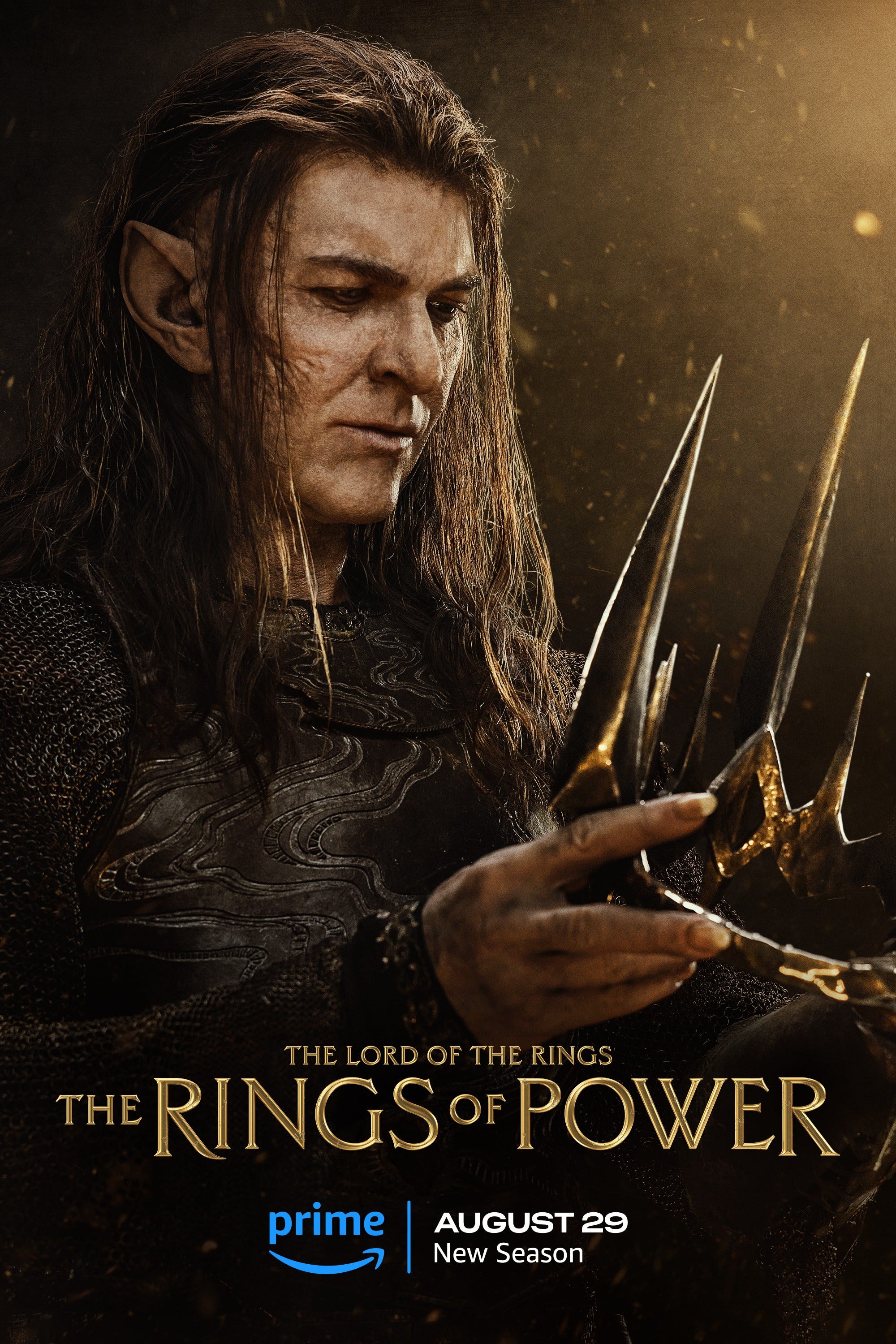
Tolkien wanted a mythology for England, not a mythology by anyone who purchased the rights. His expressed wish was for other writers to develop their own stories within the world’s texture, the way Norse mythology generated countless separate tellings. That is emphatically different from a streaming platform compressing thousands of years of the Second Age into a single narrative, relocating the forging of the Rings, collapsing Númenor’s arc, and inventing major characters wholesale.
Christopher Tolkien, who held guardianship of the legendarium until his death in January 2020, was unambiguous about where he stood on commercialization. In his 2012 interview with Le Monde, he said: “Tolkien has become a monster, devoured by his own popularity and absorbed into the absurdity of our time. The commercialization has reduced the aesthetic and philosophical impact of the creation to nothing. There is only one solution for me: to turn my head away.” He said Jackson’s films “eviscerated the book by making it an action movie for young people 15 to 25.” That was his verdict on relatively faithful adaptations. He never saw Rings of Power, having died two years before it aired, but the logic of his position is not ambiguous.
The Tolkien Estate’s 2023 legal position confirms that the “main shape of the Second Age” must not be altered. That is not a loose guideline. Rings of Power alters it structurally and repeatedly, most visibly in the compression of Sauron’s deception of the Elves and the timeline of Númenor’s fall. The Estate’s acknowledgment that “plenty of unanswered questions exist” about the Second Age created room for creative interpretation of gaps. It did not license rewriting events the texts document.
Where the Middle Ground Actually Is
The real middle ground is not between “fully canon” and “basically fan fiction.” It is between “perfectly consistent, signed-off masterwork” and “canonical despite being editorially constructed.” The Silmarillion is the second thing. Christopher assembled it with care, from his father’s own words, using the most mature available drafts, and produced the only version of the mythology Tolkien ever had any realistic chance of seeing in print. The History of Middle-earth series does not supersede it — it annotates it, complicates it, and deepens it for those who want to go further.
What The Silmarillion does not do is open a door. It closes one. The more precisely you understand what Tolkien actually wrote — the specific theology of Arda, the defined history of the Elder Days, the carefully constructed fall of Númenor — the less room exists for the inventions Rings of Power requires to function.
The mythology is not a sandbox. It is a cathedral. Christopher Tolkien spent decades making sure people understood the difference.
What do you think? Does the editorial nature of the Silmarillion change how you read it, or does the source material speak for itself?
Epic Fantasy hasn’t been this hard-hitting since Tolkien. In a world where humanity is akin to a Roman legion, a great darkness arises. Read A Throne Of Bones today.
NEXT: Brian Jacques’ ‘Redwall’ Series No Longer In Development At Netflix
"those who invoke Tolkien’s stated wish for a living mythology to justify Amazon rewriting the Second Age wholesale"
This is like saying that because Italian cuisine is a living and vibrant tradition, it is acceptable to pour ketchup over dog turds and call it Spaghetti Bolognese.
When Tolkien wrote that stuff about imagining a living mythology with room for other minds and hands etc, he was talking about the Lost Tales phase, and called the dream absurd, "my star has long since fallen" etc. After LOTR came out he didn't want people writing their own sequels or expansions, privately calling them impertinent young asses with their tripe etc. So no it's not an excuse for stuff like Rings of Power, it's conveniently ignoring the context. Category error.