


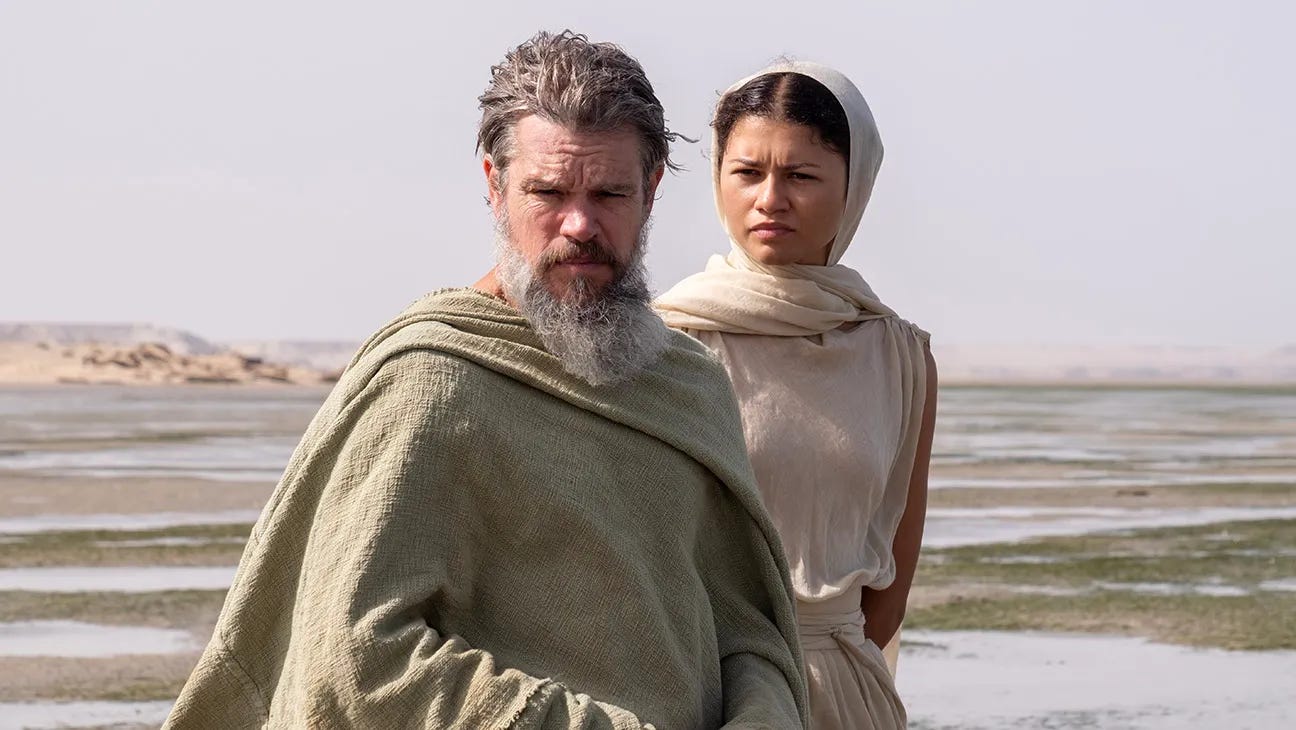
Christopher Nolan’s The Odyssey is tracking between $80 million and $100 million for its July 17 domestic opening, ahead of where Oppenheimer sat at the same point before its release. IMAX 70mm screenings sold out a year in advance. Universal has given the film a three-week IMAX exclusive that shuts Spider-Man: Brand New Day out of premium format screens entirely when it opens two weeks later. The presale frenzy has been genuine and sustained.
The tracking history on Nolan films is worth laying out because it makes the $80-100M range more meaningful than it appears. His three biggest domestic openings are The Dark Knight Rises at $160.9 million, The Dark Knight at $158.4 million, and Oppenheimer at $82.4 million. Oppenheimer is the directly relevant comparison. Before it opened in July 2023, trackers had it at $40-50 million. It nearly doubled those projections on opening weekend, then ran to $330 million domestic on a roughly 4x multiple. Inception opened $62.7 million and finished at $292.5 million — a 4.7x multiple, the strongest legs of any Nolan release. The pattern is consistent enough that Deadline’s current tracking note essentially acknowledges analysts do not know how to forecast a Nolan opening with confidence. The $20 million spread between the floor and ceiling is not uncertainty about whether the film will perform. It is institutional memory of being wrong about Nolan films in both directions.
The first-choice tracking puts The Odyssey running ahead of Oppenheimer at the same pre-release point and level with Project Hail Mary’s $80.5 million opening. The strength skews toward men over 25, which is Nolan’s core base. He has no direct competition on his opening weekend, and the three-week IMAX exclusive shuts Spider-Man: Brand New Day out of premium format screens when it opens two weeks later.
The budget changes the math that tracking numbers alone do not capture. Oppenheimer cost roughly $100 million. The Odyssey reportedly cost $250 million — two and a half times as much. Oppenheimer’s 4x multiple took its $82 million opening to $330 million domestic. The Odyssey would need to replicate that multiple off a bigger number, and then perform similarly internationally, to justify its production cost. The tracking says the opening is in range. The multiple is the number that determines whether the film is financially successful, and that is not something tracking data can tell you three weeks out.
The tracking reflects two things: Nolan’s audience is real and mobilized, and the Odyssey as a story has genuine cultural weight that transcends any individual adaptation. It does not tell you whether Nolan’s specific choices serve Homer’s poem, and based on what has been revealed so far, there are legitimate reasons to wonder.
The controversies surrounding the production are worth separating into two categories: things that are genuinely problematic and things that are not. Nolan has been collecting criticism across both columns simultaneously, which has muddied the conversation.
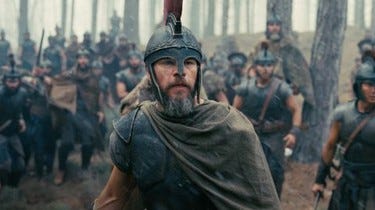
The things worth dismissing first. The American accents across the cast drew mockery from critics who apparently expect Homeric epic poetry to be performed in RP British or vaguely Mediterranean tones. The Hollywood Reporter said everyone sounds like they’re from Ohio. Ancient Greeks did not sound like anyone currently alive. No living director can solve this problem. Nolan’s decision to use American English is at least internally consistent, Emily Wilson’s 2018 translation of the Odyssey, which Nolan has referenced in multiple interviews, made the same choice deliberately, using contemporary plain English to restore the conversational register of Homer’s original Greek rather than the elevated faux-Shakespearean diction that earlier translations imposed. But her translation is rightly criticized for ruining the original text, which makes the movie suspect.
The armor criticism is also largely aesthetic. The Batman helmet comparison for Benny Safdie’s Agamemnon is funny. It is not a meaningful objection to the film.
The casting problems are different and worth taking seriously not as political failures but as literary ones.
Helen of Troy is not a supporting character who can be reinterpreted without consequence. She is the organizing principle of the entire Trojan War mythology. The Iliad exists because of Helen. The Odyssey opens in the aftermath of the war her abduction caused. Homer describes her explicitly as “white-armed” and as the most beautiful woman in the world in the specific cultural context of ancient Mediterranean civilization, which had its own conventions about what that phrase meant and to whom it applied. Lupita Nyong’o is a talented actress who won an Academy Award for 12 Years a Slave and does not need a Nolan film to validate her career. She is also self-evidently miscast against the specific requirements of this character in this world. The casting fails not because of racial politics but because it is wrong for the role on its own terms. Helen’s beauty in the Odyssey is not a general statement about female attractiveness. It is a specific claim about a specific woman in a specific society. Ignoring that specificity is the same kind of disservice to the source material as casting a slight teenage boy as Odysseus.
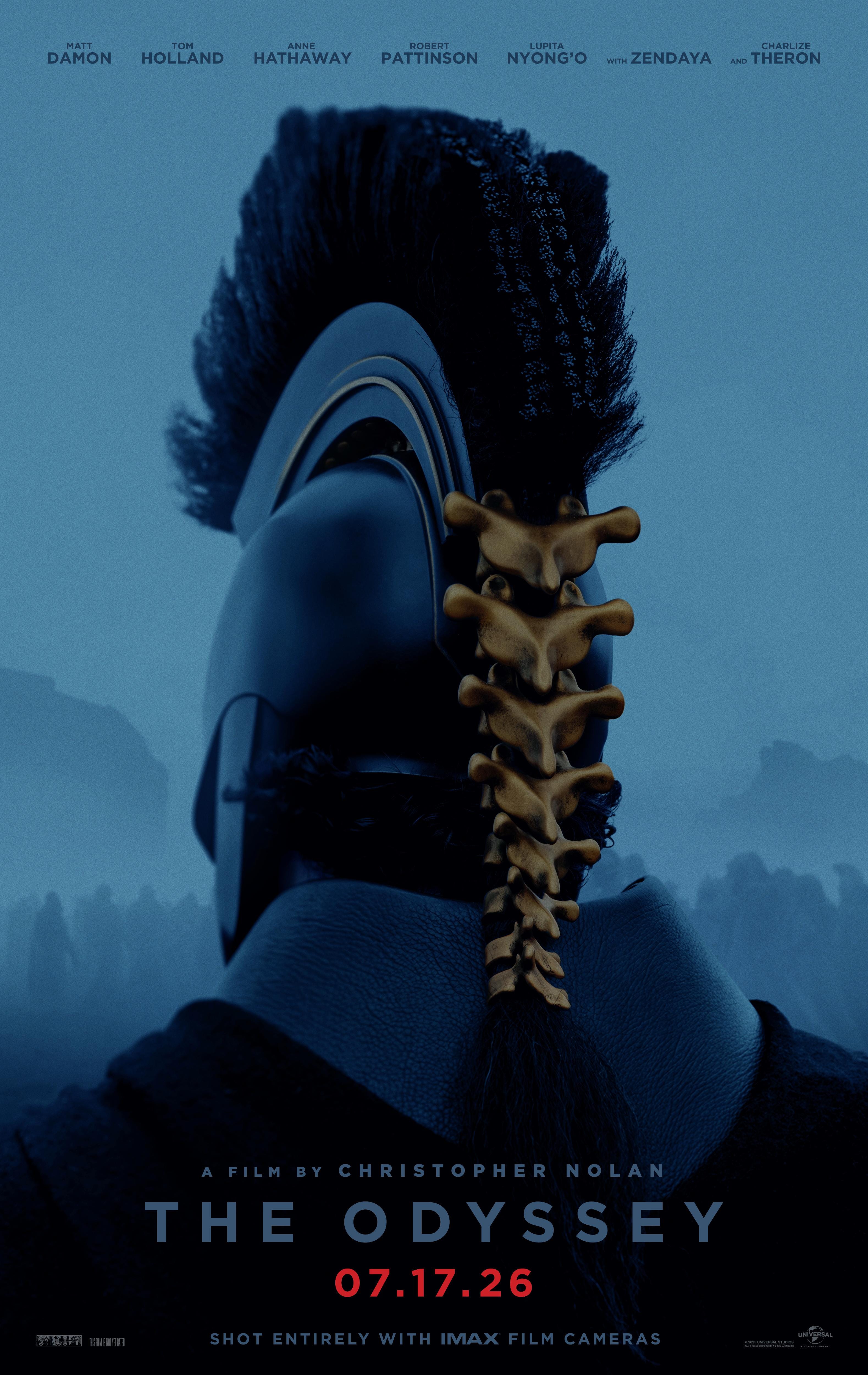
Nolan’s defense that Nyong’o’s “strength and poise” were paramount, and that he wanted to emphasize those qualities, reveals the problem. He is making a different Helen than Homer made. That is his right as a filmmaker. It is not a reason to dismiss the criticism.
Travis Scott as a bard is the casting that shows Nolan’s reasoning most clearly and reveals its limits. The comparison of Greek bardic oral tradition to rap is not stupid. Both traditions feature performers delivering narrative poetry before live audiences, drawing on established conventions and stock phrases, improvising within fixed forms. It’s a loose argument that does not make Travis Scott a bard. It makes him a celebrity cast on the basis of a metaphor. There is a difference between the theoretical similarity between bardic poetry and rap and the specific performance required of a character in a film. Nolan wanted to gesture toward an idea about oral tradition. The result is a rapper in a Greek epic reading lines he did not write, in a tradition he does not come from, because his director found the idea conceptually interesting.
Nolan has said the film is “really for people who haven’t read it.” That statement explains more about the production’s problems than any specific casting choice does.
The Odyssey is not primarily an adventure story. It is the foundational text of Western literature’s exploration of homecoming, identity, and the cost of survival. Odysseus does not want to be on this journey. He was dragged into the Trojan War because of Greek political obligations and he has spent ten years trying to get home. The Cyclops episode, the Sirens, Circe, Scylla and Charybdis. These are not action sequences. They are episodes in a sustained meditation on what a man owes the people waiting for him, what he loses by surviving, and what it costs to become someone who can come home.
Penelope is not a passive figure waiting for her husband. She is the most competent character in the poem. For ten years she holds off suitors who have consumed her household and threatened her son, using wit and deception while managing an entire kingdom without the man everyone assumes she depends on. Her intelligence in the poem matches Odysseus’s exactly, which is why their reunion works as the culmination of the entire narrative. It is a meeting of equals. Anne Hathaway is capable of playing that role. Whether Nolan’s script gives her material that honors it is the question the tracking numbers do not answer.
Telemachus’s arc is about a son becoming a man in his father’s absence. He leaves Ithaca as a boy who does not know whether his father is alive and returns having done something his father would recognize. Tom Holland, who delayed Spider-Man: Brand New Day production to take this role and told interviewers the film is “unlike anything I’ve ever seen,” clearly believes in what Nolan has made.
The $250 million budget means the film needs substantial global gross to turn a profit. Oppenheimer cost roughly $100 million and cleared $950 million worldwide on Nolan’s reputation and Barbenheimer’s cultural momentum. The Odyssey is two and a half times as expensive with no comparable cultural tailwind. The tracking is strong because Nolan’s audience is loyal and because Homer’s name carries recognition. Those are real assets. They are also not the same as evidence that the film honors what the poem actually is.
Are you planning on seeing this film?
Epic Fantasy hasn’t been this hard-hitting since Tolkien. In a world where humanity is akin to a Roman legion, a great darkness arises. Read A Throne Of Bones today.
NEXT: Marvel Turned Away the Man Who Created the Winter Soldier From His Own Movie’s Afterparty
The casting choices break my suspension of disbelief and pull me out of the story. You did not even mention Page as Achilles, yeah that is believable. While I generally like Nolan and Damon, I will be avoiding this, even for free on my next transatlantic flight.
Not planning to see it. I can read, and I have read the book.