


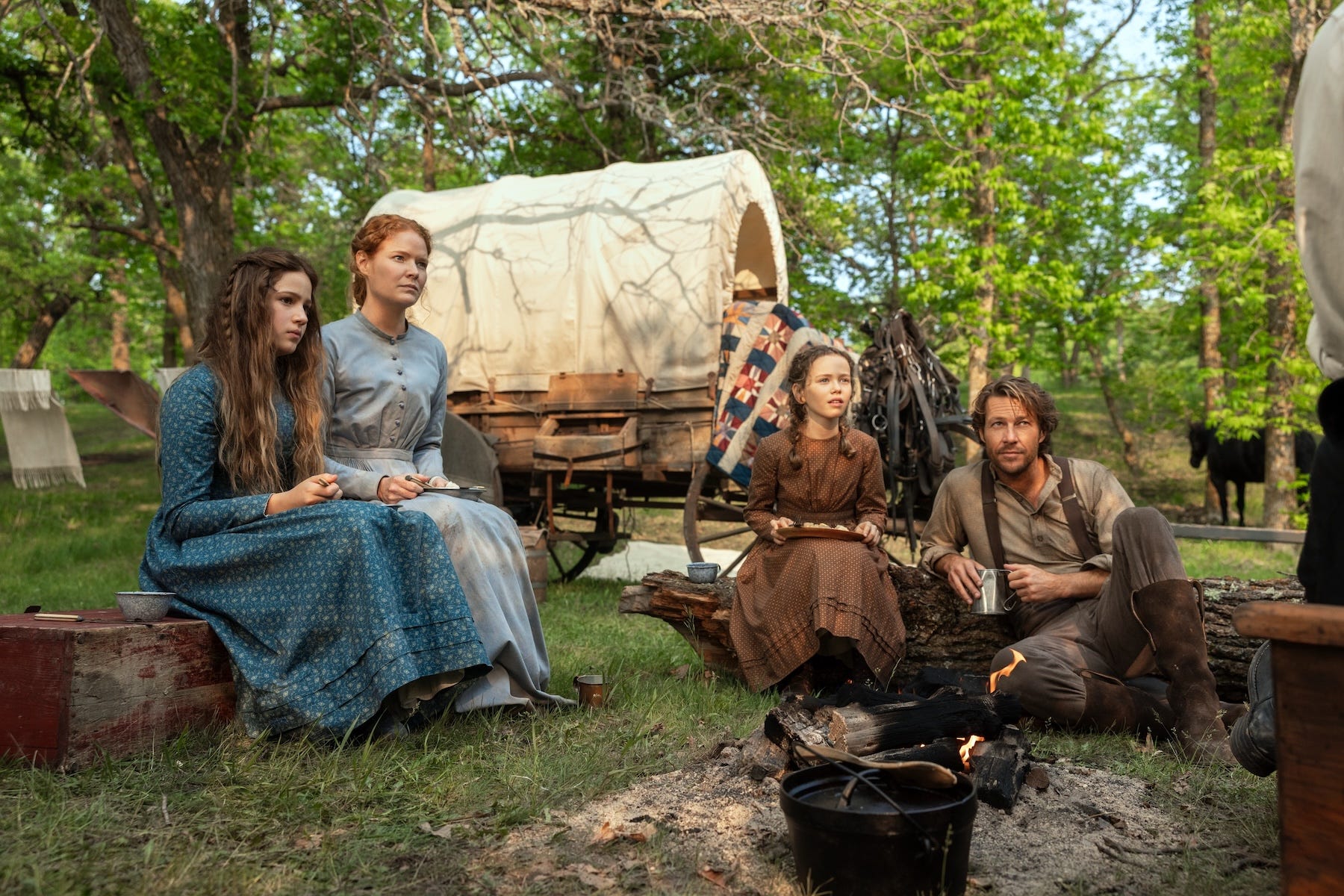
Netflix’s Little House on the Prairie premiered July 9 with an eight-episode first season already renewed for a second, and the opening episode spends its hour on the Ingalls family’s wagon journey from Wisconsin to Kansas. This review covers episode one only. A lot of the ideological content that critics have flagged in advance coverage of the series simply isn’t here yet.
Showrunner Rebecca Sonnenshine, previously a writer and executive producer on Eric Kripke’s The Boys, opens with a detail the original 1974 NBC series never touched: the Ingalls family didn’t just decide to move west, they burned bridges with friends and family back in Wisconsin badly enough that going back isn’t an option. That’s new. The old version framed the move as opportunity. This one frames it as a family with nowhere else to go.
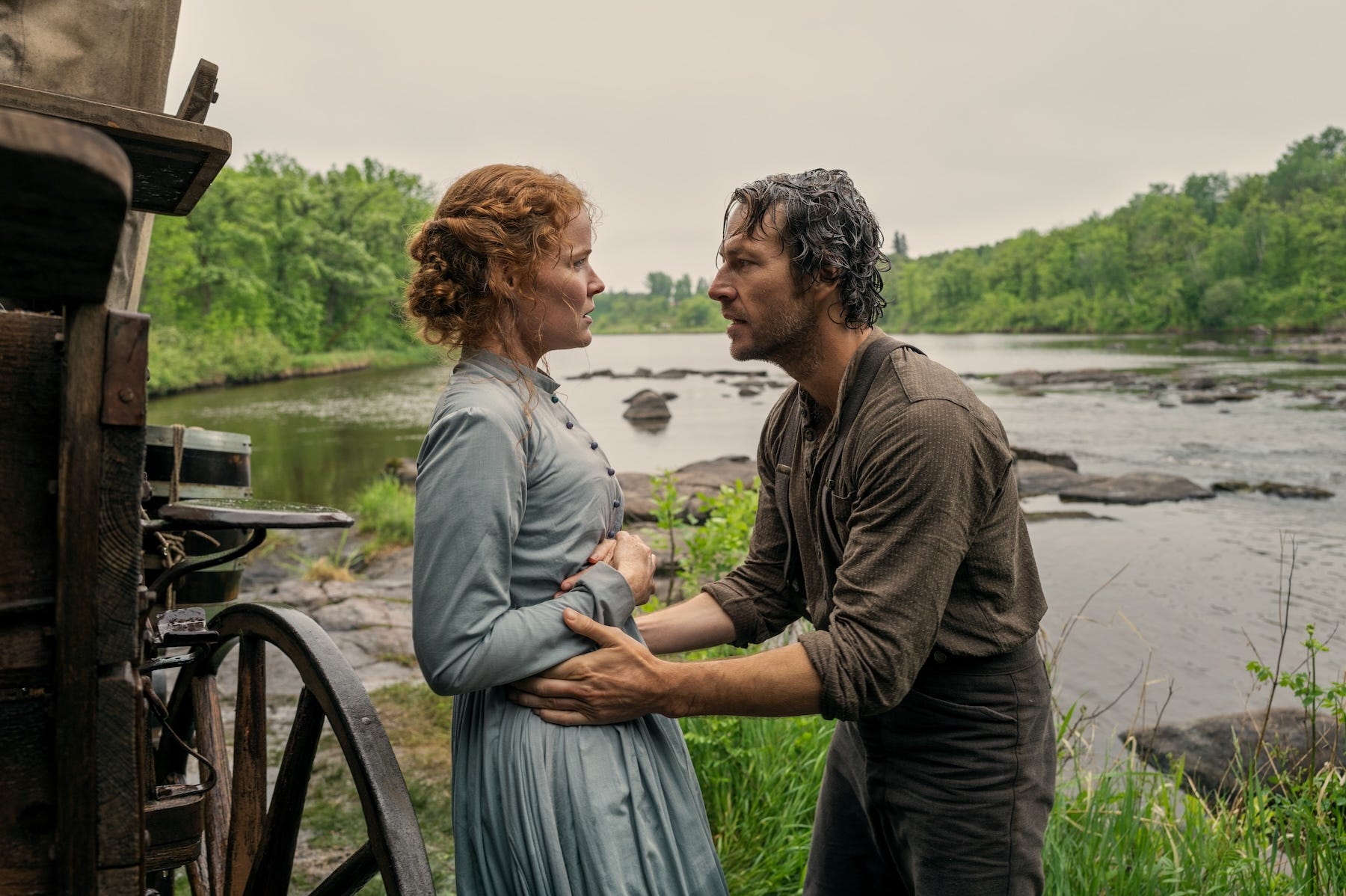
The journey itself carries the episode’s best material. A river crossing turns into the hour’s central set piece, the wagon gets stuck, and there’s a real threat of drowning as the family fights the current. Genre-savvy viewers will clock the Oregon Trail echoes immediately. In the middle of the chaos, the family dog jumps out of the wagon and disappears downriver, a beat that exists purely to make the audience worry about a family pet in danger, a trope so common in prestige TV at this point that it barely needs the tension it’s reaching for.
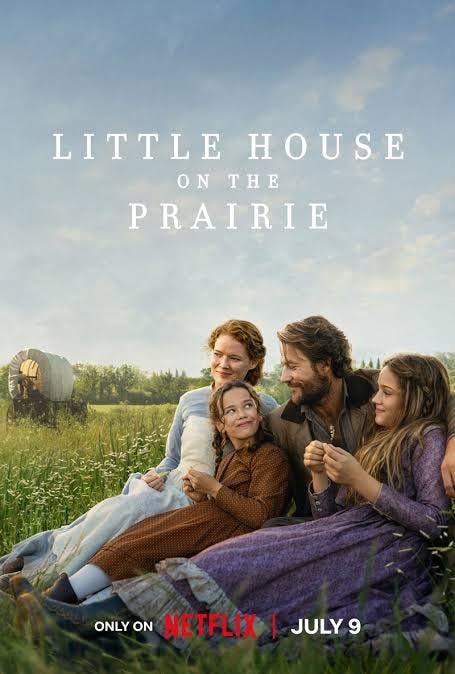
Once the family reaches Kansas, the episode settles into its real conflict: the promised land isn’t one. Money is tight, the town thinks the Ingalls were foolish to arrive without family or friends already established to help them build, wolves are a real threat, and a Kansas winter can kill people who aren’t ready for it. Charles Ingalls spends the back half of the episode searching for someone to help him raise a cabin before the cold sets in. He finds a man who lost his own daughter, and the conversation goes badly, the man doesn’t want to be reminded of his loss and the two end up in a fight. He comes back at the end to apologize, offers to help build the cabin, and brings the family dog back with him. That’s the whole arc: hope restored through another person’s willingness to show up.
The show reaches for faith as a companion theme without fully committing to it. There’s a brief shot of Laura appearing to pray as wolves close in, and word is the series leans further into faith elements as it continues. Given how much weight the episode puts on hope as the explicit moral, faith and prayer would have made a more grounded anchor for that theme than they currently do.
The wolves themselves are a problem. The animal CGI is bad enough to pull the viewer out of what is otherwise a fairly grounded, realistic frontier setting, and the show leans on those effects at exactly the moments it’s trying hardest to build tension. Combined with long stretches of slow, melodramatic back-and-forth about whether the family even wants to be in Kansas, the episode has real pacing problems. Caroline’s pregnancy announcement, paired with the reveal that she’s lost previous pregnancies, reads like a modern prestige-drama device grafted onto a story that didn’t need it to generate stakes.
The episode does lay groundwork for a bigger conflict to come. The cabin sits on land that will put the family in direct conflict with the Osage, and the episode gestures at that tension without saying much about it directly. Reports on the season suggest that storyline, along with the feminist themes, the marriage friction, and an emasculated father figure that advance coverage has flagged, escalates significantly as the season progresses. None of it is prominent in episode one. Neither is the “white settlers as villains” framing some critics expected going in.
For a single episode judged on its own, this lands as a 5 out of 10. The dog-in-peril trope and the modern-melodrama pregnancy reveal feel imported from a different kind of show, the CGI wolves undercut the tension they’re supposed to build, and the pacing drags through most of the middle. The apology and cabin-building setup at the end at least gives the season somewhere to go.
Given that Sonnenshine’s other credit is The Boys, does the restraint in episode one hold, or is this the calm before the show leans into everything its advance press promised?
Epic Fantasy hasn’t been this hard-hitting since Tolkien. In a world where humanity is akin to a Roman legion, a great darkness arises. Read A Throne Of Bones today.
NEXT: Little House On The Prairie Returns To Netflix, And The Real Story Isn’t The One Critics Are Selling
Bait and Switch. They always do. Just like Drug dealers hook you on the soft stuff to get you addicted ready to load you up on the hardcore stuff (So does the pron industry).
Hollywood can't be trusted. Burn it all down.
I mean, you just said it yourself. Rebecca Sonnenshine used to work for that piece of garbage, Eric Kripke. Of course she was going to remove the Christianity values from this version. Because her boss, Eric Kripke, hates Christianity.