


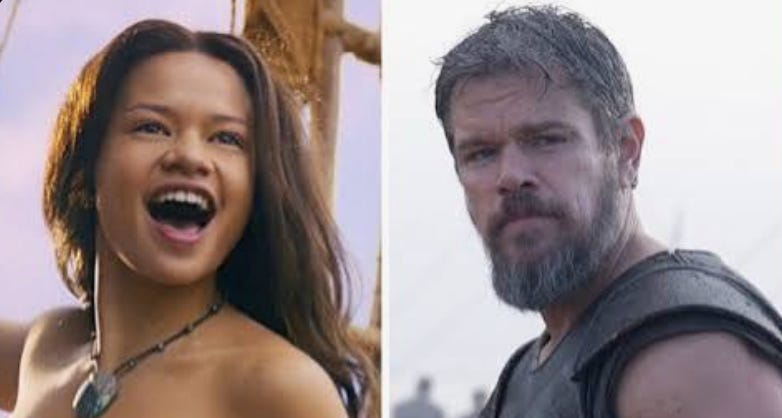
Disney’s live-action “Moana” arrived in theaters with a team of Polynesian consultants attached to nearly every department. Dr. Grant Muāgututiʻa led the effort as lead consultant for the Cultural Trust, working alongside choreographer and associate producer Tiana Nonosina Liufau and songwriter Opetaia Foaʻi. The consultants worked to ensure the tradition of respect within the culture was accurately reflected, down to how the film’s heroine walks into a room, addresses her father, and serves her elders. Every department head answered to the Cultural Trust before a scene made it to screen.
Variety framed the arrangement as a triumph of representation. Countless artisans, consultants, experts, advisors, and department heads worked closely with the Cultural Trust to make sure Māori tribal tattoos, dance, and generations of Polynesian tradition were handled with authenticity. Cast member Owen made the standard explicit: every person on screen needed to be of Polynesian descent, and she credited Dwayne Johnson’s Samoan heritage with opening the door for the rest of the cast.
Compare that standard to Christopher Nolan’s “The Odyssey,” a $250 million adaptation of the foundational Greek epic, opening July 17. Not one lead actor in the cast is of Greek or Mediterranean descent. Lupita Nyong’o plays both Helen of Troy and her half sister Clytemnestra. Elliot Page plays the soldier Sinon. Travis Scott, a rapper with two acting credits, plays a bard. Fans have pointed out repeatedly that no actor of Greek or Mediterranean descent was cast in the film at all.
Nolan has an explanation for the Scott casting, at least. He told Time magazine he wanted to pay tribute to the idea that this story has been handed down as oral poetry, comparing that tradition to rap. When Musk and other critics pushed on the broader casting pattern, Nyong’o dismissed the backlash by calling the Odyssey a mythological story and describing the cast as representative of the world. She added that she wasn’t spending her time on a defense because the criticism would exist whether she engaged with it or not.
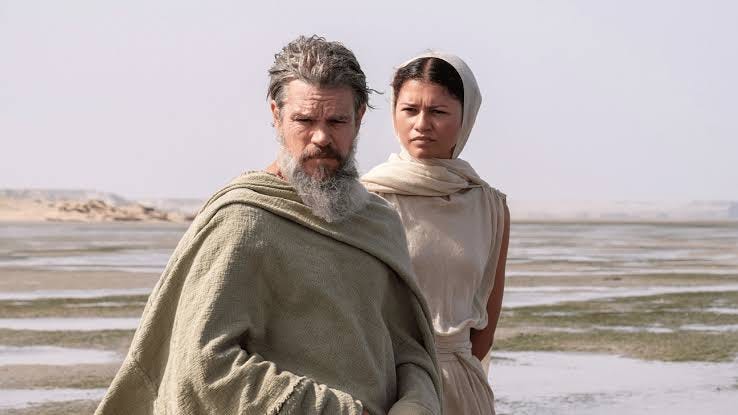
That is the opposite of how Variety covered “Moana.” There, matching the cast to the culture was the entire point, and getting it wrong would have been treated as a betrayal of the people the story belongs to. Here, matching the cast to the culture gets treated as an outdated demand from people who supposedly don’t understand mythology. Outkick laid out the contradiction directly: Variety ran a feature celebrating the “Moana” consultant process the same month one of its own columnists labeled Musk and his followers “trolls” for raising the identical concern about “The Odyssey.”
The historical liberties don’t stop at casting. Critics have flagged Nolan’s armor design, which some viewers compared to Batman’s suit, along with the modern American dialogue, including Tom Holland’s Telemachus calling Odysseus “dad.” Nolan defended the armor by pointing to blackened bronze Mycenaean daggers as precedent, and defended the dialogue as an attempt to give the language emotional rather than intellectual weight for a modern audience.
None of that controversy has slowed ticket sales. Tickets for opening weekend IMAX 70mm screenings went on sale a full year before release, an unprecedented move for a major distributor, and several theaters sold out within twelve hours. Tracking data placed the film ahead of “Oppenheimer” as the first choice among male audiences over 25, with projections putting the opening between eighty and one hundred million dollars.
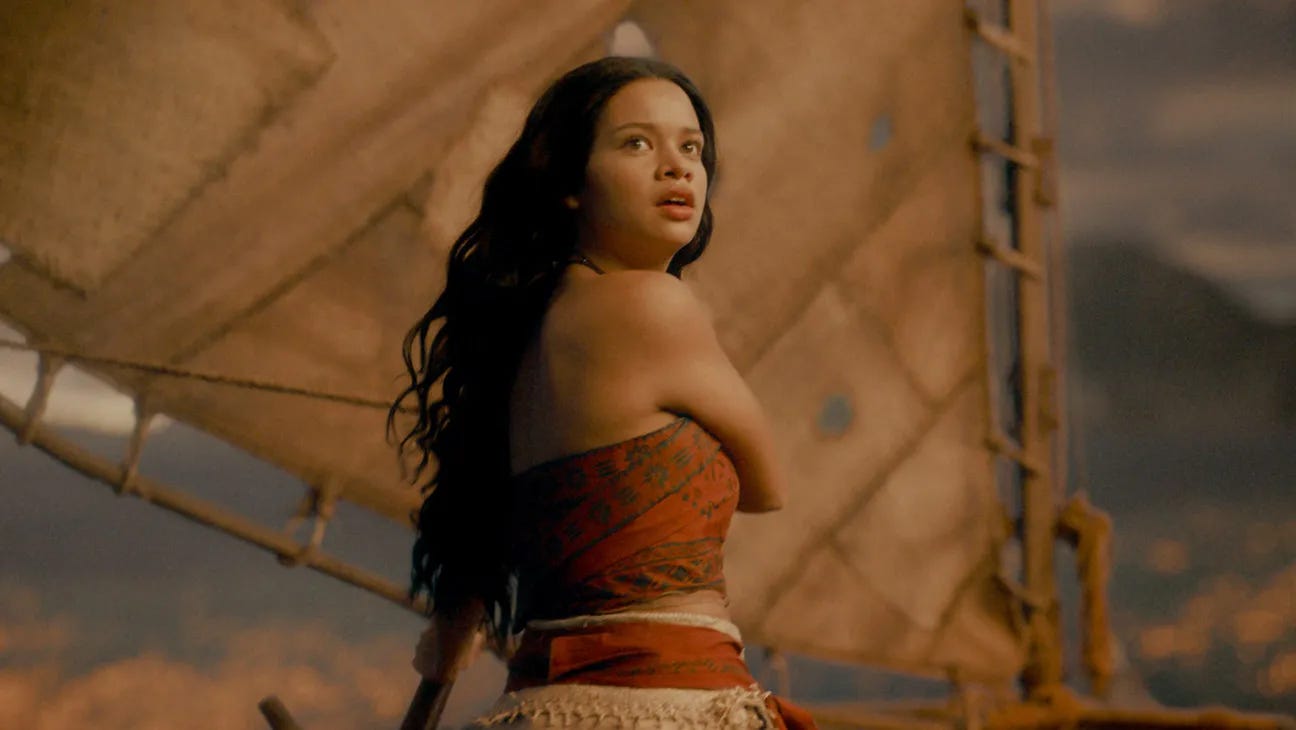
“Moana” got no such benefit of the doubt, despite doing everything Hollywood claims it wants from a cultural adaptation. The live-action remake opened to $43 million domestically against a $250 million budget, a global weekend haul of just $95 million, and projections that Disney will lose roughly $100 million on the film by the end of its run. The 2016 animated original opened bigger. “Moana 2” outgrossed the live-action remake’s entire opening weekend three times over in a single Thanksgiving frame two years earlier.
The two films share a budget, a summer release window, and a year of pre-release cultural commentary. What they don’t share is a media standard. One production spent years being praised for cultural fidelity and still flopped at the box office. The other spent a year being mocked in the press for casting decisions its own critics called ahistorical, and it’s tracking toward the biggest opening of Nolan’s career. What does that gap say about how much cultural authenticity actually drives ticket sales, versus how much of it is a story the trade press tells itself?
Epic Fantasy hasn’t been this hard-hitting since Tolkien. In a world where humanity is akin to a Roman legion, a great darkness arises. Read A Throne Of Bones today.
NEXT: The Odyssey’s Press Tour Has Become A Political Campaign, And Elliot Page Just Escalated It
Hollywood is dying. Decentralisation is coming. Youtubers are winning at the boxoffice. Let it all burn.
The Odyssey supposedly had Greek consultants. I expect that was just to make a claim of accuracy to the book and culture since they clearly ignored most of the advice.
If DEI and Cultural consultants are going to be hired for every movie, I hope they remember to add White European consultants next time they make a movie centered around the 1st world. Who am I kidding, that will never happen.