


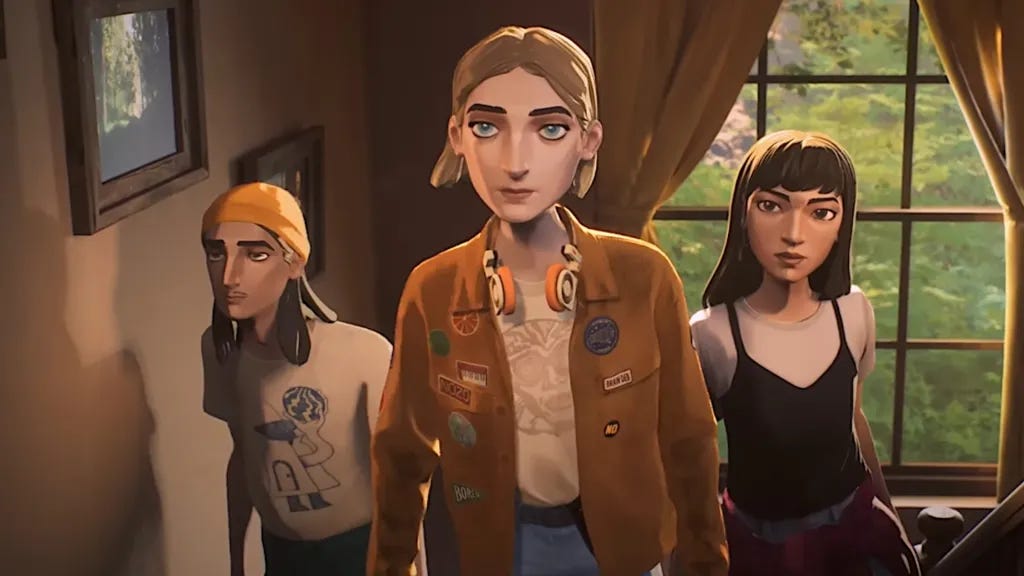
Is your dream video game all about taking a short walk through stylized suburban nights, complete with a few quick-time events, an awkward kiss minigame, and twenty-eight licensed tracks from time that feels both close yet impossibly distant?
Welcome to a game called Mixtape, a 2-5 hours long video game, priced at $20, and praised to the heavens by the critics and met by many players with the familiar shrug of “it is all so tiresome.”
Now, I have heard some voices on the digital winds declaring that this is nothing less than a nepo-backed astroturf operation. Wealth from Oracle Corporation flowed through Megan
Ellison’s Annapurna into a small Melbourne studio, allowing them to buy licensed music, induce a sea of glowing aggregate scores, and secure a quiet place on XBOX’s Game Pass.
This story sounds familiar...
The Power of the Mixtape
In earlier epochs, an entrepreneur made his mixtape by hand. He chose the songs, rewound the cassette with a pencil, labeled it with messy ink, and then handed it over to the masses with
trembling hope. There was a time when a mixtape was considered some form of dangerous, intimate speech that said: “This is who I am. These songs carry my soul!”
Ostensibly, Mixtape seeks to resurrect that crossing. It places us inside the last night of a group of friends before life scatters them to the winds of becoming proper adults in society.
Supposedly, the game is nostalgia for the ‘90s rendered in beautiful, hand-crafted stylization. The music is supposed to function as the very weather of experience: skateboarding to Devo, filming chaos to Iggy Pop, weeping to old soul. Like so many other projects that rely on these same nostalgic pulls (James Gunn’s Guardians of the Galaxy comes to mind) the developers at Beethoven & Dinosaur are desperately trying to let old speech happen again through play and let a generation that grew up on those feeds feel, for a moment, the raw voltage of the moments that made the 90s what they were.
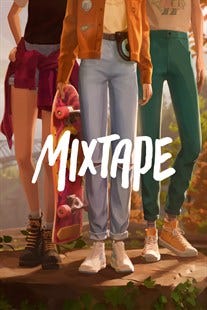
Now, if only the developers cared about the art of making a good video game. The “game” is naught but a short, linear, heavily cinematic experience. It is essentially a movie guided by your thumbs. Were you expecting an engaging arcade experience? Sorry, that would take effort.
The fact that so many critics hail the game’s supposed emotional truth and brevity (“it does not overstay its welcome”) should tell you that the modern “gamer” is anything but. They are movie-watchers who treat video games like movies. That’s all there is to it. Meanwhile, many real players see the slop for the trough. $20 dollars for what feels like a premium episode of television? Let’s shout it loud for those in the back:
This is not a video game.
But the deeper issue, as with all things, is the authority. Who permitted this supposed “cultural moment” into being?
Inherited Possibility
Annapurna Interactive bears the mark of inherited possibility, which is a polite way of saying “nepotism.” In plain terms this means that Megan Ellison (producer, entrepreneur, and founder/CEO of Annapurna Pictures) did not start Annapurna Pictures (and later its Interactive arm) with nothing but a good idea and a shoestring budget, as most people assume Indie titles are made. She started it with access to hundreds of millions of dollars (directly and indirectly) from her father, Larry Ellison, co-founder of Oracle Corporation and one of the world’s richest men.
Reports speak of a $200 million gift on her 25th birthday (with more to follow), ongoing financial backstops when the company hemorrhaged money, and the quiet power of family connections that make lenders, talent, and partners far more willing to engage.
https://www.celebritynetworth.com/richest-businessmen/producers/megan-ellison-net-worth/
With that kind of money, you can greenlight any expensive, prestige-driven project you want to. Give it big licensed soundtracks, polished production values, and multi-platform releases.
These are things that would bankrupt or deter an ordinary indie team, but the Cinderella in this story was born with a golden parachute. She can weather any spectacular losses and keep the doors open which is something most small studios would never even dream of.
Is this really what people think of when they say something is “Indie”?
I asked the same question about Expedition 33 last year and it seems that the answer is, yes. The only influencer of note who has talked about this is the based and esteemed Lord Frogmire:
The phrase also quietly echoes Heidegger’s idea of inherited possibility, referring to the historical and cultural legacies each generation receives and must take up, repeat, or transform. But here, the “inheritance” is not primarily ancestral. Instead, it is material and temporal: a massive acceleration of what is possible in one lifetime. A young producer can play at the scale of Hollywood (or high-end interactive art) decades earlier, and with far less mortal risk than someone without that backing.
Note, this is not an insult to Megan Ellison’s taste or sincerity. I am merely recognizing that her ability to fund and distribute a cultural object like Mixtape arrives already clothed in a power most creators cannot and will never be able to achieve. The market-brained public, trained to trust prestige, smooth delivery, and consensus signals, rarely pauses to notice the difference between the homebrew “mixtape” handed over with trembling fingers and one delivered by an institution that could afford to lose millions on the gesture.
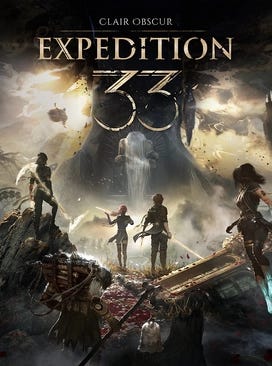
This is why it is worth bringing up Expedition 33. While that game is good or even great, the conditions under which such a game came about are not ordinary. They are inherited. And in our age, such inheritance increasingly shapes who gets to define the emotional weather of a generation. Mixtape is no different.
Larry Ellison’s family wealth, which once sustained Hollywood ventures, now sustains his daughter’s interactive art. Licensed music rights that would bankrupt most small teams have suddenly become feasible. Marketing crates appear, review scores cluster at the high end, and Steam peaks remain modest because many play it “freely” on a brief subscription.
Notice the familiar pattern: Across the arts, patronage has never died; it has only changed its name and its servers. And mark this as well, the scandal buried within a market-brained condition of the masses who receive it. We have become a people whose ears are tuned to the frequency of the feed, whose hearts beat in time with algorithmic approval, and whose very sense of worth is priced in Metacritic aggregates.
Consumers of product are low-attention-span morons who no longer know how to judge a work by the tremor of authentic speech. Instead, every work originates with pre-subscribed commands: a presupposed aura of prestige that surrounds it by merit of a brand name or a genre tag. That is precisely the susceptibility by which the new patronage exploits us: the billionaire adjacency no longer need force behaviors. They’ve realized all they need to do is speak in the polished grammar by which the masses have already been trained: glowing embargoed reviews, perfectly timed influencer unboxings, and the seamless integration into subscription ecosystems that make any and all resistance feel useless.
As a side note, even one of the greatest engines of today’s youth attention, TikTok’s American operations, has passed under the same family orbit through Oracle’s central role in the recent
U.S. joint venture. And the same hand has long given generously to the Israel Defense Forces: tens of millions channeled through Friends of the IDF, including a record $16.6 million gift in 2017 alone.
The market-brained and consent-manufactured masses mistake the ease of access and the chorus of affirmation for genuine resonance. We have been conditioned to outsource our taste, to let the machinery tell us what moves us. Thus the nepo-backed mixtape arrives not as imposition, but as pre-validated fulfillment for the attention economy. And the hungry, who are never offered anything authentic, simply consume it, forget about it, and move on to the next distraction.
Every age has its grammars of power: how speech is funded, protected, amplified, or silenced.
The tribal chieftain, the feudal lord, the revolutionary committee, the modern foundation, the billionaire’s daughter and her algorithmic amplifiers: all of these are attempts to command the future by commanding the means of resonance. Today the command flows through digital media: through influencers and aggregate sites and through the very reflexes of a public that confuses virality with vitality.
Toward a New Imperative
Friends, the real scandal is not that a wealthy publisher backed a nostalgic indie game. The scandal is that we no longer know how to make mixtapes among ourselves. We no longer know how to risk speaking what is true without the mediation of platforms, scores, marketing, or billionaire adjacency. Market-brained, we have traded the dangerous intimacy of the handmade for the safe, pre-approved glow of the sponsored.
The task ahead is not to boycott or to defend. The task is to recover the grammar of genuine creativity. To make our own mixtapes again. To speak, even if we shall be changed and to play. And we must play, not as consumers of curated emotion, but as avid, risk-willing souls.
The last track has not yet faded, and the tape is still turning. What will you put on side B?
NEXT: From Barrel Rolls to Chicken Legs: Nintendo Completely Botched Star Fox

"Is your dream video game all about taking a short walk through stylized..." No. My dream video game has gameplay. Expedition 33 was excellent. I'm not really bothered by its half-indie/half-corpo origins because it is fun.
Man this game is so cringe. Megan Ellison is so dysgenic. So hard to believe these ppl are our betters.