


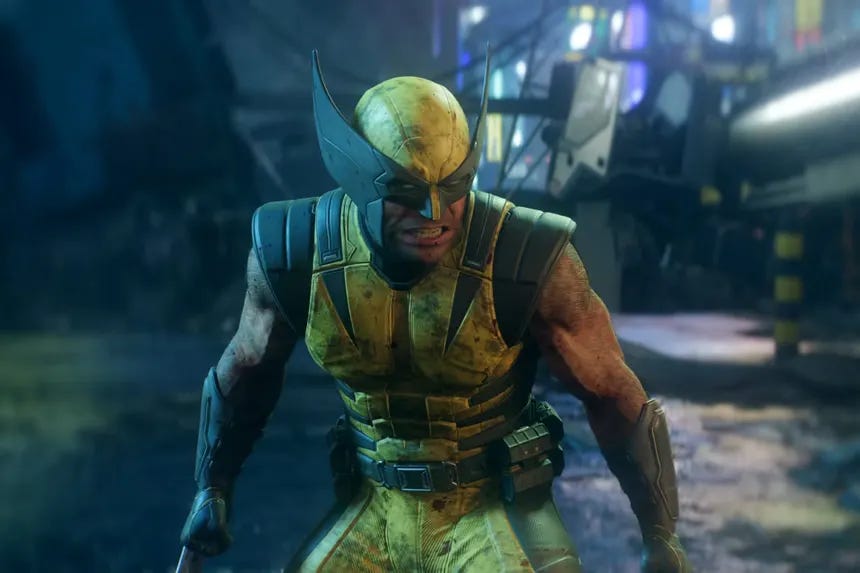
Marvel’s Wolverine has become a punching bag on social media in the weeks before its September 15 PS5 release, and the criticism has moved well past jokes about combat footage into pointed questions about who wrote the game and who’s in it. The reaction intensified after preview embargoes lifted this week and gameplay clips started circulating, with one widely shared comparison placing footage of Wolverine fighting a Sentinel next to a clip from the PS2-era Ben 10: Protector of Earth. A Spanish-language repost of the comparison pulled in tens of thousands of likes before an English version did even better, and other clips mocked Wolverine’s movement and combat controls directly.
Insomniac’s community and marketing director, James Stevenson, addressed the pile-on on X. “I think the wild way this algorithm amplifies and forces negativity upon you has me reconsidering my philosophy on telling devs to look or post here,” he wrote, adding that the reaction felt like “a relentless onslaught that I cannot believe is good for anyone’s mental health nor representative.” The replies weren’t kind. One user shot back, “hey man counterpoint, have you ever though about making good video games?” A handful of others told him to ignore the noise and keep posting for the players who actually care.
GameSpot picked up the story Monday morning with a piece framing the entire backlash as another case of manufactured internet negativity, built around Stevenson’s algorithm complaint and a comparison to 2018’s “Puddlegate” flap over Spider-Man’s E3 demo footage. The outlet also tied the mood to Sony’s decision to end PS5 disc production, arguing PlayStation fans are primed to be angry about something regardless of the actual target. What that framing never engages with is the specific, more substantive criticism running through a large share of the actual posts, criticism about writing credits and casting rather than combat animations.
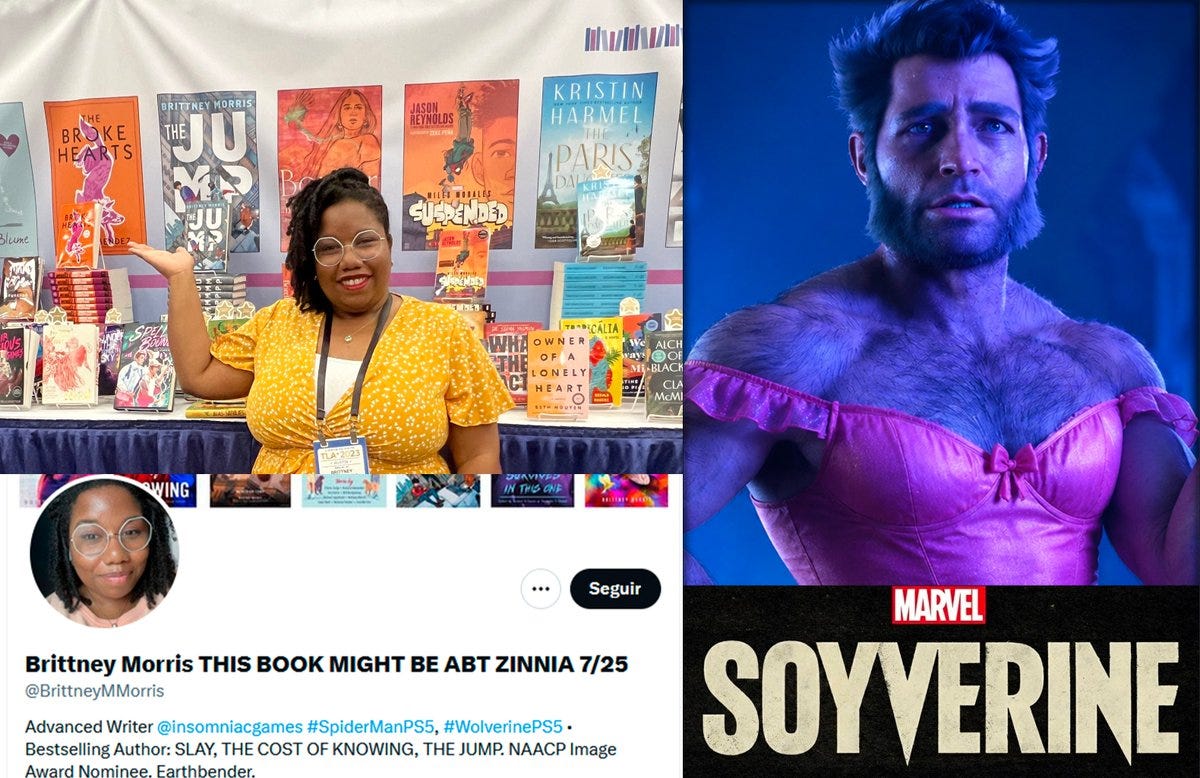
One thread centers on who wrote the game. A widely shared post from X account Poliwar claimed the “lead screenwriter” for Wolverine is an author of “LGBT novels for black teenagers,” tying her directly to Spider-Man 2 and asserting she “ruined” that game’s story. The writer in question is Brittney Morris, and the facts check out only partway. Morris’s own X bio confirms she holds the title “Advanced Writer” at Insomniac across both Spider-Man PS5 and Wolverine PS5, and her author bio lists contributions to both games. What isn’t accurate is “lead screenwriter.” Wikipedia’s credited writing team for Wolverine lists four names, Mary Kenney, Walt Williams, Joe Halstead, and Nick Folkman, with Morris not among the top-billed credits. She’s a confirmed contributor, not the sole or lead voice on the script. Morris is the bestselling author of Slay and The Cost of Knowing, both aimed at young Black readers, and her X handle includes a pride flag, consistent with the “LGBT novels” framing, though the claim that she personally “ruined” Spider-Man 2’s story is a subjective opinion stated as fact in the original post, not something borne out by that game’s reception or its list of eleven credited writers.
A second thread, from account LearningTheLaw, compiled images of six Wolverine characters under the caption “The female and confirmed They/Them characters in the video game Marvel’s Wolverine,” pairing character models with what the post presents as the real-world performers or artists behind them, including a credit reveal reading “Leech: Noga Wind.” That post has pulled over 300 likes and 3,700 views this week. Fandom Pulse has not independently verified each individual’s stated identity beyond what’s shown in that post, and readers should treat the specific pairings as claims circulating on X rather than confirmed Insomniac casting statements.
Meanwhile, early hands-on previews, including GameSpot’s own, have been positive on Wolverine’s combat and tone, and the game remains a strong PlayStation Store preorder performer, so the backlash clearly hasn’t tanked interest. But collapsing every criticism into “algorithm-driven toxicity” lets outlets like GameSpot avoid engaging with a verifiable claim about writing credits sitting right inside the backlash they’re dismissing. Stevenson may be right that X’s engagement incentives are distorting the volume and tone of the reaction. That doesn’t mean every question inside that reaction is manufactured or false, and treating them as identical is its own kind of dodge.
Does GameSpot’s “it’s all just algorithm-driven negativity” framing hold up when a real, checkable question about writing credits is sitting inside the backlash it’s dismissing, or is sorting fair criticism from bad information exactly the discernment social media makes impossible?
Soo.... Elliot/Ellen Page as Wolverine?
Sounds perfect for woke Hollywood.
It can even have claws pop out of its top-surgery scars. Why not?
So inclusive.
Just like Heather Antos with John Byrne's Elsewhen, they can't handle that their modern day writing is crap and that everyone wants the classic material written by actually talented people.