


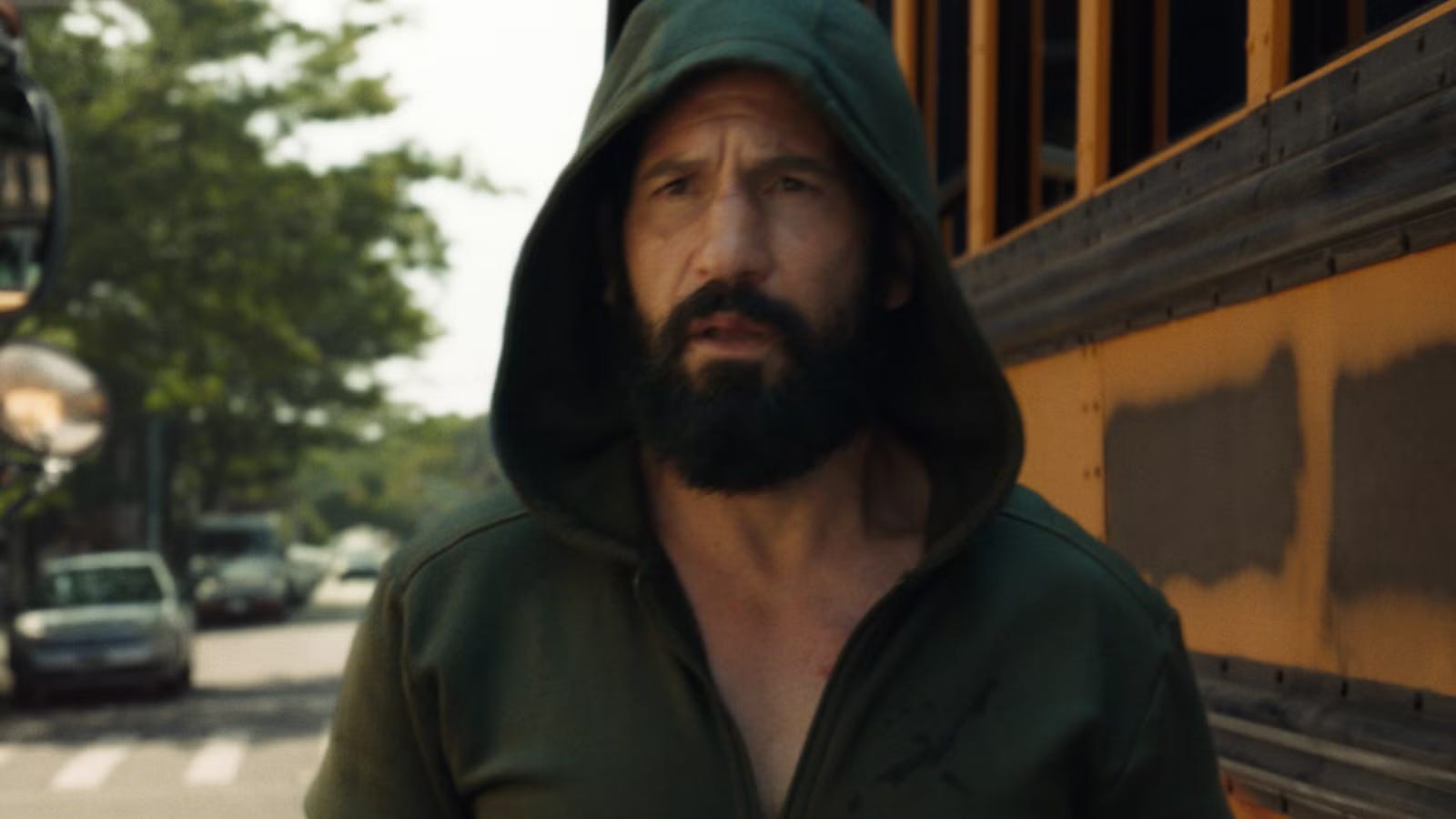
The Punisher: One Last Kill landed on Disney+ today and the reviews are strong. The RT score has not yet locked but the first wave from critics reads as near-unanimous positive. Jon Bernthal co-wrote it alongside director Reinaldo Marcus Green. The action sequences are being compared to The Raid. Bernthal is being called the definitive Frank Castle.
Read the reviews closely and a different picture emerges from the one the headlines suggest:
Comic Book Movie’s Josh Wilding: “A relentless, no-holds-barred exploration of grief and PTSD, and an ultra-violent pitch-perfect take on The Punisher. This is Bernthal’s magnum opus as Frank Castle.”
Collider’s Maggie Lovitt: “The special is a heavy, introspective look at where Frank’s head is as of late.”
MovieWeb’s Joseph Deckelmeier: “It feels less like we’re watching Frank Castle from the outside and more like we’re trapped inside his head, the war, the trauma, the rage, and the violence all closing in around him.”
Screen Rant’s Rob Keyes: “It’s Frank at his lowest, Jon Bernthal giving it his all, with some haunting sequences.”
A parent guide for the special describes its central themes as “loss, the inability to move past trauma, and the feeling of being broken by war.”
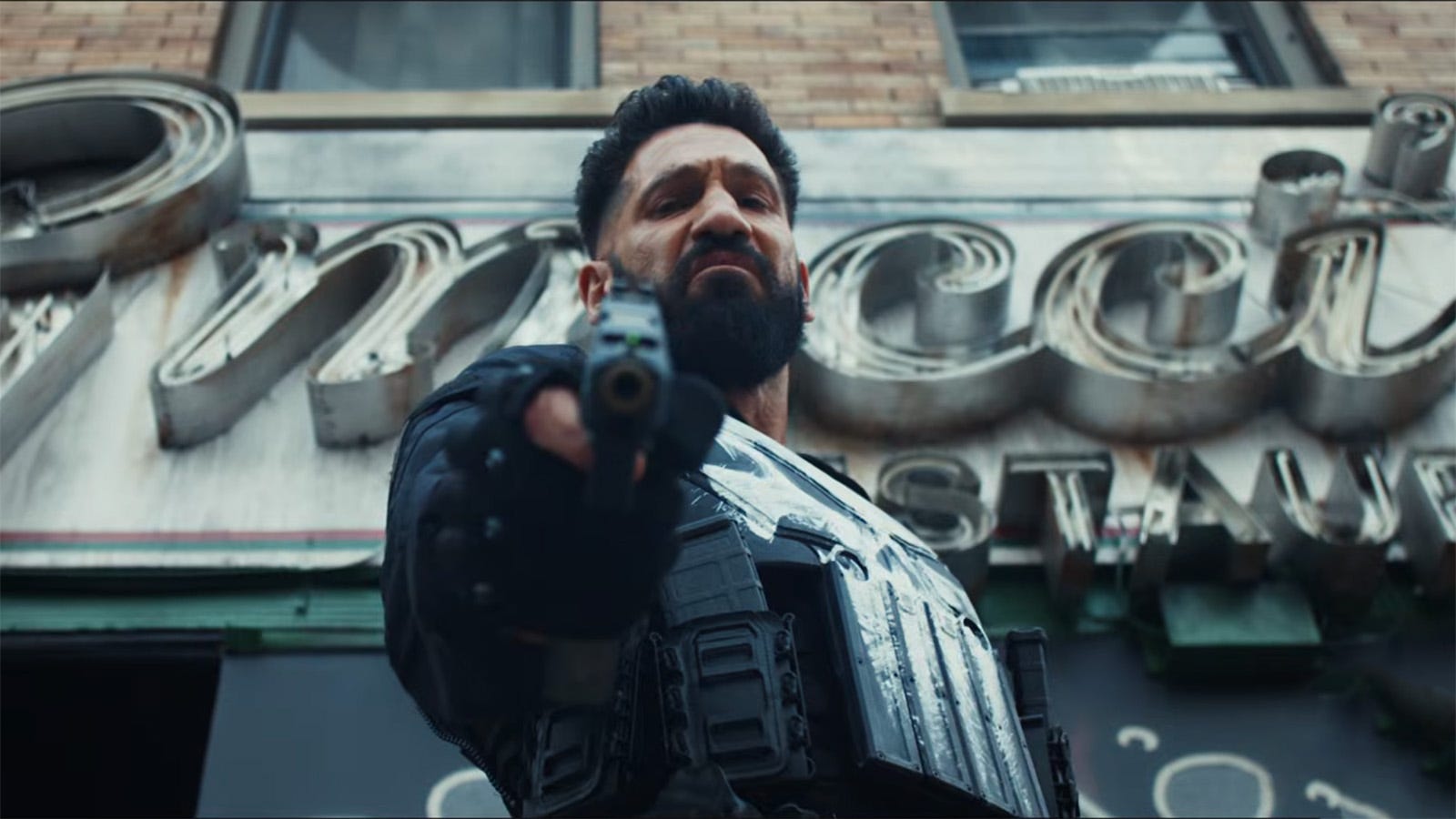
Grief. PTSD. Trauma. Introspection. Frank at his lowest. These are the words being used to describe Frank Castle in 2026.
The Punisher in the source material is a United States Marine who watched organized crime murder his wife and children in a park. He declared war on crime. He carries the Medal of Honor, the Navy Cross, three Silver Stars, four Purple Hearts, and the Presidential Medal of Freedom. He is devoutly Catholic, trained by Force Recon and Navy SEALs, and operates on a simple code: the worst of the worst deserve to die, and he will be the one to kill them. Garth Ennis’s defining MAX run, which built the character’s modern literary reputation, placed Frank Castle in a context of military trauma — but as a man of action processing that trauma through mission, not as a character defined by his inability to function.
The character’s skull logo became one of the most recognized symbols in American military and law enforcement culture. Police departments put it on squad cars. Special operations units wore it on patches. The January 6 Capitol participants wore it. Marines deployed it as a tactical insignia. The symbol meant something to those people: a man who fights back when institutions fail, who does not wait for permission, who finishes the mission.
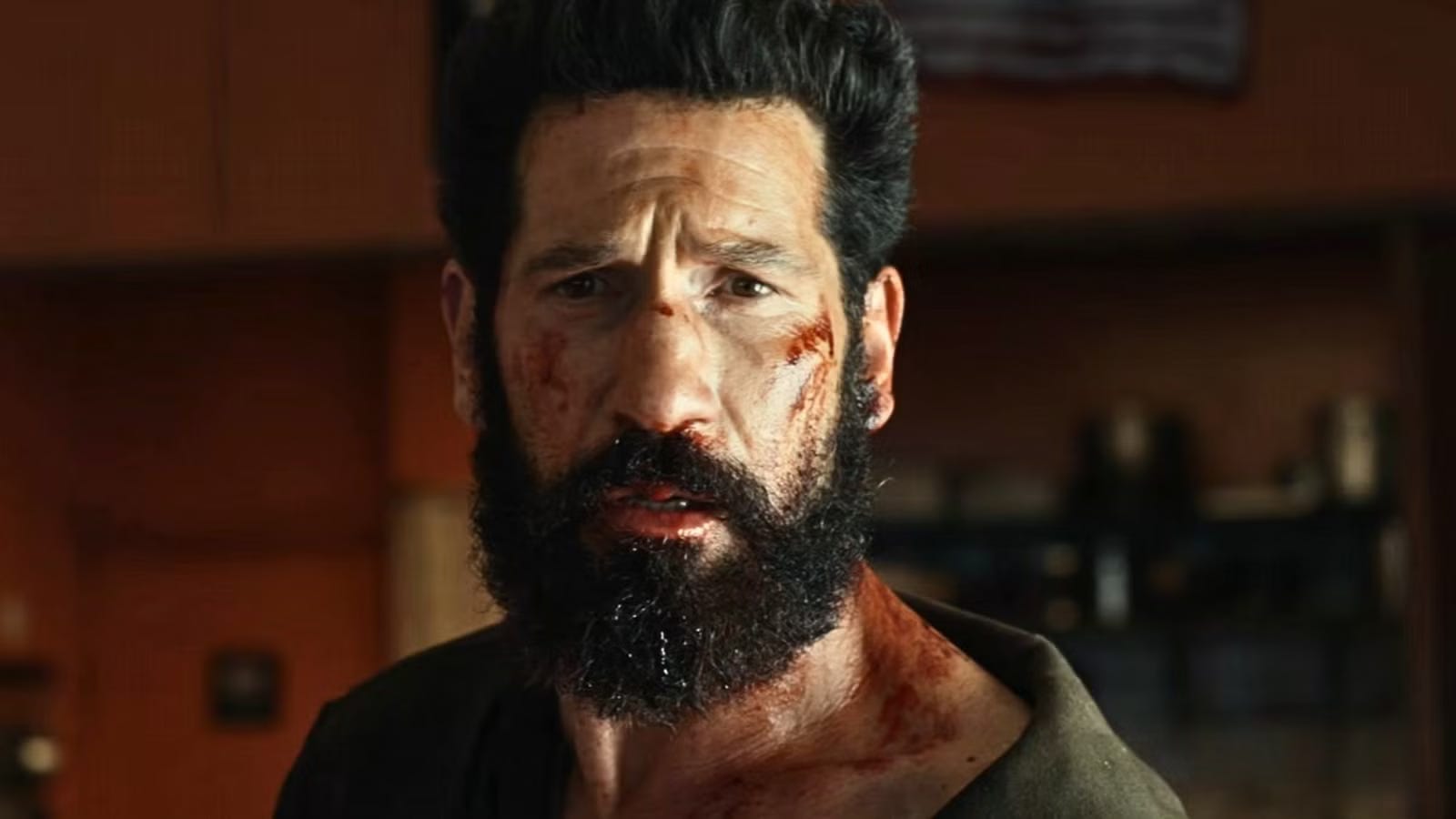
That is what Marvel hates about Frank Castle.
Gerry Conway, the character’s co-creator, said it directly in an interview with SYFY Wire: “To me, it’s disturbing whenever I see authority figures embracing Punisher iconography because the Punisher represents a failure of the justice system.” He called cops who put the skull on their cars people who are “basically siding with an enemy of the system.” In 2020 Conway launched a “Skulls for Justice” campaign to redesign the logo in support of Black Lives Matter, explicitly to deny law enforcement the use of the symbol. Conway himself ran the BLM campaign. That is where the character’s creator stood.
Marvel responded to the cultural moment by trying to retire the skull logo in comics. In 2022 they relaunched the character with a new costume that removed the skull and replaced it with a red and black design. Readers rejected it. The skull came back.
One Last Kill keeps the skull and the violence. Bernthal clearly fought for that. The reviews confirm the action delivers. But the framing around the action, the introspective grief study, the trauma processing, the “Frank at his lowest” approach, follows the same logic that ran through Daredevil: Born Again Season 2. That season cast Wilson Fisk as a Trump stand-in running ICE-style raids through New York. The showrunner confirmed it publicly, said the imagery was “almost exact” to real events, and watched half the audience leave before the season ended.
One reviewer called One Last Kill “20 minutes of Frank continuing to mope about his family, and 20 minutes of him brutally murdering people.” The violence is there. The Frank Castle who declared war on crime because it was the right thing to do is being reframed, season by season and special by special, as a broken man defined by what he cannot get past rather than a man defined by what he chooses to do.
There is a version of the Punisher that speaks to the audience that put his skull on their vehicles. That audience did not want a grief counseling session with gunfire attached. They wanted Frank Castle to be Frank Castle.
Disney has wanted something different for years. The reviews suggest One Last Kill is better than Born Again Season 2 at balancing both impulses. Whether the framing satisfies the audience that actually loves this character is the question the viewing numbers will answer.
Does turning the Punisher into a PTSD character honor what Frank Castle is, or does it strip away the core of what made him matter?
450 pages of classic superhero storytelling that puts character first. The Flying Sparks Omnibus collects the complete saga of Meta-Girl — the kind of cape comic the mainstream forgot how to make. Back the crowdfund to get your copy.
NEXT: Daredevil: Born Again Season 2 Ends With a Bang Nobody Watched
The PTSD angle is part of his character; the problem is that they let it change his personality. Castle is conflicted, but the classic version of the character buries that conflict internally and it comes out as rage, not "rage+tears". He's adopted a moral perspective that makes him able to accept both his background and himself, even though that perspective is, by almost any moral standard, profoundly broken. This is the essence of the Punisher as an anti-hero; he's swallowed his sadness, converted it to anger, and built a new moral system out of it. He believes his own bullshit enough that he sometimes sounds really reasonable when he explains it, and there's enough wrong with authority figures in the Marvel universe that a vigilante circumventing them can easily be seen as a hero by a lot of different people, which reinforces Castle's sense of justifiable homicide.
But when you make him angsty *as* he's taking the law into his own hands, it communicates a lack of commitment to his cause. It makes him more sympathetic, which can make for good drama on the surface, but it's also too easy, and not the way the character was meant to be. Originally only a select few ever got to see the "real" Frank Castle, still simmering below the surface with obsession over the deaths of his loved ones, still haunted by the idea that what he's doing isn't right. It's the heart of his dysfunctional friendship with Daredevil, who doesn't always follow his Catholic faith very well, but who does always take its universal truths and objective morals seriously. Matt sees that Frank is even more dangerous than he seems, because Frank is ignoring his own moral compass and redefining "right".
So if Frank is wailing and gnashing his teeth all the time, even while he's killing people, you get a) better temporary drama, but b) a less faithful adaptation, a weaker character arc, and a less important relationship with Matt Murdock over the long haul. It's the exact kind of short-term bargain Disney usually makes with properties it didn't generate, but merely cannibalized. It's also the reason why it's possible to be interested in this version of the character, while still being disturbed by how it's really Jon Bernthal wearing the real Punisher's skin like a suit. He looks the part; from a certain distance he acts the part too. But it's not the same guy.
Hollywood and the left is all about suffering and validating the victimhood of the sufferer.
Castle was an instrument of vengeance by choice, not because he had a late-night emo-session and crashed out the next day.
Castle was methodical, not driven by tearful outbursts under a blanket wailing about Britney.
No. No interest in seeing this "reimagining," either.