


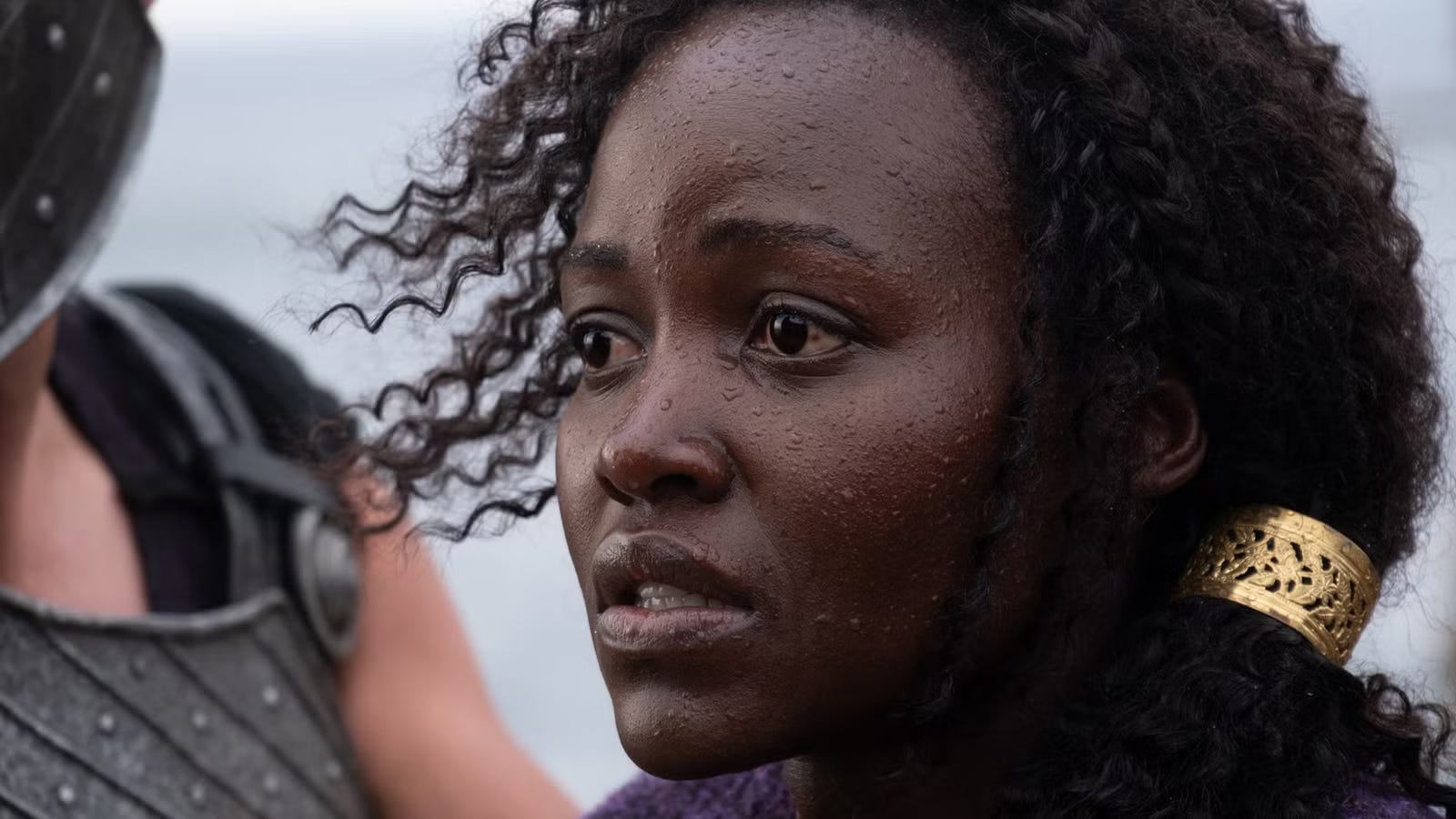
The Odyssey casting controversy entered a new phase this weekend when critics surfaced Lupita Nyong’o’s past statements about cultural representation in Black Panther and placed them next to her defense of playing Helen of Troy.
Nyong’o’s resurfaced comments came from her Black Panther promotional work, where she praised the film for pushing back against the misrepresentation of Africa. She noted that Wakanda speaks Xhosa, that the cast had to learn the language and get the accent right. She described Black Panther as helping challenge longstanding misconceptions about Africa by insisting on cultural specificity rather than treating the continent as one vague monolith.
This week, defending her casting as Helen of Troy in The Odyssey, Nyong’o told interviewers: “This is a mythological story. Our cast is representative of the world.” A post on X placing both sets of statements side by side drew over half a million views.
The contrast is precise. Nyong’o argued that Black Panther was obligated to treat African cultural identity with fidelity, to learn the specific language, to represent specific traditions, to resist the flattening of diverse cultures into one generic image. She then accepted a role as one of the most culturally specific figures in Western literature and defended it by saying mythology transcends origin.
It’s pretty clear that the Hollywood standards are double ones once again. When it comes to black culture, it must be revered; when it comes to white culture, it must be replaced.
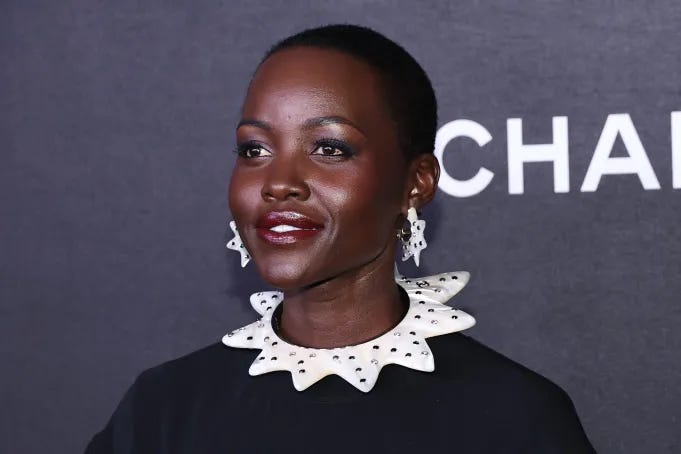
Helen of Troy is not a mythological blank. She is a character from a specific civilization’s founding literature, described in Homer’s own text with specific physical characteristics, embedded in a specific set of cultural assumptions about beauty and identity that the ancient Greeks held as central to the story’s meaning. The argument that mythology belongs to all of humanity applies equally to the African traditions that informed Wakanda. If one requires specificity and the other permits substitution, the principle being applied is not universal.
Elon Musk posted this weekend: “Chris Nolan is an anti-White racist.” The mainstream press responded by framing the casting criticism as racist rather than engaging with the consistency argument.
Christopher Nolan described his casting rationale for Nyong’o by emphasizing “strength and poise.” Nyong’o responded to the physical description question by saying: “You can’t perform beauty.” Homer’s entire narrative architecture around Helen is built on her beauty being a specific, overwhelming, civilization-ending fact. Dismissing that as unperformable while accepting the role is a position, not a neutral observation.
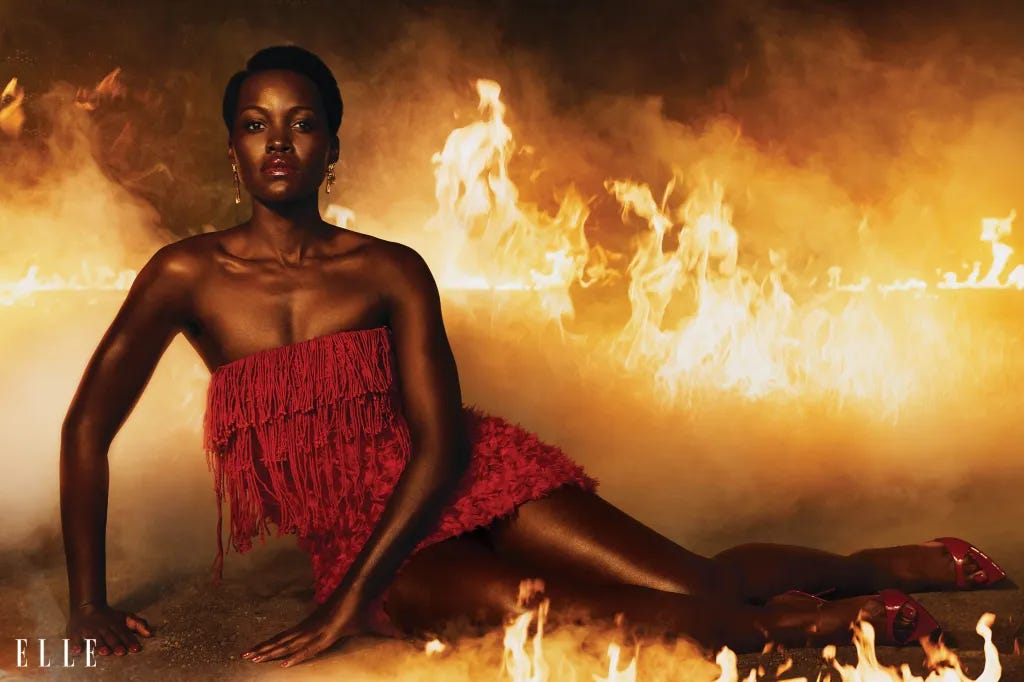
Also confirmed this weekend: Travis Scott plays a bard in The Odyssey. Nolan’s explanation: “It’s about rap.”
The film opens July 17.
Does the standard Nyong’o applied to Black Panther apply equally to The Odyssey? Let us know in the comments.
Epic Fantasy hasn’t been this hard-hitting since Tolkien. In a world where humanity is akin to a Roman legion, a great darkness arises. Read A Throne Of Bones today.
NEXT: Nolan’s Odyssey Cast Explains What They Did To Homer And Imply Criticism Is Racism
If you go watch this, for whatever reason, you are part of the problem.