


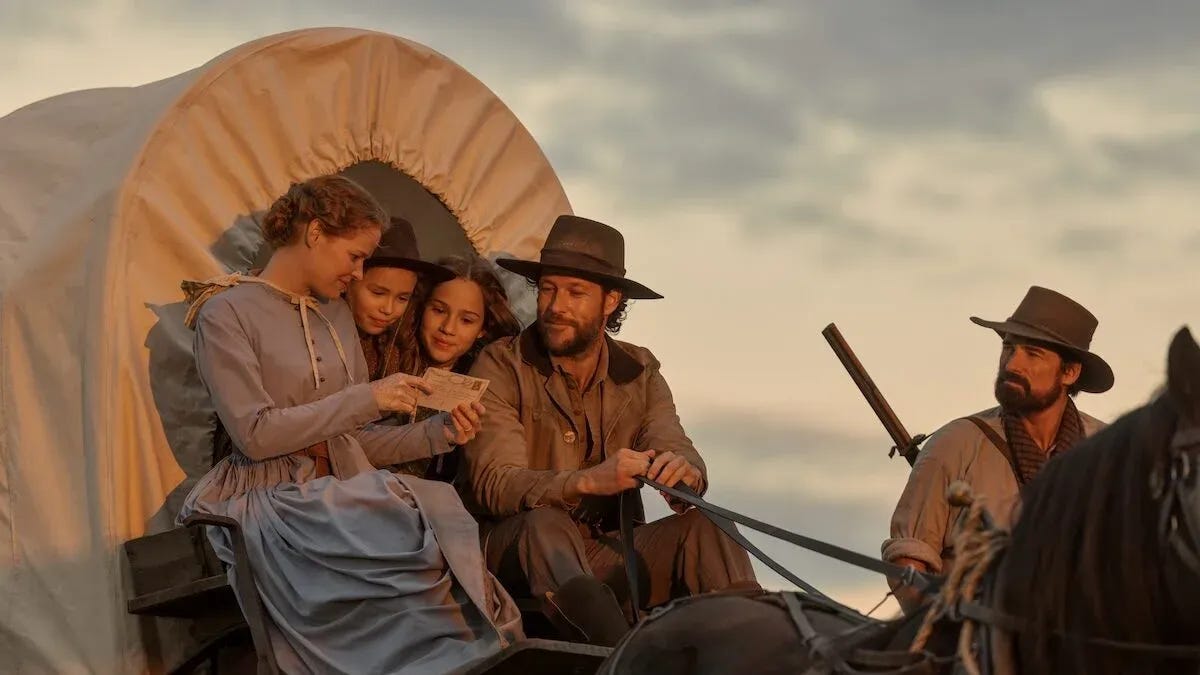
Netflix’s Little House on the Prairie reboot has already been covered here for what it changed. What’s worth a second look is how showrunner Rebecca Sonnenshine talks about those changes, because she isn’t playing defense. Across three separate interviews in the past week, with TheWrap, Variety, and ComingSoon, she’s made the case that turning Little House “woke” wasn’t an accident she’s explaining away. It was the plan.
Start with the word itself. Megyn Kelly warned Netflix in January that if the show got “woke-ified,” she’d “make it my singular mission to absolutely ruin your project.” Sonnenshine’s answer wasn’t to distance herself from the label. It was to reclaim it. “The standard definition of ‘woke,’ as it had been for many years, was to be aware of social justice and inequality, I think that is a good thing,” she told TheWrap. “Any show that I would ever do would have those feelings, because I believe that those are important human qualities that we should all aspire to.” That’s not a showrunner insisting the criticism is unfounded. That’s a showrunner confirming the criticism is correct and telling you she considers it a compliment.
She went further with Variety, framing the entire backlash as something beneath her to take seriously. “I’m not even sure what ‘woke’ means to people anymore, to be honest,” she said, adding that if it just means caring about injustice and prejudice, she doesn’t understand why anyone would be upset by it. Per Variety’s reporting, she’s characterized the objections as not really political at all, but rooted in people being scared their childhood is changing into something they don’t recognize. She’s repeated some version of “people are worried for no reason” more than once, and told the outlet she’s noticed conservative viewers tend to enjoy the Native American storylines once they actually sit down and watch, a line that treats her own audience’s objections as something they’ll grow out of once she’s had a chance to correct them.
The clearest admission came back in TheWrap, and the word choice itself is worth sitting with. Asked about reworking material from Wilder’s books, Sonnenshine didn’t call it modernization or expansion. She called it correction, using a specific word that shows up constantly in these conversations for a reason: “problematic” isn’t a neutral description, it’s activist shorthand for “content that needs to be flagged, contextualized, or removed before an audience can be trusted with it.” “It’s 2026, it’s time to reckon with some of the things that are in the books that have been problematic for people,” Sonnenshine said. “I don’t want people to throw away these books... They’re amazing books. It’s OK to reckon with them a little bit and also tell a really good story about people being able to change... changing your mind is a good thing.” She’s not the only one on the production reaching for that exact word. Producer Joy Gorman Wettels told Vulture separately that the show’s entire intent was “to face the problematic nature of the historical text head-on,” which means this isn’t Sonnenshine improvising a defense in one interview. It’s the show’s actual internal talking point, repeated by two different people, about a set of childhood novels most of America grew up reading without anyone flagging them for reeducation.
She extended that same logic to the American frontier as a concept. Sonnenshine told TheWrap she wanted to spotlight the “myth of America” the government used to sell westward expansion, and said the “pull yourself up by your bootstraps” individualism at the center of Wilder’s books doesn’t “cut it” for the real dangers of pioneer life, adding she doesn’t think Wilder believed that either, a claim about the author’s own intent that Wilder never made and can’t confirm or deny. Even Caroline Ingalls’ character arc got the same framing. Sonnenshine confirmed Caroline’s initial wariness toward the Osage family is faithful to the books, but says the show exists specifically to let her “change,” turning a supporting character’s private growth into the show’s explicit thesis statement.
None of this is a showrunner caught off guard by a culture war she didn’t ask for. It’s a showrunner who picked the fight in her own words, called her critics confused about a term she’s confident she understands better than they do, and told two separate outlets in the same week that the books she loved as a child needed her generation’s correction before they were fit to air. Fans spent January bracing for a show that might quietly lean left. What they got instead is a showrunner who’s spent July explaining, on the record, exactly why she thinks that was the right call.
The second book of The Secret Scrolls of Naruto shifts the action from the open roads and waterways of the Kamigata to the warren of Tokugawa-era Tokyo, where the conspiracy runs deeper, the villains are closer, and nobody can be trusted. Two killers strike a deal over saké: one will murder the swordsman-monk Gennojō, the other will claim the woman he has been hunting since Osaka. Underground chambers, a great urban fire, a swordfight in total darkness on a plum-scented path, a deathbed confession that transforms a pickpocket, and a midnight ambush at Sensō-ji temple — this is the book where Yoshikawa Eiji earns his reputation as the Alexandre Dumas of Japan.
NEXT: Netflix’s Little House On The Prairie Premiere Plays It Safer Than Advertised, But Slower Too
Anyone surprised? This netflix afterall. Childless karen whore rewriting things she reaffirm her own bs.
As soon as it was announced as a Netflix show, it was certain to be woke. I can't remember the last traditional show they released. We don't need to be told.
Hell, they even added that painfully cringe "I'm gay" scene to Stranger Things despite it not actually meaning anything or supporting the rest of the show.