


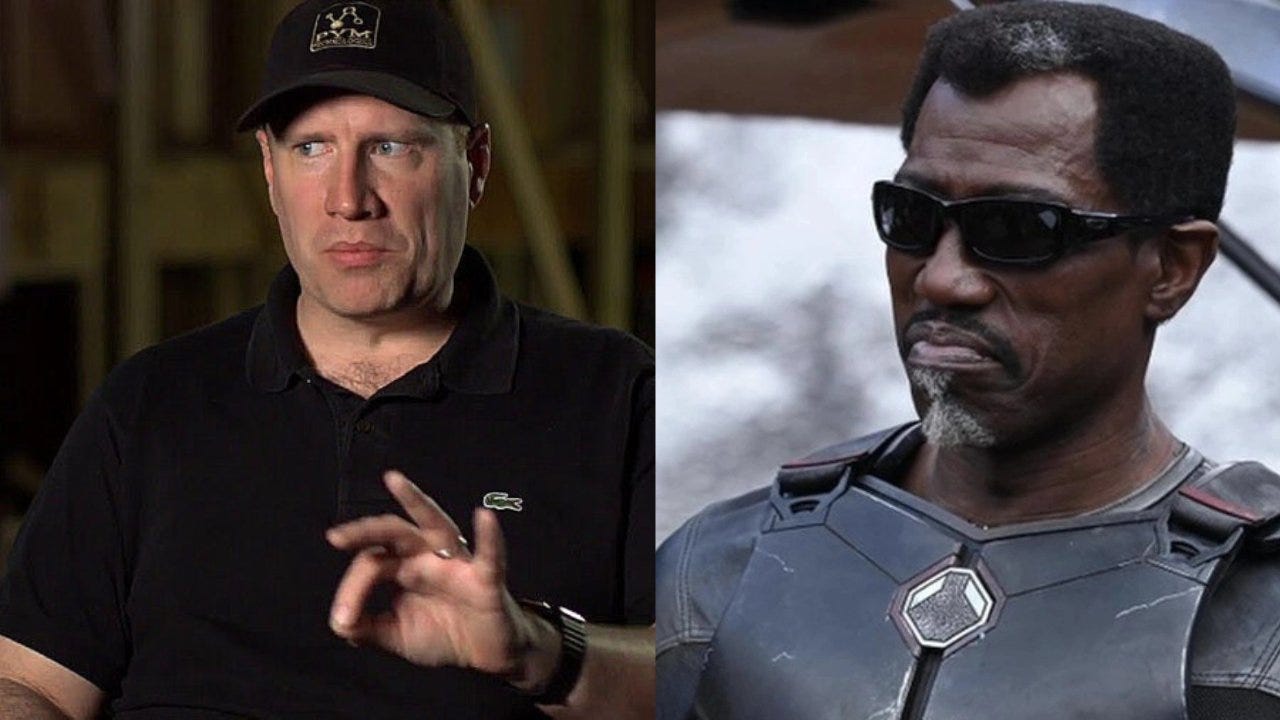
Kevin Feige told the “Happy Sad Confused” podcast he feels like “a gigantic loser and failure” that Marvel never got Mahershala Ali’s Blade off the ground. He should feel that way. Marvel announced Ali as Blade at Comic-Con in 2019 before the studio had a director locked, a finished script, or any real sense of what the movie was supposed to be. The announcement got the headline. Fans got excited. Disney got to show the room that Marvel still had big things coming after “Endgame.” Making the movie became tomorrow’s problem, and tomorrow kept arriving without it.
Seven years later, Blade still has not happened. Bassam Tariq exited as director in 2022. Yann Demange took over and left too. Marvel cycled through screenwriters, pulled the film from its release calendar in 2024, and never found a version of the script it considered ready to shoot. Marvel waited so long that Wesley Snipes came back instead, reminding audiences why they loved his version of the character in “Deadpool & Wolverine,” and now plenty of fans would rather see Snipes get one more movie than wait for Ali’s version to materialize at all.
Feige brought the same instinct for getting ahead of the finished product to Comic-Con this year. Facing criticism that the “Avengers: Doomsday” trailer rushed Robert Downey Jr.’s Doctor Doom onto the stage without the years of buildup Thanos received, Feige pushed back on the show floor in an interview with Brandon Davis. “I’m never confident about anything, I just work hard to try to deliver,” Feige said. “But I will say I do think, I was just saying to somebody else, that the Thanos buildup has built up in people’s heads over the years.” The Marvel boss who admits to feeling like a failure over Blade’s seven-year delay was, in the same weekend, telling fans their memory of his own franchise’s pacing was the problem rather than the pacing itself.
Hall H got a fresh example of the pattern in real time. Marvel announced Ryan Gosling as Ghost Rider on the same stage, with Shawn Levy directing from a Jonathan Tropper script and a release date of 2028. Feige said the idea came together on the set of “Star Wars: Starfighter,” the two actors’ upcoming film, and that Gosling had wanted the role for years. It is 2019’s Blade playbook again: a big name, a logo, a wave of applause, and two years of development still standing between the announcement and a single frame of finished footage.
That timeline should worry James Gunn more than it worries Feige. DC announced “Gods and Monsters” in 2023 as a sprawling roadmap: movies, television, and interconnected characters, all promised before audiences had seen whether the first pieces worked. Studios make these announcements because they excite fans and reassure executives and shareholders that the machine has a plan. But Feige is showing Gunn exactly what happens when the plan becomes more famous than the finished product. Every delay becomes a story, every missing project becomes evidence, and by the time the next big reveal hits the stage, fewer people in the room believe it.
The rule Feige never followed with Blade is not complicated. Don’t announce the movie when all you have is a logo and an actor. Announce it when the script works, the director is hired, and the cameras are close to rolling. Feige learned that lesson the hard way with Blade and is now finding new ways to relearn it in public. Gunn has three more years to decide whether he wants the same lesson taught to him.
If Marvel can’t finish a Blade movie seven years after announcing it at the same convention where it just announced Ghost Rider, what confidence should anyone have in a 2028 release date?
The second book of The Secret Scrolls of Naruto shifts the action from the open roads and waterways of the Kamigata to the warren of Tokugawa-era Tokyo, where the conspiracy runs deeper, the villains are closer, and nobody can be trusted. Two killers strike a deal over saké: one will murder the swordsman-monk Gennojō, the other will claim the woman he has been hunting since Osaka. Underground chambers, a great urban fire, a swordfight in total darkness on a plum-scented path, a deathbed confession that transforms a pickpocket, and a midnight ambush at Sensō-ji temple — this is the book where Yoshikawa Eiji earns his reputation as the Alexandre Dumas of Japan.
NEXT: Star Trek’s 60th Anniversary Panel Celebrated “Diversity”
only Wesley Snipes can be Blade. The man got destroyed because of taxes.
This is why he thinks he's a loser?? 🤣🤣