


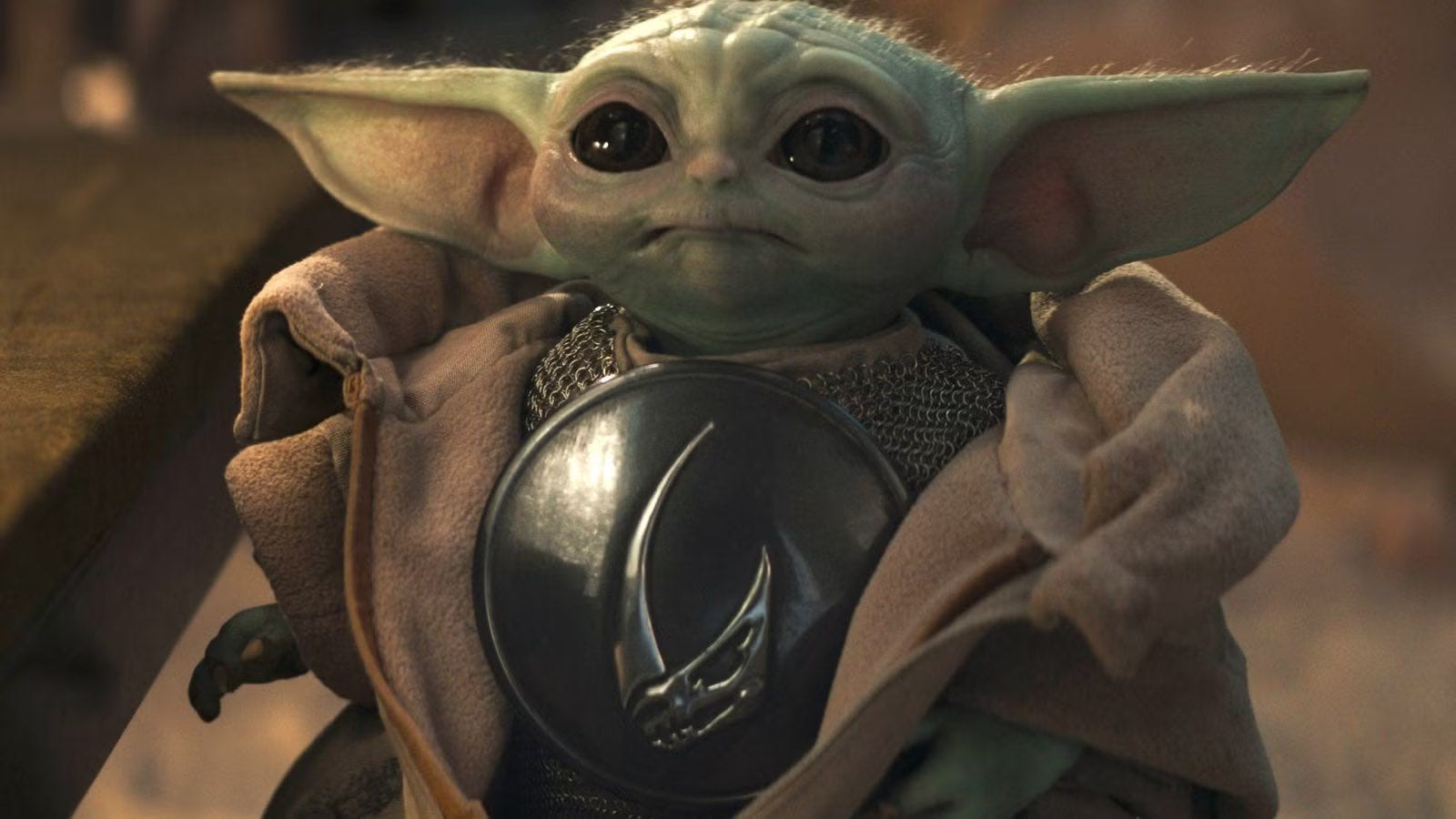
Jon Favreau sat down with GamesRadar ahead of The Mandalorian and Grogu‘s theatrical release and made a statement that Star Wars fans paying attention will recognize as a direct conflict with decades of established lore.
“Grogu is a character that is — his species lives for centuries. He’s on a path to be both a Jedi and a Mandalorian. He’s making certain choices and decisions, and he has a great teacher now.”
Both a Jedi and a Mandalorian. Favreau presents this as a creative opportunity, a long-form storytelling path with “a lot of plans” behind it. The problem is that the Star Wars universe George Lucas built treats these two identities as mutually exclusive — not by coincidence or cultural preference, but by the fundamental requirements of what a Jedi is.
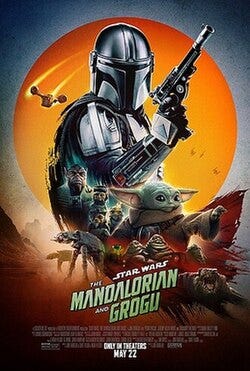
Jedi renounce attachment. That is not a suggestion or a cultural norm within the Order. It is the doctrinal core of Jedi philosophy, established across the prequel trilogy with enough weight that the entire tragedy of Anakin Skywalker turns on it. A Jedi who refuses to release attachment does not become a different kind of Jedi. He becomes Darth Vader. The Jedi Code as Lucas constructed it requires the practitioner to surrender personal bonds, family loyalty, and the kind of fierce tribal identity that defines Mandalorian culture. Din Djarin’s entire arc runs on the tension between his Mandalorian covenants, i.e. this is the way, and the attachment he forms with Grogu. That tension works narratively because the two worldviews pull in opposite directions.
Favreau attempts to address this indirectly. “Luke Skywalker didn’t study under Obi-Wan for very long, but still refined his skills. So I think that that’s part of the path that’s available to Grogu, as per what we’ve already learned from the previous Star Wars films.” The Luke comparison does not hold. Luke’s abbreviated training under Obi-Wan and Yoda is treated in the original trilogy as a narrative limitation, not a feature. Yoda explicitly tells Luke he is not ready. The consequences of that incomplete training run through The Empire Strikes Back and Return of the Jedi. Luke is not presented as a Jedi who successfully integrated a separate cultural identity alongside his Force training. He is a Jedi who struggled, failed, and ultimately succeeded by surrendering attachment at the critical moment, releasing his weapon and refusing to fight his father.

The precedent Favreau is actually building on is not Lucas-era Star Wars. It is Dave Filoni’s expansion of the lore through The Clone Wars and Rebels, which progressively softened the Jedi’s attachment doctrine to make room for more emotionally accessible characters. Ahsoka Tano walks away from the Jedi Order specifically because she cannot reconcile its demands with her own values. The entire MandoVerse narrative works within that softer Filoni framework rather than the Lucas one. Within the Filoni framework, Grogu being “both a Jedi and a Mandalorian” is presented as a creative choice Favreau and Filoni are making together — not a contradiction of the lore, because the lore has already been quietly revised to permit it.
The question for Star Wars fans is whether that revision is one they accept. The Jedi Code’s attachment prohibition is not a minor detail. It is the load-bearing wall of the entire six-film saga. Remove it, and the tragedy of the prequel trilogy becomes a story about a boy who loved his mother too much and needed better therapy. The attachment prohibition exists because Lucas built Star Wars on mythological and religious structures, specifically the kind of renunciation found in Buddhist and Stoic traditions, where the price of genuine wisdom is the willingness to release what you love most.
Grogu chose attachment at the end of The Book of Boba Fett, walking away from Luke’s training to return to Din Djarin. Favreau framed that choice at the time as Grogu following his heart. The lore frames it as Grogu doing what Anakin did — choosing the person over the path. The difference is that Anakin’s choice destroyed half the galaxy and produced the Empire. Grogu’s choice is being presented as the first step toward a dual identity that enriches him.
That is a fundamentally different Star Wars than the one George Lucas made.
Does Favreau’s vision of a Jedi-Mandalorian Grogu work for you within the Star Wars universe, or does it break something essential about what the Jedi are? Let us know in the comments.
Space marines on a holy crusade across the galaxy. If that sentence got your attention, Justified: Saga of the Nano Templar is your next read. Three books of relentless action Read Justified: Saga of the Nano Templar on Amazon!
NEXT: Amazon Cancels Its Lord of the Rings MMO, And Tolkien Fans Should Be Relieved
Who TF cares anymore? Star Wars was ruined a long time ago!
By the time the prequels came out, I had given up on the idea of Jedi being consistently portrayed within the pseudo-religious framework they were first presented. Too many authors, directors, actors, and commenters (let alone fanfic'ers!) couldn't be bothered to deal honestly and fairly with the strengths and limitations of practiced self-discipline (and self-denial) dedicated to a higher purpose.
(...and don't get me started on "grey Jedi"...!)