


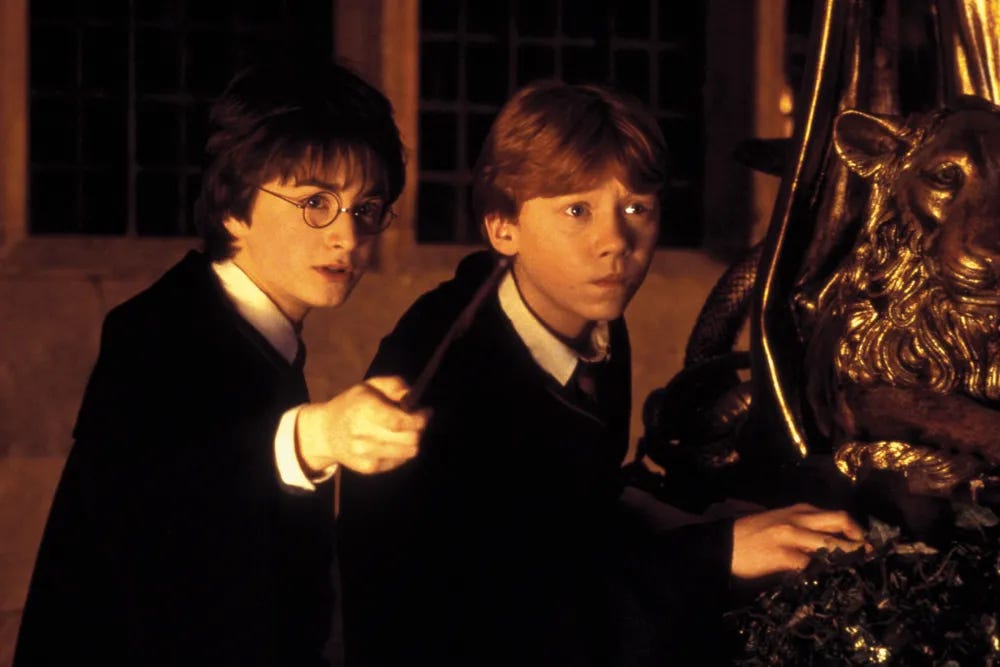
Hasbro CEO Chris Cocks ran straight into the arms of progressive activists this week, declaring “we support diversity” after facing backlash over the company’s new Harry Potter toy licensing deal with Warner Bros. Discovery. The statement reveals a company that hasn’t learned anything from years of alienating its core customer base through relentless identity politics across its entire gaming portfolio.
The controversy erupted when Hasbro announced a multi-year partnership to produce Harry Potter toys, games, and collectibles tied to HBO’s upcoming series reboot. Podcast host Nilay Patel confronted Cocks on the “Decoder” podcast, claiming J.K. Rowling’s “transphobia is turning off lots of young consumers” and asking how Hasbro justifies the deal.
Cocks folded immediately: “For me, it’s separating the art from the artist and going to what the core fans want. I’m not going to get into the politics around it, other than to say we very strongly support diversity and inclusion inside of Hasbro. We are proud of it and proud of the diversity of viewpoints and backgrounds we have in our employee base. Harry Potter is a wonderful franchise. It’s done a great job of bringing joy to the world.”
The statement is remarkable for its cowardice. Rather than defending Rowling’s right to hold biological reality-based views or pointing out that Harry Potter fans overwhelmingly support the franchise regardless of activist pressure, Cocks immediately distanced himself from the author while pledging allegiance to diversity and inclusion.
This is the same company that has spent years systematically dismantling two of its most beloved gaming properties through relentless progressive messaging - and the Harry Potter deal suggests they have no intention of stopping.
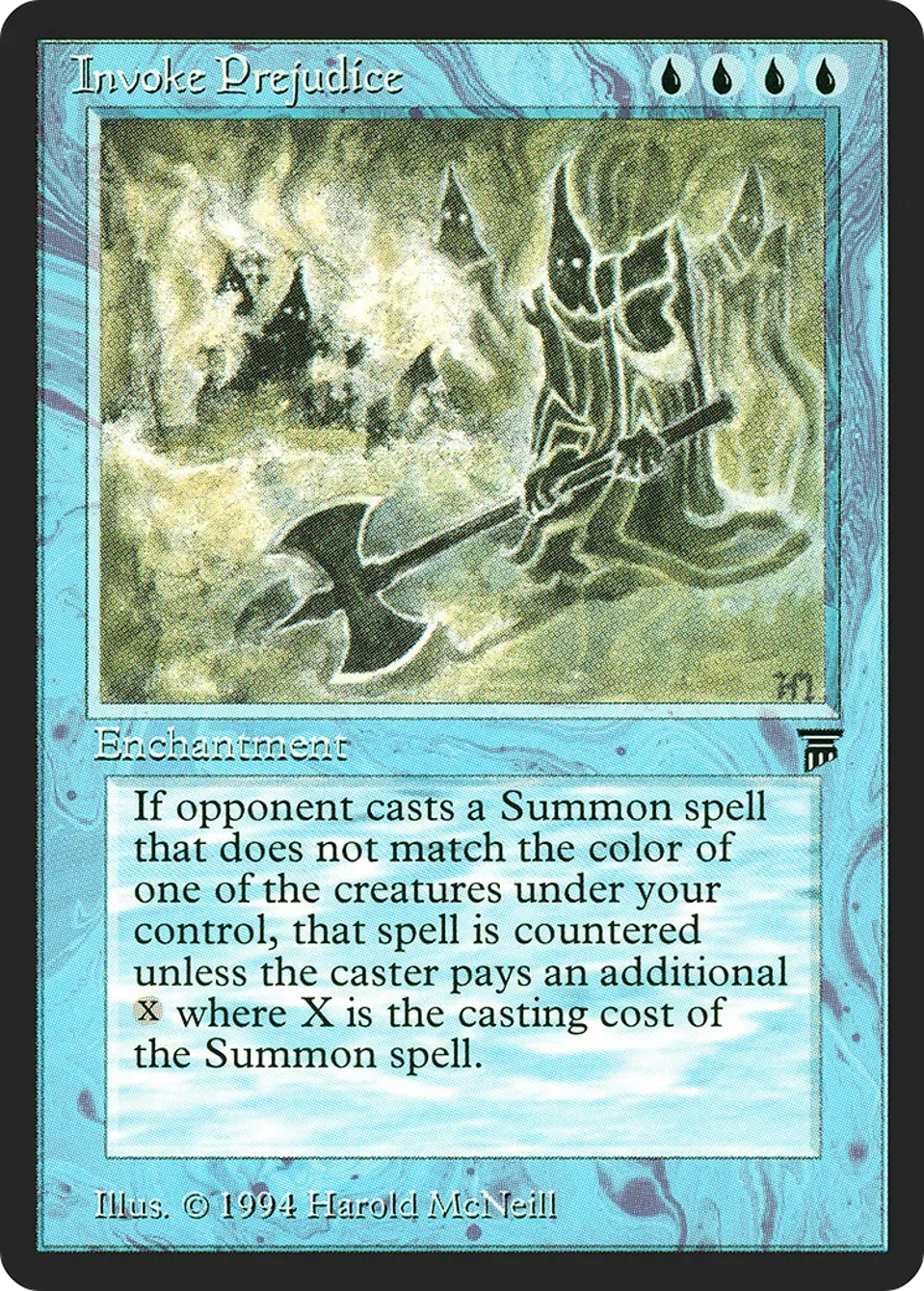
Magic: The Gathering tells the story of Hasbro’s ideological capture in painful detail. It started in 2020 with what media outlets celebrated as removing “racist cards” from the game - pulling titles including “Invoke Prejudice,” “Cleanse,” “Stone-Throwing Devils,” “Pradesh Gypsies,” “Jihad,” “Imprison,” and “Crusade.” That initial purge opened the floodgates.
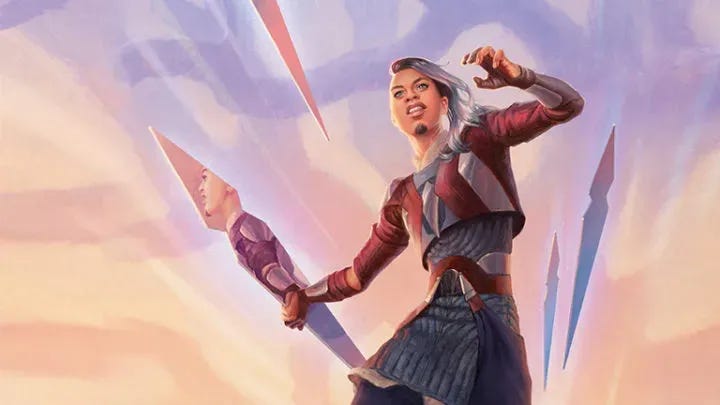
Wizards of the Coast, Hasbro’s gaming subsidiary, then introduced what they called “trans and non-binary representation” to the card game. Alesha, Who Smiles At Death became a marquee transgender character inserted into a game about intense combat and destroying opposing summoners. The company even published story fiction on their website reiterating the character is “her” - with italics - to ensure players understood the virtue signaling.
They doubled down with planeswalker Niko Aris, described as non-binary, whose card art depicts what critics called the look of a “mentally ill leftist.” The progressive messaging accelerated from there.
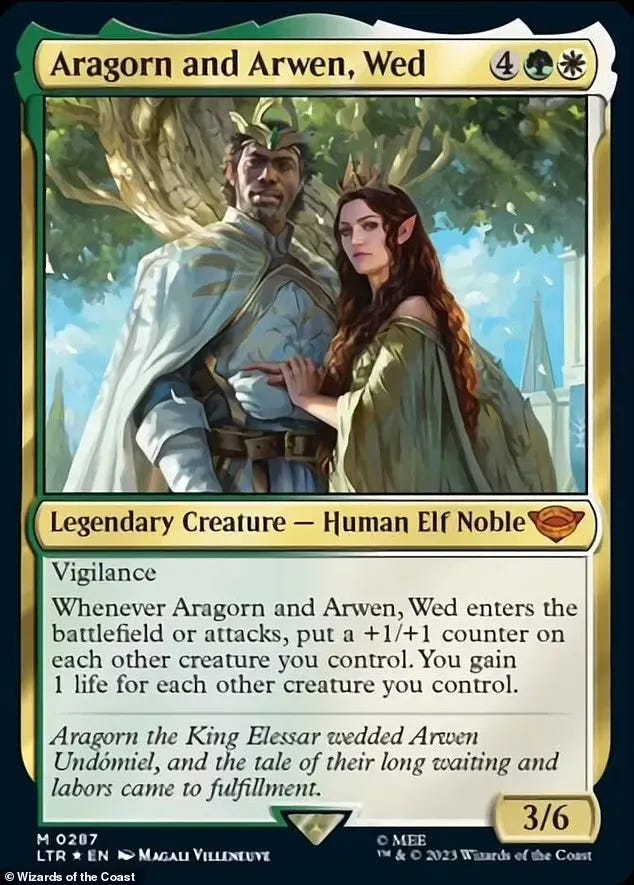
Magic’s biggest controversy arrived when Wizards obtained the Lord of the Rings license and promptly decided Tolkien’s beloved characters needed updating. The company made deliberate changes to character designs and representations that Tolkien never intended, treating a beloved literary estate as raw material for contemporary social messaging.
Hasbro applied the same formula to Dungeons & Dragons. The Monster’s Manual removed orcs as monsters entirely, while introducing male hags, male dryads, and transforming the incubus and succubus into what fans described as a transgender allegory. The official D&D art revealed what fans called “Mexican Orcs” - an attempt to address perceptions that orcs represented Black people by replacing that imagery with Mexican cultural elements instead.
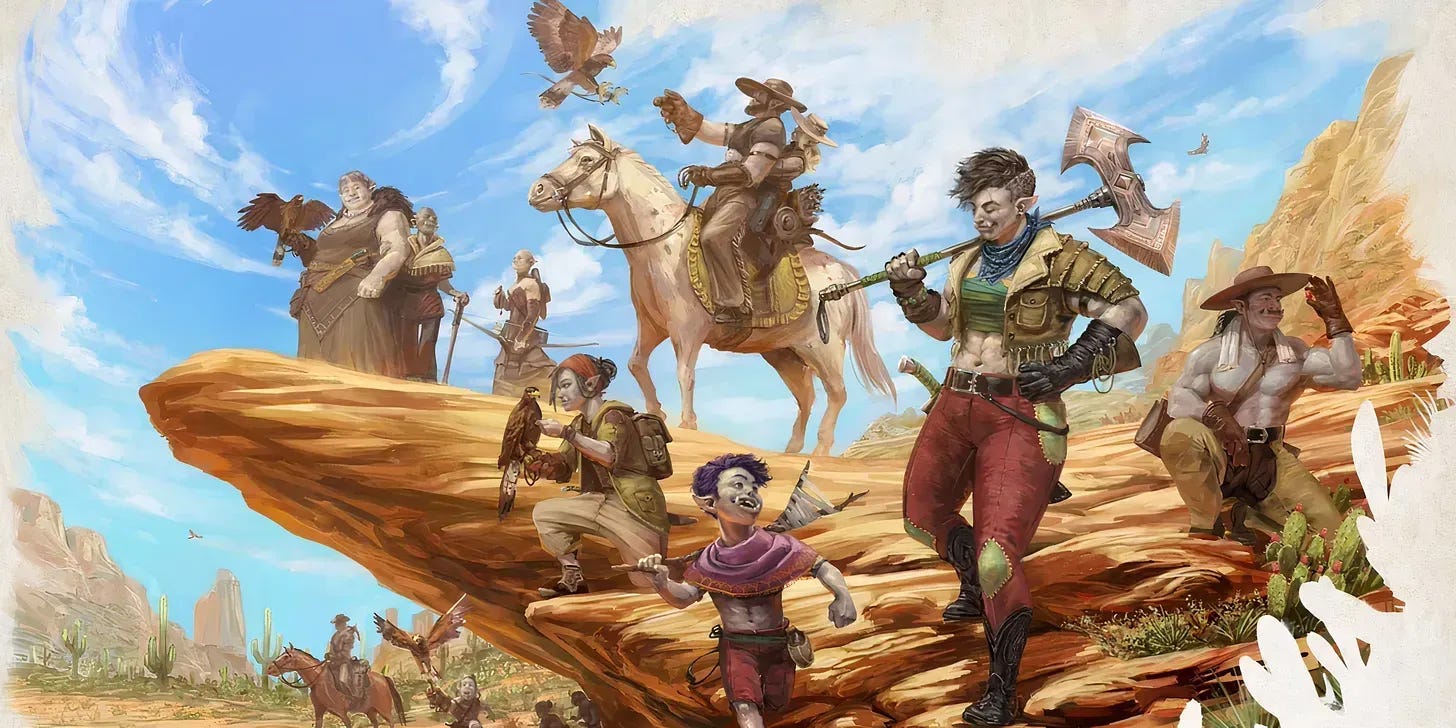
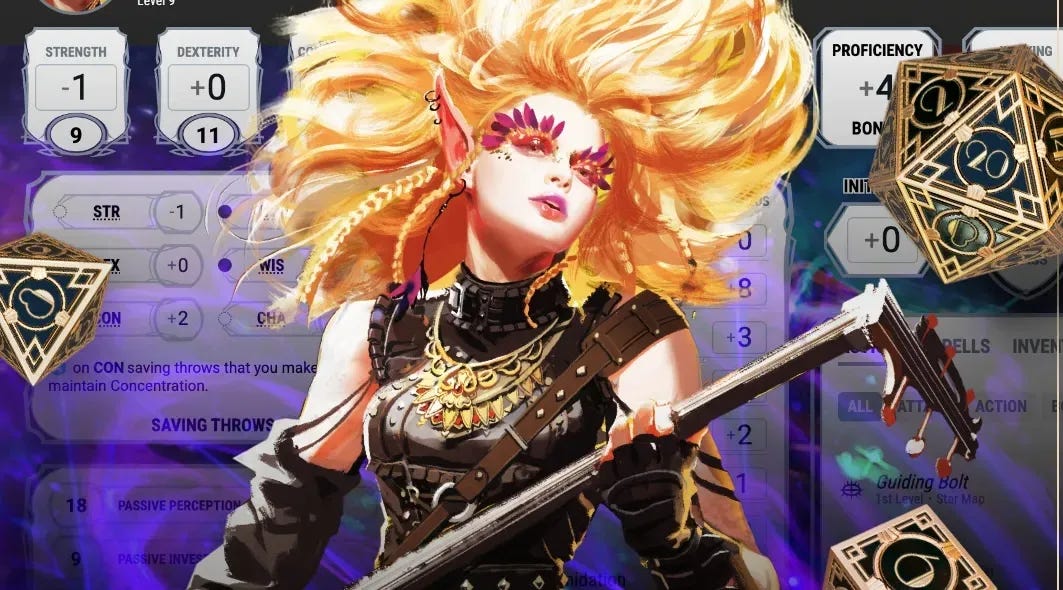
The company then marketed a “glam bard” supplement explicitly designed to attract Taylor Swift fans to D&D - people who, by definition, don’t play the game. The strategy of abandoning core audiences in pursuit of demographics that have no interest in the product has become Hasbro’s defining business approach.
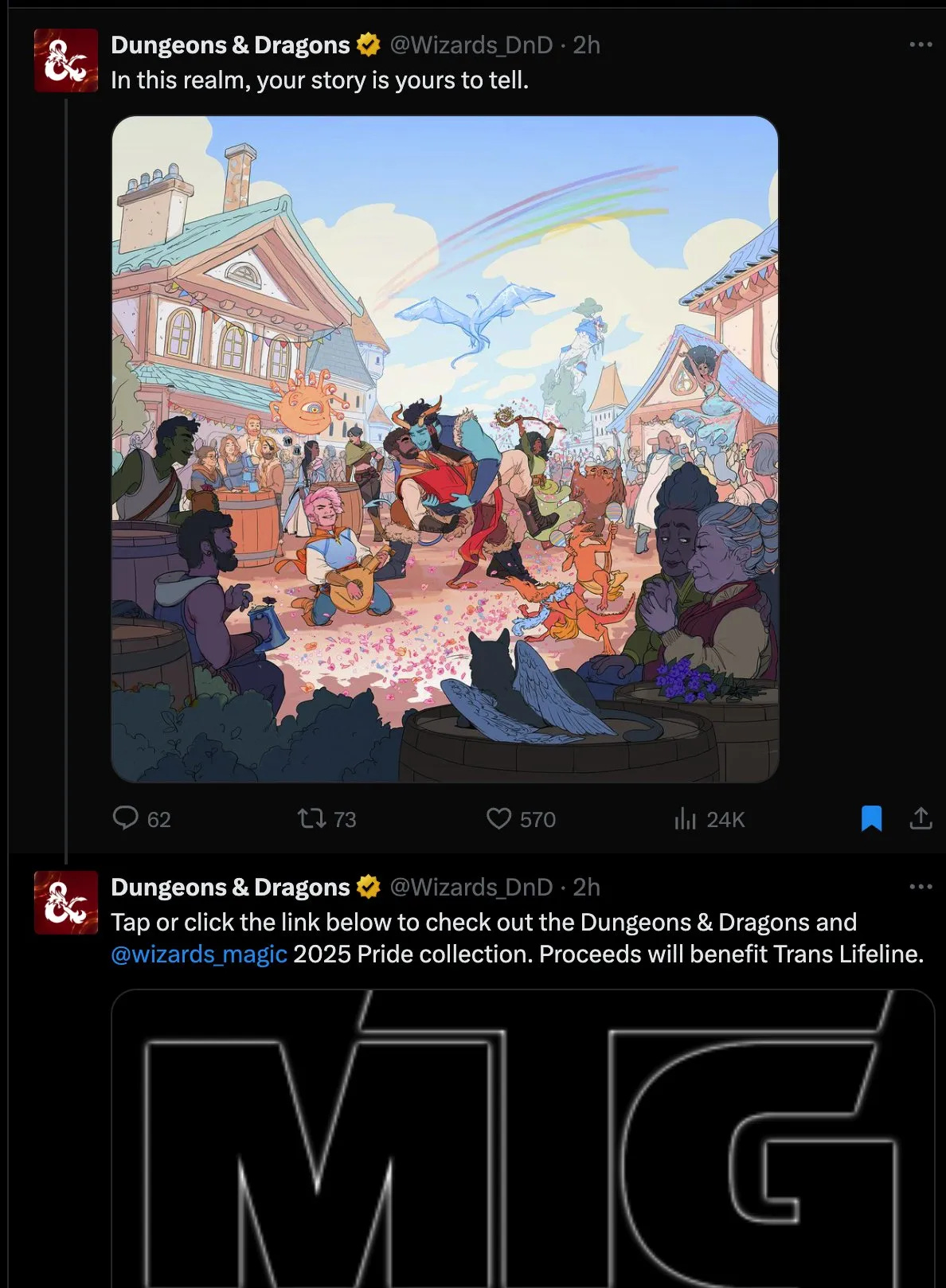
The D&D account posted art on X loaded with homosexual couples captioned “In this realm, your story is yours to tell” - a direct signal about the direction of the franchise. Meanwhile, Hasbro used Magic: The Gathering to promote a Trans Lifeline charity through a livestream that was, according to fan response, universally savaged.
The very next week after that Magic controversy, Hasbro pushed Dungeons & Dragons further into the same territory. The pattern reveals a company that registers fan backlash and responds by accelerating the behavior that caused it.
Now Cocks wants credit for “separating the art from the artist” while simultaneously declaring his company’s commitment to diversity and inclusion. The positioning is cynical. Hasbro isn’t separating art from artist - they’re using every property they touch as a vehicle for the same progressive messaging that has driven away Magic players, D&D enthusiasts, and now potentially Harry Potter fans.
The Harry Potter deal itself carries irony so thick you could cut it with a sword. Hasbro is partnering with a franchise whose creator holds views their CEO just distanced himself from, while simultaneously running a company that has spent years inserting the exact ideology Rowling opposes into every product they make.
Tim Kilpin, President of Toys, Games, Licensing and Entertainment at Hasbro, offered the standard corporate enthusiasm: “The world of Harry Potter and its unforgettable characters align perfectly with our mission to deliver a lifetime of play to generations of fans.”
What Kilpin didn’t mention is that Hasbro’s “mission” apparently also includes transforming beloved gaming properties into progressive messaging vehicles, alienating core fanbases, and then declaring diversity commitments when activists come calling.
HBO’s Harry Potter series debuts in 2027, with Hasbro products revealed later this year. Given the company’s track record with Magic and D&D, fans of the wizarding world would be wise to watch carefully how Hasbro handles the franchise - and whether their diversity commitments show up in the product line alongside the toys and collectibles.
What do you think about Hasbro’s pattern of inserting progressive messaging into beloved gaming franchises?
Six books. One unforgettable world. The Adventures of Baron Von Monocle is steampunk adventure with the kind of worldbuilding and heart that made you fall in love with fantasy in the first place. Start the series on Amazon.
Basically the fags and, soon to off themselves, tranny’s were given the keys (carte blanche) to the kingdom.
After a decade, they are sorely left wanting.
The experiment failed and now we’re seeing the death throes, while they fade into consciousness irrelevancy.
Like dying dogs biting everyone around them, in a fit of rage.
Hasbro needs a new CEO, who’ll stand up to Woke Goblins. Chris Cocks is a coward, which also explains why the Woke Goblins at Wizards of the Coast are still allowed to do whatever they want with Magic: The Gathering and Dungeons & Dragons.