


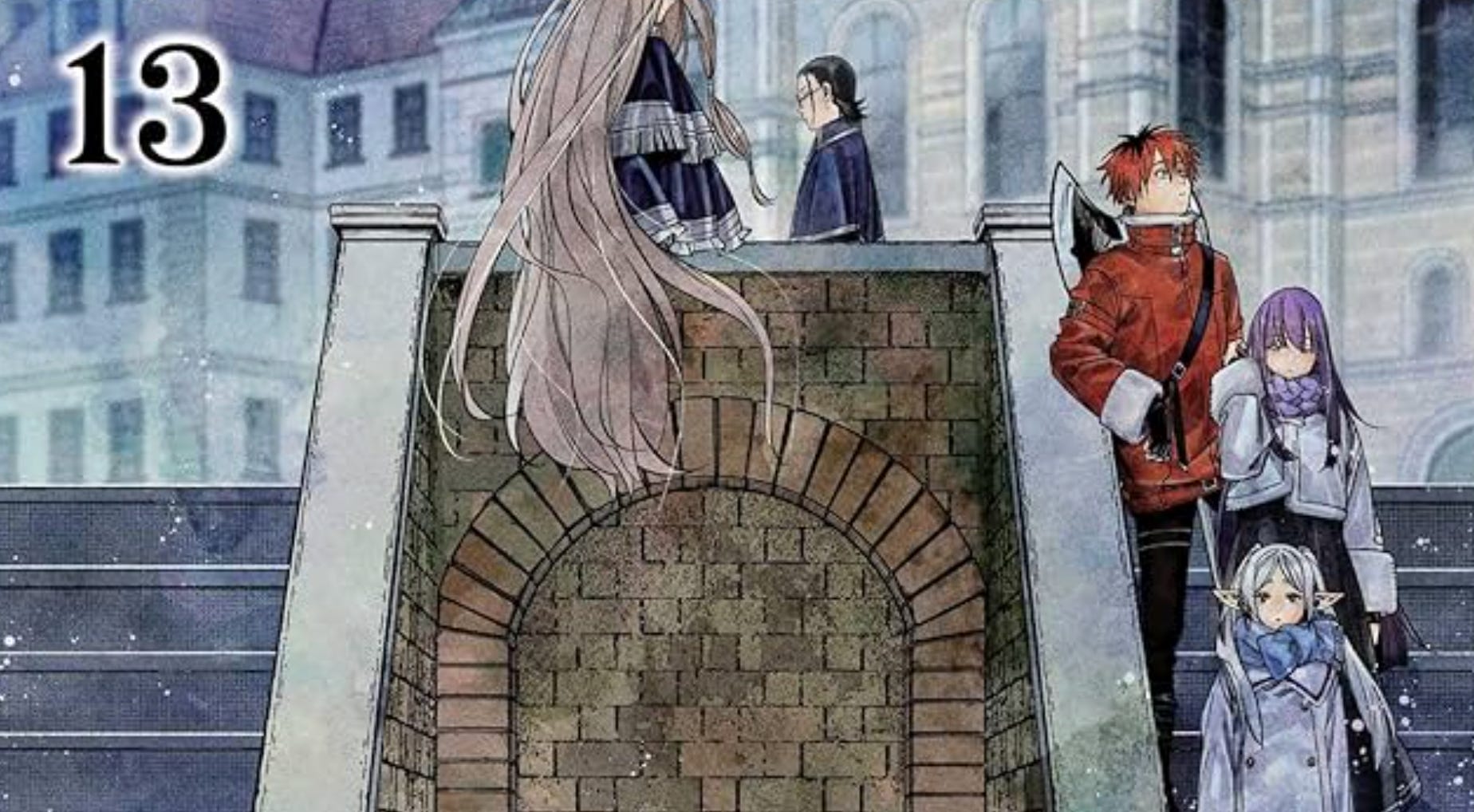
Volume 12 ended on one of the best cliffhangers the series has produced: Himmel trapped in a dream where he married Frieren, greater demons closing in, the hero’s party finally alive on the page rather than filtered through thirty years of elven memory. Volume 13 had everything it needed to pay that off.
It pays it off too quickly.
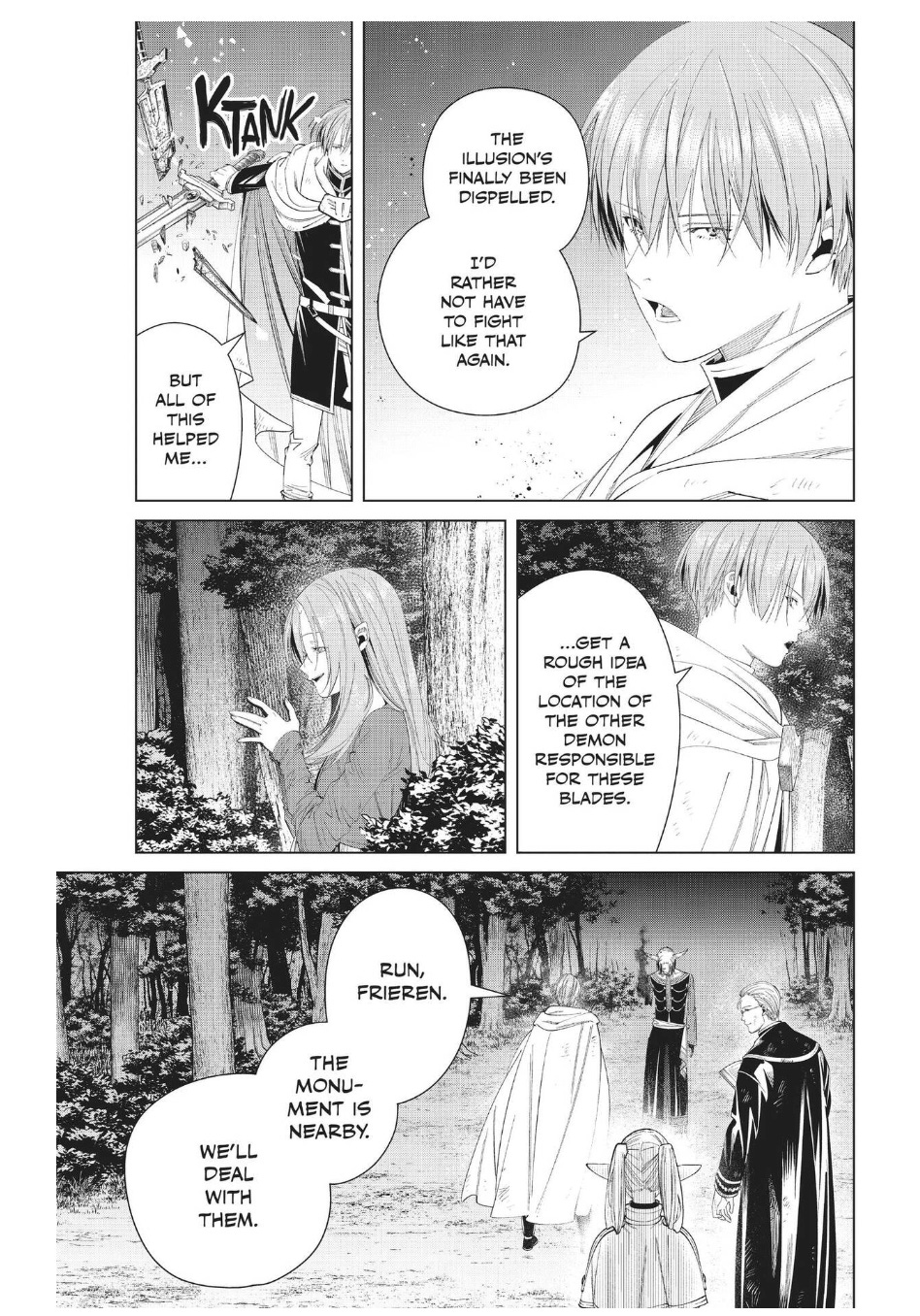
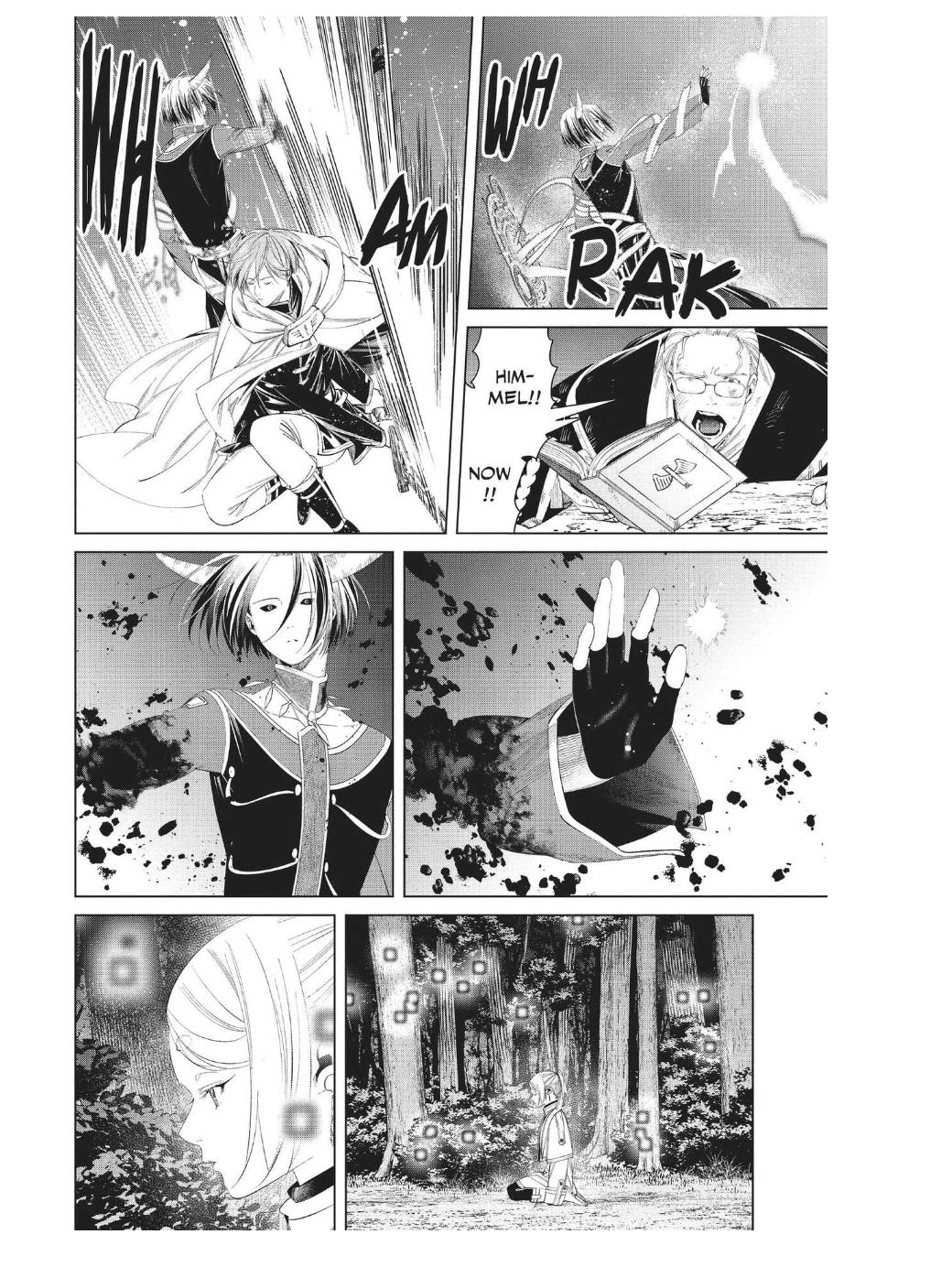
The powerful demon Grausam traps both Frieren and Himmel in an illusion too beautiful to leave willingly. That setup alone should have given the volume room to breathe, to sit inside that fabricated world and let its weight land. Instead, Himmel realizes he’s in a fabricated world and somehow fights through it on pure instinct, breaks the hypnosis, and that’s enough for Frieren to reach the monument and return to her own time. It resolves in a handful of chapters. Readers who wanted to linger in Himmel’s dream, to watch Frieren reckon with what it meant that his deepest desire was a life with her, don’t get that. The series moves on
.
That’s the core disappointment here. The dream sequence was the emotional payoff the entire time-travel arc was building toward. Volume 12 made explicit for the first time what the series had long implied about Himmel’s feelings. Spending more pages inside that illusion, letting Frieren sit inside what could have been, would have been some of the most affecting work the series has done. Instead it’s a detour, resolved and filed away.
From there, Volume 13 settles into the episodic rhythm the series relies on when it isn’t building toward something. The party travels from town to town in a series of side adventures until they reach a place where the mayor, a man named Vadaal, attempts to kill Frieren. The slice-of-life chapters in between have the series’ characteristic warmth, and the art remains precise and evocative throughout, but the volume has the feel of a transition chapter stretched to fill its page count
.
The Fern material will feel familiar to anyone who’s read the earlier volumes. The small-gesture relationship beats between Fern and Stark, the birthday present dynamic that defined some of the series’ most charming early work, gets revisited here with a new character. It works on the same terms it worked before. That’s also the problem. The series has established that it can do this kind of quiet character moment. Doing it again with a new face doesn’t add anything, it just confirms the formula is still functional.
The Vadaal cliffhanger at the end shows more promise. There’s a suggestion this could spiral into something larger, a conspiracy with roots going back decades, though whether the series commits to that or treats it as another contained arc remains to be seen. The setup is efficient and the threat feels different in kind from what the series usually delivers.
Frieren remains a beautifully constructed manga. The craft is consistent. But Volume 13 is the kind of volume that exists between better ones, clearing the time-travel arc off the board and laying pipe for whatever comes next. After the propulsive, emotionally loaded run of Volume 12, that’s a letdown.

7.5/10
What do you think of how the series handled the resolution of the time-travel arc? Let us know.
Three free books. No spam. Just new releases, deals, and the occasional update from the front lines of independent publishing. Sign up for the Jon Del Arroz newsletter and start reading today.

NEXT: Review: “Huck: Big Bad World” Is the Superman Story Comics Fans Have Been Waiting For
I'm watching the new season on Crunchyroll. In my opinion, Frieren is one of the best drawn animes that I've watched. It's calm enough that I can enjoy the scenery and follow the relationships.