


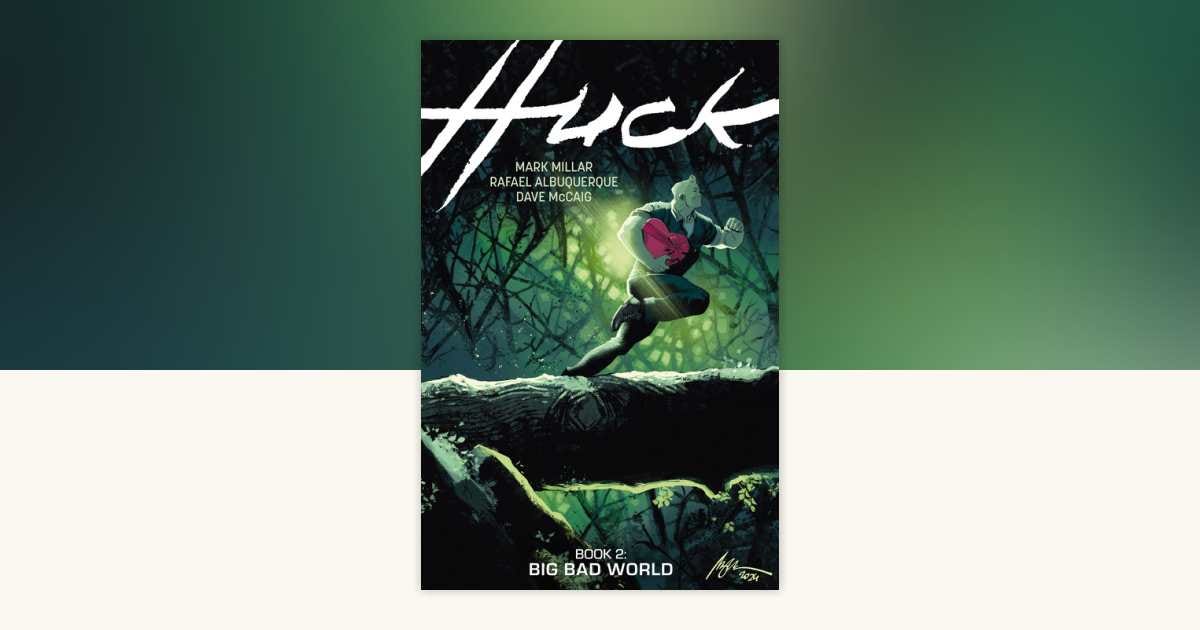
Mark Millar built his reputation on deconstruction. Kick-Ass asked what would happen if a real teenager tried to be a superhero and answered with broken bones and trauma. Wanted put the reader inside a supervillain’s head and made them like it. Nemesis was Batman if Batman were a monster. Millar’s brand, for most of his career, was the antihero as protagonist and cynicism as default.
Huck is the exception.
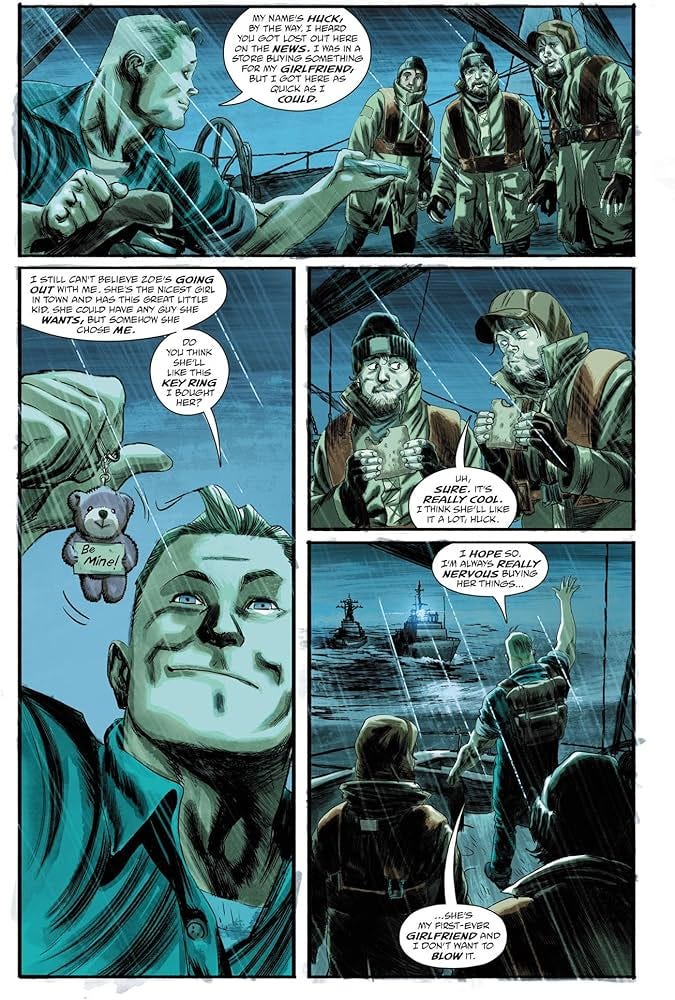
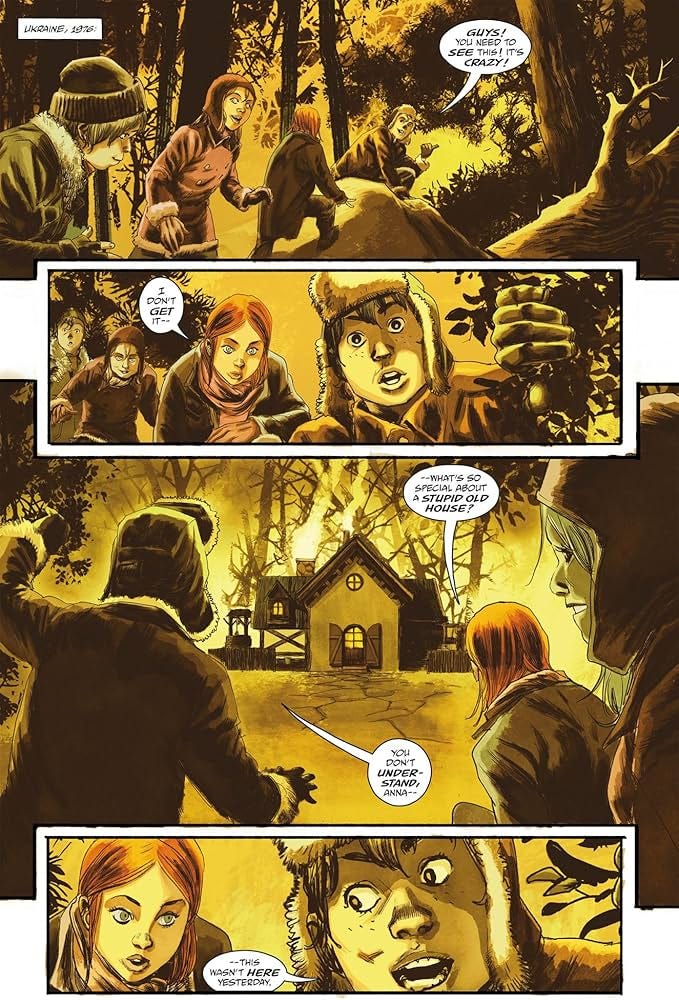
The original six-issue series, published by Image in 2015 with art by Rafael Albuquerque, introduced Huck as a gas station clerk in a small Maine coastal town, autistic, gentle, and superpowered, who does one good deed a day and asks only that nobody talk about it. His neighbors keep the secret. A newcomer breaks it. A media firestorm exposes him, and the story pulls back to reveal his origins: a Soviet program, a scientist named Orlov, a mother who escaped a Siberian testing facility while pregnant and barefoot in a snowstorm, and a twin brother named Tom. Orlov built robots to hunt them. Huck beat the robots. Millar has said the series was his direct response to being “traumatized” by the grimdark tone of Man of Steel, and the whole point was to function as an antidote to the antihero.
It worked. Huck became the most purely good character in Millar’s catalog, the one figure in Millarworld who does the right thing every time not because it is tactical but because it is who he is.
“Big Bad World,” published by Dark Horse in 2025, picks up after the events of Millar’s Big Game crossover event, in which Huck was killed by a nuclear weapon and subsequently restored. The sequel finds Huck after he has tracked down the doctor responsible for his and his mother’s powers, seemingly ready to return to the quiet life he loves. Then a mysterious man tells him he and his mother are not the only super-powered people in the world, and that many more are hiding just like them. Huck and his mother hit the road to find them.
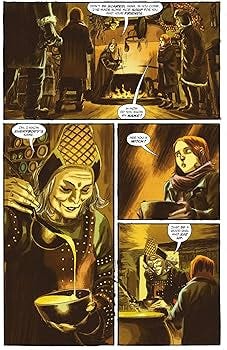
What follows is Millar expanding the Millarworld while keeping the character’s soul intact. There is a romance, a pregnancy storyline with a gut-punch twist, a villain arc, and a climax that earns its happy ending. Albuquerque’s art remains the perfect match: warm, kinetic, expressive without being overwrought. His Huck looks like a man who has never once considered doing something selfish.
The pregnancy storyline is where the book takes its biggest risk, and one that almost didn’t work out but the twist saves it. Huck’s love interest turns up pregnant, and the circumstances suggest the child belongs to an ex. The setup reads like Millar putting his most decent character through a modern humiliation the story has no business asking him to absorb. For a couple of issues, the book is actively uncomfortable. Then the twist lands, the math works out differently than the reader feared, and the story earns the relief it delivers. It is the kind of narrative rope-a-dope Millar has always been good at, and here it serves the character rather than undercuts him.
There is one legitimate craft complaint. Huck’s mother is killed during the story. Millar has established within the story that a resurrection mechanism exists, and she does come back, but the return happens offscreen and lands with almost no weight. You reach the final pages and realize she is alive again without having witnessed the moment it happened. For an emotional anchor as powerful as a mother’s death, that deserved a scene. Readers who are not tracking every corner of Millarworld continuity will feel the whiplash.
That is a minor problem in an otherwise clean six-issue run.
What “Big Bad World” gets right is the thing the original got right and most superhero comics have abandoned entirely. Huck is not conflicted. He is not tempted by the dark side. He does not have a speech about why heroism is complicated. He sees someone who needs help and he helps them. He absorbs betrayal and loss and keeps going. He wins, not through moral compromise but through moral consistency.
One reviewer called Huck “an absolute counterpoint to the violent antiheroes we regularly witness in comics.” That was ten years ago and the observation has only aged better. The genre is drowning in irony and trauma porn and protagonists who need convincing to do the right thing. Huck does not need convincing. He just does it.
That is what heroism looks like. It is also, apparently, what it takes to make a superhero story feel radical in 2025.
9.5/10. Netflix has a series adaptation in development. If they get it right, this character has the potential to do for streaming what the original series did for comics.

What do you think of Huck? Have you picked up “Big Bad World” yet? Let us know in the comments.
Three free books. No spam. Just new releases, deals, and the occasional update from the front lines of independent publishing. Sign up for the Jon Del Arroz newsletter and start reading today.
NEXT: Optimus Prime Gets Replaced With A Strong, Female Leader In Transformers Comic
If you have a library card, you can potentially link it to the Hoopla app and borrow this through the app. I just did that so I can read it on my tablet.