


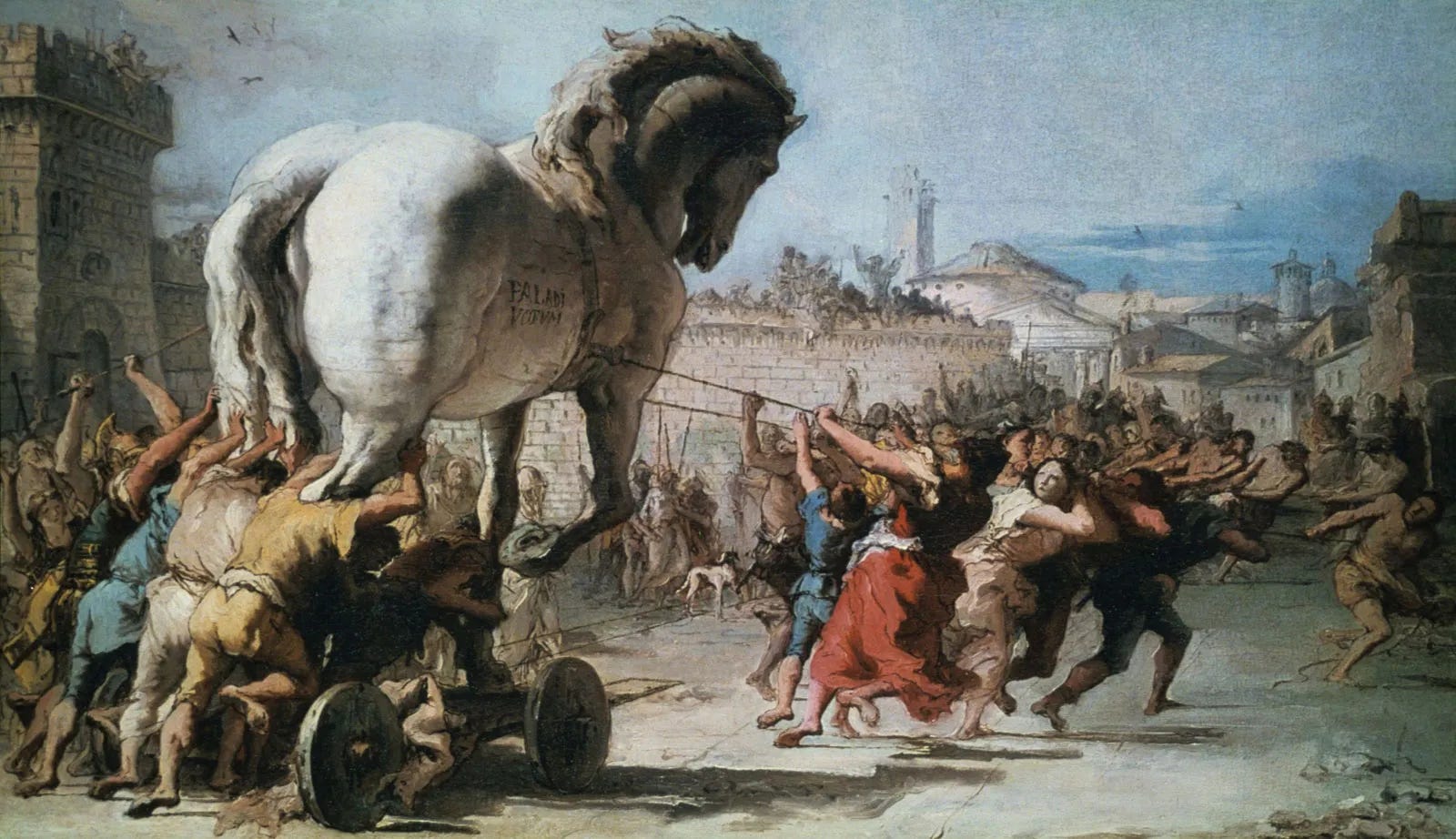
Nolan’s Odyssey is putting Homer in front of audiences who may never have touched the source material, and that’s a genuine opportunity. The Odyssey is a complete story on its own, but it’s also one piece of a much larger world that shaped Western literature, law, and drama for the next 2,700 years. If the film left you wanting more, here are five texts worth reading next, in the order that builds context most effectively, and the specific translations that will actually reward the effort rather than smooth it over.

Start here if you can manage it, because everything about Odysseus in the Odyssey assumes you already know who he was at Troy. The Iliad is harder reading than the Odyssey by a real margin. It has none of the Odyssey’s fairy-tale structure, no monsters or magic islands to break up the pace, just nine years of siege compressed into a few weeks of narrative focused almost entirely on Achilles’ rage and its consequences. But it’s the Iliad that tells you why Odysseus is famous for cunning rather than strength before the Trojan Horse even comes up, and what kind of world he’s trying to get back to.
Translation: Richmond Lattimore (University of Chicago Press, 1951). Lattimore is still, more than seventy years later, considered the closest English rendering to Homeric Greek available, preserving the original’s formulaic repetitions and long rolling hexameter lines rather than smoothing them into modern narrative prose. It’s harder going than Fagles, but that difficulty is the point: you’re reading the poem’s actual structure, not a translator’s improvement on it. Read Fagles first if you need momentum to finish it, then come back to Lattimore once you already know the story.

Homer assumes you already know the gods’ family tree, their rivalries, and how the world came to be. Hesiod is where that knowledge actually comes from. Theogony lays out the succession of divine generations, from Chaos and Gaia through the Titans to Zeus’s final consolidation of power on Olympus, and it’s the closest thing the Greeks had to a creation myth in a single text.
Translation: Glenn W. Most (Loeb Classical Library, Harvard University Press). Most’s Loeb edition prints the Greek and English on facing pages, the standard format for readers who want to check a translator’s choices against the actual source line by line rather than take them on faith. Most is a working classicist producing a scholarly edition rather than a poet producing a literary interpretation, which matters for a text this foundational and this short. There’s no reason to read a looser paraphrase of Hesiod when the real thing, with the Greek right there for comparison, is this accessible.

This trilogy, Agamemnon, The Libation Bearers, and The Eumenides, picks up the other homecoming story running parallel to Odysseus’s own. Agamemnon returns from Troy to a wife who’s spent ten years planning to kill him, and the trilogy follows the blood debt that unleashes across two more generations before ending with the invention of trial by jury, the gods stepping back from private vengeance to hand judgment to a public court. It’s the foundational text for the entire Western idea that civilization means replacing the blood feud with the rule of law.
Translation: Richmond Lattimore, collected in The Complete Greek Tragedies (University of Chicago Press). One specific warning here: do not confuse this with Anne Carson’s An Oresteia. Carson’s book is a genuinely interesting literary project, but it isn’t a translation of Aeschylus’s trilogy at all. It splices together Aeschylus’s Agamemnon with Sophocles’s Electra and Euripides’s Orestes, three different playwrights writing decades apart, repackaged as if they were one continuous work. It’s worth reading on its own terms once you know what it actually is. It is not where you go to read Aeschylus.

A shorter, sharper read than the Oresteia, and one of the clearest statements in classical literature on the tension between divine law and human authority. Antigone defies her king and uncle Creon’s decree to bury her traitor brother, insisting that the gods’ law outranks the state’s, and pays for it with her life.
Translation: David Grene, also collected in The Complete Greek Tragedies (University of Chicago Press). Grene was one of the two lead editors, alongside Lattimore, of the entire Chicago series, and his Antigone is built on the same standard: accuracy first, poetic force second, no modern political gloss layered onto Sophocles’s actual argument. Staying inside the same Chicago series for both this and the Oresteia also means consistent editorial standards and cross-referenced introductions across your reading, rather than switching translation philosophies play to play.

Once you’ve read the myths and the tragedies, Herodotus gives you the closest thing the Greeks had to an actual historian, writing about the wars against Persia that came a few centuries after the Trojan War the Iliad and Odyssey describe. Herodotus is called the “father of history” for a reason, but he’s also part anthropologist and part storyteller, weaving customs, geography, and digressions across the known world into the actual military narrative of Marathon, Thermopylae, and Salamis.
Translation: Andrea L. Purvis, in The Landmark Herodotus, edited by Robert B. Strassler (Anchor Books). The Landmark edition exists specifically for serious readers: extensive maps for every campaign Herodotus describes, footnotes keyed to modern archaeology and geography, and appendices written by working classicists on subjects like Persian court life and Greek religious practice. Robin Waterfield’s Oxford World’s Classics translation is the strongest alternative if you want something more compact, praised for staying close to the Greek while remaining genuinely readable rather than stiff. Skip Godley’s old Loeb prose unless you specifically want the most literal possible rendering with none of the surrounding scholarly apparatus.
Read in this order, the arc holds together: Hesiod gives you the gods, the Iliad gives you the war and the hero, the Oresteia and Antigone give you what Greek drama built out of that inheritance, and Herodotus shows you the civilization that produced all of it defending itself for real. The Odyssey is a fantastic entry point. It was never meant to stand alone, and neither should the translation you read it in.
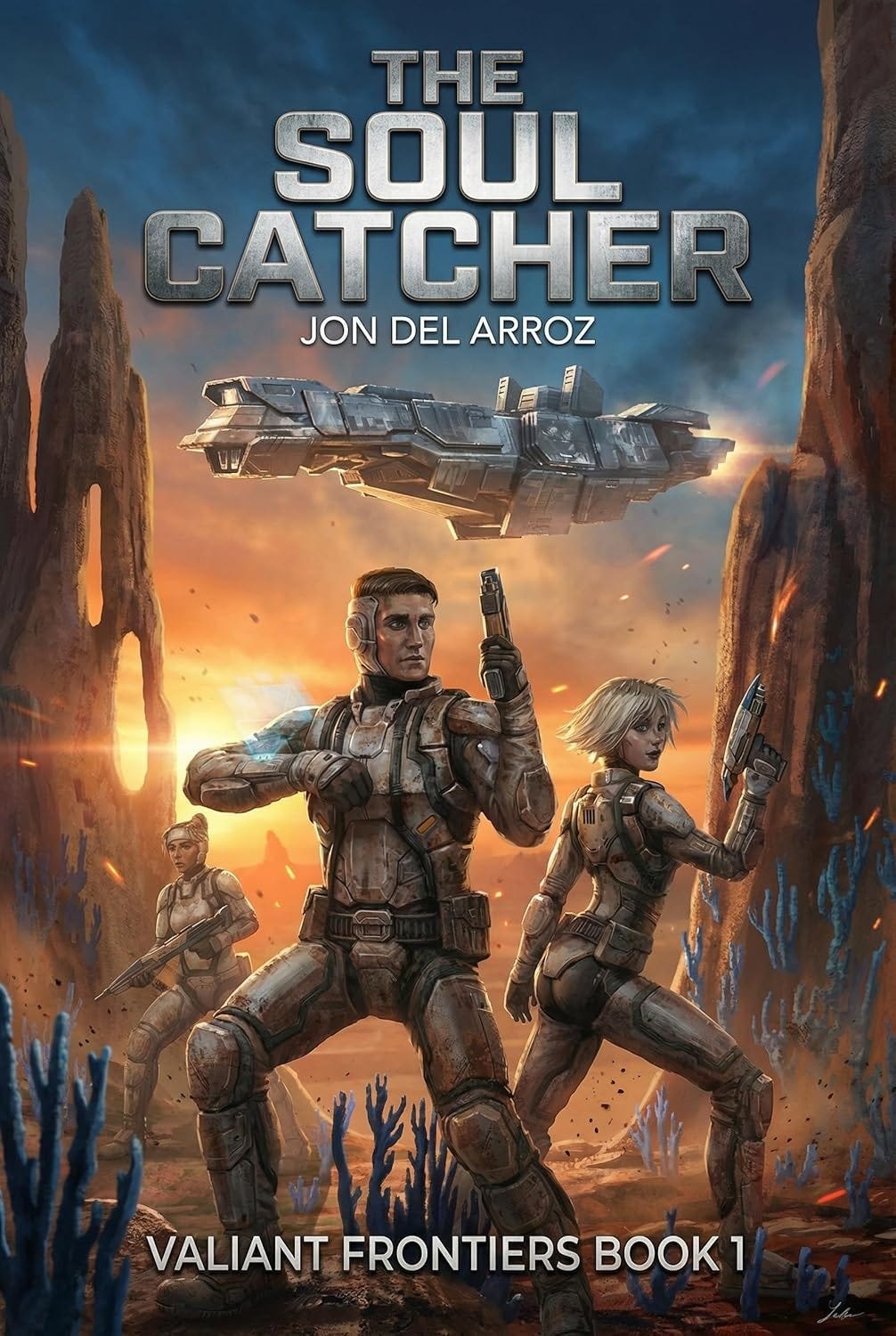
Then there’s my work if you want some sci-fi! First contact with the Oridians was supposed to be humanity’s proudest moment. Instead, their chief engineer is dead, their ship is sabotaged, and an ancient alien technology is stealing souls. Book one of the Valiant Frontiers series delivers exploration, mystery, and the kind of crew you’ll want to follow across the galaxy. Read The Soul Catcher on Amazon and start the adventure.
NEXT: Christopher Nolan’s “The Odyssey” Trades Homer’s Masculine Triumph for Modernist Regret
Can't find my 7th grade copy of Antigone from the 1970's that I still have, and have re-read once or twice. We studied Beowulf and Macbeth in that same class.
The only translations of Theogony my local public libraries have are by Lattimore, M.L. West and Apostolos Athanassakis. Any thoughts on West or Athanassakis?
This reads like my daughter's first semester Lit class booklist at LCC. Nice!