


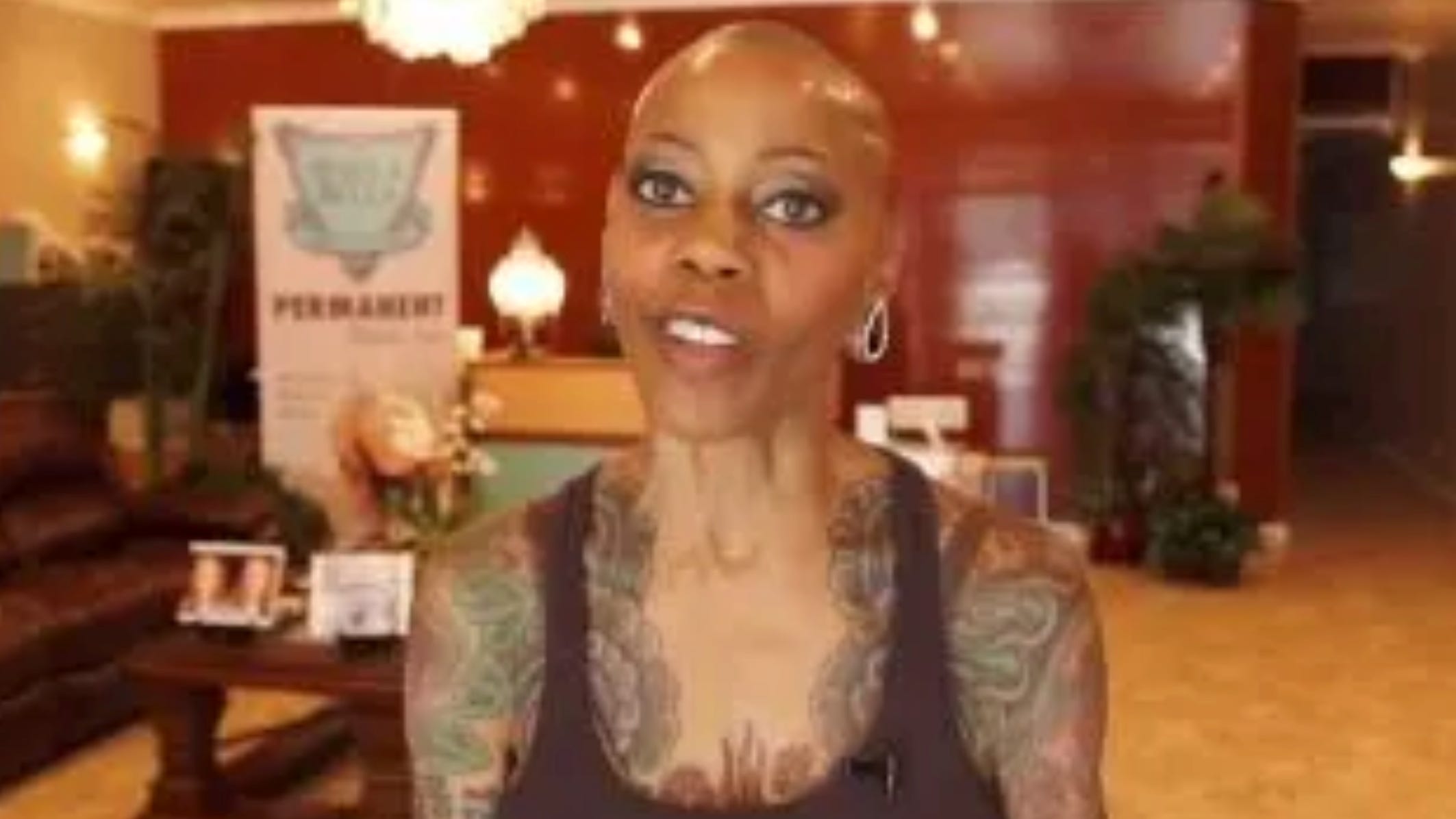
Debra Wilson has had a long career as a comedian and voice actress. She was an original MadTV cast member, did sharp impressions of Oprah and Whitney Houston, and has logged extensive credits in games and animation. None of this is in dispute. There is, however, an ongoing issue with the pattern of how she keeps appearing.
The defense is always the same: she is a working professional. The writers and directors make the creative choices, and she just performs. While this is likely true, it is beside the point. The point is what is governing the decision to put her particular face and presence in front of audiences again and again. This is about pattern recognition.
The face-capture aspect sits inside a larger, openly stated project of typecasting. Dove’s Campaign for Real Beauty is a clear example. Advertisers and game developers deliberately use “real” women with older faces or non-idealized bodies to promote identity empowerment and subvert classical definitions of beauty. This language has circulated through advertising, casting departments, and media for years: challenge traditional standards and prioritize representation. Naturally, we get repeated exposure to faces that many people find unappealing. But the industry is not incentivized to change anything because, religiously, it has been compelled to treat conventional attractiveness as something that needs correction.
Audiences who prefer traditional beauty are told they are the problem.
What should also be emphasized is that none of what follows here really has anything to do with Wilson herself. She is likely easy to work with, and there is no personal reason to dislike her, even when her politics differ. The issue is the larger pattern and the ideological container the industry keeps placing around her. Refusing to believe the Left operates this way is one reason the Right keeps losing the culture war. The Right rarely adopts durable symbols, rarely elevates them, and rarely fights for victory in the spiritual and aesthetic realms. That is precisely where much of the Left engages, and where it continues to win.
The Leftist mindset works through icons. That is why we will keep seeing more of Debra Wilson in AAA titles and far less of Sydney Sweeney in any mainstream role. Regardless of what either woman actually believes, both have been turned into icons, and icons are tools for waging culture war.
Wilson’s case is useful because it is concrete. Her roles are high-profile enough to notice, and the projects often carry a similar political flavor as well. In Wolfenstein II: The New Colossus, she voices Grace Walker, a militant Black resistance leader written with clear left-leaning revolutionary energy, and in Suicide Squad: Kill the Justice League, she voices Amanda Waller. She also provides the face capture for both characters. In some projects, these do not appear to be random jobs, but recurring assignments of a specific look and delivery to roles that carry ideological weight. One might even be led to believe that specific studios keep selecting her for those roles.
Wolfenstein II: The New Colossus places her inside a deliberate political frame. The game is set in an alternate 1960s where the Nazis won the war and occupy the United States. The resistance includes black revolutionary elements alongside socialists, communists, and anarchists. American white supremacists, specifically the Ku Klux Klan, appear as open collaborators with the Nazi regime. Klansmen in robes walk the streets of occupied towns and speak with German soldiers. The game treats this collaboration as some kind of natural continuation of pre-existing American racism, even though the connection has little historical basis.
The protagonist receives a rewritten personal history that reinforces the same themes. B.J. Blazkowicz is a third-generation Polish-American whose mother is Jewish. His father, Rip, is an abusive, racist, anti-Semitic collaborator who thrives under Nazi rule. In a key flashback experienced by the player as young B.J., his father beats his wife and son after discovering that
B.J. has befriended a black girl. He also forces the boy to shoot the family dog as a lesson in strength and later sells out his Jewish wife to the regime. Domestic American bigotry and Nazi ideology are presented as fundamentally linked.
Bethesda’s marketing leaned into the contemporary political moment. The campaign used the slogan “Make America Nazi-Free Again,” the hashtag “NoMoreNazis,” and imagery of punching Nazis. It arrived shortly after Charlottesville and the public rise of the alt-right. Official statements framed the game as simply anti-Nazi and “on the right side of history.” Many on the right read the marketing and the depiction of American collaborators as equating contemporary right-wing politics with early-to-mid-20th-century Nazism.
Wilson’s role as Grace Walker sits at the center of that entire package. The character’s look, politics, and placement inside a game that already treated American white identity as continuous with Nazism made her a convenient face for the larger project. That association is part of why the repeated casting of Wilson continues to register negatively for some audiences. It is not only about her appearance, but the specific ideological container the industry keeps placing that appearance into.
The New Colossus functions as a kind of victory flag in the propaganda field for a Left still stuck in the late-2010s era. The game elevated her as the face of a specific political moment, and that elevation has been maintained. She keeps being put forward as a kind of living emblem for the same set of ideals the industry wanted to push at that time. The claim that this is only about performance quality requires ignoring the pattern of the roles, the timing, and the surrounding cultural incentives. Therefore, one ought to see the continued use of Wilson’s face as an ongoing affirmation of a particular moment in history. Because large parts of that political culture still cannot divorce fact from fiction, and routinely treat ordinary political opponents as literal Hitlers, the same aesthetic and ideological packages keep getting recycled today.
Anyone who still insists otherwise can be asked a simple question: For the sake of argument, assume the behind-the-scenes reason for her repeated promotion is exactly the ideological one described here. Would that be wrong? The honest answer from most of the people defending her casting is no. It would be correct. It would be good. At that point, the earlier denial collapses. What they first called a conspiracy or an unfair accusation becomes, under light pressure, something they quietly approve of. The sequence is familiar: it is not happening, and it is good that it is happening. That is the real position. The rest is just the performance of innocence.
If you genuinely believe casting decisions are completely separate from ideology, what evidence would ever convince you otherwise? At what point does a pattern stop being a coincidence and become a deliberate cultural statement?
NEXT: The Leaker Who Turned Rockstar’s Silence Into a Crypto Pump

Actually enjoyed her work on MAD TV-- it's a shame she had to go full on circus freak...
I see that bug-eyed freak portrayed in so many games where the developers claim they cannot face capture.
I see it and it is an instant no - and I like her voice.